Chris Worfolk's Blog


Steve Jobs: The Exclusive Biography

January 7th, 2015 | Books

I have not ready that many biographies, so it is hard to judge quality. However, I was impressed by Walter Isaacson. He has spoken to everybody. Well, perhaps not presidents, but most people not only those at Apple and Jobs’ family but also pretty much everyone who ever talked to Jobs, including many business-celebrities.

Isaacson says he hopes he has presented an honest book. You would certainly hope so, as the idea of Jobs being even more of an insufferable dick that he is portrayed in the book is a scary thing to imagine. A great man none the less, but a difficult one to get along with.

It got quite depressed with the first section of the book. There was Jobs, younger that I was, doing something he loved, building a great company, carving out his place in the tech industry. When I compare that to what I am doing with my life, I come off pretty poorly.

I was comforting to know that Jobs’ live was not all work and no play though. I sometimes wonder, when playing guitar or in the rare moments when I am actually relaxing, whether the true winners in this world are so driven they would never waste their time enjoying themselves and thus I am not one of them. However, Jobs has plenty of time for messing around bootlegging Dylan tapes and shouting at waitresses. That is not to say he was not a hard-worker when needed and an incredibly driven human being. But it does show you can you can something great while still having the time to obsess over a washing machine for a month.

steve-jobs-biography

Another irritating food post

January 5th, 2015 | Food

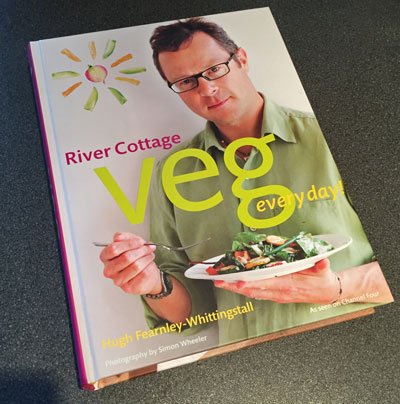
I recently bought myself a copy of Hugh Fearnley-Whittingstall’s River Cottage Vegetable Cookbook and I have been using the downtime over Christmas to working through some of the recipes. I’ve had mixed results.

Disastrously Sainsbury’s online do not sell Swiss chard – this is figuratively a middle class nightmare. It is also difficult because every single recipe seems to start with “chop and then fry a large onion”…

Chakchouka

Mostly made of peppers and tomatoes, then you bake a couple of eggs in it. The egg was good. It also smells increasingly nice as you cook it.

chakchouka

Pinto Bean Chilli

A bit of a hassle to make because you have to soak the pinto beans overnight. You also need to add plenty of chilli. The first one I did I had deseeded the chilli and it was a bit bland, whereas the second one that included the seeds was much better.

pinto-bean-chilli

North African squash and chickpea soup

Barely looks anything like the picture.

squash-and-chickpea-stew

Pearl barley broth

To really get the croutons right you need to let the bread go stale.

pearl-barley-broth

Beetroot soup

Nicer than it sounds. But that is a fairly low bar to beat.

beetroot-soup

Squash and fennel lasagne

This is also a pain to make. You have to bake the squash while sautéing the fennel and boiling the sauce before combing it all together and baking some more. Very nice though, probably due to the quantity of cheese in it. I think I actually prefer fennel cold.

lasagne

The Who

January 4th, 2015 | Distractions

Last month I took my mum to see The Who at Leeds Arena. It was nice to see a band worth going to playing there. The whole place was packed; I’ve never seen the arena have all of its sections open before. The couple behind us were talking about how they had not seen this band for 40 years.

They were excellent.

I was a bit cold at first as it was just Roger and Pete at the front of the stage, then a wall of amps, and the rest of the band behind almost curtained off. Of course those two are the actual “Who”, but Zak Starkey has been drumming for them for over 15 years now.

However, as the show went on it got better and better. They played for two and a half hours. I do not think I could do that at my age, let alone theirs. Especially Starkey as although he is a lot younger, he has the most intensive job and did not have any songs off.

IMG_1051 IMG_1052 IMG_1053

Gingerbread house 2014

January 3rd, 2015 | Distractions

gingerbread-house-1

gingerbread-house-2

A lot heavier snow fall compared with 2012 and a definite improvement on 2011.

The Norden

January 2nd, 2015 | Religion & Politics, Video

The Norden is a documentary series where they take someone from the United States to visit Finland, Norway and Sweden and compare the way they do things. With predictable results.

Prisons

Police

Guns are a terrible idea; go Norway.

Religion

I think the paster here does really well. He is down with the Heavy Metal Mass, and it feels like with the room 666 they are just teasing him. Plus the Bible does hate gays. I do not agree with that, but it is in there.

2014 in review

January 1st, 2015 | Life

Another year has flown by. One of the things that shocked me while summing up 2013 was that I used the phrase “celebrated ten years” more than once. This was the year I failed to make it into the 27 Club, so time really is ticking on.

In January I started working with full time with Knight Analysis. When I wasn’t playing Rocksmith that is. Almost all of the time I wasn’t working, I was playing the guitar. The lovely Sherlock returned and we visited Tropical World, which is not big news but something we do not do enough. Meanwhile Google started displaying ratings for the Leeds Restaurant Guide.

There were the usual holidays of Darwin Day and Galileo Day in February. I was still spending all my time playing Rocksmith, but finally finished the 60 day challenge at the end of the month. I was also saved from suicide by the addition of a dishwasher. There was lots of sport too with Super Bowl XLVIII and Leeds Tornadoes practices.

After working my fingers to the bone on guitar practice I got a well-earned reward in March in the form of a Fender Telecaster. I also won the Leeds City Toastmasters speech contest. There were some old school times with a post-Wendy fry-up and my speaking at Leeds Atheist Society. I also hosted a Sunday Assembly Leeds that nobody came to. The Foundation launched its new website.

In April I was elected the Toastmasters Area 15 governor. Duncan Dallas sadly passed away and the Leeds Restaurant Guide published its second edition. Louis Theroux returned to our screen and we celebrated Fonze’s birthday.

Conchita Wurst stormed Eurovision in May. There was some kind of other vote too. I earned my Competent Leader award with Toastmasters, ran 10k and started seriously doing Parkrun too. Toastmasters held their division contest with me as Chief Judge and a large part of Leeds burned down. Craig and Zoe got married and Worfolk 18 celebrated a decade of publishing by holding a porn party. I also put together a photo montage of the past ten years that I was rather proud of.

That brings us to June, a month in which the Leeds Restaurant Guide published its third edition and Britain was ranked as having the best healthcare system in the world (by a probably biased source, but who cares). I correctly predicted the demise of Wendy House which turned out to be the last ever one. The results of the British Social Attitude survey came out and showed that the non-religious now outnumber of all the religious put together.

It was an insanely busy month in July. I ran the Leeds 10k and fixed HSBC’s website. We celebrated Higgs Day and Leeds hosted the Grand Depart. I began my year as Toastmasters area governor and held my first area training. Having achived Competent Communicator and Advanced Leader Bronze that also earned me a trip crown. We visited Darlington to see my sister’s new house. I wrote about the best places to live in Leeds, independence days, and published the first Finn-Global Development Index. We went to the park to play mölkky and my blog turned 10 years old.

After all that is was nice to spend some time relaxing in August. With relatives visiting from Canada we visited Whitby and Temple Newsam for the Finnish picnic. There were also trips to Warwick and Cardiff. We partied for Leeds Pride and I ate a bear. Robin Williams sadly left us and we remembered 100 years of Tove Jansson. More research came out showing that wine tasting is nonsense and I even spoke up in defence of social science. I finished the month by handing over Leeds Skeptics after five years at the helm.

It was all about Norman’s birthday celebration in September. We went up to Ullapool in the Scottish Highlands for a week, where we saw stars and dolphins and managed to convince the Scots to remain part of the Union. I also got engaged to Elina. Back down south there was an area speech contest and we visited Flamingo Land to see the hippos. Gijsbert and Weili became parents when baby Samantha arrived. Isaac was christened, Michael Mosley tried to eat himself to death and Google decided I was a woman. I also decided that if I was going lead a truly evidence-based life, I had to start drinking. We visited Llandrindod Wells in Wales for the Loony Party conference and attended Yarndale 2014.

In October I completed probably the greatest achievement of my life by finishing War & Peace shortly before turning 28. Anxiety Leeds moved venues to the LGI and began fortnightly meetings. James became Dr Murray, we partied for Halloween and I launched a new website for guitar strumming patterns.

We felt like we were in a horror movie in the November fog. Luckily it did not decent until after we had seen Alan Davis. Huffington Post published the results of their survey on religion in which “60% of people described themselves as non-religious” and “over half believe that religion does more harm than good”. I ran the Abbey Dash and finally arrived in the future as fibre was rolled out to Leeds city centre. West Yorkshire Humanists hosted a stall at Summat New.

Most of December was taken up by the Humanist Action Group’s Holiday Food Drive which raised nearly £5,000 worth of donations for local homeless shelters. The holiday season takes up time too, but not too busy to see The Who rock out at Leeds Arena. As usual, we finished the year out with a party.

On the need for diversity

December 31st, 2014 | Thoughts

One of the topics that Noreena Hurtz covered in her book Eyes Wide Open, but which I felt deserved its own separate post, was on the need for diversity.

It is a hot topic at the moment. There is a lot of research suggestive of females being discriminated against in favour of males for example. The research on academic for example seems to clearly show that if you put a female name on something it will get less attention than if you put a male name on it.

However, we do nominally live in a free and equal society, so many people have asked how this can be the case. After all, it is illegal to discriminate on protected characteristics in the workplace for example.

For me, Hurtz has been the first person to do a good job of rounding up the research.

The bias within

Hurtz talks about auditions for musicians to join symphony orchestras. To his credit, Gladwell also talks about this. The biggest change in recent decades is that it is now common for musicians to perform behind a screen, so that the judging committee cannot see them. The result has been that women, who were almost never seen in such orchestras are now far more regularly hired.

How can this be so? One answer, of course, is that people are just bigots. However, I have always found this difficult to accept. Maybe that was the case 50 years ago, but today, does anyone genuinely believe women should be paid less than men? I simply cannot imaging anyone thinking that. Of course, maybe they do, and I have just lead a sheltered life of high intellectual society. But this seems unlikely as such problems equally permeate the Skeptics movement.

However, Hurtz shows there is an alternative explanation, one on the subconscious. We are all biased. We are biased to people who look like us in terms of gender, skin colour, and even name! Without knowing it, I am more likely to get on with someone also named Chris than I am with someone named Phil, or Matt, or Dan. It is not that anyone is consciously discriminating, it is that our minds have evolved to be more trusting of individuals that look like us. The reasons for this are plentiful and probably fairly obvious to those of us with an understanding of human and genetic evolution.

This does not mean that there is anything inherently bigoted about each of us (or you could also look at it as we are, but we are all as bad as each other), but it is important to accept that there is a subconscious bias that we need to be aware of and try and correct for where possible.

Why it is important

This is important because there is also research to show that better decisions are made when a broader range of diverse people have input. On a large scale, this is being used by governments and the scientific community to try and gather ideas from as wide a range of people as possible.

On a local level, it means trying to actively promote a broader range of backgrounds. If you have two possible candidates for a job for example, and they both seem equally qualified, the one with the background least similar to yours is probably the one you should pick.

What we are talking about here is real diversity. For example, if I was to hire a black woman who grew up in Leeds and studied computing at university, I would not actually add much diversity, because he experiences would be very similar to mine. It is more than skin deep. However, actively seeking diverse backgrounds for genuine reasons – because you want to overcome the subconscious bias and find people that will add a new way of looking at problems – can only help you make better decisions and be more successful.

Eyes Wide Open

December 30th, 2014 | Books

I recently read Noreena Hertz’s book “Eyes Wide Open: How to Make Smart Decisions in a Confusing World”. It’s quite a good read. In the book she puts forward some of the problems with decision making in the modern world and how can improve our own thinking.

I have picked out some of my favourite quotes and ideas.

“We need to be better decision makers, have decision making classes in schools”

This I would totally agree with. If people had a better understanding of decision making, scientific analysis and understanding statistics and information you would hope that we would at least some of the time have better decisions making, even if that doesn’t fix political bias.

However, I think some of the picture of the “modern world” being such a problem is unjustified.

“The average copy of the New York Times contains more information than you would have encountered 300 years ago.”

That I would suggest is nonsense. How do you measure information? I am sure the New York Times contains a lots of facts and figures, but if you think about the amount of information you pick up just by living your life, its a lot.

Take cooking for example. There is so much knowledge in preparing ingredients, putting it all together and cooking it, serving it, tasting it – tasting food alone has to be a huge amount of information. The human brain can store loads of information.

She probably means specific information in a context. However, it struck me as an add thing to say. She then goes on to say that this is a lot given we can only hold seven things in our memory. Though the latest research indicates this is only two or three things anyway.

“Our world is increasingly unstable and we cannot rely upon it anymore.”

Again, this to me seems like nonsense. Our world is the most stable it has ever been. On a global level, less people are being killed by war than ever before. However, it is on a personal level were we really have seen the chance.

Hundreds of years ago, if the crops failed, you were fucked. Totally fucked. There was a good chance you would die. Just ask the Irish. Today I can walk into Tesco and buy food 24 hours a day, 7 days a week. It will always be there. There is no time when Tesco do not have food.

So who cares if Leman Brothers might collapse overnight. I will still be able to find food, clean water, shelter and medical care tomorrow, and the day after, and the day after that.

In short, I think she paints a much bleaker picture than we actually find the world. However, there is plenty of room for improvement. Luckily there were some buzz words to the rescue – lets go about making some empowered decision making.

Intuitive thinking

One of the first things that I liked was that She then says that intuitive thinking is often wrong, in contradiction to Gladwell. She even says something like you can’t just blink and make a good decision. Perhaps as an intention reference to the nonsense Gladwell wrote in his book entitled “Blink”, or perhaps not.

Social media

Hurtz puts forward the idea that the constant ping of emails, phone calls and other distractions utterly ruins our train of thought. “Social media is distracting.” I have not seen the research on this, but it would be interesting to know if this is also true of the younger generation who have grown up with it.

Cult of the measurable

Hurtz laments the rejection of anything that cannot be measured. SHe claims that domestic violence is ignored because it is hard to measure. This is a big claim, so I would like to see some evidence on that before I believe it. Of course it could be the case, and if it is, that is something we should address.

Measurables are important though. Maybe not with wine, the example Hurtz uses, but they are with most things. How do you measure success without measurables? How do you make an evidence-based decision if you cannot measure the evidence? It provides the justification for your decisions.

Positivity bias

Most people have a positive bias. Ironically, it is depressed people see the world most clearly. Everyone else overlooks the negative stuff. This should be taken into account when making decisions. You should re-adjust your perceptions in case bad things happen.

I discussed this idea with my friends and family. They said, in my case, I was probably adjusting far too much already lol.

Recency bias

I am not sure what the actual name of it is. However, Hurtz tells the story of an ER doctor that had seen a lot of pneumonia cases recently. A patient came in with slightly odd symptoms that did not quite fit. However, the doctor diagnosed it as pneumonia. Another doctor, who had not seen all the cases, immediately correctly the diagnosis to aspirin poisoning.

This is something I could definitely do to be more aware of at work. Often I will be trying to trace down a bug, as it is the same thing I have seen before, but the usual fixes and debugging are getting me nowhere. Usually, it will turn out to be something totally different, but because I am zoned in on a particular problem, I miss it.

Challenger in Chief

Hurtz recommends you appoint someone to pay “Challenger in Chief”. Their job is to challenge your ideas in an attempt to overcome your optimism bias. They can play Devil’s Advocate and put your ideas to the test.

Pick your historical lessons carefully

Do not get hung up on past success and failures. Richard Zanuck, one of the producers of the Sound of Music, went on to commission several more musicals after the huge success of the first. They flopped. History is not always a good indicator.

This correlates with what Duncan J Watts writes. History only happens once, so is a sample size of one. His classic example is the Minidisk. Sony, hurt from losing the VHS Betamax wars, really did learn its lessons and make an excellent product in the Minidisk. But it still flopped, because of the entirely unpredictable rise of file sharing making MP3 devices popular. Do learn from your mistakes. But do not learn too much.

Thinking time

According to Eyes Wide Open, Barack Obama advised David Cameron to allocate large parts of his day to time where he does nothing but sits and thinks.

I cannot find any evidence to support the claim made in the book, but it is good advice anyway. At work, sometimes I just sit and think. That time is an investment, allowing me to work out the pros and cons of my ideas before I implement them, thus saving time in the long run.

It is also a good idea to not implement ideas straight away. When you first come up with an idea your a) probably quite excited about it and b) have not had time to think it through. Put it at the back of your mind and mull it over for a while before doing anything.

This is something I already practice at work and home. If I decided to take on a new project or get involved with a new charity, I will wait a few weeks and see if I am still as excited about it as I was when I first thought of the idea. Only after sustained interest in an idea will I pursue it.

Similarly, at work, if we need a new feature implementing, I will generally leave it to the next day so that my mind has time to process the pros and cons of my approach.

CV writing

Studies on CVs that suggest if you write it in the third person it is taken more seriously. So the next time you are updating your CV, replace “I lead a team and I implemented x” to “Leading a time and implementing x”.

Anchoring

Anchoring is a real problem, and something Kahneman writes a lot about in Thinking, Fast and Slow. If you are not familiar with the problem it is this. If you ask someone who much a house is worth, they will probably give you a reasonable estimate. However, if you tell them the house recently sold for a huge amount, they will subconsciously anchor on this, and give you a much higher estimate.

This is not always a problem, but is a massive problem when it comes to things like sentencing a convicted criminal to x number of years in prison. It is also one of the reasons why you can get a much better pay rise by switching companies.

Once you are aware of these potential anchors and biases, you can try and eliminate them. Hurtz recommends painting a blank canvas. If you are looking round a new house for example, and the current owner has baked some fresh bread to bias your senses, take the time to try and imagine it without it without the smell.

Colours affect our judgement. This is something we saw a lot at Sky Bet. Just changing the colour of a button for example could have a significant impact on whether people clicked it or not.

Narrowcasting

Do not be so hasty to block people with different opinions on Facebook and Twitter. It is important to expose yourself to different points of view, otherwise you find yourself in a bubble where all you ever get is people reinforcing your existing opinions, regardless of their validity.

I have Facebook friends who post material from the far left, and occasionally from the right. I have religious friends and foreign friends with cultural differences, and many of their opinions I do not agree with. However, I am glad they share them with me to challenge my own point of view.

Eli Pariser also has a great TED talk about this.

Summary

While I think the introductory chapter perhaps over-emphasises the problems with modern society, this book is filled with good ideas. Of course, I would think that as I already use a lot of them, but there was plenty of useful reminders and new ideas that for me, made this book an excellent read.

eyes-wide-open

Happy holidays!

December 29th, 2014 | Distractions

Oh, while I remember, happy holidays for eight days ago. Have a good one. Here is a picture of some snow:

snow

Photo by Cynthia Yip.

Holiday Food Drive 2014

December 26th, 2014 | Foundation, Humanism

A big thank you to everyone who contributed to the Humanist Action Group‘s 2014 Holiday Food Drive for local homeless shelter. Our final boxing was a long hard day but well worth it in the end. We are pleased to announced so far we have raised in-kind donations worth…

£4,934.81

The donations went to four local homeless shelters and will benefit all of their residents. Thanks to your kind contributions a hundred people that would have woken up with nothing over the holidays will now receive much needed food, clothing and toiletries.

hood-drive-2014

You can see all the photos from the event on our Flickr page.