Chris Worfolk's Blog


2017 in review

January 6th, 2018 | Life

In, January I set out to make 2017 my year of marketing. Have I learnt it? Well, I’ve definitely learnt a lot. But there is always more to know. January was also “book launch” month. I released Why Restaurants Fail and How to Exit VIM, which, despite both being short books, would turn out to be my most popular. Our friends Craig & Zoe welcomed Holly into the world.

Valentine’s Day is tricky when you have a baby, so February was not all it could have been. As if it wasn’t already bad enough that I had had to trade down my guitar amp. The Patriots won the Super Bowl and I launched a new version of my website.

The excitement of our domestic lives increased significantly in March when we bought a stick blender. It proved very useful for Malaysian month. In business, I launched the IT Career Acceleration course and launched the WAM online store, built with Stripe and React. Venla had her naming ceremony.

I published yet another book in April. This time it was the Human Baby Cookbook. I also discovered that costermonger is a real thing and made it to the Division E final in the public speaking world championships. In business, I launched one of my courses on Udemy. Most of my time, though, was taken up running my 30-Day Anxiety Challenge for WAM subscribers.

Everyone knows that May is all about Eurovision. Portugal won for the first time. We discovered chanterelles in Pateley Bridge and said goodbye to Ho’s Chinese. On the back of my 30-Day Challenge, I launched my 4th book of 2017, Do More, Worry Less. And knocked a respectable 24 minutes off my half marathon time. Anxiety Leeds pitched at Leeds SOUP.

In June, Venla had her first trip to the beach and started learning the xylophone. We celebated Kerny’s first birthday and had a changing of the guard at West Yorkshire Humanists as Moz stepped down as chair and we celebrated 50 years of the group’s existence. Food was tasty but small due to canape month. I wrote half a million words in one week (according to Grammarly).

It was a good foodie month in July with hand-rolled truffles and MasterChef-inspired dishes. We attended the annual Finnish picnic and celebated Higgs Day. I ran an okay-ish time in the Leeds 10k and launched my Mindfulness for Anxiety course.

Things got technical in August, with a focus on accessibility and mobile-first navigation. We celebrated Leeds Pride and Anxiety Leeds published its first impact report. It was also a month crammed with sport: inspired by the Tour de France we got on bikes for the first time in decades. We went swimming. And I traded in my Air Retaliation 2s for new trainers and brought my Parkrun PB down to 25:06. We celebated Gran’s 90th birthday and Finland turning 100. Riitta came to visit and Hugh and Anna got married.

In September I helped the NHS launch their new homepage before heading back to university. We bought bikes and went to City Ride and ran the Kirkstall Abbey 7. I made a very early exit in the Toastmasters speech contest.

Richard Thaler collected a long-overdue Nobel prize in October. We celebated our second wedding anniversary and Venla’s first birthday. I also celebrated my birthday, just after squeezing in last year’s birthday present. I ran the Yorkshire 10 Mile in under 90 minutes and moved my Parkrun PB down to 24:37.

I declared that November would be a month of action for my business and it was. I published two books: a book version of the IT Contracting Master Class course and Skeptic’s Guide to Pregnancy. I published my course Mindfulness for Social Anxiety and made Running For Anxiety available to the public. I went to my first business networking event, WapenTalkie. Outside of work, I went sub-50 in the Abbey Dash, completed my first duathlon (and my second and continued training on the bike.

Finally, in December we celebrated the festive season. It wasn’t quite a white Christmas, but it did snow. Venla mastered the art of standing up and climbing and we celebrated Finland’s independence day. Elina became an auntie for the second time. We held the 8th annual Holiday Food Drive for local homeless shelters. I placed 9th in the Braham pie-athalon: a dualthon where you had to scoff a mince pie at each transition, and completed my first sportive.
Sport Psychology

January 3rd, 2018 | Books

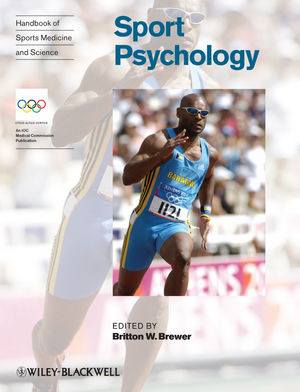
With a rather long full title of Handbook of Sports Medicine and Science, Sport Psychology (Olympic Handbook Of Sports Medicine), this textbook provides an introduction to the major issue in sport psychology.

It’s a really well put together book. It covers each area in short and to-the-point chapters. The whole thing is just over 100 pages and gives you a brief but comprehensive introduction to the areas.

What it’s missing are the details on some of the interventions. It talks about confidence, mental preparation and focus. And explains what these areas are. But then it goes on to say “imagery is useful for this” without going into any detail about what exactly imagery is.

Overall, though, this is a great introduction to the subject.

Our Korean Kitchen

December 31st, 2017 | Books, Food

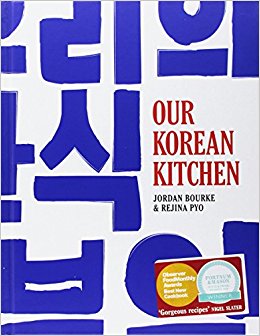
Our Korean Kitchen is a cookbook by Jordan Bourke and Rejina Pyo.

It sounds exciting, but honestly, it’s not. I just can’t make much from this book. Everything is too difficult.

There is always a question of authenticity vs practicality. Some people may have preferences either way. Mine is probably towards the latter. I want to make stuff from a cookbook. If that means dumping it down for British people, I’m for that.

The recipes I did manage were total winners. The bulgogi is delicious. Elina loves the warming chicken and potato stew. But I’m not sure where to go after that. Have you tried making your own kimchi? It’s not straightforward.

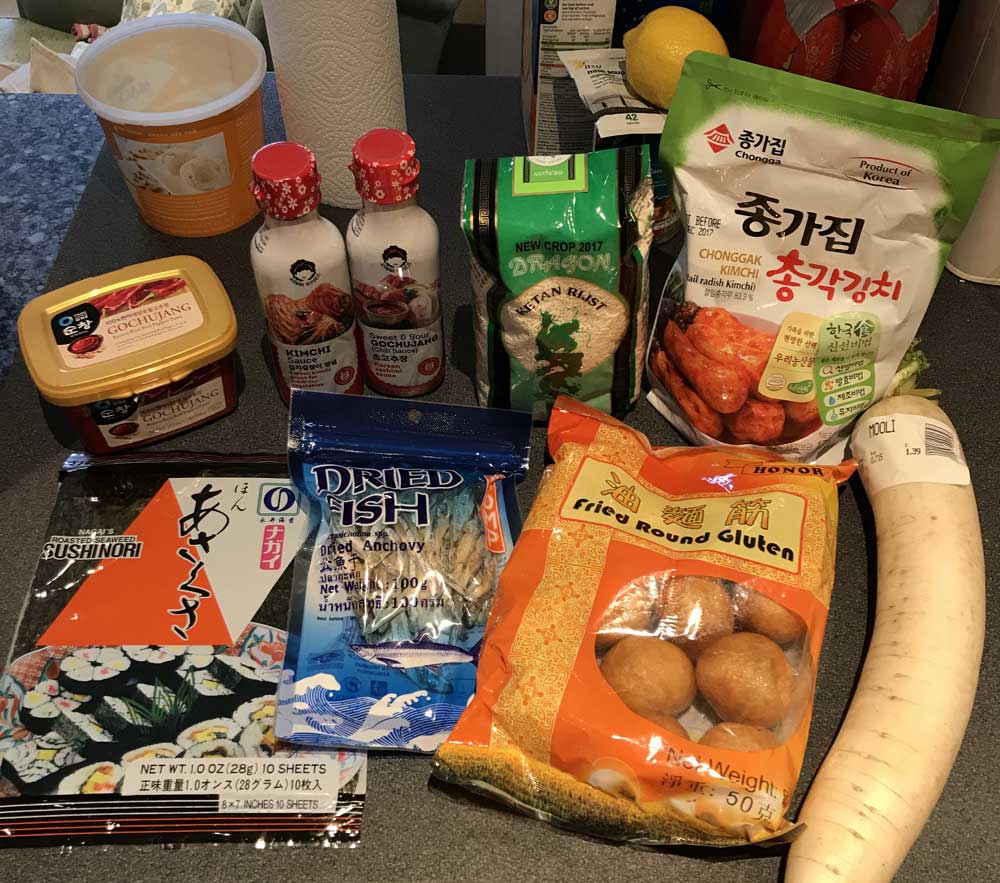
I thought I had really put the effort in after I spent an hour in the international supermarket chasing down gochugaru paste, kimchi sauce, muli and half a dozen other ingredients. But it wasn’t enough.

If you are someone with a lot of determination, you can probably get a lot out of this book. But if, like me, you are time limited and not entirely sure how to use doen-jang soybean paste, you might struggle with this book.

Beef wellington

December 30th, 2017 | Food

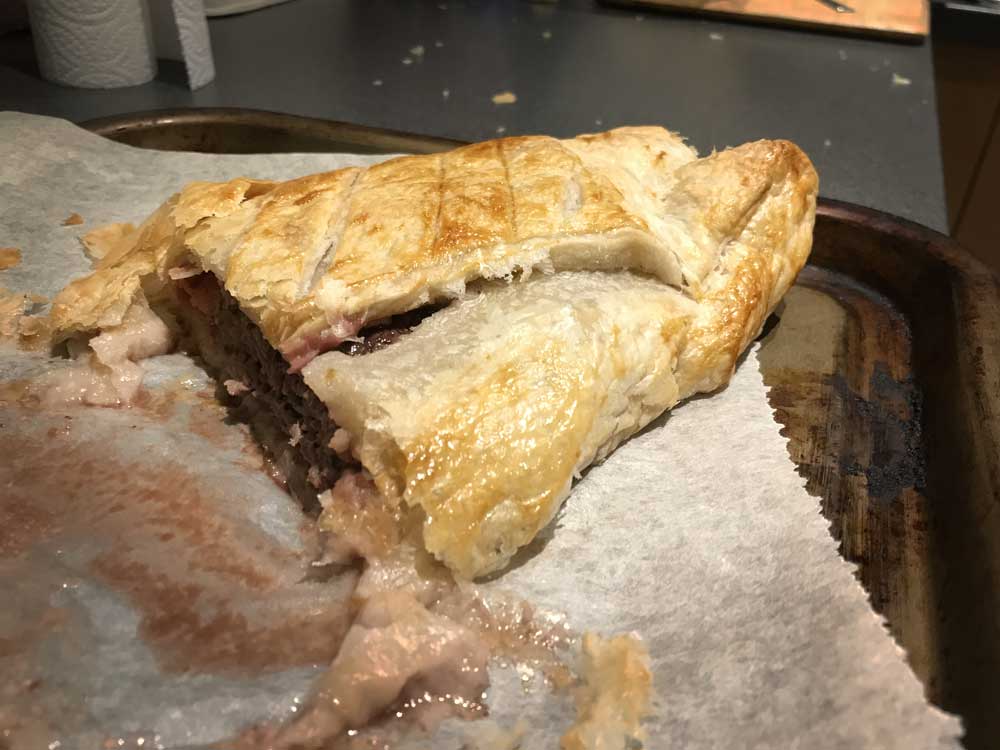
I tried my hand at a beef wellington. It looks more like a sausage roll, largely due to me using pre-cut fillet steak, rather than an entire fillet. At £30 a pop for one, I think I’ll live with the shape.

Christmas Eve Eve Eve

December 29th, 2017 | Friends

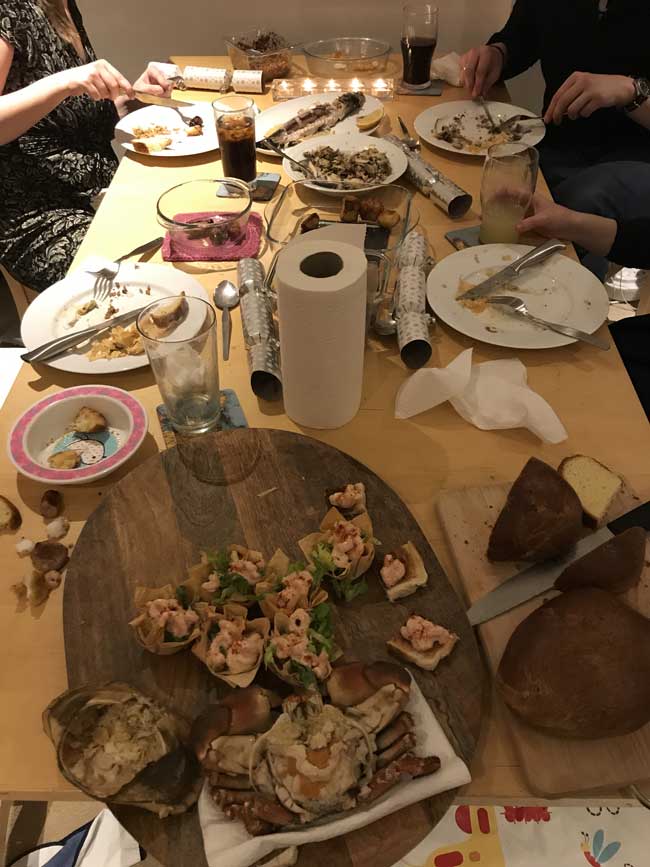
To celebrate Christmas Eve Eve Eve, we got together with the Sheridans for a meal.

It was interesting to see Venla interacting with Kearny. They didn’t really play together because they are still too young for that. However, they did spark off each other. There was a lot of squealing and looking at each other.

My brioche turned out quite well. A little overbaked due to running around after Venla, but otherwise fine.

Discovering stairs

December 28th, 2017 | Family & Parenting

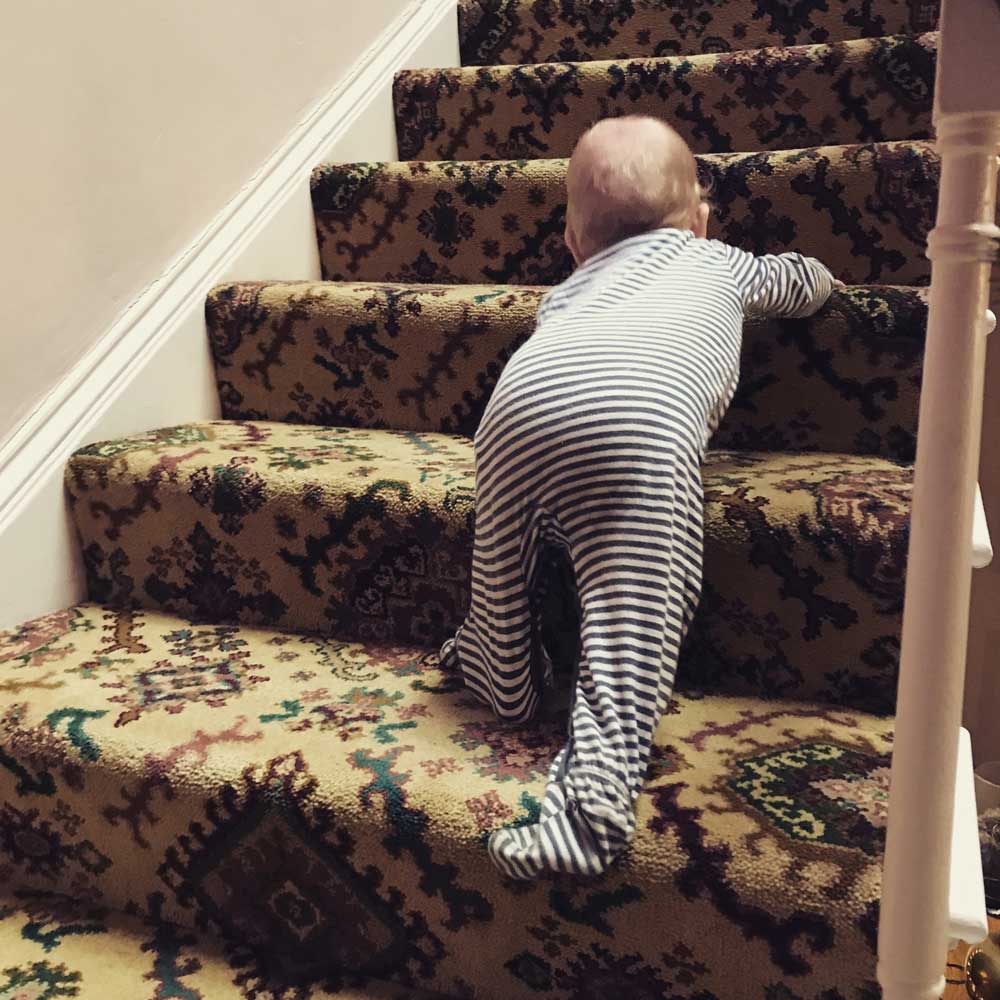
This has trouble written all over it.

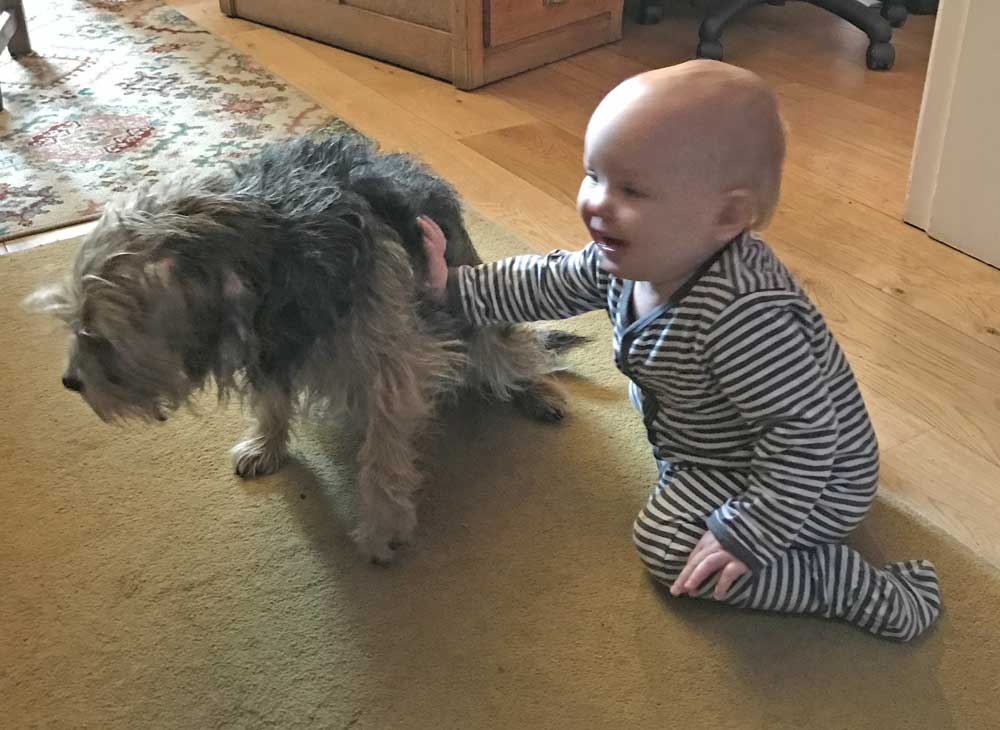
We dropped by Jane’s house to pick up several bags of donations she had kindly sorted out for the Holiday Food Drive. Venla had a brilliant time. When she wasn’t petting Jane’s dogs she was climbing up and down the stairs.

Cognitive-Behavioral Treatment of Perfectionism

December 27th, 2017 | Books

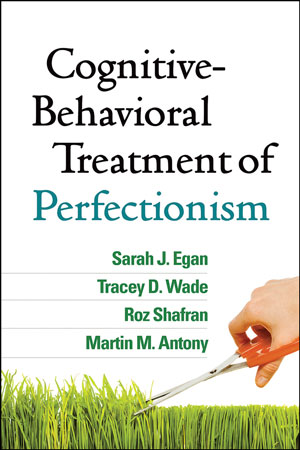
Cognitive-Behavioral Treatment of Perfectionism is a book by Sarah J. Egan, Tracey D. Wade, Roz Shafran, and Martin M. Antony.

It’s written for therapists but is also useful for academics. And, as it turns out, for some introspection, too.

What exactly is perfectionism? There is no universal definition of clinical perfectionism but typically involves in a process of people setting unachievable standards for themselves and then feeling bad when they miss them. Treating it can have transdiagnostic benefits for a person’s mental health.

A key part is an over-reliance of self-feedback. It’s not enough that other people tell you that you are doing a good job: you need to meet your own high standards, not theirs.

How do you assess it? There is no single way, though a few inventories are emerging. And by “a few”, I mean loads:

  • Almost Perfect Scale-Revised (APS-R)
  • Behaviour Domains Questionaire (BDQ)
  • Burns Perfectionism Scale (BPS)
  • Clinical Perfectionism Questionaire (CPQ)
  • Consequences of Perfectionism Scale (COPS)
  • Frost et al. Multidimensional Perfectionism Scale (FMPS)
  • Hewitt and Flett Multidimensional Perfectionism Scale (HMPS)
  • Neurotic Perfectionism Qustionaire (NPQ)
  • Perfectionism Inventory (PI)
  • Perfectionistic Self-Presentation Scale (PSPS)
  • Positive and Negative Perfectionim Scale (PANPS)

The model

The standard model for perfectionism is that you set a standard and try to achieve it. These standards are typically inflexible, over-general (one mistake wipes off the entire report as failure) and filled with double-standards (it is okay for someone else to do that, but not me).

The height of the standard leads to avoidance.

You either then hit the standard, in which case you tell yourself it was too easy.

Or you miss the standard and beat yourself up.

The treatment

The book lays out a full treatment plan based on cognitive behaviourism. However, one thing I will point out for a quick win: merely monitoring your symptoms seems to improve things.

Ethlers and colleagues (2003) had people with PTSD perform daily monitoring of their symptoms. After three weeks, 12% had improved sufficiently to no longer meet the clinical level of PTSD.

Similarly, there is evidence that self-monitoring contributes to improvements in anxiety and depression (Coull & Morris, 2011).

Self-criticism

Perfectionists often see a value in self-criticism because they believe that if they accepted lower standards, they would be lazy and unproductive.

So, rather than eliminating self-criticism, we want to replace it with constructive feedback.

The authors suggest we think of it as the choice between two basketball coaches: do you want one who just calls you “stupid” and “a failure” when you make a mistake? Or do you want one that is encouraging, offers suggestions for improvements and guides you to the next level in performance? That is the difference between a self-critical inner voice and a compassionate but productive one.

This is important because of the Yerkes-Dodson Law. This states that there is an optimal level of arousal. Too little, and you will be lazy. Too much, though, and your performance starts to deteriorate as well. Moderation is the order of the day: gentle pressure produces optimal performance, not viciously beating yourself up.

Procrastination

One of the biggest problems for perfectionists is that they are often not productive because of procrastination. They put off tasks for a number of reasons:

  • The task is large, and therefore the time commitment to completing it perfectly is equally large
  • You feel overwhelmed by the idea of having to do it perfectly
  • Giving yourself too little time is an easy get-out: it’s okay for it to be imperfect because it is not a true reflection of your performance

So, they do nothing. Nothing pleasurable, either. There can be no enjoyable tasks because they “haven’t earned it”. So, the time simply goes to waste.

The motivation trap

A common reason for putting tasks off is “waiting for the motivation” to get it done. But the authors claim that this is a fundamental misunderstanding of causation.

We assume that motivation inspires action. But, in reality, action inspires motivation (Shafan et al 2010). If you want to feel motivated about a task, force yourself to start it and them motivation will follow.

This fits with my blog post on what comes first: thoughts or feelings? It is our behaviour that drives our feelings, not the other way around.

Summary

This is a really interesting read for anyone interested in perfectionism. It is aimed at clinicians, which means you don’t get all of the friendly hand-holding of popular science, and everything comes from a certain angle. However, it is written in a very engaging way, so doesn’t suffer from the stuffiness of academic texts.

Defrosted freezer

December 26th, 2017 | Life

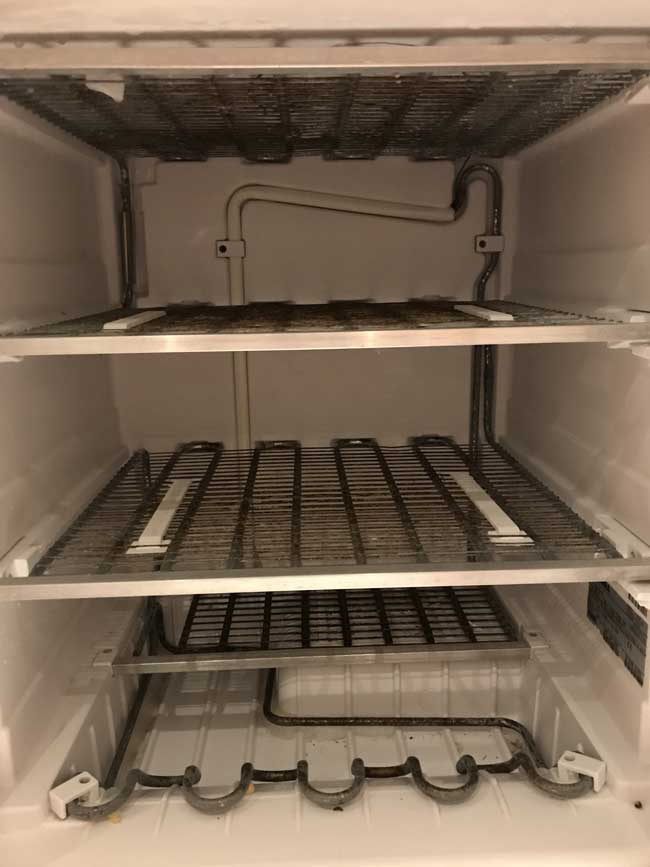
I, Chris Worfolk, hereby certify that on the 21 December 2017 I defrosted the freezer. In accordance with the presence established in case law by Pics vs I Didn’t Happen, I submit this photo, including the EXIF data, as proof. Thus, should any other party to this marriage again attempt to claim that they might have done it last time so it wasn’t their turn, even though they have never done it in the entire time we have lived at this properly, this post will serve as evidence to the falsity of their claim.

Snow

December 25th, 2017 | Photos

Who loves snow? This baby does.

Parkrun by bike

December 24th, 2017 | Sport

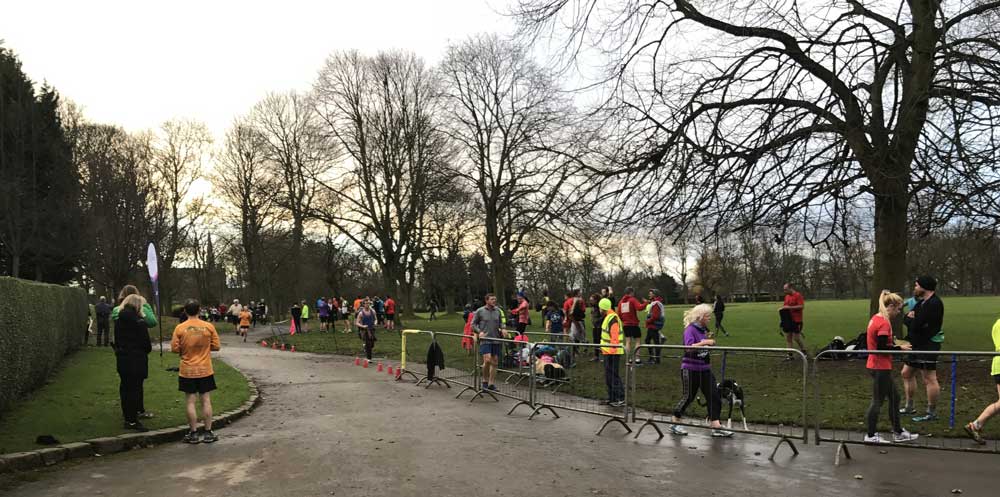
I’m still going easy on my ankle so I decided to cycle to Parkrun. It was the first time I have done so, so I thought I would document some of my thoughts.

Padded cycling shorts make a big difference. I went out in my running gear and noticed I felt a little uncomfortable almost as soon as I was on the bike. Then I remembered why: I always wear my cycling shorts on the bike, even for triathlons (no, it doesn’t feel like wearing a nappy, that much). I think investing in some tri shorts for these occasions might be in order.

It’s nice having the bike there because you can carry things like bottled water and a jumper for cold days. Of course, you can’t leave anything valuable on the bike.

My belt makes a better shortage solution than my short pockets, especially for keys. It doesn’t fit my phone in, though, so I need a better solution for that when running off the bike.