My favourite books
Sunday, June 7th, 2015 | Books
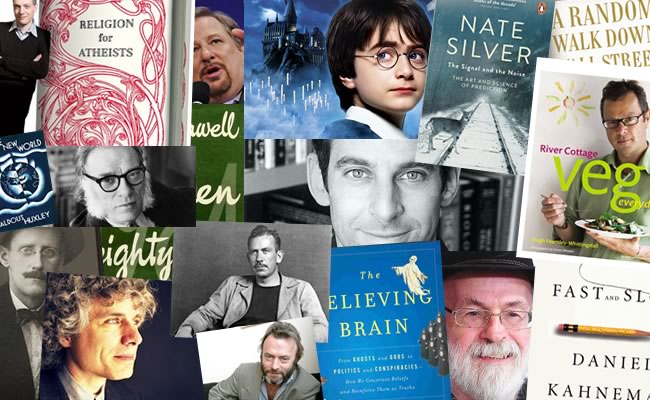
Have you ever wondered what my favourite and most influential books are? The answer is to that question is almost certainly no. However, I was making a similar list for books I might want to re-read if I ever get somewhere near finishing my reading list, and decided it would be nice to stick it on my website too.
Fiction
- Isaac Asimov. The Foundation series is probably my most-read fiction books. I also like the Robot and Galactic Empire books which all form into one universe.
- Nineteen Eighty-Four by George Orwell. This used to be my favourite book because at its heart it is a love story. Wrapped in a terrible dystopia, so well thought out that we often struggle to distinguish it from the world we live in today, despite the horror of it. Blog post.
- Brave New World. A lot of people confuse Aldous Huxley’s futuristic novel for a dystopia. It’s clearly a utopia because it creates a world where everyone is happy. If you’re not happy, that’s fine too, you get to go live on an island. What could possibly be wrong with that? Blog post.
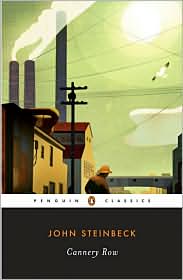
- John Steinbeck. The Grapes of Wrath is done an injustice to every time it fails to top any literature list. Also check out East of Eden, Of Mice and Men and Travels with Charley.
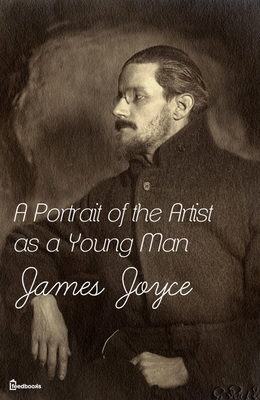
- James Joyce. Ulysses is worth a crack just to see if you can read it. For large stretches of that novel, I had no idea what was going on. The fire and brimstone preaching in A Portrait of the Artist is immense, too.
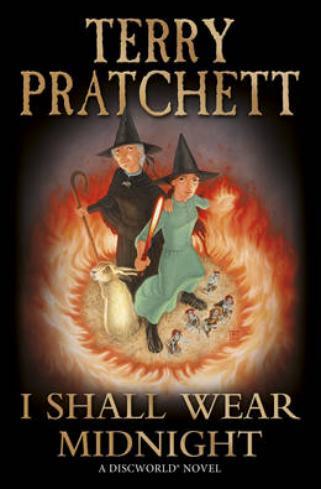
- Terry Prachett. How much joy has one man delivered the world? 40 Discworld novels with another one on the way, and many non-Discworld books too. I am sure that like me, many of you were heartbroken when Pratchett passed away in 2015.
Non-fiction
- The Four Hoursemen of Sam Harris, Dan Dennett, Christopher Hitchens and Richard Dawkins. Harris offers some good stuff on morality; notably The Moral Landscape and Lying. I also like Unweaving the Rainbow (Dawkins), God is Not Great (Hitchens) and Consciousness Explained (Dennett).
- Religion For Atheists by Alain de Botton. His book shows us how we could design secular society to utilise the many truths and good ideas that can be found in religion. Blog post.
- The Purpose Driven Church. Rick Warren is a man who knows how to run a church. Even if you are running a secular organisation, or any community organisation, This book is a source of inspiration for how to do it. Blog post.
- Thinking, Fast and Slow by Daniel Kahneman really started to develop my interest in psychology. Kahneman is so good that he has a Nobel Prize, despite the fact that there is no Nobel Prize in psychology. Blog post. Also check out Duncan J. Watt’s Everything Is Obvious: Why Common Sense Fails Us.
- The Believing Brain by Michael Shermer. Why do people form irrational beliefs? According to Shermer, it is because all beliefs are formed for personal, social and emotional reasons and the rational reasons only ever come second. Blog post.
- The Blank Slate. Are humans inherently good and will we reach a state where we are all just nice to each other and live in perfectly fair, honest and utopian societies? No. I would like to believe we would, but Steven Pinker comes in with so much evidence to prove I am wrong that I am forced to submit. He writes boldly and honestly. Blog post.
- The Signal and The Noise by Nate Silver. If you have ever wondered why humans are terrible at predicting stuff, this is a good read. Blog post.
- A Random Walk Down Wall Street by Burton Malkiel. Promise me that you will never invest in the stock market without reading this book first. Blog post.
- Ego is the Enemy by Ryan Holiday. A well-argued case of keeping our egos in check. We often think successful people are successful because they have a big ego. But Holiday shows that they did their best work when they were most humble and that we should strive for the same. Blog post.
Have you ever wondered what my favourite and most influential books are? The answer is to that question is almost certainly no. However, I was making a similar list for books I might want to re-read if I ever get somewhere near finishing my reading list, and decided it would be nice to stick it on my website too.
Fiction
- Isaac Asimov. The Foundation series is probably my most-read fiction books. I also like the Robot and Galactic Empire books which all form into one universe.
- Nineteen Eighty-Four by George Orwell. This used to be my favourite book because at its heart it is a love story. Wrapped in a terrible dystopia, so well thought out that we often struggle to distinguish it from the world we live in today, despite the horror of it. Blog post.
- Brave New World. A lot of people confuse Aldous Huxley’s futuristic novel for a dystopia. It’s clearly a utopia because it creates a world where everyone is happy. If you’re not happy, that’s fine too, you get to go live on an island. What could possibly be wrong with that? Blog post.
- John Steinbeck. The Grapes of Wrath is done an injustice to every time it fails to top any literature list. Also check out East of Eden, Of Mice and Men and Travels with Charley.
- James Joyce. Ulysses is worth a crack just to see if you can read it. For large stretches of that novel, I had no idea what was going on. The fire and brimstone preaching in A Portrait of the Artist is immense, too.
- Terry Prachett. How much joy has one man delivered the world? 40 Discworld novels with another one on the way, and many non-Discworld books too. I am sure that like me, many of you were heartbroken when Pratchett passed away in 2015.
Non-fiction
- The Four Hoursemen of Sam Harris, Dan Dennett, Christopher Hitchens and Richard Dawkins. Harris offers some good stuff on morality; notably The Moral Landscape and Lying. I also like Unweaving the Rainbow (Dawkins), God is Not Great (Hitchens) and Consciousness Explained (Dennett).
- Religion For Atheists by Alain de Botton. His book shows us how we could design secular society to utilise the many truths and good ideas that can be found in religion. Blog post.
- The Purpose Driven Church. Rick Warren is a man who knows how to run a church. Even if you are running a secular organisation, or any community organisation, This book is a source of inspiration for how to do it. Blog post.
- Thinking, Fast and Slow by Daniel Kahneman really started to develop my interest in psychology. Kahneman is so good that he has a Nobel Prize, despite the fact that there is no Nobel Prize in psychology. Blog post. Also check out Duncan J. Watt’s Everything Is Obvious: Why Common Sense Fails Us.
- The Believing Brain by Michael Shermer. Why do people form irrational beliefs? According to Shermer, it is because all beliefs are formed for personal, social and emotional reasons and the rational reasons only ever come second. Blog post.
- The Blank Slate. Are humans inherently good and will we reach a state where we are all just nice to each other and live in perfectly fair, honest and utopian societies? No. I would like to believe we would, but Steven Pinker comes in with so much evidence to prove I am wrong that I am forced to submit. He writes boldly and honestly. Blog post.
- The Signal and The Noise by Nate Silver. If you have ever wondered why humans are terrible at predicting stuff, this is a good read. Blog post.
- A Random Walk Down Wall Street by Burton Malkiel. Promise me that you will never invest in the stock market without reading this book first. Blog post.
- Ego is the Enemy by Ryan Holiday. A well-argued case of keeping our egos in check. We often think successful people are successful because they have a big ego. But Holiday shows that they did their best work when they were most humble and that we should strive for the same. Blog post.