Archive for the ‘Books’ Category

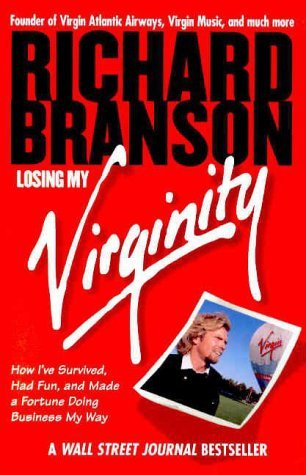
Losing My Virginity

Tuesday, May 5th, 2015 | Books

Don’t get your hopes up, this is not the long-awaited gory details of myself and Yvonne Mcgruder in the back of a beaten up Ford Fiesta. It’s the title of Richard Branson’s autobiography.

It’s a short and sweet book – I got through the whole thing in a day. He is one crazy bastard. When he isn’t almost killing himself on boats or hot air balloons, which he is a lot, he is getting arrested (though only in his younger days) and indulging in free love. Though he also appreciates keeping an alcohol-free clear head when he needs to.

The length means you don’t get the intricate detail that something like the Steve Jobs biography goes into, but does keep it moving. Virgin is a company that has been so close to going under so many times. I’ve read quite a few other books of other businessmen and none of them have such a track record of death-dodging than Virgin. Of course, it could be that Branson is just more honest. He talks openly about marijuana, sex and criminal activity, but maybe everyone else is up to it too. I can’t see Alan Sugar with a spliff but who really knows.

It’s also quite dated now. Virgin has done a lot since 1998 when the book came out and it feels like half a story. It doesn’t offer business insight in the same way that Like a Virgin does, but it does make for an entertaining read.

Losing_My_Virginity

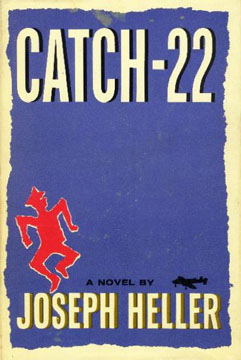
Catch-22

Monday, May 4th, 2015 | Books

Anyone who does not want to fly combat missions is sane enough to fly combat missions. That is the ironic narrative of Joseph Heller’s Catch-22, a novel set during the Second World War.

I found it really slow going at first. Funny, but slow moving. It follows the life of Yossarian, as well as a large cast of other characters, as they attempt to survive through the war. As the story goes on it opens up into a dark, satirical and ultimately very funny story. If you have that kind of sense of humour. Which I do.

The impossible but simultaneously inevitable situations that Milo Minderbinder finds himself in, the idea of someone being promoted just so their name would be Major Major and Captain Black’s endless series of loyalty oaths are just absurd enough to be ridiculous and yet somehow plausible in the crazy world we live in.

Catch-22

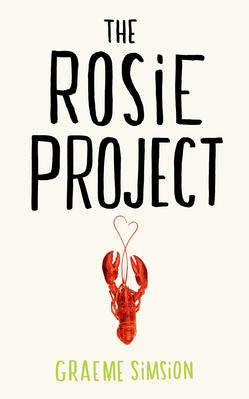
The Rosie Project

Tuesday, April 28th, 2015 | Books

The Rosie Project is a novel about a guy named Don and his struggles with relationships. He falls somewhere atypically on the autism spectrum, probably Asperger syndrome.

It was a novel I had looked forward to reading, so I was pleased when it made it into my current reading sprint. I identified strongly with the protagonist. He has so many useful ideas like efficient, running his life from a whiteboard and a proper meal schedule. Though with the obvious difference that he is autistic (and doesn’t even realise it) and I’m not.

The ending was predictable and formulaic. Good news, obviously. Have you ever read a novel that doesn’t end like it should? They’re rubbish. Even George R. R. Martin knows deep-down that what he does is awful and wrong. Gripping, but rubbish.

The-Rosie-Project

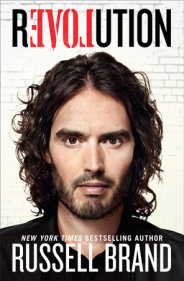
Revolution

Saturday, April 25th, 2015 | Books

I had some hopes for this book. Russell Brand and I are superficially alike. That is to say, we both have long tangled hair and a tendency to stand up for justice rather than kowtowing to authority.

However, the revolution that Brand proposes is perhaps-unalterably bound up in a movement towards a religiously-inspired spiritualism. Brand would argue that that is the point. They need to be connected together.

He opens the book with a prayer and talks about his belief in god. Which god you ask? Doesn’t matter. Brand seems to accept all the contradictory claims of various religions as true. But what does that matter when you believe that science cannot explain everything. Especially Consciousness. I’ll be writing to Dan Dennett for my money back then.

Some of the claims drift into the beyond ridiculous. Whether or not you think that the entire working class is being oppressed and knowledge of other alternatives is being carefully controlled and discredited, a group of people doing mediation does not drop a city’s crime rate by 20%. I couldn’t even find the study that Brand was referencing, but you do not need to know that it does not make sense.

That’s the bad stuff though. There is also lots of good stuff in the book.

He writes in an engaging style. It’s entertaining, it slips in and out of poetry and moves seamlessly between the fun and the serious. It is self-aware enough to realise that many will regard Brand as a champagne socialist.

Some of which is contentious. For example, he claims that the US election has been won by the side with the most money. He points out that isn’t claiming this always has happens. It is just that it has happened every time ever so far. Thought provoking, though you could argue that the side with the most support should be able to raise the most money.

Other points are less contentious. Wealth inequality is increasing. We are severely damaging the planet. The currently democratic process fails to engage people. We all know this he states again and again. And we do. That is to say, most people would accept these ideas (though not all). Few would argue that 85 individuals should have the same net worth as 3,500,000,000 others.

Every election we discuss low voter turn-out. People don’t seem to care. Except clearly, people do care about democracy in general. The nation phones into premium rate lines to vote for X-Factor every week. Even I voted in Eurovision. It’s the current political system, a feeling that they have no voice and no power that people are disenfranchised with.

Whether his socialist utopia will work is another question. His experiences with the Buy Love Here project does not bode well, nor does the evidence that human nature is rather unpleasant.

However, at worst you can argue that Brand becomes the reductio ad absurdum to his own ideas. That does not mean he doesn’t have a point.

Revolution

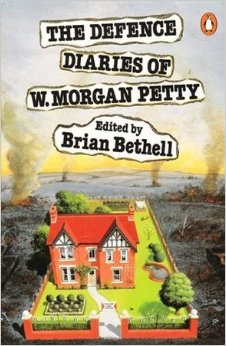
The Defence Diaries of W. Morgan Petty

Friday, April 24th, 2015 | Books

When W. Morgan Petty, resident of 3 Cherry Tree Drive, Canterbury, heard there might be a nuclear war soon, he took the most sensible course he could. He declared his house and gardens a Nuclear Free Zone. With Roger, who helps out in the garden, by his side they set about preparing for the post-nuclear period which his house would of course now survive intact.

It’s very funny and a reasonably-short read so does not get old. However, been set in the 80’s it is now dated and the young people will struggle to get the references more and more.

defence-diaries

Leeds Restaurant Guide, 4th Edition

Friday, April 17th, 2015 | Books, News

It’s been ten months since the last edition of the guide was published, but the drought is over. This edition features 14 brand new reviews and is available now in the Amazon Kindle store.

Added

  • Almost Famous
  • Bem Brasil
  • Bird & Beast
  • Buca di Pizza
  • Bulgogi Grill
  • Bundobust
  • Byron
  • Cabana
  • Griffin Hotel
  • Kerala
  • Meat Liquor
  • Teppan 260
  • Tharavadu
  • The Man Behind The Curtain

Dune

Tuesday, April 14th, 2015 | Books

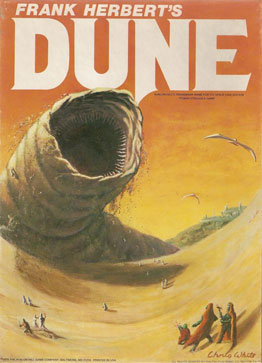
Dune. Arrakis. Desert planet.

Dune is a 1965 novel by Frank Herbert. It is gripping. I usually make it through a novel. It’s rare when I actively seek out extra time to get in reading. However, this was one of those novels. Intricate and interesting, yet not overpoweringly complicated.

It has also aged very well. Despite being 50 years old, it did not sound out-dated. Herbert died in 1986, coincidentally the same year as follow science fiction author L. Ron Hubbard.

It does mean however, that I now have five sequels to add to my reading list.

dune

The Establishment

Tuesday, April 7th, 2015 | Books

Ah Owen Jones, hero of the left. In his book “The Establishment: And how they get away with it” he rails against the man. The man it turns out is politicians, big business and the media. Of course Jones is an Oxford graduate who writes for a national newspaper. It received mixed reviews from the critics (who are also part of The Establishment) but wider support from the proletariat including being Waterstones’ book of the month.

Jones jumps around to various topics, gradually weaving them together. He begins by talking about the links between politicians and big business. Most big businesses have MPs on their boards for example, and cabinet ministers regularly earn £70,000 a year for non-executive directorships. Money that most people can only dream of earning for working full time, let alone for a handful of days year. Being an MP can be incredibly profitable in this manner and yet how can they possibly claim to be objective in such regards?

Thus big business took control of our society after being invited in by Thatcher. This was the end of the drive towards income equality in the UK. They settled down and began to fuse economic liberalism with an authoritarian state.

Jones discusses Hillsborough, though his discussion of the Battle of Orgreave is much more relevant. The police attacked, beat and falsely arrested protestors and then tried to cover it up. After a 7 year battle, they were eventually forced to pay out half a million pounds in compensation. Sadly, things haven’t got much better, as the killing of Ian Tomlinson, a newspaper seller who got caught in the G8 protests shows.

No wonder so many people are too scared to attend protests with the fear of violence, kettling for hours and hours, and false arrest ever present when the police are around.

According to Jones, the police have have become an instrument of the state, going round murdering and raping people without consequence. Their actions rob of us our right to free assembly and protest, and their stop and search powers rob us of our presumption of innocence, even though only 9% of such searches end in arrest, let alone charges being pressed.

So much for the working class being the benefit scroungers too. Jones claims it is the rich that are the beneficiaries of the system. They enjoy the educated workforce, infrastructure and regulated society that the state provides while benefiting from huge government handouts.

The bailout of the banks is an amount of money the rest of us can only dream of. The low pay companies offer the working class is subsides by working tax credits and housing benefit. Companies like ATOS enjoy £100 million a year contracts to turf people off sorely needed benefits while the owners send their children to heavily subsidised public schools that are given £88 million a year in tax-breaks.

Yet the government continues to sell off and privatise our public services. Why? Not because the electorate demand it. Polls show that even most Conservative voters support public ownership of the utilities and railways. More likely, it is the £70,000 a year politicians are receiving for their non-executive board positions.

Jones concludes that we should take back our public services, which could be done at no cost as franchises expire, and increase income tax on the rich to bring in extra money. And it would bring in extra money. Rich people do not leave when you increase the tax rate, because they want to live in a safe and secure society with good utilities, infrastructure and a well-educated workforce. Societies that enjoy heavy state spending.

The Establishment

Just a footnote regarding the book cover above: my copy had a quote from Irvine Welsh on the front, not Russell Brand.

Story of O

Thursday, April 2nd, 2015 | Books

Back before people were brawling in the cinema over Fifty Shades of Grey, or discussing whether Secretary was a story of female-enpowerment, there was Story of O. Originally published under the name Pauline Réage in 1954, it was later revealed to be the work of French journalist Anne Desclos.

Story of O is the tale of a woman who gives herself up to a life of domination, submission and sexual slavery. It is also the name of a hair dresser in Hyde Park. It is unclear why.

On it’s original publication it received a major French literacy prize in the form of Prix des Deux Magots. However, that didn’t stop obscenity charges being brought against the publisher.

Does it represent objectification of women? Quite possibly. However it suffers from the same conundrum that all such stories suffer from – when the woman commits to it consensually, can her own free choice be a form of abuse?

Story of O

Nudge

Sunday, March 29th, 2015 | Books

Nudge: Improving Decisions About Health, Wealth and Happiness is a 2008 book by Richard H. Thaler and Cass R. Sunstein. It looks at choice architecture (that is to say how you present people with choices) and advocates libertarian paternalism in public policy, and beyond.

Libertarian paternalism is the idea that we should let people do what they want, but nudge them in the right direction. The current phasing in of enrolment in private pension schemes is a great example of this. People can opt-out if they wish, but if they no nothing, then a sensible default course is chosen for them, in this case to have a pension.

Another good example of this is organ donation. Should you have an opt-in or opt-out system? Both are libertarian by nature in that they let people choose what they want to do. However, most people do not bother to choose, regardless of whether the default is to donate their organs or not. I’ve blogged about this before.

It begins with a revision lesson on Thinking, Fast and Slow. Anchoring is a real problem for example. You will tend to fill your plate at dinner time, so if you want to eat less and lose weight – use smaller plates.

The book notes that people are human, rather than “econs”. Econs being a term of perfectly rational beings. So there is often a struggle between the planner and the doer in you. Your planner will set the alarm for 7am, but when it comes down to it, you just hit the snooze button.

For this reason, Elina now has an app on her phone that donates to charity every time she hits snooze. As it happens she never hits snooze anyway, but if she did, studies have shown that this small financial incentive would be likely to have a powerful effect.

Once you accept people are not econs, things make a lot more sense. I love credit cards. There are loads of advantages to them. However, I pay the full balance of every month. If you know you do not have enough self-control to do that, seemingly irrational actions like avoiding having one suddenly makes a lot more sense.

There is also the problem that the free market does not always function correctly. It works well for soft drinks. We all drink them regularly, so can tell what is a good product, easily compare them, and choose the best ones. But how about mortgage advisors? We may not see the effects for decades, and we only buy one or two throughout our lifetime so the opportunity for learning is not there. The same is true for healthcare decisions. Also, as we are not expects, that adds an extra layer of difficulty to making sensible decisions.

Because we are human, and have these struggles, the book suggests we should nudge people into doing the most sensible thing, while ultimately giving them the choice to change it if they so wish. Hence an opt-out system for organ donation. By default, people will donate the organs, and the overwhelming majority will leave it at this, while still allowing people to change this if they want to be a completely morally bankrupt dick.

Some of the nudges you can use are incredibly trivial and effective. One of the most amusing being that if you put a fake fly in a urinal, men will aim at it. In fact, they aim so well that it reduces inaccuracy by around 80%.

There are some related topics the book touches on. Stimulus-response compatibility for example. People expect things to be certain way. For example, if you put a handle on a push door, people will pull it. Even if you write pull on it. You could argue it is still there fault, but the human brain is geared up to pull things with handles. Just design a better door.

There are a number of social factors that influence people’s actions too. Priming for example. If you ask people what to do before they do it, they are more likely to actually do it. Though as Matt Cutts notes, if you go out and tell people your goals, that actually makes you less likely to complete them.

People often tend to follow others too – if you tell people the percentage of people that are compliant with their tax returns (which is very high), people are more likely to be honest. This fits with what Michael Shermer argues in that people will only follow society’s rules if they see everyone else is following them too.

Company stock options for employees. These are a terrible idea. I invest in the stock market, but I try to diversify my risk as much as possible. Not only do I use index funds that invest in a broad range of companies, but I invest in a diverse range of these – UK, North America, Europe and the developing world. Yet with company stock options, you don’t just have all your savings in one market – you have them in one company! That is super risky, and if the company goes bust, you lose both your savings and your job. Of course many companies offer incentives to invest, but according to the book, these are only worth 50% of their share price when evaluated – so the incentive better be good or you would be better investing it in the wider stock market.

Thinking, Fast and Slow convinced me that taking our extended warranties and phone insurance was never worth it. I never did anyway, but I always wondered whether I should. Nudge points out this applies to a whole host of other things too: insurance when posting items, a smaller excess on your car insurance or damage waiver on your rental car. They offer these policies because they make money, so if you can stomach the short term loses, avoiding them brings long-term gains.

The book concludes with some ideas for society to consider. One is the privatisation of marriage. They argue that the state could get out of the marriage business and leave it to churches, humanists, etc or even your local diving club to do marriages. They could then be as discriminatory or weird as they wanted. However, they would confer no recognition or benefits from the state. Similarly, the state could recognise civil unions, which were independent of marriage, but allow the state to recognise your relationship.

They also address concerns about the misuse of nudging. Of course, this already happens – the supermarkets do not select which products are at eye level at random. However, the book suggests that a good guideline would be that all nudges should be made public. Auto-enrolment in pensions, for example, is no secret, and has an opt-out, so it is difficult to argue it is anything but beneficial. Employing such a strategy means that the least well-informed people in society are protected while offering the most well informed as much choice as they would like.

Nudge