Posts Tagged ‘psychology’

Man’s Search for Meaning

Friday, December 30th, 2022 | Books

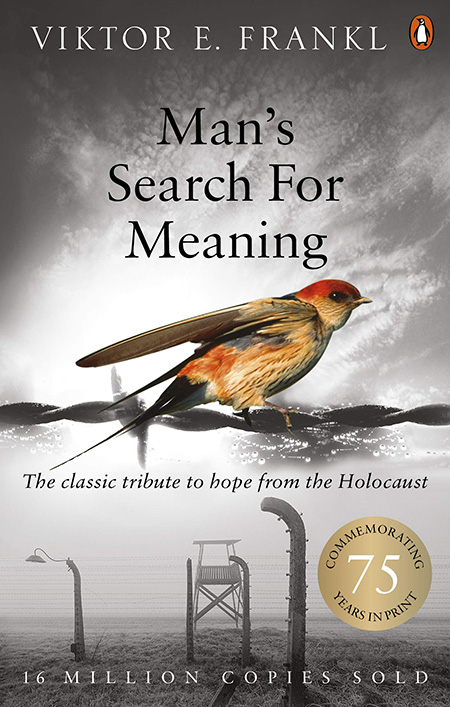
Man’s Search for Meaning is a book by Viktor Frankl. The majority of the book talks about his experience as a Nazi prisoner of war and his experience in the concentration camps.

The second part of the book discusses logotherapy, which is Frankl’s own form of therapy. It is similar to existential therapy and looks to find meaning in life. Life is suffering but if you can find meaning in the suffering, it becomes bearable.

One of the techniques, paradoxical intention encourages clients to do the opposite of what they fear. For example, if you are worried about blushing in public, go out into public and try to blush as much as possible. Similar experiments are often described in modern CBT textbooks.
Cognitive psychology course

Thursday, September 23rd, 2021 | News

Cognitive psychology is the study of mental processes. In this course, we will cover all of the core topics in cognitive psychology including perception, attention, memory, learning, language, decision-making, emotion and much more. We’ll also look at research methods and how neuroscience is allowing us to see inside the brain.

Preview the course on Udemy or watch the trailer below.

Metacognitive Therapy course

Saturday, March 6th, 2021 | News

Metacognitive Therapy (MCT) is an evidence-based psychotherapy looking at cognition. While Cognitive-Behavioural Therapy (CBT) traditionally looks at what we think, MCT looks at how we think. It explores meta-beliefs such as needing to worry to keep ourselves safe, whether change is possible, and whether thoughts can be harmful.

When we understand the neural systems that lead us to engage in these cycles of worry and self-doubt, we can give the client (or ourselves) new processes to avoid engaging in these unhelpful patterns.

Metacognitive Therapy is highly effective at reducing worry and rumination and proven to reduce anxiety, PTSD, OCD and depression. In this course, we will learn what MCT is, how it works, how to use it in practice and how to apply it to each condition.

Preview the course here.

The Chimp Paradox

Thursday, April 23rd, 2020 | Books

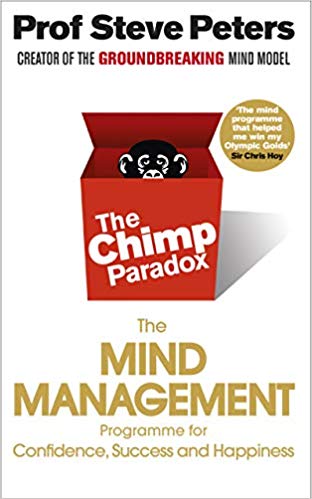
The Chimp Paradox is a book by Dr Steve Peters. In it, he describes his model of the mind as two parts: the chimp, an irrational emotion-driven strong animal, and the human, the higher part of our brain that we often like to pretend is the “real us”.

It is a generalist book in that it is a useful read for anyone, not just those struggling with their own mind, but more of a popular self-help book with applications for every day relationships and problems.

I found it an interesting read, most of the time, but I don’t think I ever made it to the end.

Insomnia and placebos

Friday, July 26th, 2019 | Science

One of the major factors that influence insomnia is emotion and expectation. If you think you should be able to sleep, you are going to struggle. If you have little expectation of sleep, you actually find it easier.

Storms and Nisbett demonstrated this in a study where they gave two groups a placebo. The first group were told they had been given caffeine pills while the second group were told they had been given relaxation pills. The first group found it easy to get to sleep while the second group found it harder.

This came up in a group discussion recently where someone suggested a great tactic for being the effect: try to stay awake. She found that if she stopped trying to sleep and started trying to stay awake, she fell asleep pretty quickly. With the results of the above study, perhaps we should not be suprised.

Masters graduation

Tuesday, July 23rd, 2019 | Life

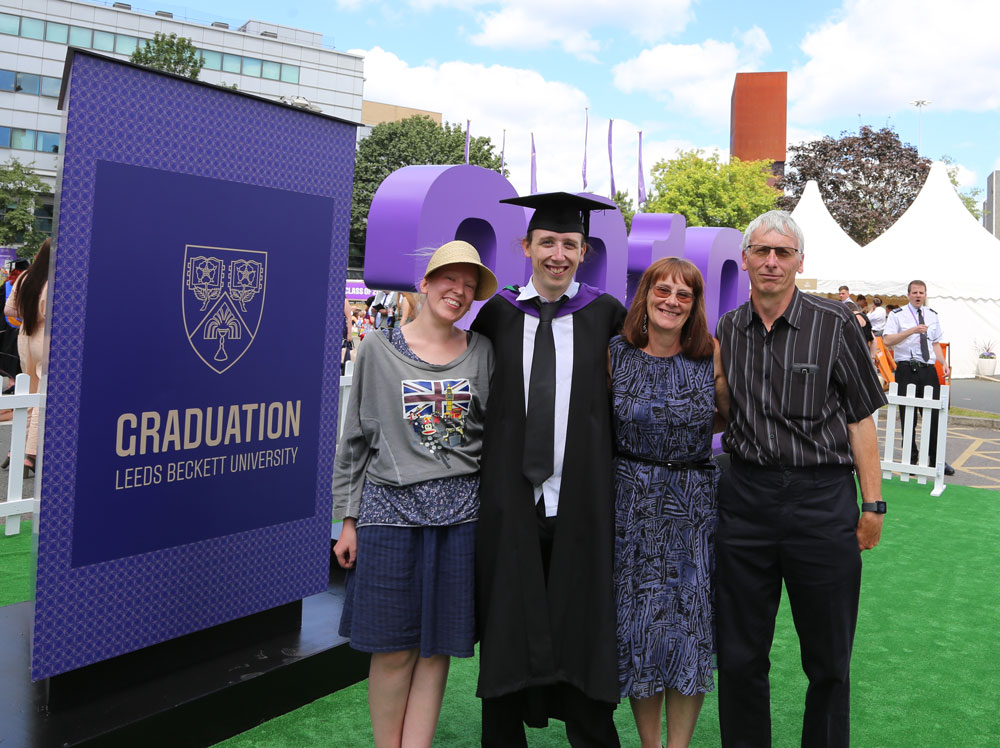
I finished my masters degree last year (with a distinction and 82% in my final project, thanks for asking :D). Because it takes the exam board a few months to award the degree, and then you have to wait for the next set of graduation ceremonies, that meant nearly a year’s wait.

Earlier this month, the day finally arrived.

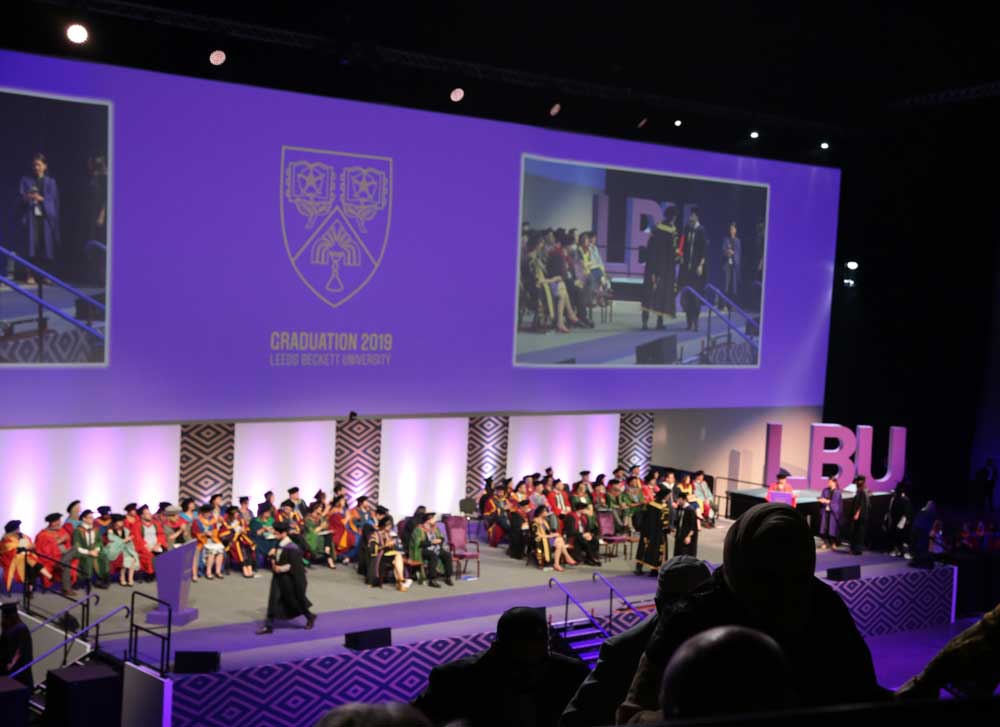
Beckett is currently holding their degree ceremonies at the Leeds Arena. This is not as pretty as the Headingley campus but did mean there were enough seats for everyone. This was critical as it meant I could take Elina and not have to decide which one of my parents I loved the most.

The ceremony itself was long and dull. There were 1,000 students graduating in the same ceremony. Some in absentia, but that still a lot of people. And, because of the way they lay things out, I was almost last. Literally, I was sat next to the three PhD graduands whose presentations are reserved for the end. However, the vice-chancellor did give a good speech at the end.

After the ceremony, we headed over to the Rose Bowl where they had turned the car park into a reception area with some food and drink stalls and places to take photos.

All in all, a nice ceremony, but not a patch on Leeds University. When I graduated for my bachelors, the whole school got together and put on refreshments and all the staff were there to congratulate us. This was very different. It was all run centrally, very busy, expensive, I saw almost nobody from my course because of the size of the group and there was no school-specific stuff or any of the faculty there.

I did get a video, though, including a slow-motion relay:

How do you keep going for 14 hours?

Sunday, June 30th, 2019 | Sport

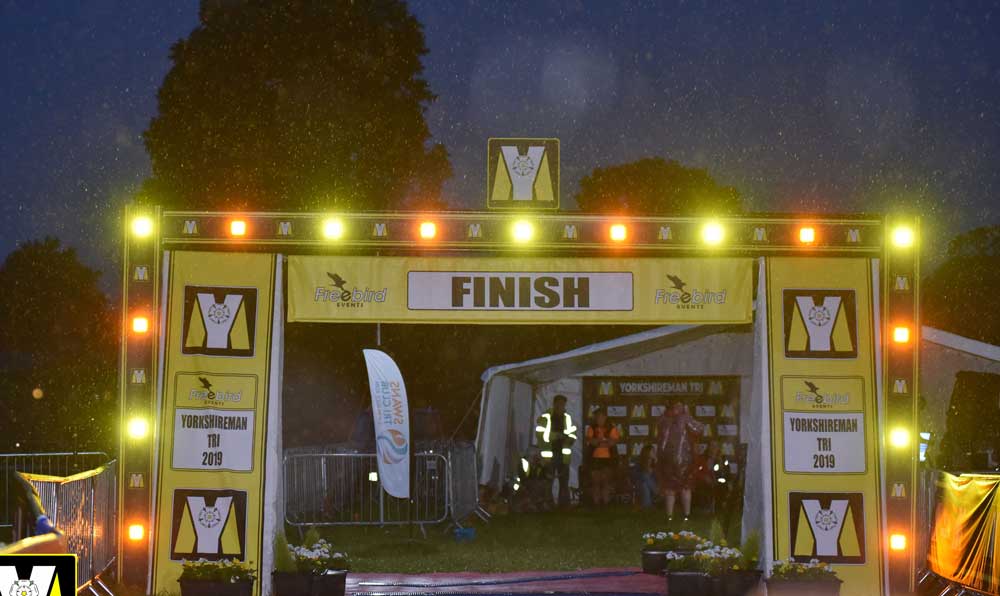
When I tell people that it took me 14.5 hours to complete my full distance triathlon they often ask “how do you keep going for that long?” It might be meant as a rhetorical question. But I’ve some thought into it.

Prepare your body

You need to do the training. Nobody would be surprised if someone did not do the training and failed to finish. It’s not just the volume of training: you need to do some distance work. You need to prepare your body for each discipline because otherwise, you run into things you hadn’t run into.

In the run-up to the event, I did a 4km swim in the pool, a 3km swim in open water, 2 x 100-mile bike rides and a three hour 30km run. Three of them were on back-to-back days.

I think it is important to do this because you hit things you wouldn’t hit in short workouts. Things like cramps. Things like back pain that only sets in in the later hours of the ride.

Prepare your mind

Two things you need to do here:

First, make sure your training gives you the psychological belief that you can do it. Do this by doing hard events. Few people believe they can do a full distance race if they have never done a triathlon. Neither did I. But I did understand I only had to believe in the next step.

I did a sprint. Then a standard. Then a load more standards. Then a half. Even then, it was only after I ran a marathon and an ultramarathon that I started to believe I could do it.

In preparation, I did some long sportives including the Tour de Yorkshire (only 123km but 2,400 metres of climbing) and The Flat 100 (160km). The latter was down as part of a race simulation weekend where I also swam 4km on the day before and a 3-hour run on the day after.

Second, it helps to have some mental strategies to assist you on the day. Mindfulness and self-talk are two of the most important and I teach both of these on my sport psychology course.

Keep eating

Providing you don’t get injured (you did some strength training, right?), the two things that are going to stop you are running out of energy and running out of mental resilience.

Your body cannot convert fat into energy fast enough, so you need to supplement this with food to avoid hitting the wall. Being hungry or dehydrated will also make you grumpy, which will increase your chances of wanting to give up.

Therefore, it is important to keep eating throughout the entire event. I’ve written about my fuelling strategy here.

Pace yourself

As you get more tired and fed up, you may encounter a desire to speed up. You want to get it over with. Do not listen to this voice.

Going above your target pace increases the risk of cramps, increases the risk of hitting the wall and is generally unsustainable, so will produce a slower time overall and maybe even a DNF.

Summary

It’s a marathon, not a sprint. Actually, it’s a marathon plus 112-mile bike ride and 2.4-mile swim. So, take it easy, keep eating, and make sure you have spent the time building up your muscles and building up your confidence.

Introduction to Social Psychology course

Saturday, April 27th, 2019 | News

I’ve launched a new course on social psychology. Here is the blurb:

Do you want to better understand the people around you? Why they think and act as they do? Maybe you have noticed people don’t always act rationally and are wondering why.

These are the questions that social psychology answers. It looks at how other people, groups, and wider society shape the way we think and behave.

It is an academic overview, but presented in a fun way with real-world examples, like what we can learn from climate change, elections, and even online dating.

And here is the trailer:

You can check it out on Udemy here.

Dissertation

Saturday, September 15th, 2018 | Life

It’s in. After a year of hard work on the MSc programme, including nine months working on the research project, my dissertation has been submitted. Now begins a two month wait for the results.

Why do video assistant referees wear full uniform?

Wednesday, June 27th, 2018 | Sport, Thoughts

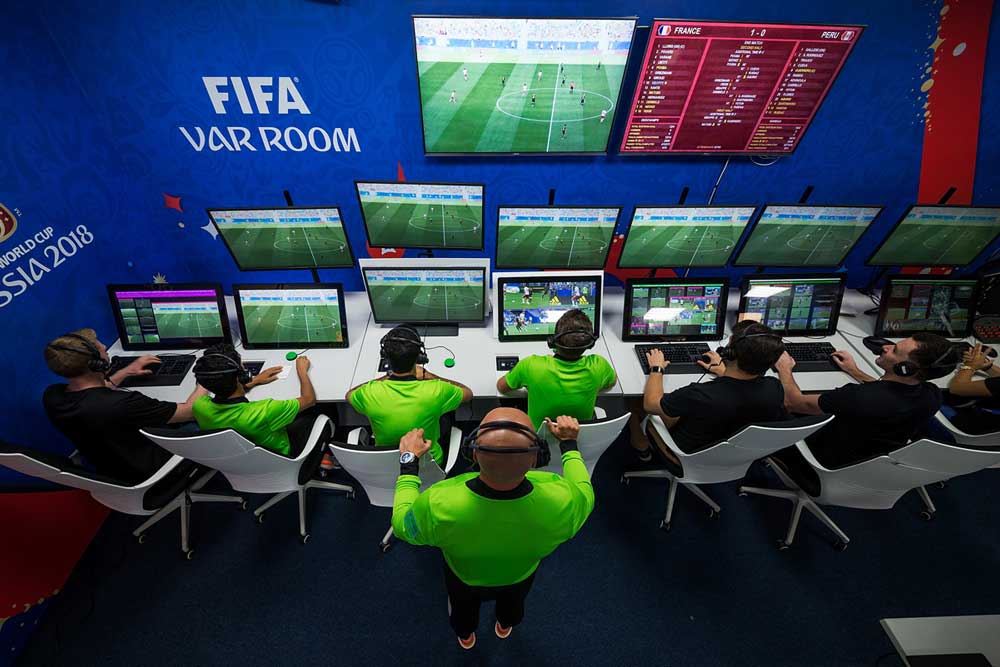
If you’ve been watching the World Cup, you may well have seen inside FIFA’s VAR (video assistance referee) control centre. Here a team of officials sit watching computer monitors so that they can double-check the on-pitch referee’s decisions in case they have missed something obvious.

You may have also noticed they are wearing full referee’s kit.

Why? You could argue that as they are set in a control centre in Moscow, sometimes 1,000 kilometres away from where the game is happening, there is little need for a dress code. Or, at least, little need for one that stipulates the traditional outfit of a referee.

But here are two reasons why it is better to wear the kit.

First, it puts them in the right frame of mind. Refereeing is a difficult job. You have to be impartial and fair. You have to make decisions that are difficult: did he use his arm to his advantage or was it a genuine accident that the ball struck him there? Is that fair wrestling for the ball or a foul? These are grey areas that often have no obvious correct answer.

In sport psychology, we talk about getting in the right mindset. When you are doing mental imagery/visualisation exercises, for example, the best thing to do is get the athlete to put their kit on and go to the field where they will play. It makes it more real.

If you want to make a VAR feel like they are on the pitch, making real game decisions, which they are, stipulating that they wear their usual refereeing kit is a great place to start.

Second, it gives them legitimacy. Systems like VAR are always going to get criticised for the mistakes they make and ignored for the many times they get things correct. It is easy for fans to look at them as bureaucrats tucked away in a tiny box, thousands of miles away from the action, and vilify them for any decisions they don’t like.

This concern is why they replay the footage that the VAR officials are watching and the superimposed lines showing how they make decisions about whether someone is offside or not.

Similarly, by putting the officials in full kit, it shows the fans that these are real referees doing a legitimate refereeing job. Thus, it makes it easier for fans to accept adverse decisions.