Posts Tagged ‘psychology’

Chartered status

Tuesday, September 30th, 2025 | Life

I’m excited to share that I’m now a Chartered Psychologist with the British Psychological Society.

I’ve been in psychology for many years, and chartership is something we work towards over the course of our careers. It’s nice to hit that milestone. Of course, I’m still the same person I was yesterday – just now with a few extra letters and a slightly longer email signature.

The Assertiveness Workbook

Friday, August 1st, 2025 | Books

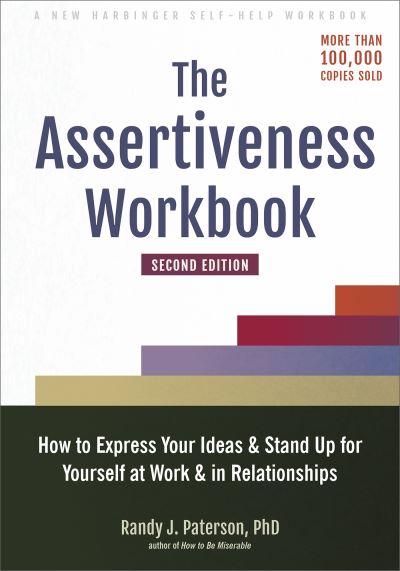
The Assertiveness Workbook: How to Express Your Ideas and Stand Up for Yourself at Work and in Relationships is a book by Randy Paterson.

It’s written as a self-help book but makes for an accessible read for clinicians, too. The book begins by describing different types of communication and how they differ from assertiveness communication. It then breaks down specific topics such as giving compliments, giving and receiving feedback, saying no and handling confrontations.

The Power Threat Meaning Framework

Saturday, July 26th, 2025 | Books

Our current system of understanding mental health is typically based around psychiatric diagnosis. You go to your doctor and your doctor gives you a label like “social anxiety disorder” or “borderline personality disorder”. These labels are, on the whole, stigmatising and unhelpful.

Worse, they are not grounded in evidence-based medicine. After a hundred years of lookng, we cannot find the biomarkers for mental illness. Depressed people do not have lower serotonin, for example. Nor are there genetic markers. As far as we can tell (and research has been well-funded and plentiful), mental health issues are not an “illness” in the traditional medical sense.

So then we say “okay but they are functional”. Something happens to someone which activates underlying vulnerabilities and they develop social anxiety. But this does not hold up, either. There are no clear pathways of things that trigger specific labels (the everything causes everything problem) and the majority of service users meet the criteria for multiple labels (the everyone suffers from everything problem).

As a result, we don’t know what causes any of these labels (no biomarkers or pathways), what they look like (people’s symptoms transcend multiple labels) or what to do about it: most first line treatments like anti-depressants or single-diagnostic CBT seems to make things worse.

Much of psychology already recognises this problem and has suggested dropping the word “disorder” and changing the question from “what is wrong with you?” to “what has happened to you?” Trauma-informed approaches are opening up a much greater scope for what counts as trauma.

The Power Threat Meaning Framework goes beyond that. It asks how power been used in someone’s life (think oppression), what threat that created, what meaning the person made of it and what threat responses were activated. It suggests that all troubling experiences and behaviour, from mild anxiety and depression, to hearing voices, self-harm and eating disorders, can be understood from this perspective.

It also suggests that all behaviour is on a continuum, from “normal” to “clinical”. This is important because while some critics might agree mild anxiety is part of normal human experience, they often bawk at the idea that hearing voices or dissociation is typical. Even though most people regularly “zone out” (dissociate) on a regular basis.

The PTM Framework offers what it calls a general foundational pattern and seven provisional general patterns. These allow us to explore useful patterns without detracting from an individual’s personal narrative.

  • Identities
  • Surviving rejection, entrapment, and invalidation
  • Surviving disrupted attachments and adversities in care
  • Surviving separation and identity confusion
  • Surviving defeat, entrapment, disconnection and loss
  • Surviving social exclusion, shame, and coercive power
  • Surviving single threats

The PTM Framework is a contribution to the movement away from psychiatric diagnosis which still has much work to do, and the document acknowledges this.

But we are already seeing improvements. Many services, such as educational support and some NHS mental health services, look at individual need rather than labels and many have switched away from using disorder-specific measures to general outcome measures.

I don’t claim to have done justice to this document in any way in this blog post. You should go read it; it’s fantastic, if quite a technical read.

Sedated

Friday, July 11th, 2025 | Books

Sedated: How Modern Capitalism Created our Mental Health Crisis is a book by James Davies discussing the rise in use of psychiatric diagnosis and antidepressant prescribing.

Davies charts the rise of the DSM, Diagnostic and Statistical Manual of Mental Disorders, which is the standard textbook for psychiatric diagnosis. Now on the revision of its fifth edition, the DSM has massively expanded over the decades to include ever more labels. These labels have no biological basis and are generally the consensus of small committees many of whom have financial links to the pharmaceutical industry.

The author then goes on to connect this to the rise of neoliberalism. As Thatcher dismantled trade unions, increased inequality and reduced working-class people’s quality of life, something was needed to explain this suffering that depoliticised and managed that suffering. The answer was labelling people as mentally ill.

Today, if you are sad because your zero-hours contract means you both have a job and still need to rely on food banks, it is not because of inequality it is because you have an anxiety disorder, or a depressive disorder. It is you, the individual, that is broken, and not that you are living in an unfair society, or so the biomedical model of mental illness would have us believe. And wouldn’t you know it, uber-capitalism can sell us the solution in the form of some antidepressants or a course of CBT.

Some people do find labels helpful. But currently, this is the only lens we are using. And often, the only solution is antidepressants, or if you are lucky some non-trauma-informed CBT.

Thus, mental health has been redefined to conform to the needs of uber-capitalism. Someone who is “mentally well” is someone who can work. IAPT was explicitly set up with the idea of getting people back to work. And programmes like mental health at work initiatives or Mental Health First Aid try to teach us that we should find new ways to handle the suffering caused by low wages, lack of job security and 24/7 work stress.

Work can be meaningful and promote self-esteem. But many jobs today do not provide any dignity. 10% of nurses are using food banks. People are being forced into the gig economy never sure if they will get a pay cheque. People work in warehouses that are gutting their local high street while their bathroom breaks are timed.

Crucially, everybody suffers. Even those with well-paid jobs find themselves lacking meaning and social connectedness. So we try to fix it by buying more stuff. This creates a cycle of consumerism, and then having to invest in security systems and increased policing to protect our stuff, and that in turn divides communities further.

So, what do we do about all of this?

First, we need a model of mental health that targets the root causes: inequality and social isolation. Putting more money into training counsellors will not help because individual distress is a symptom of wider social problems and not something that can be fixed in itself.

Second, we need a wellbeing economy. We need a form of capitalism that works for the benefits of individuals, not for the benefit of capitalism itself. A good start would be undoing the harms of deregulation and rebuilding trade unions to move away from uber-capitalism to more balanced social democracy. This is the exact model that operates in Nordic countries who have the highest quality of life.

The Female Profile of Autism

Monday, June 16th, 2025 | Books

The Female Profile of Autism: A Guide to Clinical Assessment is a book by Isabelle Hénault and Annyck?Martin. It suggests its intended audience is both clinical professionals and autistic women looking to understand how autism presents in women and what the assessment process looks like.

It has three parts. The first talks about autistic experience in the third person. The second is a narrative written by Martin about her experience of discovering she is autistic. Part three is some guidelines for clinical assessment.

I wasn’t too sure what to make of the book. There is clearly a lot of relevant clinical experience here. But is it neuroaffirmative? I’m not sure. It’s not medical model but it’s not the language I would expect to see in a new book. However, it was written in French and then translated to English, so it is fair to say some of the language may have got off point in translation.

It also leverages the work of Tony Attwood a lot. Now, Tony Attwood is a legitimate bigwig with his own Wikipedia page. But some of the language is like “and the magnificant Tony Attwood says…” as if he is the Wizard of Oz. Maybe he is; I’ve not met him. But I would like a clinical book to reference research and integrate ideas a little more. And again, maybe some of this is the translation.

The assessment guide provides a lot of useful questions. I would tweak the language to pathologise a little less, but the questions hit on the relevant issues. Overall, I would say this is a useful book for clinicians working with autistic women and girls.

Counselling Adolescents: The Proactive Approach

Friday, April 26th, 2024 | Books

Counselling Adolescents: The Proactive Approach is a textbook on youth counselling by Geldard & Geldard. It’s one of the classic textbooks on counselling young people.

It’s an interegrative counselling philosophy. There are bits of SFBT, Person-Centred, Transactional Analysis, psychodynamic and behavioural approaches in here. It’s also a little dated but not out-of-date. That said, I didn’t find it quite as useful as many of my colleagues have.

Love’s Executioner

Tuesday, January 24th, 2023 | Books

Love’s Executioner and Other Tales of Psychotherapy is a book by Irvin Yalom. It presents ten cases from his work as a psychiatrist in story form.

By story form, I mean it is written as a narrative. Each case is based on a real client and their real story, but many of the details have been changed to protect their identities. Yalom writes in a compelling way that attempt to teach psychologists something but has also earned the book a great deal of popularity with the general public and would be highly accessible to everyone who wants to read some interesting stories.

None more so than the story from which the book takes its title, Love’s Executioner, which almost reads like a thrilling Agatha Christie mystery. For me, none of the other stories quite matched the first but each was interesting and I was excited to pick up the book each time.

The Body Keeps the Score

Tuesday, January 10th, 2023 | Books

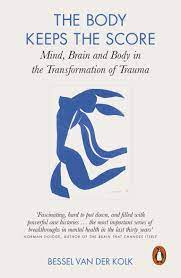
The Body Keeps the Score is a book on trauma by Bessel van der Kolk. van der Kolk makes the case that trauma is the most pressing public health crisis. It is everywhere, affects a huge number of people and is the number one treatable condition that can improve people’s mental health, give millions of people a chance to live a better life and reduce intergenerational abuse.

He discusses both PTSD, which occurs when someone experiences a traumatic event or events as adults, and childhood trauma, which affects the individual’s development, attachment style and ability to form relationships. Memories of the event(s) are often frozen in time with the individual unable to process it. By process, we’re talking about our ability to form a coherent narrative, with closure, that allows the memory to fade into the background and allow us to move on with our lives even if the scars remain.

He discusses the limitations of talking therapy, though somewhat focusing on CBT over more humanistic approaches, and explores what other evidence-based approaches may work. Notably EMDR, but given the need to physically rewrite the body, also the possibility of using yoga, theatre and other lived-out approaches.

The Coddling of the American Mind

Thursday, January 5th, 2023 | Books

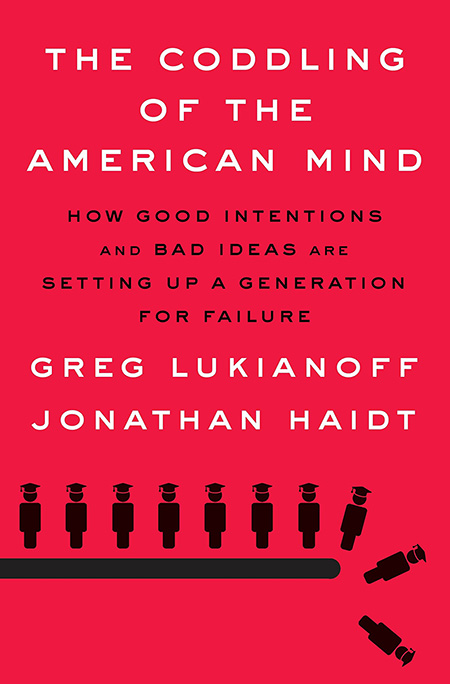
The Coddling of the American Mind is a book by Greg Lukianoff and Jonathan Haidt. It makes the case that people are “anti-fragile” and that by protecting people from ideas they disagree with, we are actually doing them harm.

The book focuses on the limitations of free speech being introduced across university campuses and the idea that everyone should feel safe. This is antithetical to the way CBT works. If a client comes to therapy and says “I don’t feel safe because I think I will be killed by a tiger” we would look for the evidence around how many tigers live in their local area and whether they typically attack humans. But on many university campuses, and wider society, people are using the idea of “feeling unsafe” to try and shut down freedom of speech. This is bad foe society but also for the individual because we amplify their anxiety.

The book also argues that it creates divisions in society. It argues that teaching things like micro-aggressions and consent workshops is currently done on the basis of negatively, encouraging people to give the least charitable rather than most charitable interpretation of ambiguous actions and therefore creating a negative interpretation bias (which again is something we would try to do the opposite of in therapy).

It also touches on the idea of trigger warnings. Again, in therapy, we would typically talk about how avoidance can be a maintaining factor in mental health problems. Removing avoidance in the safety of a therapeutic alliance is somewhat different to randomly doing it in real life, but it should at least give us a moment to stop and pause and consider how many of the strategies we think are helping people are actually making things worse.

The arguments and nuances in this book are complex and it is not possible for me to do it justice in this blog post. But I would encourage you to read the book yourself because it would be fascinating to hear other informed opinions on it.

Man’s Search for Meaning

Friday, December 30th, 2022 | Books

Man’s Search for Meaning is a book by Viktor Frankl. The majority of the book talks about his experience as a Nazi prisoner of war and his experience in the concentration camps.

The second part of the book discusses logotherapy, which is Frankl’s own form of therapy. It is similar to existential therapy and looks to find meaning in life. Life is suffering but if you can find meaning in the suffering, it becomes bearable.

One of the techniques, paradoxical intention encourages clients to do the opposite of what they fear. For example, if you are worried about blushing in public, go out into public and try to blush as much as possible. Similar experiments are often described in modern CBT textbooks.