Archive for the ‘Books’ Category

The Shepherd’s Crown

Monday, December 7th, 2015 | Books

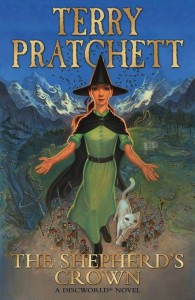
So this is it then, the final Pratchett novel. Worse, it’s a Tiffany Aching novel.

Pratchett comes out swinging for his final work. Perhaps it was his last chance to do something big, or perhaps he was trying to claw back readers from the popularity of George R. R. Martin, but I did not expect it to stat that way.

I did find a surprisingly amount of enjoyment in the book though. I have never been an Aching fan, but this was quite a good one. A nice way to go out on.

the-shepherds-crown

Simply English

Monday, November 30th, 2015 | Books

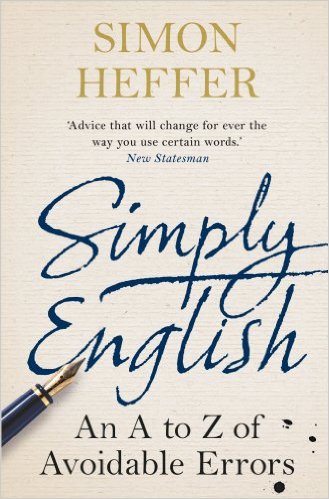
Simply English: An A-Z of Avoidable Errors is Simon Heffer’s second book on grammar.

It is a very interesting read. Approximately half the content I already knew, but it was a good refresher on that. Other issues it clarified or corrected me on. It literally is an A to Z of words and how they should be used correctly, and how they are often misused.

He frequently talks about the pedants. A group that he does not seem to include himself in. This seems strange given he has written two books on grammar. I agree that it was a sorry mistake for a leading national newspaper to misspell blackguard, but cataloging the date on which it was published strikes me as obsessive.

He does approve of the verb ‘to text’ though. I am glad, because as Heffer correctly points out, there can be little rational objection to it. However, he does like to reminder the reader on a regular basis that he is down with it.

Some of the content is rather elitist. Formally addressing a baron, for example. Am I ever going to use that? It feels like space that could have been put to better use. There was no entry on ‘troll’ for example, even though people frequently use the verb incorrectly.

I think the book will have a positive impact on my use of English. I have learnt some things already, and see it as a valuable reference for when I am writing in the future.

Simply-English

Robot Dreams

Sunday, November 29th, 2015 | Books

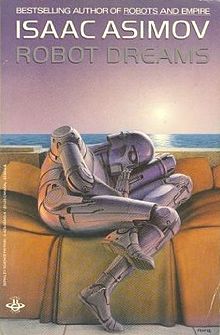
Robot Dreams is a compilation of short stories by Isaac Asimov. It contains a mixture of his work, including the robot series, but also the multivac series, and unrelated science fiction stories. A few I had already read in The Complete Robot but most were new to me.

I think I enjoyed the book slightly more than The Complete Robot as a lot of the stories felt more polished. Overall, I remain more a fan of his full-length novels than his short stories, though both are good.

The story the book is named after, Robot Dreams is actually one of the worst stories in the book, in my opinion. There does not seem to be a satisfactory motive or conclusion to it.

RobotDreams

A Dance with Dragons (Part One)

Saturday, November 14th, 2015 | Books

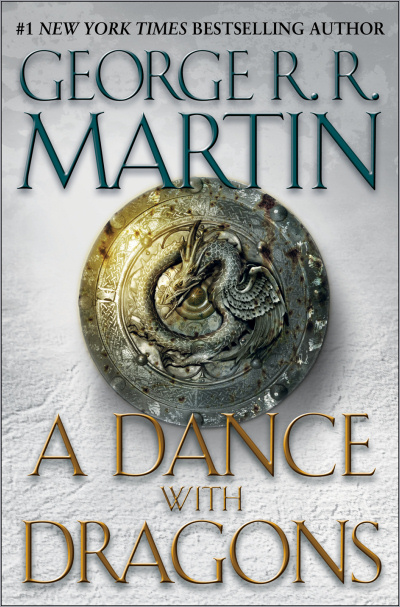
A Dance with Dragons is the 5th novel in George R. R. Martin’s A Song of Ice and Fire series.

I am in two minds about it. Some of it, especially at the start is just confusing. Sam is back at The Wall and being sent to Old Town. I don’t know why as he left in A Feast of Crows. Maybe I missed the sentence that said “Jon Snow had a flashback”, but having talked it over with friends I am not the only one to have suffered déjà vu. Davos too, though this is latter explained.

On the other hand, it feels like quite a bit actually happens in this book. Which is unusual for a book of this series which can often go for hundreds of pages without much happening. I think i like it this way.

A Dance with Dragons

A Billion Wicked Thoughts

Friday, November 13th, 2015 | Books

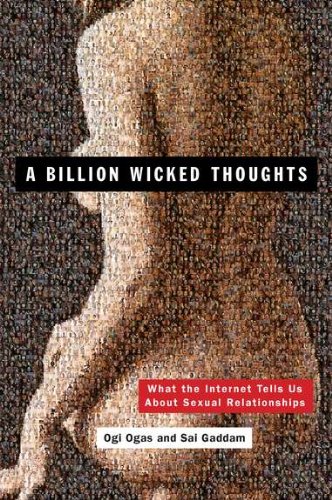
A Billion Wicked Thoughts: What the Internet Tells Us About Sexual Relationships is a book by Ogi Ogas and Sai Gaddam looking at sexuality.

This has been a subject that has traditionally been difficult to study. Sex, especially kinky sex, is a taboo to some extent in most cultures, and so people do not discuss it openly. You cannot see what porn people are purchasing by looking at the supermarket. Even on questionnaires, people might not believe it is really as anonymous as it claims to be, and will lie.

Luckily though, the past few decade have seen the triumphant rise of the internet. Now people can search for whatever they like in the privacy of their own home. They are no longer constrained by social taboos because they can turn their browser to porn mode and happily search for Vietnamese midgets shitting in a bucket without it leaving an traceable history.

So what do billions of internet logs tell us about sexuality?

Mostly that people conform to gender stereotypes.

At this point, let me say that I am going to lay out what the books says in broad terms. The caveat is that any stereotype has some outliers, possibly many. Women can like porn. Men can like romance. We are dealing with statistics only and to tar one individual with any one giant brush would be silly. Please insert this thought into the start of every sentence. Onwards…

Men like porn. For them the goal is the organum as once they have shot their seed, their job is done. They are willing to pay for it. 98% of online porn purchasers are men. In fact women buy porn so rarely that if some payment processors automatically flag any card with a woman’s name as fraud.

Women on the other hand like romance. Their brain functions as a detective agency as the book describes it. Carefully considering men because they have to deal with the consequences of getting pregnant. They want to imagine a tough alpha male who falls for them, and only for them, so they can live happily ever after.

Men experience high corrolation between mental and physical arousal. If our junk is excite, we feel excited. But women don’t have this. You can stimulate a woman’s body, but unless you stimulate her mind as well, she isn’t into it. A deeply serious example of this is rape. Women’s bodies can become aroused during being raped and some wrongly assume this implies a level of consent. It does not.

Another example is viagra. This works for men because if you can get the blood flowing through your member, you get aroused. But for women, with the decoupled physical and emotional states, it does not have the same effect.

Gay men on the whole have a male brain. It likes the same thing straight men like – watching porn, aiming for the ejaculation. It is no more interested in romance than the straight’s man brain. The only difference is that gay men are attracted to masculinity rather than femininity. Ironically this leads many gay men to be attracted to straight men, gay for pay porn stars, because shagging women is associated with being masculine.

Whether you are gay or straight could be influenced by testosterone. Interestingly, it is gay men who seem to have more of it. The average length of a straight guy’s penis is 5.99 inches, for a gay man it is 6.32 – a third of an inch longer.

Men’s sexual cues are probably imprinted during their teenage years and cannot be changed easily. So if you get off on being tied up, you’re going to feel that way your whole life. Men get aroused by unconditioned responses such as looking at breasts, but it is difficult to condition a response into them. Pavlov might be able to make a man salivate, but he can’t trigger a full erection.

This brings up interesting points for equality. For example, it has long been believed that society conditions the idea that promiscuous men are “players” whereas promiscuous women are “sluts”. But the evidence suggests this is wrong. We are naturally wired to feel this way because the most successful males (in terms of reproduction, the only scoresheet nature uses) are the ones that sleep with the most women whereas the most successfully women are those that only sleep with, and therefore get pregnant by, the most successfully socially-dominant males.

Nowadays we do not have to worry about this, of course, thanks to the wide availability of contraception. But we are hard wired to feel this way. If anything, society reduces the objectification and shaming of women by socially conditioning us away from our baser instincts. Much like how society actually reduces rape and violence, as Steven Pinker points out.

As Noreena Hertz points out in Eyes Wide Open we’re all wired to be a bit racist, and it is up to us as intelligent people to battle our biases. Similarly, we’re all a bit sexist, so we shouldn’t feel guilty for how we are made. We should still strive for a fair and equal society though, knowing we have biases to overcome.

In summary, human sexuality is incredibly complex on an individual level. Statistically, though, a lot of us are wired to like similar things, and so long may the internet be filled with porn, and romance stories. Browse whichever makes you happy.
A Billion Wicked Thoughts

50 Psychology Ideas You Really Need to Know

Saturday, November 7th, 2015 | Books

Part of the “50 Ideas You Really Need to Know” series apparently, this book by Adrian Furnham breaks down into 50 4-page sections giving a quick introduction to various concepts in psychology.

It is not available on eBook format, so I had to get the print.

It was pretty rubbish. I was sold on the title really need, but that is not the case. It contained a lot of stuff on abnormal psychology and concepts that were irrelevant to me. I do not need to know that stuff; I need to know about psychological biases that affect my everyday life – the kind of stuff Kahneman writes about. So when I took a quick look at it and saw “Gambler’s Fallacy” I thought it would be a good revision book. It was not.

The stuff that was in there was interesting, but I knew most of it.

There was some useful knowledge, or at least reminders in there though. Happiness tends to return to the base level regardless of what happens. Good to know if you are worried something awful will happen and leave you less happy than you are now.

In general, the summations of a topic were excellent. IQ for example strongly matches up with what Ritchie says in his recent book Intelligence: All That Matters. There is also an interesting discussion regarding the Flynn effect – do we get worse at problem-solving as we age, or are we simply comparing people to younger generations, who are constantly gaining IQ?

It also rubbishes multiple intelligences (which do not exist), though the “condensed idea” which is a one-line summary for each section says there may be multiple intelligences. I assume this was summing up the idea that it then rubbished, but it was rather confusing.

Furnham does not shy away from controversy either. One section discusses the differences in standard deviation and average IQ of both gender and racial groups. It’s all evidence-based of course, but can often be a taboo subject nonetheless.

Other points that perked my interest was that everybody dreams. Even if you don’t think you do, it means you just don’t remember them – they almost certainly do happen. Also, group brainstorming can be less productive than working individually because people are embarrassed to put their ideas forward or like to free-ride along.

Ultimately, I do not think I would recommend this book, because the material in it is just not useful enough.

50-ideas-psychology

Robots and Empire

Friday, November 6th, 2015 | Books

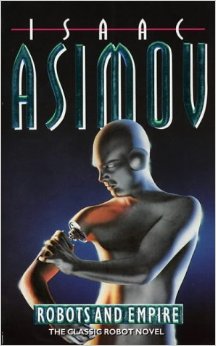
Robots and Empire is the forth full-length novel in Isaac Asimov’s Robot series. It is set hundreds of years after The Robots of Dawn and so I assumed it would be more about the creation of the Galactic Empire.

It was in some respects but was mostly another adventure of Daneel, Giskard and Gladia, who has a spacer was still alive even after all this time.

I was originally going to get it as an audiobook, but just before I did, it mysteriously disappeared from the Downpour store. Almost as if someone was removing references to Earth from the Galactic Library…

Robots and  Empire

Optimal Cupid

Thursday, November 5th, 2015 | Books

Optimal Cupid: Mastering the Hidden Logic of OkCupid is a book by Christopher McKinlay analysing the online dating site OkCupid.

He scraped the site to get data on thousands of profiles and then analysed the data so that he could build the ideal profile. He claims it worked for him, going on 88 dates in three months and is now engaged.

That is all very interesting, although it was not what I was hoping for when I read the book. I bought it thinking it would be an interesting insight into OkCupid, how they do stuff and what interesting information we can glean from a large dataset. That’s not the case at all, it is simply an analysis from a user’s perspective.

It is also a very short book. I polished the whole thing off one evening as a bit of light reading in bed. It will take you maybe an hour, maybe only half to finish it and I have no idea who the foreword is written by, but it feels like he just asked a friend to write a two page ramble.

Therefore I would not recommend the book to anyone, unless finding dates on OkCupid is your last salvation for happiness.

I did apply some of the ideas he suggested to my own OkCupid profile however, so it will be interesting to see if anything comes of it. Seems unlikely though given my profile is very clear that I am happy married and only interested in platonic friendship…

optimal-cupid

Happiness By Design

Friday, October 30th, 2015 | Books

I had not heard of the book Happiness By Design when I passed it in Waterstones. However, my eyes were drawn to it by a quote from Daniel Kahneman on the front. When I found out Kahneman had also written the forward I decided it was not worth spending any more time figuring out whether it was worth reading and just assume that it was.

The author turned out to be Paul Dolan, a British academic who studies positive psychology. He says that happiness is what you pay attention to. It is essentially the combined total of pleasure and purpose over time.

Both of these contribute to your happiness, so you can do something pleasurable but not purposeful such as watching TV, or you can do something purposeful but not pleasurable such as going to work. Ideally, you would do something that is both pleasurable and purposeful such as volunteering, and not do things which are neither pleasurable nor purposeful, such as commuting.

He also suggests you maintain a balance between these. If you life is all pleasure you would probably be happier if you occasionally did something useful. Equally, if your life is all purpose, go the other way.

This is particularly important in middle age when people experience the least amount of happiness in their lives. This is possibly due to high expectations of this being the top of the bell curve in your life. Having kids is at best neutral on your happiness, though it does add purpose.

Your job is an important contributor to your happiness. The most rewarding jobs are ones who get to see the benefits of their work – florists, gardeners, hairdressers. In contrast working in IT is one of the least rewarding things you can do, second only to being in banking.

There is some interesting related psychology in there too. For example, doing more exercise can often lead to weight gain (and not just from converting fat into muscle). Doing something positive allows you to think “I have earned this treat” even though the exercise does not even cancel out the treat, so you end up piling the pounds on.

Also a reduced sense of smell can lead to a poorer diet. As something with a below average sense of smell, I would be interested in reading further in this.

The summary of the book is that happiness is what you pay attention to, so pay attention to things that make you happy. These are things that contain pleasure, or purpose, or both. And do not put off having all your jam today in favour of having jam tomorrow because once you have lost it, recovering it is pretty much impossible.

Happiness-by-design

Compelling People

Saturday, October 24th, 2015 | Books

Compelling People: The Hidden Qualities That Make Us Influential is a book by John Neffinger and Matthew Kohut. It looks at what makes particular people, such as state leaders, the persuasive and charismatic people they are.

It claims to draw on the latest scientific evidence, though there do not seem to be any inline citations and the authors are writers and coaches rather than academics. That does not mean there is no good stuff in here – it is just difficult to know.

They put forward the idea that a charismatic person is one who projects strength and warmth. Strength is the ability to get stuff done and warmth is the ability to share someone’s feelings. The top leaders are able to do both.

Stereotypes play a role. Men are seen as stronger whereas women are seen as warmer. Luckily though, character is more important than physical characteristics, so you can soon overwrite these biases.

Lots of little clues project strength. Having your hands in fists or out flat. Vocally, be direct, sure of yourself, and avoid being too polite. In men, a low voice is strong and attractive. You can use method activating to set the tone of the conversation. For example, when I am reviewing restaurant food, I like pretend I am Paul Hollywood, and it makes it a lot easier to say blunt and honest things.

You can apply these things in your prep. Lets say for example that you are about to give a speech. As you prepare to go on stage, ensure you stand tall and smile. This will carry through into the presentation.

Another kind of strength is sated strength. This is when you’re so strong you don’t need to show it. Picture Steve Jobs for example, spread out of a couch, not giving a shit about what anyone thinks because he is the head of Apple. This is a world away from the sharp-suited kind of strength, but rather displays strength in a warm and casual way. It can backfire though – think Mark Zuckerberg turning up at his investor meetings in a hoodie and trainers. People began to question his leadership.

Similarly, different things project warmth. Tilting your head to the side. If you have a local accent, that can help project genuineness. Warmth is very easy to lose so be careful. To maintain trust ensure you do not lean away, cross your arms or touch your face.

Clothing can be a mine field too. Generally smart black clothing presents strength and casual white clothing projects warmth. However, clothing also affects how you feel, so if you want to feel confident and strong, a suit may not be the best play if you feel uncomfortable in it.

Smiling is important. You have to do it right. There is a big difference between a fake smile and a Duchenne smile, which involves using your whole face. Smiling makes other people smile, which makes them feel happy.

They also touch on a few areas that are controversial, public-speaking wise. They recommend using the magic ball hand position (put your hands as if you are cradling a ball around your belly button). I often get told off for this at Toastmasters. Similarly, we discourage the use of filler words. Neffinger and Kohut point out that they have their place as it signals to the audience you are not done.

When it is time to apply the persuasion, you need to identify with your audience and emphasise with them. The trick is to get yourself inside an imaginary circle with them, and get the opposition on the outside. Obama is very good at this when talking about gun control. He acknowledges that people have the right to bare arms (a nod to the opposition) before pointing out that responsible gun owners support him in some controls (get everyone inside the circle) and it is just the NRA that want everyone carrying automatic weapons (push the opposition outside).

The old saying “ask for money, get advice; ask for advice, get money” is also relevant. By deferring to people and making them feel important and knowledgeable, you are more likely to win their support. In contrast, once you begin having an argument with someone, persuasion ends.

Two topics the book ends with are both nice examples. The first is “it is a leader’s responsibly to define reality”. This came across strongly in Walter Isaacson’s biograpbhy of Steve Jobs. Jobs redefined the industry by insisting it would be that way. Of course you can argue that people like Dennis Ritchie were doing actually useful things while Jobs was churning out over-priced junk. But Mac, iTunes and the iPhone have shaped our society.

On a more local example, the entire committee laughed when I said were going to put on a week-long event in a marquee for Atheist Society despite having only been running for a few months. But just six weeks later we did it. Reality is malleable when you have the determination to see it through.

Finally, the most important message of the book is “be worth of being looked up to”. If you want to be someone people think is a caring, determined, hard-working leader then the best way to achieve that is to be a caring, determined, hard-working leader. The rest is just dressing.

compelling-people