Chris Worfolk's Blog


The Everything Store

January 28th, 2016 | Books

The Everything Store is a biography of Amazon and Jeff Bezos. It is written by Brad Stone.

It discusses Walter Isaacson’s Steve Jobs biography and it is easy to make comparisons between the two. Both seem demanding people to work out. IN fact, Bezos more so. Life at Amazon is painted as relentless. Bezos speaks out against work-life balance and seems to work every employee into the ground. I think I have come away being put off by the idea of working for Amazon.

This is an interesting contrast to Netflix. They claim they don’t care how long employees are in he office for as long as they do good work. How true that is in practice I am not sure though it is true that they do not track the amount of holiday staff take (you can take as much as you want), which suggests they do have a relaxed policy. Netflix have of course been hugely successful as well.

It also makes me wonder whether you have to be a bad guy to succeed in business. Though successes such as Richard Branson would suggest there are alternatives.

Bezos is a man driven to build The Everything Store. He wants every product to be available immediately for customers. This is why Amazon sometimes drifts away from selling directly (Amazon auctions, Amazon marketplace) but often comes back to fulfilled by Amazon. They want to be able to control the whole customer experience, just like Apple.

Amazon itself appears in a mixed light. It is an innovative company. It did a great job of bringing together online retail. Look inside the book, search inside the book, super-saver delivery, prime, affiliates and recommendations were all developed or popularised by Amazon. It was the first to get e-books correct with the Kindle, and its purchase of Audible has helped audiobooks as well. KDP and CreateSpace allow you to publish directly onto Amazon. Not to mention Amazon Fire, Amazon Web Services (AWS), A9 and the many technology fronts Amazon has. In terms of market share, AWS is huge and probably under-appreciated on that list.

Amazon’s core retail business has always been about books. Bezos has a passion for books, which probably partly explains why they have been so successful. Compare this to music where Apple dominated. Stone correctly points out that Steve Jobs loved music, whereas Bezos had no interest in it. Even when you have a giant corporation behind you, it would seem you still need to do things with passion to succeed.

Bezos does embrace the same view as Jobs in disrupting your own company. I love the Jobs quote, if you don’t cannibalise your own company, somebody else will. This is exactly what Bezos wanted with the Kindle: he told his team to destroy Amazon’s core market of paper book sales. This had worked out as one of Amazon’s biggest successes.

They are also a relentless competitor. Like Walmart they are willing to stomach major loses to drive competitors out of business. They don’t treat their suppliers well either. Something I experienced first hand when publishing the Leeds Restaurant Guide. Amazon give me only around 30% of the sales price, whereas Apple give me 70%.

Getting an insight into Amazon’s logistics was fascinating. For example, super-saver delivery. I had lazily assumed it was that they used some kind of cheaper, slower delivery. Not necessarily so. The idea behind it is that they don’t even get it out of the warehouse until they have spare capacity. You might get lucky and they will have capacity straight away. Or you might not.

There is also the complexity of delivery. How often have you bought a USB stick and it turned up in box the size of a microwave? It’s amusing for the customer (ignoring the environmental effect, which we should not). However, for the business, putting the right products into the smallest possible packaging is actually an important part of cost-saving efficiency.

In some ways, Amazon could be seen as a bit of a mess. In the conclusion, Stone talks about how Amazon often has poor communication between departments and effort is also often duplicated. However, the company uses these things to their advantage. Different projects compete with each other on their own internal market, like their search routines did, with the best one surviving. Often companies are desperate to avoid duplication, but maybe it is not always that bad.

The-Everything-Store

Oven-roasted turbot

January 27th, 2016 | Food

turbot

This is based on a recipe from The River Cottage Fish Book.

Flat fish are fairly easy to clean. They have all their guts in a little pocket at the front below the face. This is the only preparation I did for the flat fish. It was roasted hole with the skin on.

I replaced half of the original cherry tomatoes with sweet potato. Elina is not a tomato fan, but loves sweet potato. I cut it into chunks and boiled it for 15 minutes before adding it to the tray with the tomatoes. This produced a slightly mushy result, but with a firmed-up skin. I also rubbed olive oil and stashed a bit of butter around the fish.

Finally it all went into the oven for 15 minutes before being served on the tray.

The Brilliant Batsby: A Murder Mystery Dinner Party

January 26th, 2016 | Distractions

nye-2015-web

For New Year’s Eve we threw a murder mystery dinner party. I’ve previously written about the event and the food I served. Today, I want to talk about the murder mystery and make it available for anyone who is interested.

The script was based around The Brilliant Batsby, a parody on the F. Scott Fitzgerald novel The Great Gatsby. Set in the Roaring Twenties, the plot involves a dozen characters at one of Batsby’s famous parties. A time traveller, Baron von Brown, turns up with proof that Batbsy will be murdered in the future. But which of the guests did it?

Ready for commercial sale it certainly is not. A good boxed murder mystery allows you to work with any number of characters (or without any) and have a different murderer every time. In my script most of the characters are required and the murder is predetermined. All of this is in the dialogue and difficult to change.

Indeed this almost caused me to come unstuck. Originally The Baron was going to turn up with a motion picture device showing a video of Batsby’s murder. However, my original Batsby was ill and so I had to switch the characters around and switch the video to a letter. This resulted in some clumsy dialogue that doesn’t make a lot of sense. However, it is a parody, so best just to go with it.

The characters are:

  • The Brilliant Batsby, party host
  • Bellina Morgan, wealthy heiress and noted beauty
  • Inspector Watt, a police detective
  • Baron von Brown, a time traveller from the future
  • Mona Moonshine, infamous bootlegger
  • Murderous Joe, a convicted criminal
  • Chef Gusteau, a chef hired to cater the party
  • Professor Laura Craft, archeologist and raider of tombs
  • Timothy Timson, Professor Craft’s assistant
  • Dr Victor Zoidberg, an Austrian psychologist
  • Any number of additional characters

There are a series of 11 dialogues. Each one can be read between courses. However, if by some chance you do not have 11 courses, you could batch them. This makes sense as they are not very long, and sometimes left a conversation gap after they had finished.

If you are interested in having a look, I’ve shared the files: download them here.

River Cottage: Gone Fishing

January 25th, 2016 | Distractions

river-cottage-gone-fishing

River Cottage: Gone Fishing is a series of three 45-minute long episodes of Hugh sailing round trying to eat unusual fish. It follows the usual River Cottage format. There is some footage of Hugh doing something, and then cooking the bi-product of whatever he has been doing. There are no formal recipes as such, it is just him and his friends catching and cooking various fish.

In episode one they tour the Channel Islands on a boat, spending some time on Guernsey. In episode two he visits the Scottish Highlands to see some of the remote islands and fish farms in the Hebrides. Finally, in episode three, he visits local fishing around Devon and Dorset.

I am not really sure if I learnt anything. That is pretty useful with River Cottage: you come alway having been entertained and maybe an action point to see what your local fishmonger has. However, you don’t come away with “I’m going to buy a garfish and make a special kind of soup” because where would you buy a garfish? As a piece of entertainment though, it does its job well.

Multi-course meals

January 24th, 2016 | Food, Thoughts

dinner-party

For our New Year’s Eve murder mystery dinner party I planned a multi-course meal. To be exact I planned 11 courses. However, everyone was so full after the ninth course that we never made it to the final two.

Here is the menu I served up.

MENU

Wood-smoked salmon pâté
Served on baguette

Goat’s cheese tart
Served with Asian-inspired coleslaw

Mexican tomato and bean soup
Served with maneesh and bloomer

Breaded fish
Served with tomato chutney and lettuce

Yorkshire pudding
Served in a Thai red curry sauce on a steak

Meatballs
Served with slow-cooked ratatouille

Carrot, orange and chervil salad

Fruit pie
Served with honeycomb ice cream

Caramel chocolate shortbread

Cheese board
With crackers and grapes

Tea & coffee
Served with chocolate biscuits

Usually, I would go for a big bang approach with dinner parties. There may or may not be a starter. Most of the food would arrive with the main course, which might consist of multiple potential centrepiece dishes and many different sides.

This was very difficult to do well. The myriad dishes all had to come out hot at the same time. There was competition for attention in those final minutes and a constant strain on hob and oven space. Then you had to fit everything on the table at the same time, as well as people’s plates, and provide implements for serving everything.

My plan on New Year was to avoid all of this. By breaking everything down into small courses I would eliminate many of these problems. There was be less competition for hob and oven space as every course was spaced half an hour apart and prepared one by one. Dishes were then plated up in the kitchen and bought to the table.

Some of the effort was also wiped our by cheating, or arguably careful planning. Many of the dishes were simply cold for example. There were only four hot dishes: the soup, the fish and the two meat courses. The rest were served at room temperature, or chilled (some in my second fridge: the balcony!). I also pressed my slow cooker into use to make the ratatouille. I was able to prepare this hours in advance, slow cook it and have it sat there ready.

The advantages were clear. Each dish got more attention. Everything could be nicely presented. There was no fighting for oven space. Taking the plates to the table meant that were was plenty of space for people’s drinks, bottles of wine and even an array of candles. Many small courses also allows for more variety in the meal.

The disadvantages were reasonably few. It could be that I spent more time at the kitchen rather than at the table, but it did not feel that way. The biggest problem was plates. You need a lot of them. You either need a lot of them, or the ability to wash and dry them quickly. In the end, we used a combination of both.

We bought some high-quality disposable plates. They were made of plastic but easily stood being washed up and re-used. Being plastic I could not warm them, however. We also had to re-use cutlery.

Overall, I think I am a convert to the multi-course meal. The biggest advantage being it takes the pressure off the one big delivery. It also allows you to spend more time crafting small and varied dishes. I suspect 11 is probably a little over the top though…

Piano: six months on

January 23rd, 2016 | Music, Thoughts

piano

Six months ago I bought myself a piano and began taking lessons. It was hard to fit in: I had to give up my guitar lessons and when my singing teacher left I did not pursue another. I am not moaning like some rick stuck-up kid, but it was a good reminder for me that you can only do so much and need to allocate your time accordingly.

Now that I have spent six months with it, it seems like a good time to reflect on my progress so far.

I am still practising every day. You have to, if you want to achieve mastery (or even basic competency) of an instrument. I am finding it about as difficult to motive myself as I did with guitar. It’s a struggle to sit down ever day, but I do get it done.

I am finding it easier than guitar. With guitar, I literally could not play anything for the first six months. After that, I finally got one basic song down. Getting the muscle memory to make those chord shapes takes ages. With piano, I was playing a song in my first lesson. It was very simple song, but I was playing it. I can also see myself making progress, whereas often with guitar it feels like I am not getting any better. This has all be done with around twenty minutes practice a day. With guitar, I was usually doing an hour.

I can’t read music yet. I know how to, but in the heat of the moment I am lost. I have to start counting up the bars using FACE or ACEG. Interesting though, I need the music in front of me, and to keep my eyes on it, to be able to play the music.

I feel like I am building muscle memory, rather than learning. I can nail a piece, but as soon as I make a mistake or lose my place, it takes my ages to find it again. I am hoping this will disappear over time. As the songs her more challenging, it should push me to sight read more and more.

Always break it down. If you are struggling, break it down into a small section. Once you have this down, build it back up again. Slowly. Use the metronome to help yourself keep the beat. It is annoying, but useful.

Having a teacher is really valuable. Not only do they instruct and help you correct your mistakes, but they also reinforce the stuff you already know. I know I should break it down and use the metronome, but often I do not because I don’t like doing it. Having these concepts constantly reinforced is useful on its own.

Syndicating your blog to Facebook

January 22nd, 2016 | Tech

Back in the day, Facebook supported RSS feeds. You could put your RSS feed into the site and it could automatically crawl it and post your new blog posts into the Notes app. Facebook later discontinued this as they wanted people to post in content rather than use Notes. RSS Graffiti arrived in it’s place, automatically posting blog posts onto your Newsfeed. This perished too as it was unable to make any money.

Here are some alternatives.

IFTTT

IFTTT has been around for a while and I have been using it since RSS Graffiti disappeared. It is free but has some limitations. For example, you seem to have to include a title, so I have the title in the link and a comment above it saying the same thing. Also, there is no description.

IFTTT

HootSuite

HootSuite is a social media manager that also supports RSS feeds. It does not check as often as IFTTT does, but it can be set down to once per hour. This is fine for a personal blog. You have no control over how the RSS post is displayed, though it does a pretty good job by default.

hootsuite

Zapier

Zapier is a recipe site, like IFTTT. They have a free tier that gives you a few recipes. This is enough for my personal blog, though you might need a paid tier if you were running a lot of social media. Like IFTTT it checks every 15 minutes and gives you control over how the post appears.

zapier

Conclusion

I have settled on using Zapier for now. It is free and allows me to customise how the posts will display. However, any of the solutions gets the job done.

I am a middle lane driver

January 21st, 2016 | Thoughts

middle-lane-driver

Recently the police have started cracking down on middle lane drivers. This is a great news. They not only slow traffic down, but make it more dangerous for everyone on the road. Where is the evidence for this? That’s less clear. There doesn’t seem to be any direct evidence. However, there is research to suggest it causes congestion, which in itself makes roads more dangerous.

The problem is though, have you tried not being a middle lane driver when everyone around you is?

If you are stuck in a crowd of middle lane drivers, and you are most of the time you are driving on motorways these days, you have two options. The first is to go to the outside lane. This is a tactic that serves people well. You accelerate up to 80-90mph, cruise past all the middle-laners and keep up with the speeding car in front of you to ensure you are not holding anyone up.

But what if you do not want to drive at an illegal speed? This is a growing concern for me, not just as I get older and more sensible, but also with the increased of managed motorways with speed cameras everywhere.

The alternative is to pull in to the inner lane. This is fraught with difficulties also though. You have your middle lane driver, not overtaking anyone, doing 65mph in the middle lane. Then you approach a truck. It’s doing 55mph. You could pull out again, but typically someone else will have closed up behind the slow middle lane driver, trapping you in the inside lane and forcing you to slam on to 55mph and sit behind the truck.

This is not fair on you, the conscientious Highway-Code-following driver. It pisses me off. In fact it has pissed me off so many times I have stopped doing it.

Now, if someone is doing 65mph in the middle lane, I just sit behind them. I don’t overtake them because I don’t want to speed, and I don’t pull in because then the other drivers behind me will close the gap on the slow driver and I will be boxed in. The only safe thing I can do is to remain in the middle lane, sitting behind the other car.

Technically, you could argue that probably makes me a middle lane driver. But what else is one to do?

I would argue that technically it doesn’t, because I am trying to overtake the slow driver in front. I am just waiting for them to pull in, as they are legally obliged to do, so that I can overtake them.

This is an important demonstration of morality though. People follow laws when they see other people following laws. The reason that people will no ‘go green’ is because they do not want to sacrifice their quality of life if the people around them are not making similar sacrifices. They feel it is unfair – probably because it is unfair. Whereas if everyone did it, we could save the planet and nobody would feel cheated.

Similarly, if you are middle lane driver, you start a chain of other people being forced to drive badly behind you. Whereas if everyone pulled in, people would not be forced to decide whether to risk pulling in and getting trapped, or speeding, and so could pull in also. And everyone would live happily ever after…

Humanist January

January 20th, 2016 | Humanism

humanist-jan

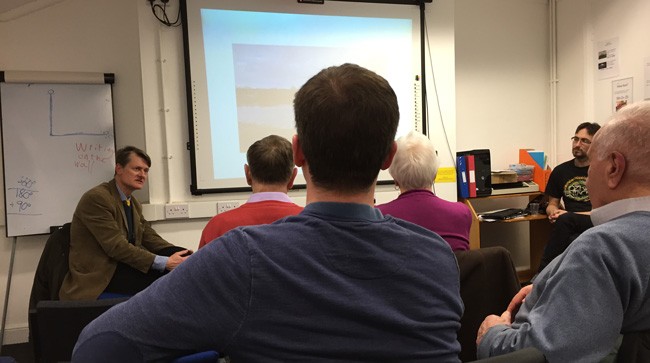
We saw another good turnout for the January meeting of West Yorkshire Humanists. We initially put out only a dozen or so chairs in a circle. However, we soon had to add more, making for a large and very misshapen circle. Always a good thing of course!

This month was debate night and we discussed a number of issues. The headline debate was ‘can terrorism ever be justified?’ The arguments are complex and myriad once you get into it.

After the meeting we went to The George for a few drinks.

selfie

They had alcohol-free cocktails for £2.95. I am not sure anyone had ever ordered them before was there was a lot of confusion about how to make them. However, they tasted good, and we ended up getting a second round.

Myth CSS preprocessor

January 20th, 2016 | Programming, Tech

myth-css-preprocessor

Myth is a CSS preprocessor that allows you to write easier-to-manage CSS, similar to LESS and SASS. The difference with Myth though is that you are writing “pure CSS” while still using features that will be available in the future (such as variables and maths). It then acts as a polyfill for browsers that do not support it.

You can see the full spec on the Myth website.

Should you use it instead of LESS and SASS? In my opinion, no. Not yet anyway. While it does offer some of the features, it does not offer the really useful ones yet. Nested roles and mixins are the big winners for me. Myth does not have these. Nor does it support includes.

It’s one advantage is that it does fill in prefixes. So if you are using flexbox, you can just have a flexbox entry, rather than the endless series of browser-targetted prefixed flexbox commands you currently have to use. You can do this using mixins in LESS and SASS, but it is messier than the way Myth implements it, where you just type the standardised CSS property.

While possibly not that useful right now, Myth is one to watch for the future.