Archive for the ‘Books’ Category

War and Peace Volume 2

Tuesday, October 28th, 2014 | Books

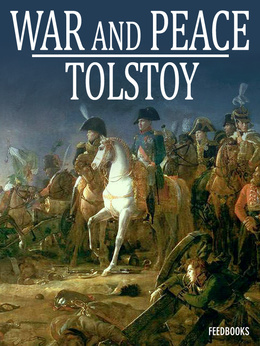
Pin a fucking medal on me, I have finished War and Peace. As Mark from Peep Show would say, I am not directly comparing my struggle reading it to the French invasion of Russia and subsequent retreat, but it was very difficult. Well, not so much difficult, but long.

I really got into it at the end. To say the first 800 pages were slow going but then it picked up sounds like a joke, but it did feel a little like that. As you get to know the characters more and more you become more involved with them, and in a novel this long, that is quite a lot.

The epilogues were huge. Normally an epilogue a chapter at the end of a book. Tolstoy had two epilogues, each with a dozen chapters in.

The fact such a book managed to maintain my interest all the way through is praise worth in itself. But this is to assume that the man, in this case “I”, had a choice in continuing to the end. However, history has shown us that once something is set in motion, it is not the will of a single man that moves it. Or something…

warandpeace

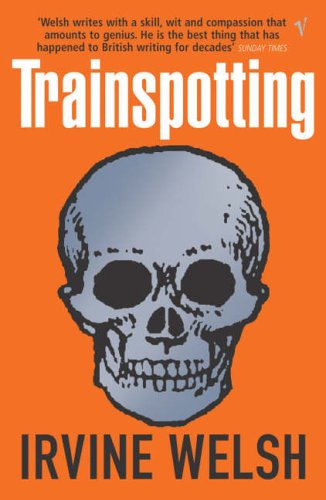
Trainspotting

Saturday, October 11th, 2014 | Books

After careful consideration, I have decided that heroin is not for me.

I had pretty much decided this already, but Irvine Welsh’s graphic depiction of life on skag in Edinburgh confirmed this view. Maybe it is amazing. Maybe you can kick the habit. But having carefully considered it, I have decided that it probably is not worth the risk of ending up lying on a floor, covered in my own sick, injecting junk into your cock because it is the only vein I can find on my body.

The content is horrible. I have read quite a few of the famous war novels, and none of them match up to this. Perhaps it is because life in the trenches is more of an abstract concept whereas having a drug habit, while not being something I have ever done, is far closer to reality.

Plus, it makes for a really good novel.

It was hard going at first as it is written in Scottish English. However it gets easier as you go along.

trainspotting

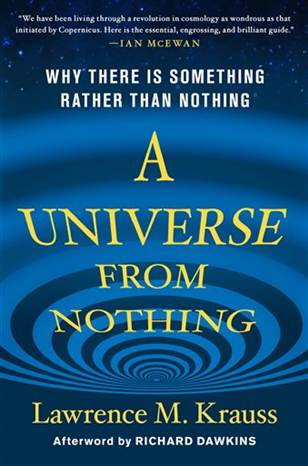
A Universe From Nothing

Thursday, October 9th, 2014 | Books

Why is there something rather than nothing? Why does the universe exist? That is the question that Lawrence Krauss aims to tackle in his book “A Universe From Nothing”. I first heard him speak at QED and very much enjoyed his book The Physics of Star Trek. This one promised to be almost as good.

I found it sufficiently accessible. Some of it was a bit too clever for me. Sentences such as “when you think about it, x doesn’t make any sense…” I could have thought about some of those problems for a long time and not seen the flaw. However, for the most part it is entirely readable and Krauss is a solid communicator of his ideas.

Given how fast physics is moving, some of the content in this book could soon be out of date. However, for now it is a clear and concise overview of where we are with our understanding of the origin of the universe. There are some fascinating insights. For example, we live at a time when the Big Bang is detectable and we can see we are part of a huge universe. In two trillion years, that will not be the case. All signs of it will have disappeared. Ours is the golden age of cosmology, because the universe is only 13.8 billion years old.

I did not feel it needed some much commentary on religion. There was no religion-bashing, but there was a lot of “which is why the universe must clearly be billions of years old and so scripture must be wrong”. Perhaps this is required this is more relevant for other audiences, but from my perspective, it felt like everyone who was going to read the book would know that already.

Overall I found the book accessible and enjoyable, as well as re-igniting that feeling of excitement about physics.

a-universe-from-nothing

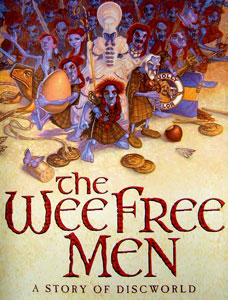
The Wee Free Men

Tuesday, October 7th, 2014 | Books

Not my favourite Discworld novel. It was a “young people novel”, so slightly different from most. I did enjoy the Nac Mac Feegle which were brilliant characters (and not racist at all). Tiffany Aching is an okay character, but maybe a little similar to Susan Sto Helit.

The_Wee_Free_Men

War and Peace Volume 1

Wednesday, October 1st, 2014 | Books

I have not posted about many books recently. Not because I haven’t been reading, but because I have been tackling the Leo Tolstoy epic, War and Peace. I have not finished it, but I have reached the end of the first volume.

That term is a little misleading as the copy I have divides the book into two halves, which it calls volumes. However, Wikipedia divides it into four books/volumes, which according to the text itself, I am now on the 8th book.

The story is that of the Russian high-society during the Napoleonic years. So far there has been some peace, then some war, then some more peace. Throughout this the story had managed to maintain my attention with it’s beautiful language even if parts of it threatened to stray into a Jane Austen-style monolog on the problems of finding a husband.

So good so far. I will report back after volume 2.

warandpeace

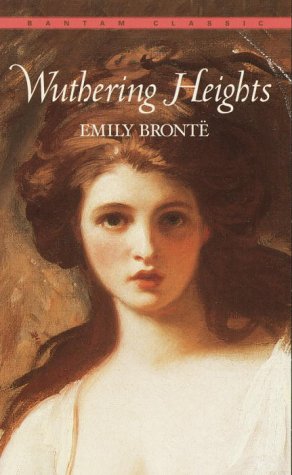
Wuthering Heights

Wednesday, September 10th, 2014 | Books

I’ve been reading Emily Brontë’s Wuthering, Wuthering, Wuthering Heights. As Elina predicted most of this time was spent with Kate Bush running through my head. There are definitely worse things in life.

What a horrible book it is though. I spent most of it hoping that one of the characters would snap and run a knife through Heathcliff. Sadly, nobody did. However, it did at least have an almost happy ending. I also had to draw a little diagram to track the family tree – though it turns out Wikipedia already has one prepared.

wuthering-heights

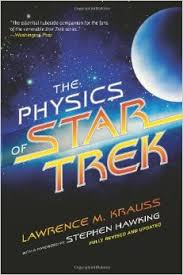
The Physics of Star Trek

Tuesday, September 9th, 2014 | Books

I saw Lawrence Krauss speaking at QED last year and decided he was definitely worth reading. When I looked up his books, I found he has one entitled “The Physics of Star Trek”. Win.

It is pretty much what you expect. He looks at various aspects of the technology featured in Star Trek and talks about how possible they would be in the real world. It turns out that Gene Roddenberry put quite a lot of thought into this, especially as Trekkers kept asking difficult questions.

It was written in 1995 and is now starting to show its age. It was, for example, written well before we successfully build a cloaking device. Krauss writes in an engaging style that is on my wavelength.

Maybe there will one day be a sequel. As the author himself suggests, he could do The Physics of Star Trek 2: Wrath of Krauss.

physics-of-star-trek

Voluntary Madness

Monday, September 8th, 2014 | Books

After writing her book Self-Made Man, Norah Vincent found herself struggling psychologically. So she checked herself into a psychiatric hospital, whereupon she got her next idea for a book. The result is “Voluntary Madness: My Year Lost and Found in the Loony Bin”.

In the book she checks herself into three different hospitals – a downtown public one named Meriwether, a private Catholic facility named St Luke’s, and an alternative therapy centre named Mobius.

She has no problems getting in. As she says, you can only look back and see the mental health problem. This is exactly the feature Daniel Kahneman talks about in Thinking, Fast and Slow. Staff at psychiatric hospital (or indeed anyone, but you would expect these people to be able to) cannot tell the difference between the sane and in the insane. Not that there is necessarily a line between the two.

The results are rather predictable. Meriwether is a cold, clinical hellhole, St Luke’s is tolerable and Mobius comes off the best.

How much we can draw from this, I am not sure. Firstly, you have to look at clinical outcomes and Norah being a sample of one is merely an anecdote about her experience rather than data to draw any conclusions from. Secondly, Mobius only take a select band of mental health issues, and so it is difficult to compare them like-for-like.

It is difficult to compare the financial costs of them because they are all in the United States, where prices are warped by the insurance system where there is little incentive to keep costs down. However, the fact that her insurance company pulled the plug because she was allowed out for runs and not drugged up to the eyeballs speak quite poorly of the US system. It would be interesting to read a similar book looking at British hospitals to compare the differences.

There are some no-brainers that we should take away from the book. Not providing health meals, or a gym, is just stupid. There is loads of clinical evidence to suggest a healthy physical lifestyle helps with mental health too, so these things should probably be the first things you put in.

Providing fresh air, using drugs sensibly, treating people like human beings, giving them a clean bathroom and some proper therapy would all probably be helpful too. However, it would be naive to think that there are not complex social reasons why these are not always provided.

In some ways, mental health could be the most exciting area of healthcare to work in. I suggest this because a lot of the ideas mentioned above are both a) easily to implement and b) would probably improve clinical outcomes.

Improving outcomes for cancer for example is really difficult. We need to find a whole new treatment, lab test it and role it out. Cancer Research UK spends nearly half a billion pounds a year on this. In comparison, to improve some mental health outcomes, you need to buy a treadmill. They’re £150 on eBay.

Of course that is a massive over-simplification and if it really was that easy you would hope that we would have done it by now. Nevertheless, it feels like we have room to make some positive changes in mental health that are easier than with physical health. Hopefully, with increased funding and research focusing on these areas, those changes will come.

voluntary-madness

Darwin’s Dangerous Idea

Saturday, September 6th, 2014 | Books

In Darwin’s Dangerous Idea, Daniel Dennett looks at Darwinian theory and what follows from that.

It is packed with interesting ideas but is also incredibly long. When your book is significantly longer than Dostoyevsky’s Crime and Punishment, your book is probably too long. I struggled to take a lot of it in, partly because there were so many ideas, but partly also because it was such a huge text to really look at in perspective.

Dennett explains how evolution is a algorithmic process and yet is simultaneously capable of creating the entire tree of life. This includes the human mind of course, which is perhaps the most controversial part of the theory, even though the only alternative theory that has been proposed so far is “god did it”.

Many of the concepts he uses to explain the theory are well-thought-out too. For example, skyhooks and cranes. SKyhooks are a miracle that just happen (Dennett claims none exist) whereas cranes are structures that build on top of each other in slow steps (how things actually work). Notably, once the structure has been built, the crane may then disappear, though there is often a trace of it left.

It is also important to look at things from an evolutionary perspective. Take sleep for example. One of my friends once said to me “you know, there is no reason for sleep – we can’t find any biological reason why we need to do it! What’s it for?”

I never knew the answer to that question. However, as Dennett points out, the answer could be that we are looking at it from the wrong way round. Sleep is safe. Plants, and many simple lifeforms spend their entire lives in this state. It is the default state. We assume that we are supposed to be awake but from an evolutionary perspective this might not be the case. It could be that being awake is something Mother Nature cooked up to allow us to find food and procreate easier, but once that is done there is no point wasting more energy.

Overall, I am not suggesting that the 3.7 billion years of life fighting for survive can be compared with my struggle to read Darwin’s Dangerous Idea and its many big words. They are different things entirely. Despite it being tough going, I am glad I read it as it contains some incredibly insightful ideas packaged into one text about the origin of life from a philosophical perspective.

We should feel special because most genetic lines are now dead. But not us. We have an unbroken chain of ancestors right back to 3.7 billion years ago. That is amazing. But do not feel too special, as every blade of grass you can see has that too…

Darwin's_Dangerous_Idea

Night Watch

Wednesday, September 3rd, 2014 | Books

The 29th book in Terry Pratchett’s Discworld series is “Night Watch”. Sam Vimes, the History Monks, time travel – what is there not to love about this novel? Nothing, that’s the answer. I love Lu-Tze and the City Watch is awesome too. It also reminded me of one of the half a dozen Star Trek episode plots that almost all of the 300 episodes are based around.

Night Watch