After I moaned about the onerous requirements of the Larousse Book of Bread my friend Jane was kind enough to bring me some fresh yeast to work with.
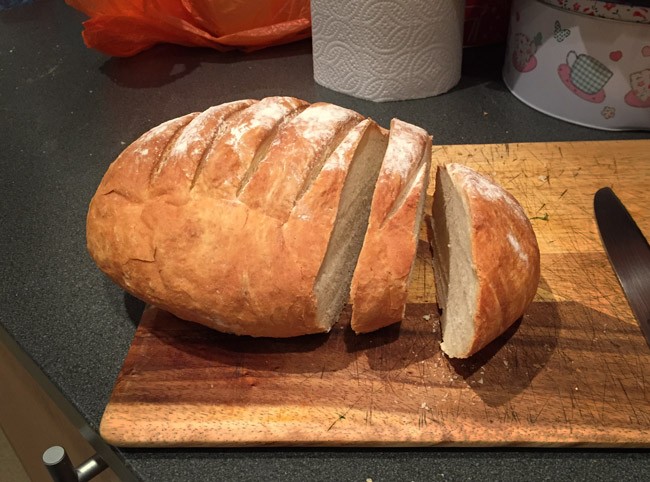
The first loaf I made was a standard white bloomer. I wanted to see if it felt any different to making it with dried yeast. The bread came out very well, though I don’t think I could actually taste any difference.

The second loaf I made was maple bread. I replaced the oil with some genuine Canadian maple syrup that my auntie Diane had brought me on her recent trip to England. It produced a slightly sweet bread. This worked well, not to sweet, but with a little something.
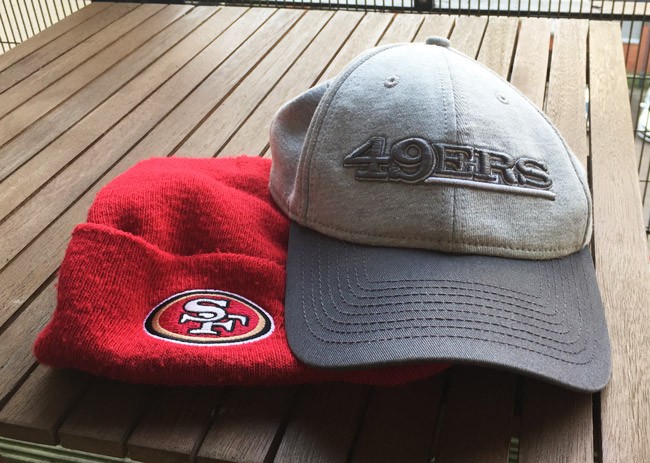
The temperature is getting warmer, the days are getting lighter and flowers are sprining up everywhere. Mostly importantly though, to mark the changing of the season I am putting away my wooly hat and bringing my cap out of the wardrobe. It’s time to enjoy some warmer rain.
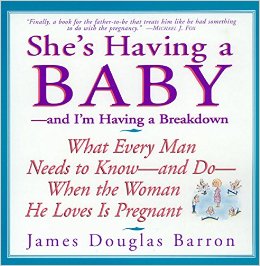
She’s Having a Baby – and I’m Having a Breakdown is a 1998 book by James Douglas Barron. You can tell it has been around a while because you have to get a physical copy of it: no ebook or audiobook, just one of those old-fashioned tree-based things.
It was recommended to me by a friend and is designed to offer helpful advice to men.
It certainly has the format right. It is a bullet pointed list of 237 things. That is more than the amount of pages in the book. Each has a heading and a paragraph of text to read, making it very easy to consume. You can pick it up and read a little bit more in a minute, or you can find yourself spending an hour on it, telling yourself you will just read one more entry.
I found it was showing its age. Or perhaps its target demographic. It is clearly written by an involved dad, but feels like it was from a time when that was not the usual situation.
The advice contained in it is useful stuff to know, but I don’t feel like I learned much. Perhaps it helped reinforce what I had already guessed (be nice to your wife, buy a carseat, things will change, etc) and a few things I perhaps didn’t expect, but nothing I felt I would have missed if I had not read the book. It was quite a good laugh though.
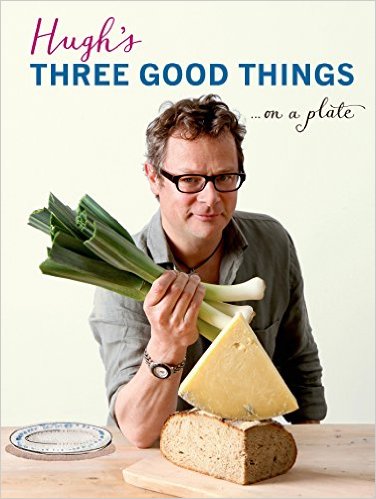
Three Good Things on a Plate is a cookbook by Hugh Fearnley-Whittingstall. I am a self-admitted Fearnley fan. This book does even more to reinforce that. Sure, he is an Old Etonian toff who’s recipes take hours to prepare because he has nothing else to do than mess around at River Cottage. However, it is unfair to level him as a one dimensional chef.
In River Cottage: Light & Easy he threw off his traditional indulgence in complicated recipes to demonstrate dishes that could be made in 20 minutes. In Three Good Things he shows us what you can do with three simple, easily-accessible ingredients.
If you have the title of the book, you have the whole concept. Each recipe is based around three ingredients. This does not include basics such as salt, pepper, oil, etc, but for the most part sticks to the rules. Don’t like one of the three ingredients? He even includes a “swaps” section to suggest other ingredients you can replace it with.
As with the River Cottage cookbooks it is beautifully presented in hardback with a full-page photo for each recipe. As is also typical, the book contains a lot of recipes, coming in at 400 pages.
One of the downfalls of simple recipes is that you have to get on with the ingredients. I found myself skipping past quite a few recipes because, even given the swaps, I couldn’t make them work to suit both my own tastes and those of Elina. Many of the dishes are quite light and therefore perhaps more suitable for lunches than dinners.
However, we did get plenty of dinners out of the book and those that we did were usually wonderfully quick and simple to prepare.
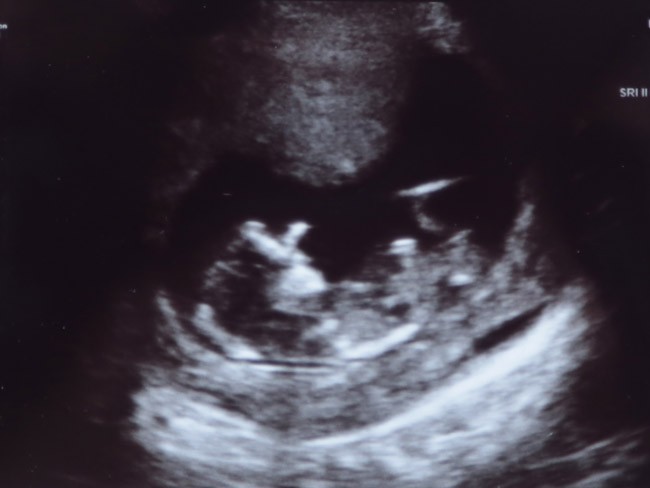
Elina and I are pleased to announce that Baby Worfolk is on the way.
If you are wondering what we are having, we have had a scan and they have confirmed: it’s a human! It doesn’t look like one yet. It will be here by the end of year, so you will be able to buy it Christmas presents. The scan suggested it would enjoy chocolate, Terry Pratchett books and guitars.
Feel the Fear and Do It Anyway is a book by Susan Jeffers.
You might think it is a book for people who have a lot of anxiety. However, in my opinion, it really isn’t. It’s a self-help book for people who like to be sold self-help books. There is a big difference there. Self-help books are generally full of unhelpful nonsense, for example.
The book does not read like something written by someone who has experienced anxiety, nor does it offer sensible advice to people who have. It’s in the title: feel the fear and do it anyway. Oh, if only we had to tell everyone that. It doesn’t matter if you are so wracked with anxiety that you have not been able to leave the house for six months. Just go to a party and talk to loads of strangers! Then you will feel much better. Problem solved.
Apparently, the answer is that people simply need to decide not to be afraid. Trying to adopt a positive attitude can be helpful of course. However, this goes back to my point that this book is for people who feel a little nervous about something, rather than people with genuine anxiety. If you’re pitching the book at those people, it might well be helpful.
She also recommends filling your life with positive people. This is a difficult line to walk. I want realistic friends. Friends that will provide me with some grounding in reality. Can you be both positive and offer rational, honest advice? I hope so, but I’m not sure.
In short, I don’t think this book is worth reading.
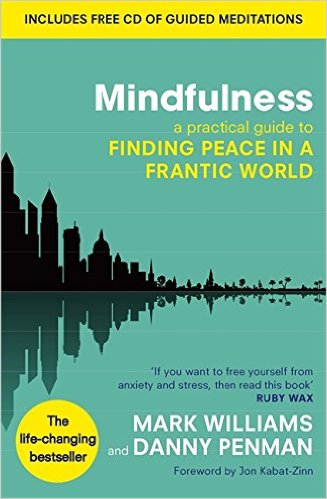
Mindfulness, “the life-changing bestseller”, is a book by Mark Williams and Danny Penman that offers an eight week course on mindfulness. If you have not come across mindfulness before, it is an attempt to take the clinically-useful bits of meditation and put them into a framework that improves people’s mental health.
I’ve now done it all, and it hasn’t changed my life.
The book comes with a CD that includes guided meditations. It’s 2016, so I don’t have a CD player, or an optical drive on my computer. In the past four years of not having one, this has been the first time it’s really been a problem as I couldn’t find all of the audio tracks online. In the end I had to resort to using my PS3.
It gets quite time consuming as you go on. In week five for example, you are doing three meditations per day: 8 minutes, 8 minutes and 10 minutes. This is more than half an hour once you had set up and cool down times. That is quite a lot. The default reaction of some is to say “just half an hour a day to improve your mental health? Surely that is worth it?” They’re probably right, but half an hour is still a long time. I could use the same time to go for a run every day, and look after my physical health, something which I don’t find time to do.
Nevertheless, I did want to give this an honest go, so I did make the time. Did it provide some benefit? I’m not sure. I don’t feel any different. However, given that I am not measuring my anxiety on a daily basis, and that you would expect to see fluctuations anyway, I find it very difficult to objectively say whether I have seen an improvement. However, it does not feel like I have. Perhaps I need some high-anxiety situations to come along to truly find out.
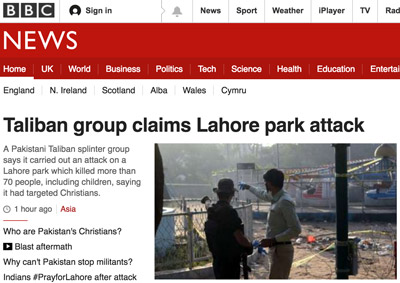
There was no #JeSuisPakistan hash tag. People did not pray for them. The media did not cover the story. Nobody cared, because the victims of the bombing were brown. The event was simply ignored.
Other than it being the lead story on BBC News of course.
What we did get to experience, was a torrent of people talking about how nobody carried about Pakistan. There was outrage. “How dare people not change their profile pictures to the Pakistani flag. How dare the media not demand that everyone change their profile picture to the Pakistani flag. No, we don’t care that the Metro published a guide on how to do it” yelled the mob, “people are ignoring this tragedy!”
This isn’t the first time such comments have been made. I regularly see items appearing in my news feed comparing the attention that news items in the West get vs news items in the East. It is a constant series of points scoring against each other as to who can be seen to care the most.
I suspect that the truth is that many people in Britain, including myself, do care more about a bombing in Paris than a bombing in Lahore. There are good reasons why:
- A bombing in Paris is a lot closer to me. If they can bomb Paris, they can bomb Leeds. Many of the people I care about most in the world are in Leeds.
- Paris is close by. I have visited it and I have friends that visit it. It is far more likely that a bombing in Paris will affect someone I know.
- The attack on Charlie Hebdo was a direct attack on values that that I care deeply about and am actively involved with.
I do not think that that lives of the people I love and care about the most are objectively more important than the lives of people in Lahore. However, like all human beings, I do care more about my friends and relatives than I do about people I do not know.
I did not add a French flag to my profile picture last year. I have no plans to add a Pakistani flag to my profile picture this year. If you are doing both, then great, I am glad some awareness of both of these tragedies is being maintained. However, surely we all have better, more productive things to do than score points off each other as to who is demonstrating their outrage in correctly proportioned amounts.
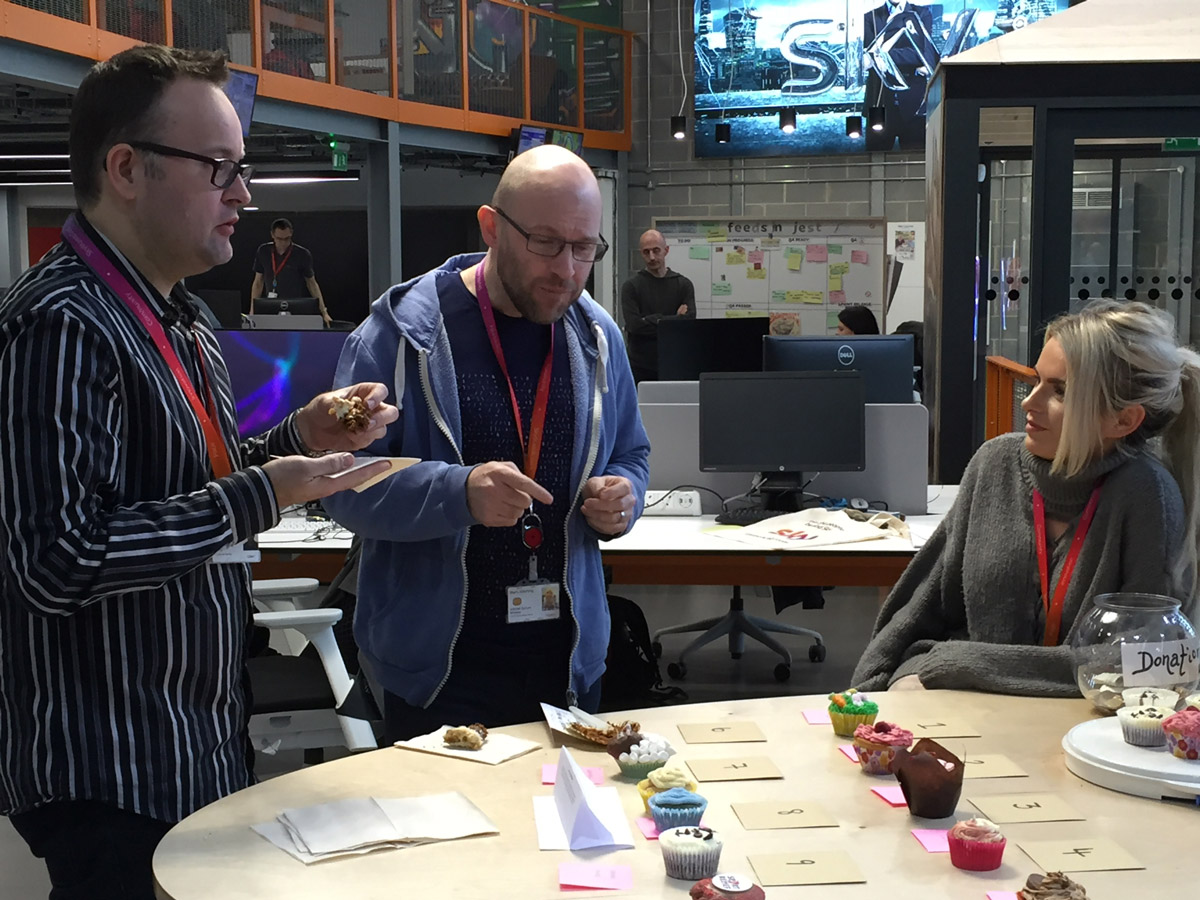
Following on from the success of the first Sky Leeds Bake Off, we held another to raise money for Sports Relief. In the end, we raised £275, which feels like a good effort. I blogged about my preparation last week.
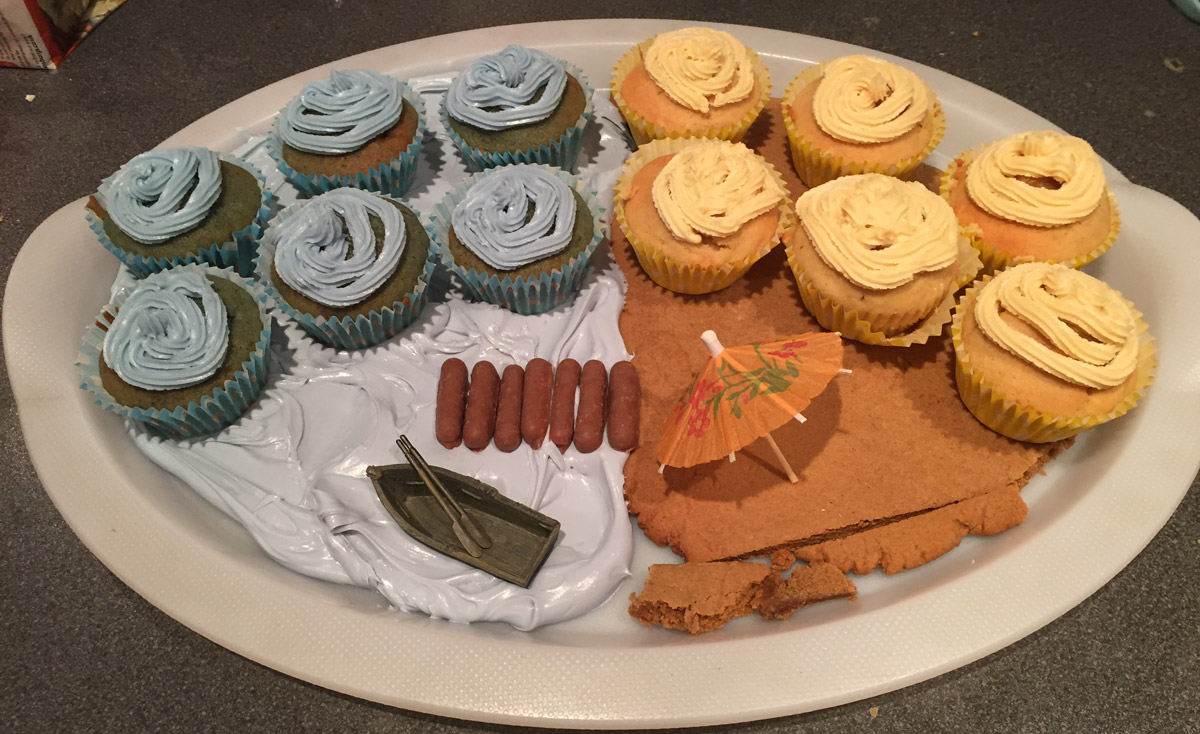
Here was my final creation:
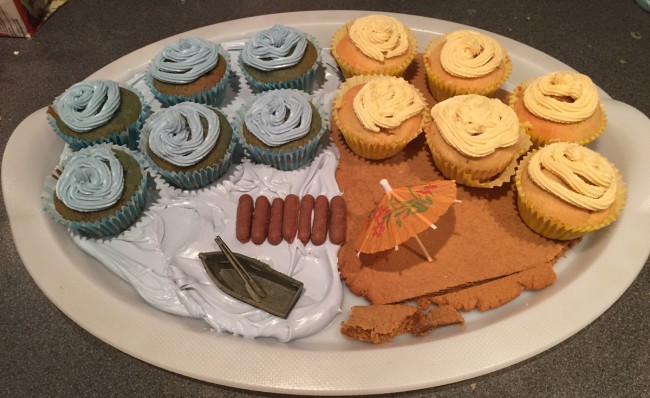
The beach was made of gingerbread. The sea was made from buttercream frosting, with a chocolate finger jetty. The sea cupcakes were blueberry with lemonade frosting. The beach cupcakes were brown sugar with a salted caramel centre and salted caramel frosting.
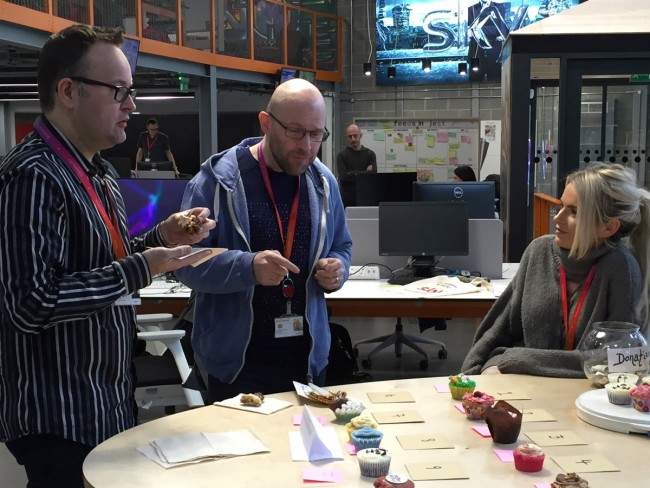
Alas, the judging was changed from the Great British Bake Off-style present all twelve as a piece, to one cupcake from each batch being selected and given to the judges. While mine were tasty, they were not tasty enough to sway the judges on that alone. However, all was not lost. Gaz did Editorial Ops proud with a 3rd place.
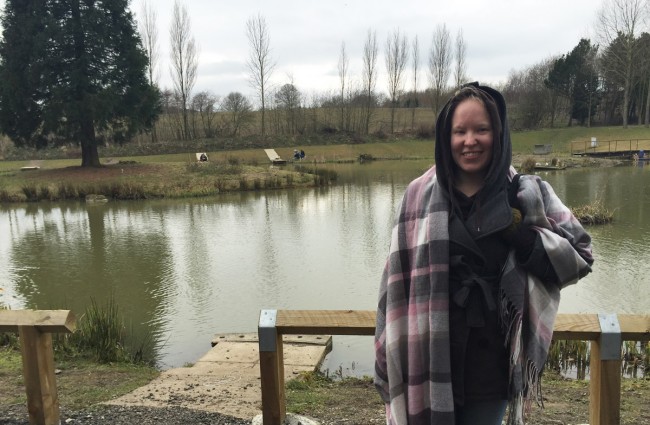
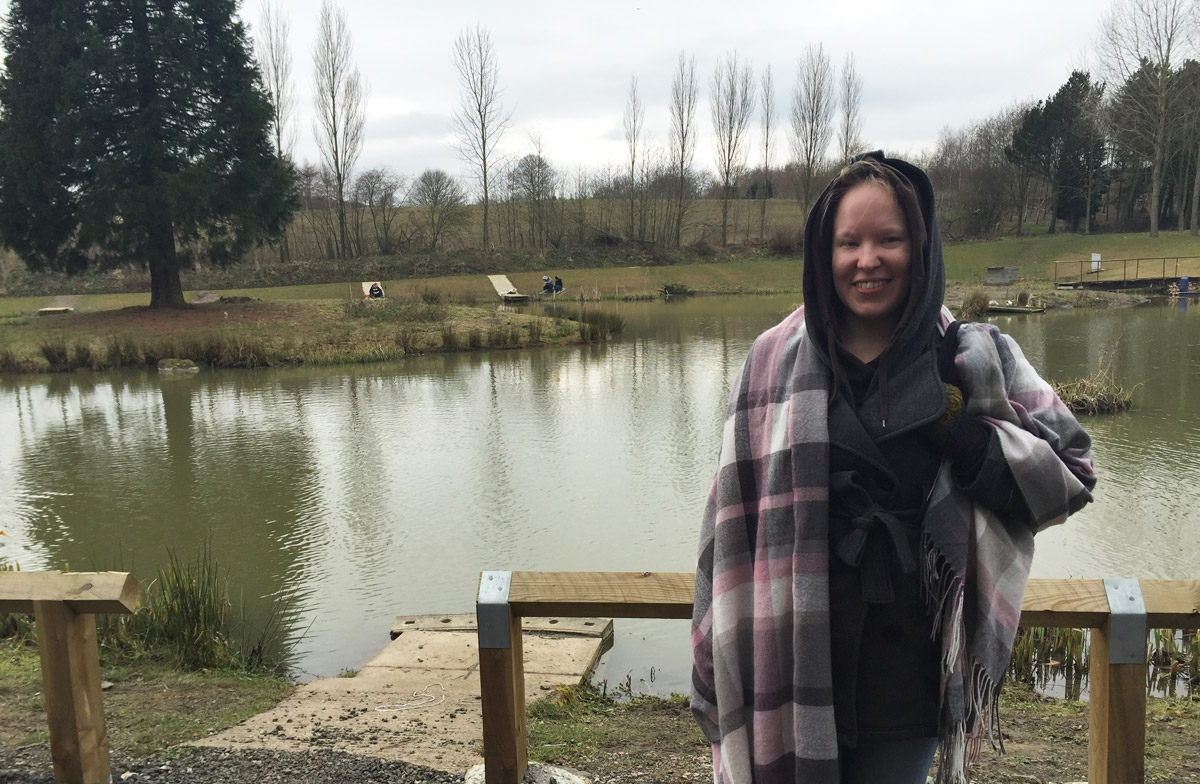
Last weekend, I went fishing for the first time. I didn’t go well. I spent most of the time trying to tackle sorted out. Then, just as I had it sorted, the line got horribly tangled, and I had to do it all again. Eventually I got myself sorted. I didn’t catch any fish. Nor did anyone else while we were there though.
It’s not quite as idicic as I had hoped. Possibly because it genuinely isn’t, or possibly because we went to a muddy fishing lake in the middle of March. Hopefully, having at least a small clue as to what I am doing, will improve the experience in future.