Chris Worfolk's Blog


Why I’m annoyed at Sainsbury’s

May 19th, 2017 | Life

This is a rant. We get Sainsbury’s to do our weekly delivery. On the whole, it’s good. However, it is not without its problems. Namely:

  • They miss stuff out
  • They send incorrect items
  • They fall out with suppliers
  • Their bagels are short-dated

Incorrect items have not been a big problem recently. But, in September last year, they sent the incorrect item three weeks in a row. The exact same mistake. So I’m not going to be removing that item from the list for a while.

Missing items is a problem, too. Maybe every two months or so we will notice they have missed something out. I’m not religious about checking it. Last time, they forgot to include our bread. They always refund me for the missing items when I complain, though.

Several times, things have disappeared from my order, including the confirmation. However, I can’t prove this and Sainsbury’s deny it happens.

Recently though, they seem to have fallen out with suppliers, too. Things disappear from their store as they change their ranges: McCain wedges and HP barbeque sauce being two examples. But all the Schwartz spices have been disappearing as well.

I emailed them about this in February. They emailed me back to say that they had not fallen out with Schwartz. Then refused to answer any of the emails I sent in February, March and April. When I phoned them about it, they said they were dropping Schwarts. Which means they lied to me in their original email.

This was the same email I complained about their bagels. When you buy them from Co-op, they come with a month’s shelf life on them. When we buy them from Sainsbury’s, they come with five days shelf life on them. They’re still investigating this.

EDIT: Since writing this they have contacted me to say that they cannot explain how Co-op have such long shelf lives because they have spoken to New York Bagel Co who have told them they only release bagels with a shelf life of 5 days. We’ve also ordered the same Bagels from Ocado who only had 4 days shelf life on them.

How much does all the marketing tools cost you?

May 18th, 2017 | Business & Marketing

Marketing is an expensive business. There are so many invaluable tools out there that you need. Of course, they do in fact all have a value. And a price. How much would it cost to get all of them? Find out below.

But to spoil the ending: the answer is a lot. Even if you are writing your own copy, doing your own graphic design, doing all of the content, emailing, admin yourself, the cost of all the tools alone is significant. And this doesn’t include stuff like web hosting, CDNs and other “technical” things.

I have listed the marketing tools that people talk about a lot. There are many others, of course, and some of these are specific: you may not do webinars, for example. But many marketers do, so I’ve included it.

Market research

Service Cost
Semrush $79 per month
Alexa $50 per month
Ahrefs $99 per month
Moz $99 per month
Buzzsumo $99 per month

Content production

Service Cost
Piktochart $29 per month
Wistia $99 per month
WebinarJam $397 per year

Free alternatives: YouTube Live gives you everything you need to do a webinar, including recording it.

Content posting

Service Cost
Meet Edgar $79 per month
Buffer $9 per month
EverWebinar $497 per year

Free alternatives: Buffer has a free plan. Recurpost does the same thing as Meet Edgar.

Facebook marketing

Service Cost
Many Chat $15 per month
AdExpresso $49 per month

Free alternatives: Many Chat has a free plan with branding. You can just manage your ads yourself using the Facebook Power Editor.

Email marketing

Service Cost
Infusionsoft $199 per month
MailChimp $10 per month
Aweber $19 per month
ConvertKit $29 per month
GetResponse $15 per month
Drip $49 per month

Free alternatives: MailChimp has a free plan.

Landing pages

Service Cost
Lead Pages $37 per month
ClickFunnels $97 per month
Unbounce $49 per month

Opt-in tools

Service Cost
Hello Bar $4.95 per month
OptinMonster $19 per month

Free alternatives: Hello Bar as a free plan.

Session recording

Service Cost
Crazy Egg $108 per year

Free alternatives: Inspectlet and FullStory both have free plans.

Summary

Some marketers have a lot of these tools: maybe one from each category. Others seem to have ALL of them. And the prices I have listed here are just the cheapest paid plans. Semrush, for example, starts at $79 per month. But if you want to track all o your websites, you will be looking at around $500 per month.

Therefore, I think it’s safe to say that people are spending thousands of dollars per month on marketing tools. And for the big marketers, they are spending tens of thousands.

If you are bringing home the bacon, it is money well spent. If you are just starting out, try the free alternatives I have listed.

Leeds Half Marathon 2017

May 17th, 2017 | Sport

Sometimes, I think it would be fun to run a marathon. Then there are other times. Times such as this, when I have just run a half marathon, and still remember just how painful it was. To do the easy half of a full one.

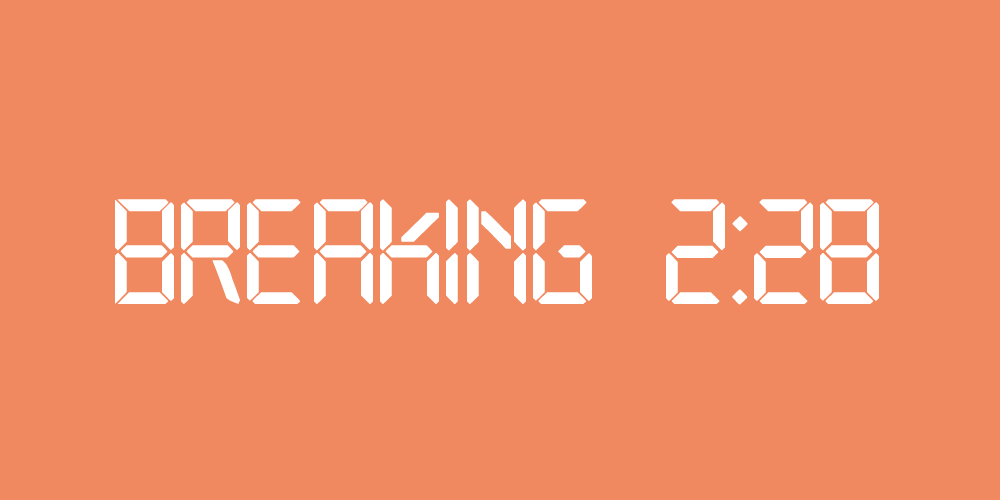
I completed my first half marathon last year and managed to complete it in 2:28:00. This year I had set myself a base target of 2:15:00 and a stretch target of 58 minutes. It’s quite a range, but I thought if I really want to push myself, I might as well go for a world record.

Favourable conditions

The temperature was a lot kinder this year. Gone was the 25-degree heat. Sunday gave us 17 degrees and some cloud cover.

The other thing I changed this year was the amount of sustenance I took on. Last year I stopped at every water station (I stay stopped, you don’t really slow down as you grab a bottle on the way past) and took on some food as well.

I don’t take anything on on my training runs: I just go out and run for two hours. My training runs are always faster. I also skipped the water station in last year’s Abbey Dash and set a personal best 10k time. So, this year, I avoided all food and skipped one of the water stations.

The result

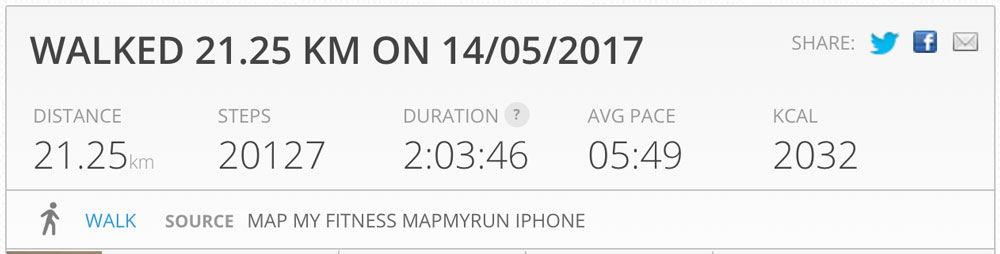
Drum roll, please… This year I managed it in 2:03:42. That’s the official chip timing, I didn’t get my GPS quite perfect.

Notice how it condescendingly marks the whole thing as a “walk” (I ran the whole thing).

I managed to take a good line: you always end up running further than the actual distance because you are dodging around people. So an extra 150m over 21.1km is pretty small.

Most importantly, I took 24 minutes off last year’s time and beat my target by 11 minutes.

How did I feel about it?

I should be chuffed. But, if I had that ability, I would probably spend far less time stressing and enjoy life a lot more. It was a great time: but if I could just found an extra 4 minutes, I could have broken 2.

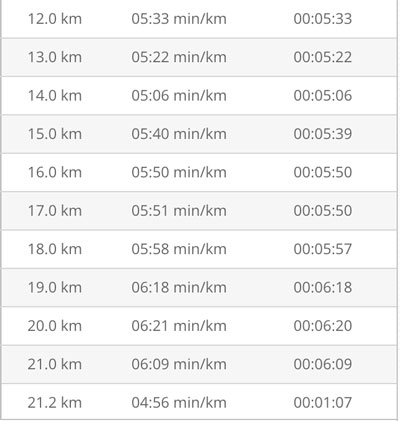
I did try. My pace was pretty erratic because of how hilly the course is. However, I did enough to give myself a chance in the first half the race and spent the 3rd quarter chasing down the gap.

But, towards the end, I ran out of steam. For the last 4 km, I was running on empty. I didn’t even notice the people cheering me on the finishing straight.

I’ll get it next year. It’s a race between me and Kipchoge. Who can break 2 first…

Contagious

May 16th, 2017 | Books

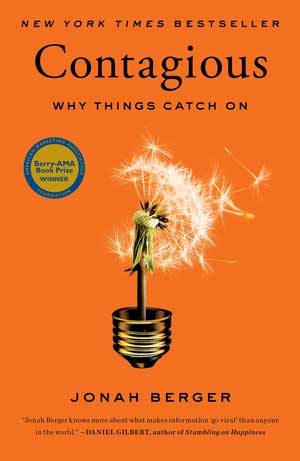
In Contagious: Why Things Catch On, Jonah Burger lays out his research on why some content goes viral and other content does not.

Triggers

Clever ads may get people talking in the short term. But what goes people talking in the long term? Burger argues you need a trigger.

For example, we’ve all taken the piss out of Rebecca Black’s song “Friday”. And Burger goes, too. But he also notes that it gets an incredible amount of views. Almost all of which happen on one day each week. Can you guess which one?

What is going on here? Once a week, it’s Friday. And it being Friday triggers your memory of how awful the song was. And you go watch it on YouTube.

This triggering is going on all over the place. For example, where you vote (school, church, etc.) affects how you vote.

Good advertising campaigns take advantage of this, too. For example “Have a break, have a KitKat”. Every time you have a break… Or Budweiser’s “what’s up” every time you answer the phone.

It needs to be something you run into commonly. For example, using a holiday as a trigger would be a bad idea because it comes around only once a year. Using the weekend as a trigger: much better.

It also needs to arrive at a relevant time. For example, a public service message about the importance of bathmats that shows someone slipping is of little use. Why? Because you can’t buy a bathmat when you step out of the shower. They need to slip when they are in a Bed, Bath & Beyond store.

Grow your environment

You can make your market larger, with the right message. For example, Boston Chicken. They could run an advert that said:

“Thinking about chicken? Think Boston Chicken.”

Fine. It might well capture a lot of the market for people looking for chicken. But how about:

“Thinking about dinner? Think Boston Chicken.”

Now you have cued people to think about Boston Chicken for dinner every time they drive home. Much better.

Emotion

In general, positive messages work better than negative ones. However, the situation is more complex than that. People share stories that are high arousal. This can be both positive and negative.

For example, awe and delight cause sharing. If something is amazing or really funny, you are far more likely to share it. Whereas contentment and sadness are low arousal emotions: they don’t inspire you to do anything.

On the negative side, there are two emotions that do promote arousal: anxiety and anger.

What is interesting about arousal is that you can artificially create it. If you have people do moderate exercise or jump up and down, and then look at their Facebook feed, they are more likely to share stories.

Social proof

People like to do what other people do. This is most evident in bad public service messages. “Say No To Drugs”, for example, reinforced the message that drug use was common and that all the cool kids were doing it.

Similarly, using the slogan “only 37% of people pay for music” encourages people to steal music because they feel like an idiot for buying it when everyone else is getting it from Napster.

“When people are free to do as they please, they usually imitate each other.”

In the case of products, they need to be publicly visible to catch on. Toothpaste doesn’t usually go viral, for example. Whereas Apple’s iconic headphones did because everyone could see other people wearing them.

Practical value

People love to share things that provide practical value. Why? Association. They look smarter by sharing useful knowledge with other people. It gives them social currency.

While a silly meme may get traction in the short-term, a brilliant how-to will get milage for a long time because people will see the value in it and keep sharing.

Harnessing the value for your brand

To get value out of viral content [as a business], you need to make your brand integral to the story. For example, Golden Casino or whatever they are called sponsor a lot of stuff. But you can tell a story about someone buying a jar of air without mentioning their brand.

Contrast that with Will It Blend. We share this because it’s awe-inspiring to see a blender crush up iPhones, lighters and marbles. But, critically, you can’t tell the story without talking out the blender. And Blendtec benefits.
The perils of being an entrepreneur

May 15th, 2017 | Business & Marketing, Life

Starting your own business it tough. Every day you run into problems that seem insurmountable. If I had £1 for every time, I had run into something that made me want to scream “ah, we’re fucked, this entire project is fucked” I would have a very viable business.

At every turn, you discover that you have to constantly raise your game and execute at a higher level. It’s like repeatedly being punched in the gut and told to get up and try harder.

Good audio is hard

Take my video courses, for example. I don’t shoot with cheap stuff. I have a full-frame SLR camera and a Rode shotgun microphone that mounts on the top.

But Udemy rejected my videos. They said there was too much echo on the video. By this point, I had already filmed an entire course. I should have used single-piece flow, as The Lean Startup advocates. But, in my defence, I did this originally, and only came up with the idea of also selling on Udemy later.

Nevertheless, I set about recording the video with a lav mic instead. This too failed. To get the focus correct, I need to monitor it on my laptop. But this sends the laptop fan into overdrive, noise that the lav mic picks up.

Funnels gone wrong

How hard is it sell on the internet? First, try giving your stuff away, and see how hard that is.

The answer is really hard. In March, I launched registration for Worfolk Anxiety’s 30-Day Challenge. A month of free coaching: who could say no? A lot of people, apparently. Initial acquisition costs were £10 per person. People would click the ad, read the entire long-form sales letter about what we were offering, and then leave.

This cost eventually came way down, to the point where it was averaging less than £1 for the entire campaign. I tweaked the copy, and the targeting and we saw better results.

Rejected ads

The problems with the funnel only arrived after I had already faced down one disaster. Having designed the ads, set the targeting and built the landing pages I proudly hit submit on the Facebook ads to turn them on.

And Facebook said “no”.

They don’t allow adverts to do with mental health. The reason is that Facebook knows way too much about you. But they don’t want to admit they have way more data on you than the NSA. So they don’t let advertisers mention it.

All of my beautiful copy using personal and friendly language had to be scraped and replaced by cold and impersonal statements. No wonder my acquisition costs were so high.

I could go elsewhere for the ads, of course. In fact, I tried. I went to Pinterest. But a bug in their software meant that you couldn’t create an audience in the UK.

Failed payments

There was one light at the end of the tunnel: someone went through my sales funnel, clicking on a newsletter ad, signing up, completing the double opt-in, hitting the tripwire page and deciding to take advantage of the hefty discount on my book that I offer new subscribers.

And then the payment failed.

Not just failed but failed silently. None of my error reporting picked anything up. Stripe didn’t pick anything up. The session recordings did not pick anything up.

I had lost my first sale on the project, and I didn’t even know why. I tried it with my own credit card, and it worked fine.

That was a crushing day. Luckily, someone else bought it the next day, and the feeling of making your first sale on any project is ecstasy. It’s amazing.

Sailing the sea of troubles

I picked out a few examples of the “oh shit” moments I’ve had over the past few months. But there have been loads more.

Phoney copyright claims against my YouTube videos, holding them hostage. 40% of people not clicking the double opt-in email. Heroku outages. Facebook custom audiences being filled with incorrect data. Bloggers never answering your emails. Apple refusing to give you a sandbox account to test Apple Pay.

Every day you run into things that stop you in your tracks.

But then you find a way a past them. Or a compromise. Or change strategy. Or just pick yourself up, shrug it off, and find a different way to move forward.

This process has to make you more resilient. It teaches you that all is not lost.

Why don’t pandas have much sex?

May 14th, 2017 | Science

Pandas get a bad rap. They don’t mate at the best of times. They spend all of their time eating bamboo, which tends to kill their sex drive. And comments to the effective of it being their own fault that they are endangered are common.

Here is Ricky Gervais making just such a point:

But this is unfair. And best explained by this Douglas Adams lecture that took place at the University of California.

You have probably noticed that pandas are massive. They don’t have many predators. Even humans, who sit here in the food chain, don’t eat them. So they don’t die very often.

And Mother Nature is pretty smart. Well, dumb, but nevertheless, natural selection works it out in the end. So, when you have a species with no real predators, they don’t procreate very often because otherwise there would be too many of them. They are designed to have very few babies.

Then humans come along, destroy most of the natural habitat and wonder why pandas cannot replace themselves fast enough.

How to open the containing folder in Mac’s Spotlight Search

May 13th, 2017 | Tech

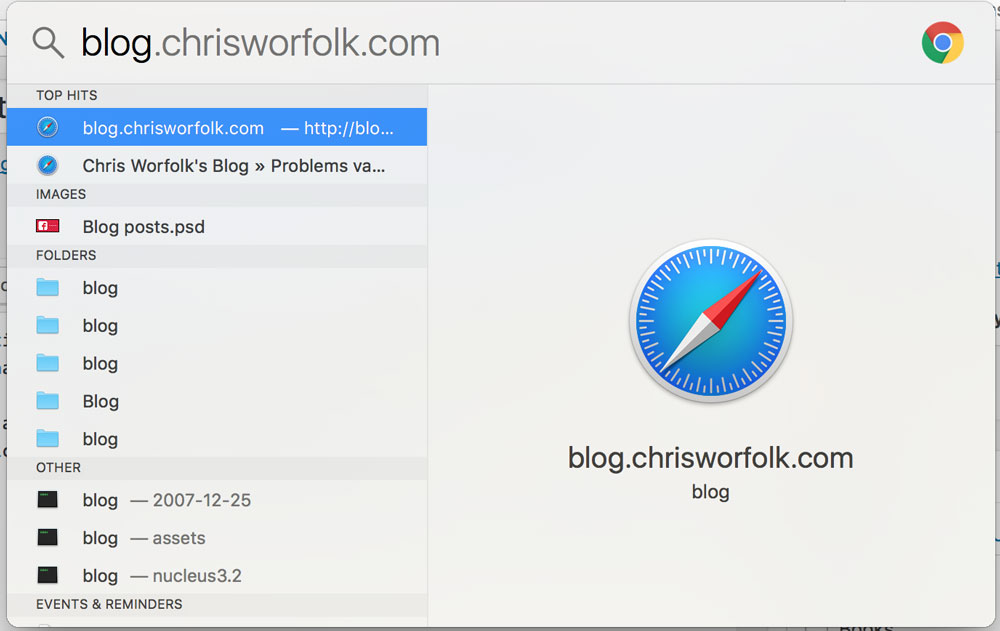
One of the irritating things about Spotlight Search in Mac is that you open want to open the folder that contains a file, but there is no obvious way to do this.

Luckily, there is a non-obvious way. And it’s pretty simple. Just hold down the Option key and double click on the file you want to open.

Venla’s naming ceremony

May 12th, 2017 | Family & Parenting

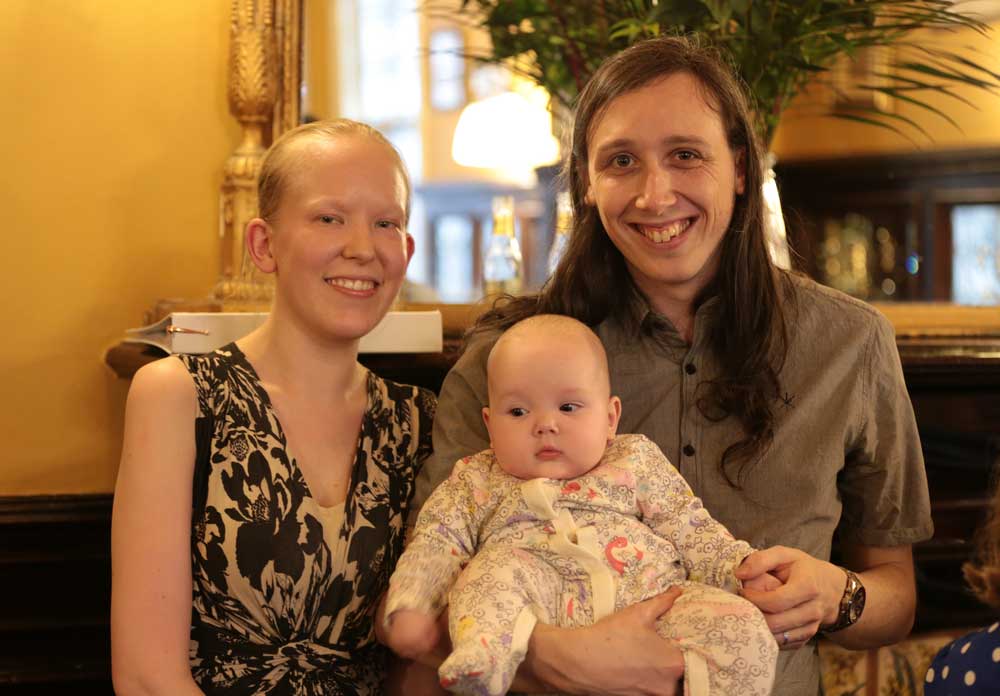
In March, we held a naming ceremony for Venla. How time flies. She is now seven months old and I still haven’t written anything up about it. Thank you to everyone who attended, especially those who took part in the ceremony and Christine for leading it.

Integrating Apple Pay with your website

May 11th, 2017 | Programming, Tech

Over at Worfolk Anxiety, we use Stripe as our payment processor. It’s very good; I highly recommend it to anyone looking to integrate a payment API into their website.

They also have support for Apple Pay. This seems highly desirable as while it is quite easy to enter my credit card details on a desktop computer, it is far more difficult to do on a mobile phone. Being able to click a big Apple Pay button and have it all taken care of is some good magic at work.

Unfortunately, while Stripe makes it super easy to do this, Apple do not.

The dreaded developer program

Most platforms want you to write amazing software for them, so they allow you to do it without much ado. Not Apple. If you want to publish something into the App Store, you have to register for their Developer Program. That is £79 a year. A lot of money, especially if you just want to give away a free app.

However, they also restrict test accounts.

So, for example, if you just want to test whether your website is properly integrated with Apple Pay, you have to pay Apple £79 for the privilege. No wonder it is called “Apple Pay”.

Two fingers to Tim Cook

Luckily, they don’t prevent you from using Apple Pay without the Developer Program. But it does mean the only way to test is to ship code to live and then pay with a real credit card before refunding the transaction.

It’s a total pain in the ass. But it is worth it to avoid giving Apple the money? That’s for you to decide (but yes, yes it is).

Which 30-Day landing page converted better?

May 10th, 2017 | Business & Marketing

Throughout April, Worfolk Anxiety has been running a 30-Day Challenge to help people reduce their anxiety. We ran ads for it and to make sure we got the most out of the ads, we ran three different versions of the landing page as a split test.

But which got the most people to sign up?

Read the rest of this entry »