Chris Worfolk's Blog


Eurovision 2017: What you don’t need to know

May 9th, 2017 | Music

We’re only five days away from Eurovision 2017. A timeless competition designed to unite the people of Europe together (after what Germany did). Here is what you don’t need to know about this year’s competition.

Lucie Jones is singing for Great Britain

It sounds like she is about to kick into the main upbeat exciting song at any point. But she never does.

Norma John is singing for Finland

And it’s worse than Britain’s entry.

Italy are strong favourites

They’re at less than evens on Betfair. Francesco Gabbani is singing Occidentali’s Karma for them. It’s in Italian and it is a pretty fun song. Of course, Russia were at evens for Eurovision 2016 and failed to secure the victory. But far fewer people hate Italy.

Also, Italy has a dancing gorilla. And no, I don’t think it’s a Chabris & Simons experiment.

How to Write a Good Advertisement

May 8th, 2017 | Books, Business & Marketing

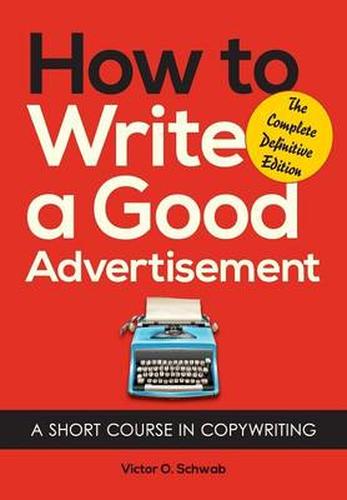
In How To Write A Good Advertisement: A Short Course in Copywriting Victor O. Schwab lays out a systematic approach to writing killer ads. That process is:

  1. Grab attention
  2. Show them the advantage
  3. Prove it
  4. Persuade people to grasp this advantage
  5. Ask for action

Each section is broken down into individual chapters. There are a lot of examples. In fact, one of the earlier chapters is just a list of a hundred effective headlines.

There is a lot of useful information in here. More importantly, it is presented in a logical narrative without the distraction of jumping around or confusing diversions.

The Subtle Art of Not Giving a Fuck

May 7th, 2017 | Books

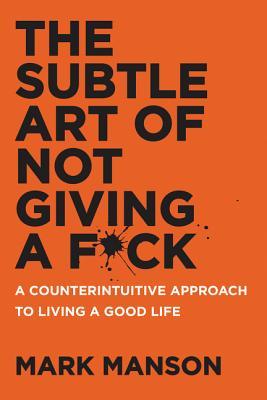
Mark Manson came to fame because of his blogging and has since gone on to publish some bestselling books, including The Subtle Art of Not Giving a Fuck.

His writing style shines through his book, too. It’s engaging and entertaining. You laugh at points. You identify with all of the material. It keeps you interested.

This made me think about longevity, though. Manson’s style is entertaining partly because of all the pop culture references. But a few times, it did cross my mind that in ten years time, nobody would know what he was on about. The truth is, my memory of _Everybody Loves Raymond_ is already fading.

His storytelling is compelling. I was with him on the edge of that cliff. I felt the same feelings.

He makes some good points, too. Life is about giving a fuck about the right things, and not caring about the rest. Nobody who is happy needs to stand int front of a mirror saying positive affirmations. But I think the reason you do that is that you’re not happy. And given how often our emotions are driven by our behaviour, I don’t write it off as a useless tactic.

Given all of that great delivery, though, I am wondering how much I take away from the book. He threw so many great ideas at me that I struggled to take it all in. And, which a not very conclusive conclusion, I was a little confused by the end. I’m a simple man: I need the take-home message spelling out for me. And maybe that was the title. But I would have liked a clearer finish.

This book is an entertaining and enjoyable exploration of Manson’s philosophy. Whether it helps you, I’m not sure. But you are unlikely to feel it was time wasted.

The Boron Letters

May 6th, 2017 | Books

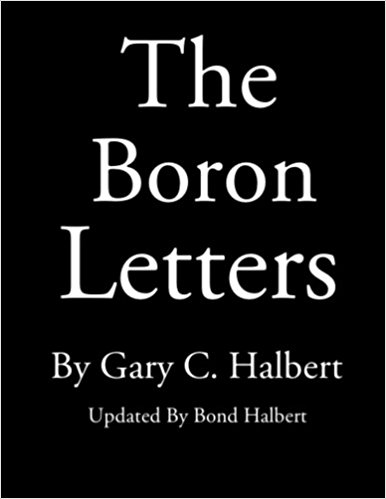
The Boron Letters is a series of letters written by Gary Halbert while he was in prison, to his son. It is held up as a significant piece of work in the copywriting field.

The thing I struggled to get past is that it is not discussed why Halbert was in prison. My guess is that it is something to do with fraud. Fraud from his copywriting. And therefore I am sceptical about how much to take from his work.

However, there is good stuff on here. There is a relentless focus on finding buyers, rather than making a product. Everything stems from finding the marketing opportunity first. And there is some practical advice on how to do it.

He also offers advice as to how to make someone feel special. To explain to them why they have been selected for such an amazing offer and create a sense of scarcity.

The letters made some important points. However, whether it adds as much value as books like Ca$hvertising and How To Write A Good Advertisement, I’m not sure.

A Woman in Berlin

May 5th, 2017 | Books

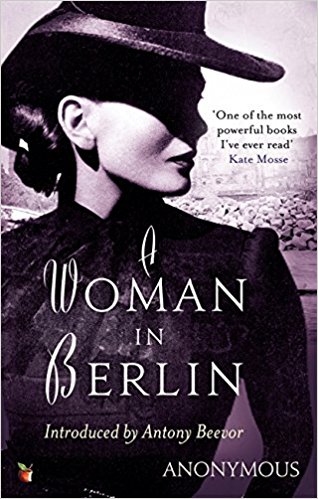
Let it never be said that I do not listen to my wife. Elina said I should read A Woman in Berlin and I did. And I’m glad because it is one of the most powerful books I have ever read.

It reads like a novel, but it is, in fact, a real-life memoir of a woman who lived in Berlin during the Second World War. It tells the story of the Soviet invasion and the rape of an estimated two million German women.

It’s not something you hear about a lot. We did the world wars extensively in school. But most of it focuses on the fighting, or on the British side of things. This is only to be expected when you are in Britain. And we did cover All Quiet on the Western Front, which gives a German perspective of things.

Two million is a lot of rapes, though. It seems like that deserves mention. But even in Germany, it was rarely talked about, and it was only the re-publication of this book that brought it into the spotlight.

There is not a great deal of graphic detail. It is just the story of one woman getting on with life. A life that involves having your property stolen, being taken by two soldiers on the stairs, and being forced to prostitute yourself to a Soviet officer to get protection from the rest of them.

Certainly worth a read. I even based a chunk of my 2017 public speaking world championship speech on it.

Smartcuts

May 4th, 2017 | Books

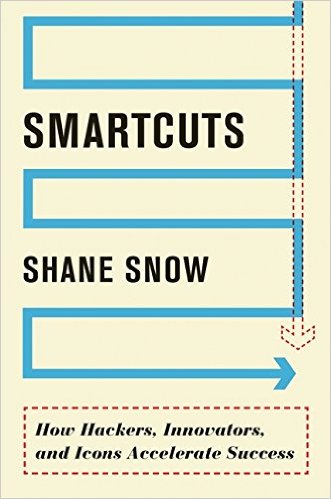
In Smartcuts: The Breakthrough Power of Lateral Thinking Shane Show presents his ideas for her you can shortcut your way to success by working smarter, not harder.

He starts by taking about the video game Super Mario. How did his friend turn the record time for completing the game from 30 minutes to 6? He used the tubes that the game designers put in for easier testing. Whether or not this is relevant, I’m not sure. But who doesn’t love Super Mario?

Lateral thinking plays a part. For example, Great Ormond Street wanted to reduce the number of children who were dying (not that it was loads, but ideally you want it to be none). So they brought in the Ferrari Formula One pit crew. They learnt how Ferrari work seamlessly as a team and took lessons from it.

Snow argues that being the prime mover is not that important. According to his figures, only 11% first movers stay ahead in the long term. This is because fast followers can copy what has come before and are not held back by the initial technical problems.

He also makes a case for pattern spotting. The best surfers spend a long time learning to spot the perfect wave so that when it comes, they know which one to hit. Similarly, as an entrepreneur, you need to be able to spot the best opportunities so that you can ride the wave of success without wasting time on those that will take you nowhere.

Mentoring is also important. Find someone who has the success you want, and get their advice.

It’s an interesting read, but I’m not sure I took a huge amount away from it. I normally have a lot of notes at the end of a book, and I didn’t have a huge amount from Smartcuts. But maybe I just need to re-read it to take it all in.

Do More, Worry Less published

May 3rd, 2017 | Books, News

I’m pleased to announce the launch of Do More, Worry Less: Small Steps to Reduce Your Anxiety. As of yesterday, it is available in the Worfolk Anxiety web store, as well as via Amazon and iTunes.

Like any book, it takes a long time to put together. Arguably, this was a quick one: it’s taken me over six months, but the restaurant guide took years. However, it has been a long time in the making. The research in the book has taken years to accumulate. And there is a lot of it. 291 footnotes and citations to be exact.

The book takes you on a journey, exploring what anxiety is, why it prevents us from reaching our goals and the proven strategies and tactics to overcome these problems and hit your targets. It then explores every aspect of lifestyle: exercise, diet, sleep, relaxation, personal growth, relationships and community to find the things that improve your mental health and what to do about them.

You can find out more about the book here.

I’ve found a new monger!

April 28th, 2017 | Life

As everyone knows, there are four primary types of monger. A fishmonger, a rumour monger, an ironmonger and a warmonger.

I turned out to be a popular phone-in on Alan Partridge’s radio show.

We’re asking, what is the worst monger? Iron, fish… rumour… or war?

But, last week, my world was turned on its head. There is a fifth kind of monger! A “costermonger”. Here is the description from Wikipedia:

Costermonger, coster, or costard is a street seller of fruit and vegetables, in London and other British towns. Costermongers were ubiquitous in mid-Victorian England, and some are still found in markets. As usual with street-sellers, they would use a loud sing-song cry or chant to attract attention. The costermonger’s cart might be stationary at a market stall, or mobile (horse-drawn or wheelbarrow).

What an age to be alive.

6 menu changes that will increase your revenue

April 27th, 2017 | Business & Marketing

When it comes to designing your restaurant’s menu, having a deep understanding of customer psychology can be very helpful. Understanding how the human brain works allows you to increase revenue with almost no effort.

Here are 6 ways you can increase the average bill by making small changes to your menu.

Add a larger priced item

Human minds are really bad at considering absolutes. We like to compare two things, instead. In Predictably Irrational Dan Ariely talks about how a marketing firm found a way to sell a $1200 bread-maker: they added a $1600 one next to it.

When the only bread-maker is $1200, people wonder if they need a bread-maker. However, when you place it next to a $1600 bread-maker, people compare the two to see which one they want. And usually, decide on the $1200 one.

So, if you have a $30 steak that you are struggling to shift, add a $50 steak. People are reluctant to buy the most expensive item on the menu. But next to a $50 steak, a $30 one seems far more reasonable.

Put expensive items in a box

Putting a box around an item draws the customer’s attention to it. This makes them more likely to order the dish. So, if you have something you want to sell, such as high mark-up dish, put a box around it.

Desserts are usually high markup, so these make an excellent choice. However, you can put a box around individual dishes as well, and it produces the same result.

Re-do your wine list

Customers cannot tell the difference between cheap and expensive wine. Study after study has shown this. So, as long as you are selling them a decent bottle, their enjoyment of it will be primarily driven by how much they pay for it.

Many customers will order the cheapest bottle of wine. So make sure you have plenty of markup on that. However, another large selection of customers will order the second cheapest bottle of wine.

This is because they do not want to look like they are going for the cheapest bottle, even though they do not know what wine they want. Therefore, you want to ensure that the second bottle is a high markup item as well.

Finally, as we have already learnt, adding a more expensive item to the menu drives up sales of cheaper bottles. So make sure that you have at least one bottle of $300 on there.

Add more “for two” dishes

One of my local Thai restaurants has appetisers for £7. Or you can get the platter for £10. Per person. And there is a minimum of two people. So, in reality, you are paying £20.

But the menu doesn’t say that. It says £10 per person. Most people never do the maths and think “£20: I could get three of the other dish for almost the same money.”

Add to this mix the fact that couples are some of the least price sensitive customers. After all, who wants to look cheap on a date? No wonder the chateaubriand is so often priced for two.

Centre align your prices

If you put all of your prices in a neat little line, with everything right aligned, you make it very easy for the customer to compare prices between dishes.

But, of course, you probably don’t want to make this easy. Because, if you do, people will choose cheaper options. This is a shame because the more expensive items on your menu are worth the money, right? Centre align the prices so that customers consider each dish on its individual merits.

Reduce the number of items

Having two many items on your menu is a bad thing for two reasons.

One is that quality suffers. You need to be turning your stock over. If nobody is ordering the dish, the ingredients will sit in your walk-in for longer, they won’t be as fresh, and you will have higher food costs.

It also makes it more difficult for customers to decide what to have. In The Paradox of Choice, Barry Schwartz talks about a store offering free samples of jam. They found that when they offered six choices, customers bought more jam than when they offered 22 choices.

What was going on here? Customers found it difficult to choose between 22 choices. The stress of making that choice (it might sound silly, but it is stressful!) made them less likely to buy a full-sized pot of any.

Your menu is the same: if you want customers to enjoy the experience more, you need to make it easier on them. They might think they want more choice, but the research shows it makes them less happy.

Summary

Follow these six simple ideas, and you will be able to increase the average cheque size. Understanding customer psychology is the key to running a successful restaurant. The answers are not always intuitive, so it is important to look at the evidence.
The Worst-Case Scenario

April 27th, 2017 | Public Speaking

My speech for the 2017 international speech contest was entitled “The Worst-Case Scenario” and told the story of how things going wrong can so often produce our greatest achievements.

Club contest

I managed to see off some tough competition in the form of Simon and Paul at the club level. People say that the club level is often the most difficult to win. This is often attributed to questionable quality judging, but I think it has more to do with the amazing speakers we have at Leeds City.

Area contest

For the Area 15 final, I decided I had to sort my outfit out. If I was going to speak about running, I needed to be a runner.

As it turned out, the evaluation contest was taking place before the speech contest. So I quickly had to change back into my civvies and then get changed again.

Division contest

At the Division E final in Birmingham, the story ends. I didn’t even place. I’m a pretty bitter loser. It’s frustrating because the only feedback people ever offer is “I loved your speech”.

It robs Toastmasters of it’s most important ingredient: the feedback that allows you to grow. And it also makes you question whether there is much objectivity to what we are doing.

Or maybe it conforms to Robert Pirsig’s definition of quality and is simply incredible. We know a great speech when we see one but we can’t say why. The magic eludes me, but it doesn’t seem to based on sound fundamentals.

Still, that’s the talk of a loser. Onwards and upwards.

And, on the plus side, it did make a nice road trip for Venla.