Chris Worfolk's Blog


London vs Leeds: what will £32m get you?

June 16th, 2017 | Life

The property price differences between London and anywhere that is not London have been well documented. A small garden shed in the capital will set you back far more than a three bedroomed house in Darlington. But what if you have some cash to splash?

This came to mind recently when I saw two properties for sale.

One was this £30,000,000 house in London.

What can you get in London?

Technically, it is detached. But, if you look at how close the next building is to it, you could be forgiven for not realising this. And there is no doubt that it is a nice house. But if we look at the description…

Today this Grade II listed building currently extends to circa 9490 square feet (881 square metres).The property is in need of full modernisation but retains a number of period features.

…it turns out it is a fixer-upper.

What can you get in Leeds?

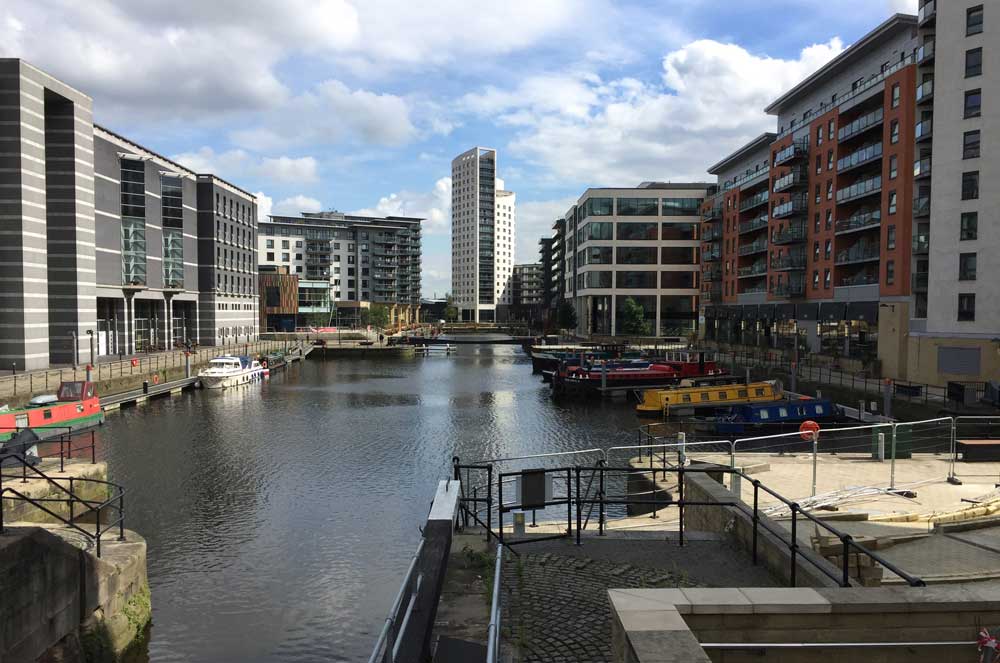
Compare this to the £32,000,000 property you can get in Leeds. It is two million pounds more, of course, so you are expecting something a little better.

That’s right, it’s Leeds Dock. It is a 1,200,000 square foot site complete with 1,100 apartments. And loads of office space. And a bar. And a restaurant (but it’s only a Pizza Express). And a casino (now closed). And the Royal Armouries Museum.

Recently put up to sale for £32,000,000 by its owners Allied London. Which is significantly more than the £1.5 million they paid for it just five years ago.

Why Udemy pay their instructors £2.68 for a £100 course

June 15th, 2017 | Life

I like Udemy, both as a student and an instructor. As a student, I have done some brilliant courses on there. As an instructor, it has been easy to create courses and make them available for sale.

But there is one downside if you plan on using Udemy to make a living: the payouts are terrible.

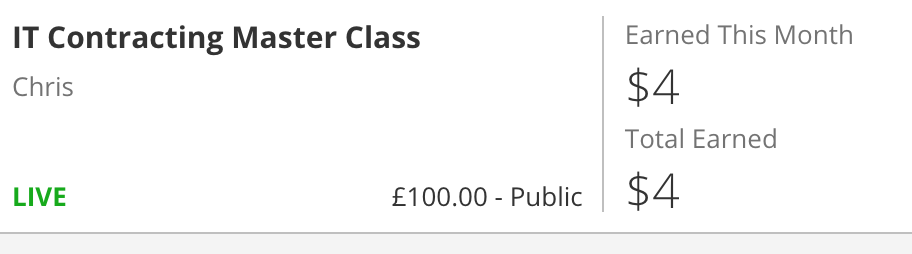
Take a look at My IT Contracting Master Class, for example. It is a £100 course. I was excited when the first customer signed up via Udemy. That is until I realised that I would only be getting £2.68.

What is going on here?

First, Udemy discount everything. The £100 price tag is basically a lie. I’m not sure what they do is legal in the UK. They have an advertised price, but you never pay that. In the five months, I have been using them, there has not been a single day when the have not had a sale on. It’s like going to a furniture store with their ever-revolving discounts.

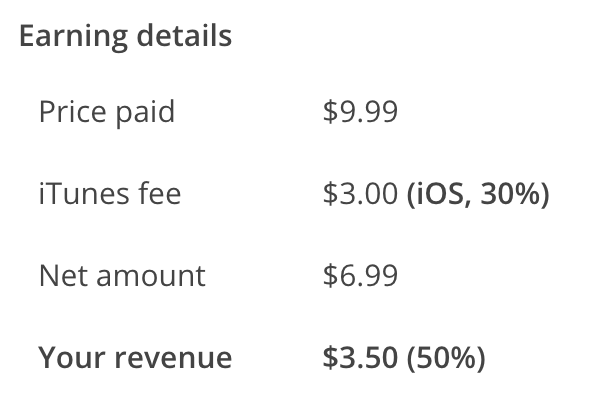
Sometimes the discounts are bigger than others. Sometimes it is £10, sometimes £15. But as a UK customer, you are getting screwed anyway. The US consumer gets a bigger discount. In this case, the course was sold for $9.99.

Then iTunes take a cut, so that’s $3 gone, and then Udemy split the remaining money with you 50/50. There is $7 left, so that makes £3.50 each. Or, translated into Sterling, £2.68.

Technically, I think you can opt-out of these discounts. But, in practice, very few courses do. And this means that you are competing against a market of discounted courses, which makes it impossible to do business. And Udemy is more favourable to the courses who do not opt-out. So, in reality, I don’t feel like I have a choice.

Udemy is a great platform. However, I wish they would be more transparent about their prices. You don’t ever pay the list price and so instructors are paid very little.

Grammarly weekly report

June 14th, 2017 | Tech

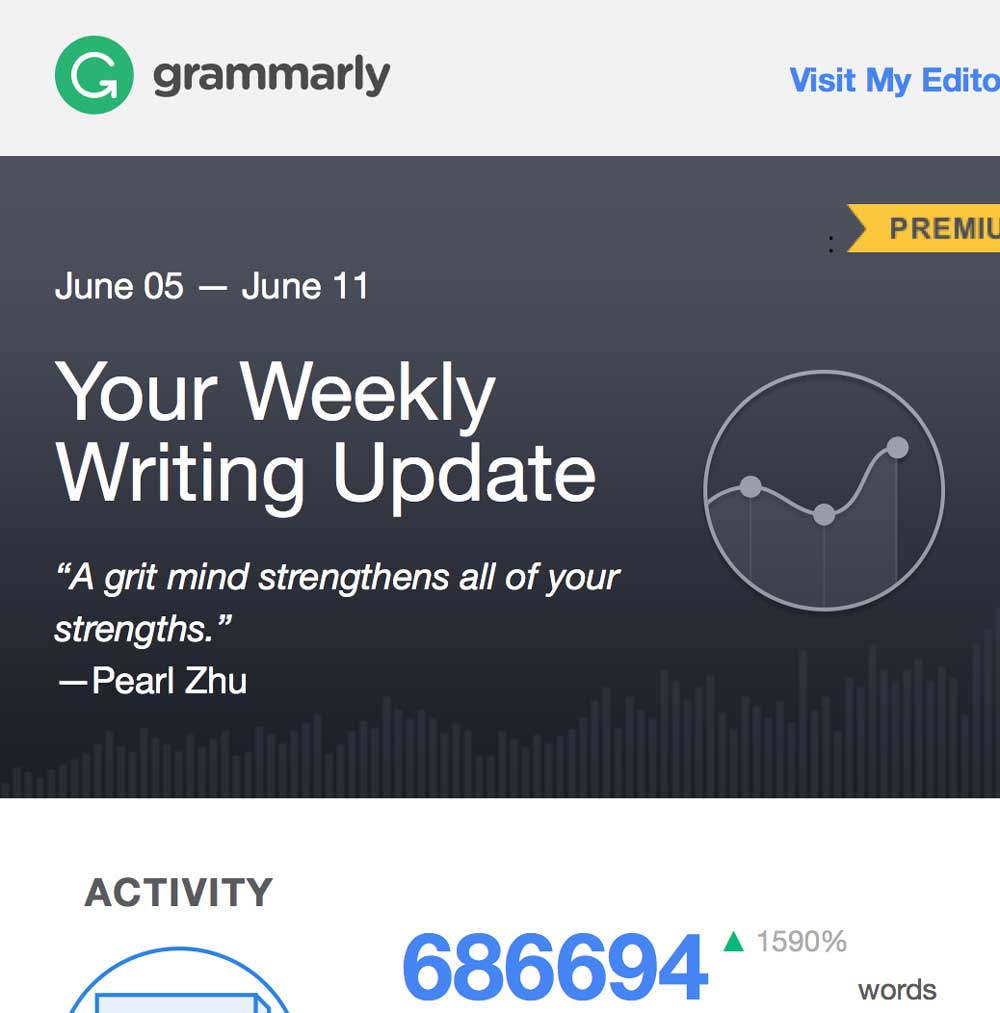
Either I have become the most prolific writer of all time, or Grammarly’s numbers are incorrect.

According to my weekly report, I checked over half a million words last week. Now, I do write quite a lot. And it picks up the spell checking I deliberately do for my articles, as well as most of the content I write in online forms.

However, I am pretty sure I did not make my way through over 600,000 words.

One explanation is that the numbers are simply incorrect.

Another is that the Grammarly for Mac app isn’t great: it freaks out when it loses internet connection and you have to reload the page. It could be repeatedly sending everything back to its server for checking.

Or, I’m sleep writing.

I feel like an idiot for voting, and you should too

June 7th, 2017 | Religion & Politics

Tomorrow is the general election. Will you be voting? If you answer is anything other than “no”, you’re making bad choices with your life.

I usually vote. But I feel like an idiot for doing so.

Why? Because pretty much every economic model shows that voting is not worthwhile. Think about it: your vote is worth basically nothing. The British electorate is 45,000,000 people. You are just one of them. You don’t make any difference on the outcome.

And, presumably, you put some kind of value on your time.

An example: Leeds Central

I’m based in Leeds Central. It’s Hilary Benn’s Labour safe seat. Last time, we received 24,000 votes. His nearest competitor received 7,000 votes. That is a majority of 17,000. He has a 55% share of the vote.

This never changes. The last time Leeds Central elected anyone other than a Labour candidate was in 1923. 94 years ago. Before I was born. Before my parents were born. Before my grandparents were born.

So, no matter what I do, Hilary Benn will be re-elected as the MP for Leeds Central tomorrow.

Okay, so that established, I now have a choice. It’s polling day and I am sitting in my house. Regardless of whether I cast my vote, Hilary Benn will be re-elected. I can choose to spend 30 minutes going to the polling station. Or I can choose to spend the 30 minutes with my daughter.

What’s the rational choice here?

Voting costs time

Voting is a time-consuming business. You have to go to the polling station and get back. You might have to queue. I have had to queue for 40 minutes in a previous election.

That’s a big time-suck. How much is your time worth?

Probably valuable, right? I could be spending that time with my family or my friends. Or relaxing. Or cooking. Or getting some work done. Or learning something new. There are loads of valuable things you could do with that time.

And if your time is worthless, maybe you need to spend that time sorting your life out.

The rational action is not to vote

If you live in one of the 80% of safe seats, your vote is completely worthless. Nothing is going to change there.

If you live in one of the 20% of marginal seats, you vote is still worth practically nothing. Why? Because elections rarely ever come down to one vote.

We have a general election every 4-5 years, have done for around 200 years and currently have 650 constituencies. That is tens of thousands of constituency elections. Just once. In 1886. Seems unlikely you will be that one vote, then.

But voting is a right, and an honour

Which is the kind of thing we tell young men when we need them to go off and get themselves killed in a pointless war. “It’s an honour to service in the British military, and your duty to defend the Queen. I’d probably get some insurance for those legs of yours, though. And maybe freeze some sperm.”

When people tell me I have to vote, nobody can explain to me what that means. Or why. Why do I have to vote? It literally doesn’t make a difference to the outcome of the election. It doesn’t change anything. It is a waste of my time.

Those are concrete facts. The 30 minutes I lose spending time with Venla is a concrete outcome. “You’ll be participating in the great democratic process” is a nebulous concept with no clear value.

Yes, but if nobody voted…

People say to me “well, if everyone who wanted Bremain had gone out and voted, we would have won”. This is true. But they won’t. You don’t have control over them. You only control yourself and your one single vote.

It’s essentially the tragedy of the commons.

And if everyone thought like me and stopped voting, I would start voting, because my vote would suddenly become incredibly valuable. But until that happens, it isn’t.

If you don’t vote, you can’t complain

Of course you can. Not voting doesn’t somehow disqualify you from having an opinion when your human rights start getting stripped away or the government starts murdering disabled people.

Not voting merely shows that you have some grasp of basic probability. In short, that you’re not an idiot.

If anything, voting should disqualify you from having an opinion because you fail to grasp how the whole system works (or doesn’t work).

But Chris, you said you vote

It’s true. I’m not better than you. I’m saying that we’re all idiots together.

But young people don’t vote

You could argue “that’s fine, I am happy being an idiot, let’s all be idiots together and be proud of it.”

Fine. But young people don’t vote.

Most people say that they are disenfranchised and ill-informed. But is there any evidence for this? A back-of-the-envelope calculation suggests that young people should be more informed. They have more access to news, access to the internet, higher levels of education than ever before and a higher IQ (which moves up 3 points every decade). They should be the most switched on.

And I think they are. What if, rather than being ill-informed fools, young people are just smarter than us? They realise how pointless voting in a first-past-the-post system is and have realised that their time is too valuable to waste on such an endeavour?

Conclusion

Voting is an irrational act. Your vote will have no impact on the outcome of the election. It does, however, cost you valuable time. The sensible thing to do is not to vote.

That is why young people don’t vote. They’ve realised this ahead of the rest of us. Sure, if they all block voted they could change the election. But they won’t, and they understand that they won’t because they each individually only control one vote, and so they do the thing that makes sense and use their time more productively.

The rest of us have been brainwashed by words like duty or feel that it would somehow be offensive towards the ghost of Emmeline Pankhurst if we choose to spend the time with our family instead.

Maybe I’m wrong. The truth is, I would like to be proven so. I would like to think I am not acting irrationally. But your argument better be well-thought-out and articulate because nobody has been successful yet.

And you say “well, I’m happy to act irrationality”. But that in itself is not a badge to be proud of. We often chastise the electorate for failing to vote in their own self-interest. But what right to do we have to make these claims when we ourselves cannot rationalise our actions? None whatsoever.

Footnotes

Image courtesy of Man vyi via Wikimedia Commons.

Why would you advertise for people people?

June 3rd, 2017 | Business & Marketing

This is the second of two blog posts about billboards. Life does not get any more exciting than this. Read part one here.

I ran up the canal. And for a long time, there was a First Direct billboard half way up my route that said: “people people wanted”. Every week I told myself I should take a photo of it. Finally, after a month, I resolved that this would be the day. So, I ran up there, pulled out my camera and… it had gone.

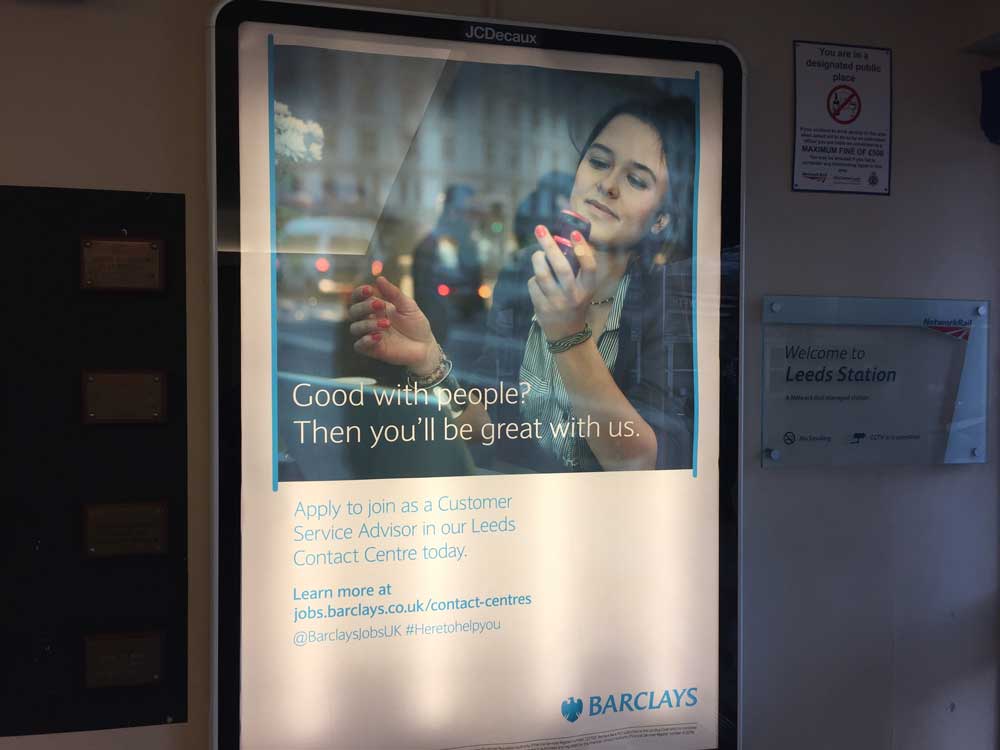
However, I recently saw this advert at the train station and it will illustrate my point just as well.

The headline reads…

Good with people? Then you’ll be great with us.

In both of these instances, it could be that they are just looking to drive some recruitment there way. And to an extent, it is. But there must be far more cost-effective ways of finding people than a billboard that targets everybody. Most people have a job, for example, and don’t work in customer services.

However, these advertisements serve a secondary purpose.

They are also value signalling. Not only do they advertise for friendly customer service people but they also say to everyone who reads it “why not come and bank with us – we care about getting friendly staff on board.”

Few people are people people looking to move into a different customer services role. But everybody would like a bank with friendlier customer services.

On the Manchester Arena bombing

June 2nd, 2017 | Thoughts

I, like everyone else, was shocked and appalled to see the pictures coming out of Manchester after the terrorist attack at Manchester Arena. Not in the hyperbolic sense: there was a literal shock (well, not shock, but shock) and appalling. That someone would do that for a concert aimed at children genuinely takes you aback.

It’s the kind of propaganda you might expect to have spread during the Second World War. Goebbels would have been proud to convince his citizens that the enemy was deliberating bombing children. But here was someone so brainwashed by a political-religious ideology that they were actually doing it. At the M.E.N., a place where so many of us in the north have pleasant memories.

I would like to say I was inspired by the reaction of the community in supporting the victims. But the truth is better: I wasn’t surprised because that is just standard. Of course, people rushed to help, gave people rides, took them into their houses. Who was surprised by this? When did we set the bar so low? Not us.

How Tesco created a brilliant billboard

June 1st, 2017 | Business & Marketing

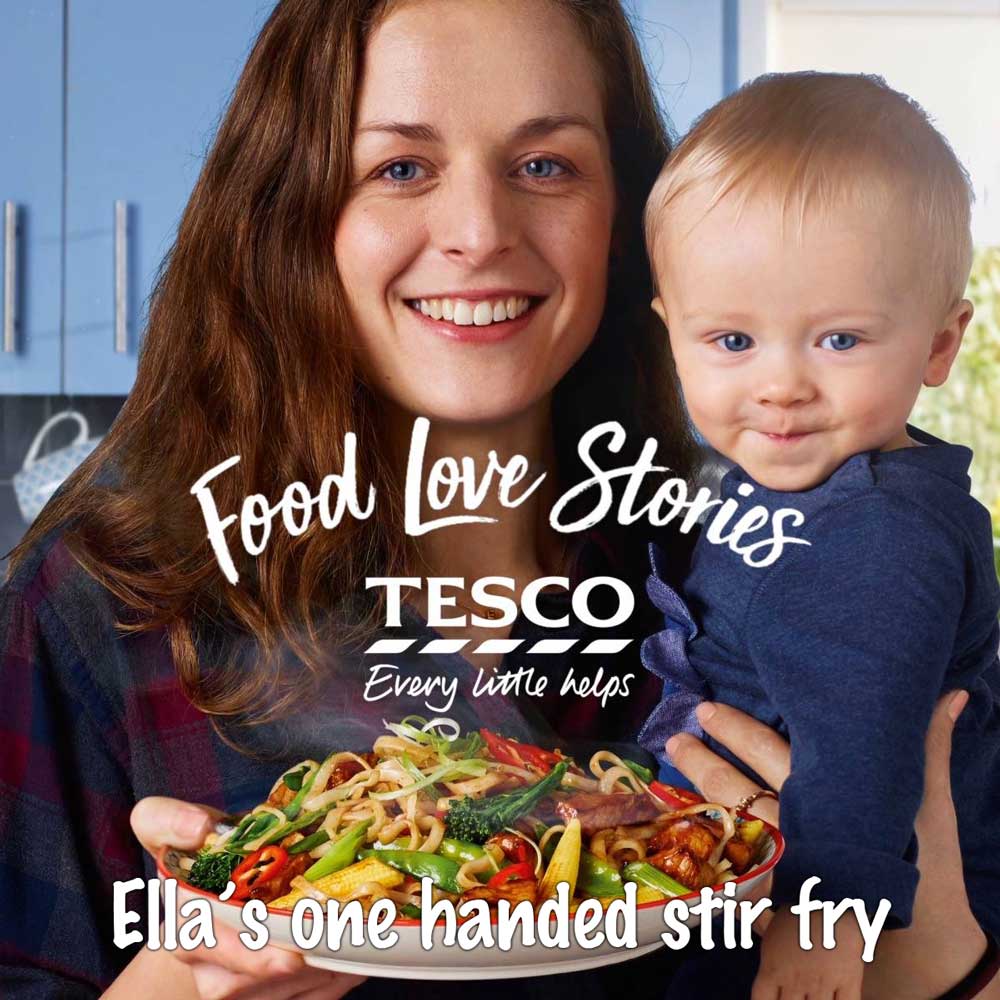
This image was on a billboard. You’ll have to take my word for it: it was on the inner ring road and being the responsible driver I am, I resisted the temptation to take a photo while driving at 40 mph (yes, of course I was only doing 40, officer).

But I had to post a (badly recreated) picture because it is brilliant marketing.

Why? Because the art of marketing is not about making a brilliant product and then finding some people to sell it to. It is about finding a problem that people have and designing a product to fix it.

And if you want to do it well, you have to zone in one particular pain point. Focus right in on the problem people are having and drive home that you have the solution.

What problem does almost every parent with a young child have? Trying to eat dinner. It’s impossible. Venla will not tolerate other people eating. I can’t remember the last time Elina and I ate at the same time because one of us has to bounce a baby.

Your best hope, indeed, your only hope, is to design food you can eat one handed. We don’t design around taste, or flavour, or type of cuisine: we optimise our menu for what we can eat one handed.

And Tesco has zeroed on on a problem that every young family faces and said “come buy food from us and your problem will be fixed.”

Eurovision 2017

May 31st, 2017 | Music

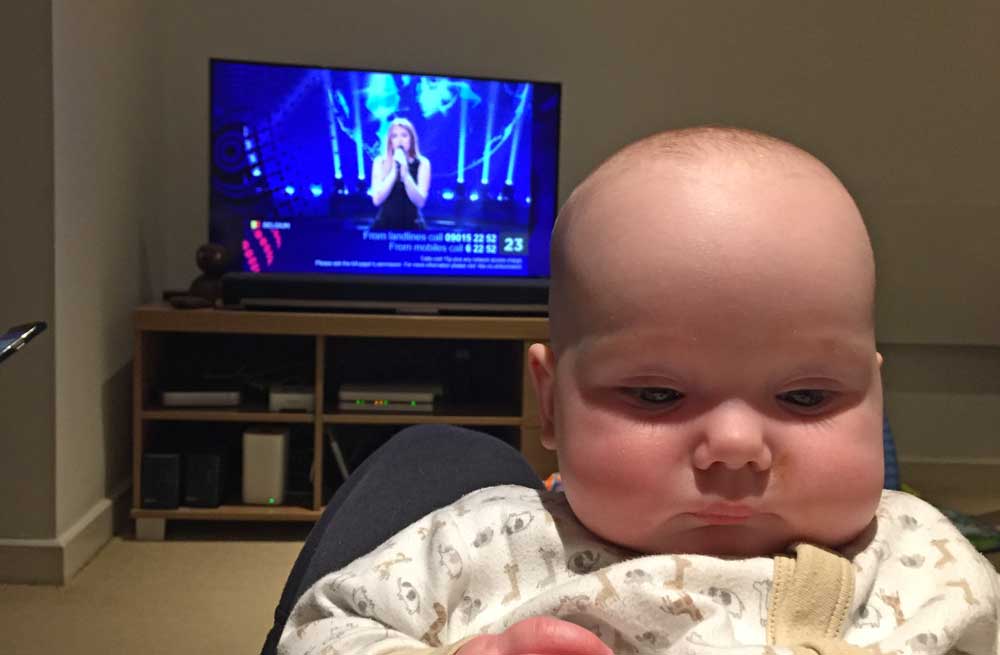
Venla’s first Eurovision. She was not excited about it.

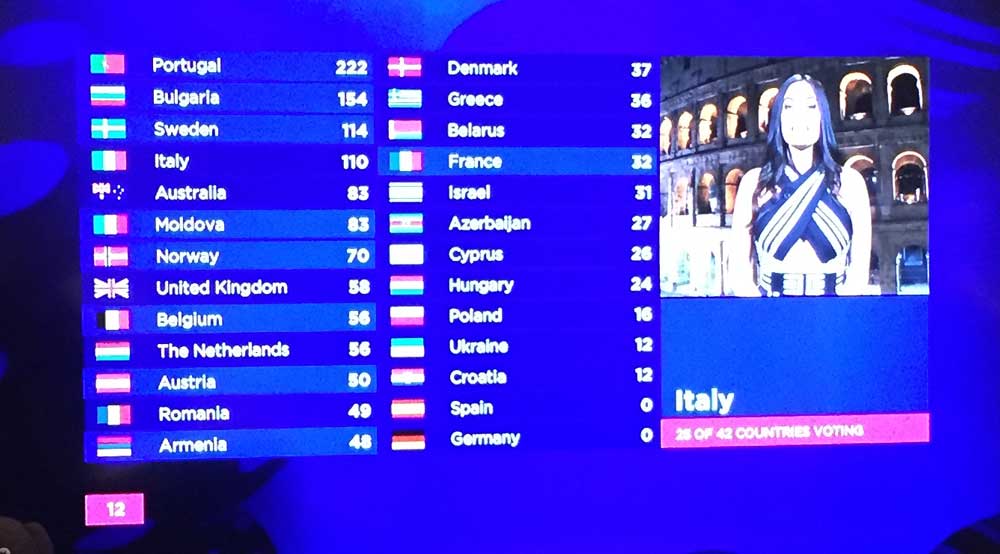
Nor were the contestants. This year’s contest didn’t produce much in the way of songs I have found burrowed inside my head. I still have a fair few knocking around on my playlist from last year, so it was disappointing to see a less-exciting array this year.

At least Romania gave us some rap yodelling.

Decent year for Britain. We were on the left-hand side of the scoreboard for quite a long time.

But maybe that is a sign that we have let out expectations drop too long. We have won it five times. Great commentary by Graham Norton, as ever.

Oakwell Hall parkrun review

May 30th, 2017 | Sport

I try to test up for the week or two before a race. However, as I’m also chasing my Parkrun 250 club (I have a long way to go), I couldn’t resist doing a Parkrun the day before the Leeds Half Maraton.

As I didn’t want to do my usual 10k run there-and-back, that meant driving. And, as I was already in the car, we decided to take the whole family and head over to Oakwell Hall.

As a Parkrun, it’s a mixed bag. The organisation is brilliant. There were loads of volunteers and cake at the end. It was also scenic: probably the most scenic I have done with the exception of Lyme Park. However, on the downside, a lot of it is done on man-made pathways that are only two people wide. Therefore, for the first 2 km, you are constantly being bottlenecked and forced to stop or slow down. It’s two laps, and nobody lapped me, despite me taking it easy.

Why one restaurant charges $100 for a cheesesteak sandwich

May 29th, 2017 | Business & Marketing

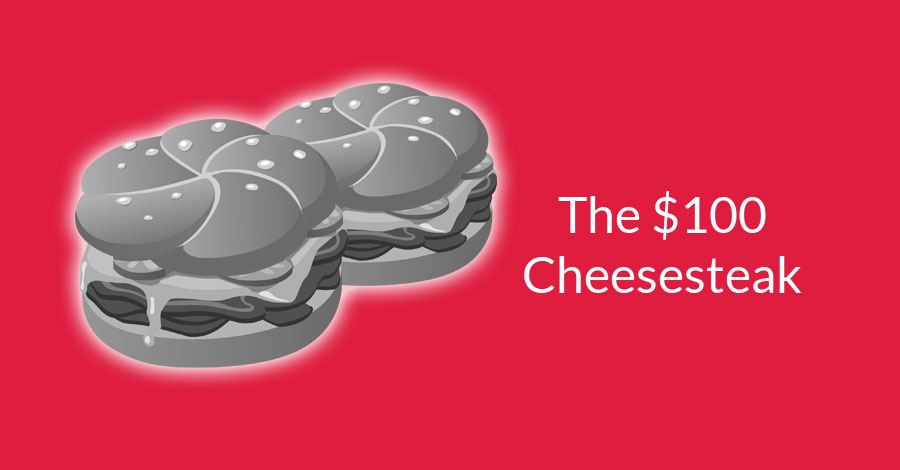
The humble Philadelphia cheesesteak sandwich is an American classic. It is not a complex recipe: some bread, some steak, some cheese. Rarely do all the ingredients fit into the name of a dish. It is also available everywhere.

So, how does a small steakhouse located in Philadelphia charge $100 for one? That is the question that the owners of Barclay Prime asked themselves. They found a way: and rocketed their restaurant into the spotlight in the process.

No ordinary sandwich

It goes without saying that this is no ordinary cheesesteak. It starts with a freshly baked roll (baked in-house, of course) and features Wagyu rib eye and foie gras and is finished off with plenty of truffles.

Oh, and it comes with half a bottle of vintage champagne.

Does anyone buy it? It turns out that they do. Often, groups will get one to share between them. Doing this brings the cost down while granting everyone the bragging rights.

But the truth is that Barclay Prime do not have $100 cheesesteak on their menu because they think it will be a good money-spinner. That’s not what most of their customers are there for.

But, as I bang on about in my book Why Restaurants Fail, the success of a joint has little to do with the food. It is about whether a restaurant understands customer psychology and marketing. And Barclay Prime do.

The ultimate promotional tool

In Contagious: Why Things Catch On, professor of marketing Johan Berger talks about how to make a marketing strategy go viral. He uses Barclay Prime as a case study because it is one of the best examples of how a restaurant can use a single dish to create a massive wave.

People like to share interesting stories. It gives them social currency. And a restaurant charging $100 for a cheesesteak is an interesting story. It is hard not to tell people about it.

It is not just the novelty of it that helps it go viral. The dish fulfils many different points on the imaginary checklist of things that make something contagious.

It provokes emotion. In this case, it is almost a sense of awe. “Wow, someone is charging $100 for a cheesesteak and people are buying it!” There is shock value there: you can’t hear that and not perk up.

Being able to say you have had the cheesesteak makes you look like a big shot. And when it comes down to basic psychology, most of us are subconsciously trying to impress the opposite sex with displays of wealth.

People are proud to have eaten it. They take photos of it and share it on their Facebook, Instagram and Twitter. Celebrities turn up to try it which then provides even more credibility.

And the media start writing about it, too. In the age of 24-hour news, the machine is ever hungry for anything they can fill some air time or column inches with. This story gave them that.

Critically, you cannot tell the story without talking about Barclay Prime. Nobody would be interested in “I ate it at a restaurant”. You have to say which restaurant it is. And that gets Barclay Prime talked about by everybody.

How to make your food go viral

Making great food might get your restaurant talked about. A few people might tell their friends that they had a good time and the food was nice.

If you want more people to talk about your food, make it really bad. The adage goes that people will tell three people about a good experience, but ten people about a bad experience. The additional promotion might not be so good for business, though.

But if you want everybody to be talking about your restaurant, you need to come up with something that has the potential to go viral. It’s not random: there are rules to it. Barclay Prime understood those rules, and if you can learn them too, you have the same opportunity.

What are the rules?

Your food, or the experience, needs to invoke emotion. And this needs to be a high-arousal emotion. People who are full and content are not in a high state of arousal. They do not rush to share photos or tell their friends about it.

High-arousal emotions include surprise, delight and awe. How can you work these into your food? It’s no easy challenge. People enjoy great food, but they talk about novel food.

Here are some more examples:

  • The Fat Duck offers “multi-sensory food” including an egg and bacon ice cream and dishes that include audio elements.
  • Red’s True Barbecue makes a doughnut burger. It is a burger but served inside a doughnut, rather than a bread bun.

Critically, you have to deliver on your promise, too. Your food has to be both amazing and novel. The $100 cheesesteak works because it is so surprising: but also tastes divine thanks to the Wagyu beef and truffles.

Summary

Charging $100 for a cheesesteak was a bold move for Barclay Prime. But it paid off big time. People bought it, but more importantly, people talked about it. Rather than spending on advertising, people were paying them.

If you want your food to go viral, it needs to provoke emotion. You need to fill people with awe, surprise and delight. And you need to deliver on that promise. If you do, people will tell their friends about it.