Archive for the ‘Religion & Politics’ Category

Inclusivity at the World Cup

Wednesday, December 14th, 2011 | Religion & Politics, Thoughts

Most of us reading this will live in 2011, in the Western World. We’re used to living in a civilised society, summer riots aside. But thanks to globalisation, we’re increasingly finding a clash of cultures on many issues.

A good example of this is the World Cup hosting duties being awarded to Qatar.

The problem with this is that being an Islamic nation, homosexuality (well, homosexual acts, but it amounts to the same thing) is actually illegal there. These are enforced, including against people just on holiday there[1].

Yet, in 2022, thousands of footballers, and several hundred thousand fans will travel to the country. And many of them will be gay. Even if you take a conservative estimate that 1% of people are gay, that puts at least 1,000 gay people in a country where just being themselves – is illegal.

That’s mental. I really don’t think we should be OK with this situation.

Luckily, everyone’s favourite football character Sepp Blatter stepped in to offer some advice. He explained “I’d say they [gay fans] should refrain from any sexual activities.”[2]. Problem solved, I guess. Of course, this is from the same man who doesn’t seem to have a problem with racism[3] and is constantly dogged by allegations of corruption[4].

So what do we do about it? Well, we could get all the major countries to boycott it. Or at least Western countries, who knows how much control His Holiness commands over South America’s attitudes, and the answer is probably quite a lot. We could certainly give it a try though, and it would be a worthy cause. As Bryan Goldberg points out, Qatar also has a terrible human rights record, and that’s just the start of it.

Of course, we probably won’t do that, not because missing the World Cup would be mega rubbish (which it would be, that would be the biggest drawback of not taking part), but because it would be politically insensitive for us to call a nation out on the fact that their state religion is the most intolerant faiths currently practiced in the modern world (then again, maybe I’m just being over critical – it’s easy to take 534 verses out of context5).

Instead, our fearless leader David Cameron hopes that bringing the World Cup to Qatar will show them that homosexuality is actually fine[6]. Apparently, “football can be a great engine for social change and a change of attitudes” and, when it comes down to it, at least there is such a thing as an Islamic soup kitchen.

So, eleven years from now, in an attempt to change social attitudes, we will send hundreds of our citizens into a country where making love to their spouse is a crime punishable by execution. Wonderful.

[6]: http://www.insideworldfootball.biz/worldcup/bids/qatar/8894-cameron-believes-qatar-world-cup-can-change-attitudes-towards-homosexuality – this resource is no longer available

Faith Schools: Why They Matter

Tuesday, December 13th, 2011 | Religion & Politics

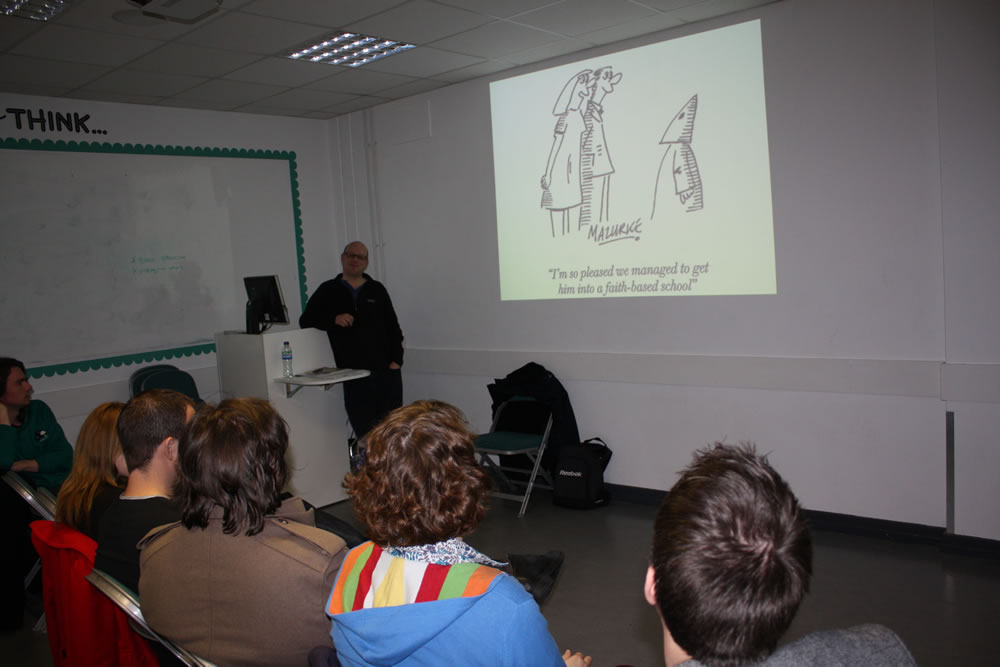
Dan Bye, council member of the National Security Society who has previously spoken at my Skeptics in the Pub group, presented a talk to the Atheist Society on faith schools and why they are such a ridiculously bad idea.

Unfortunately such talks often end up preaching to the converted – the people who turned up were the people who already know faith schools are a scar on our education system whereas those who aren’t all that aware didn’t manage to make it down.

One point of debate I found though was whether you were morally responsible if you lied to get your child into a faith school (pretending to be religious) because it was the best school in the area. Ultimately, the answer is, yes, you are a bad person. But much like Mr Cameron, I can probably see why parents do it.

My parallel was that with some recent health issues, I am now cashing in on my private BUPA cover. Yet, I’m not really sure if I agree with the idea of private healthcare. Surely the ideal in our society should be that everyone has access to healthcare and you shouldn’t be able to buy a longer life?

It’s a bit of a hypothetical argument because of course you can – those who come from a more well off, well-educated background tend to have a healthier lifestyle, make more educated life choices and avoid manual labour and as a result, end up living longer. But ignoring the pragmatic truth, what would we want as an ideal for our society? Probably one in which your health was not compromised by the amount of money you have.

Ultimately we decided that it wasn’t the same thing – while I have BUPA cover, I also continue to make my contribution to taxes and therefore the NHS, and by using my BUPA cover to go private, I am actually freeing up more time for NHS staff to treat others.

But I didn’t have to rationalise myself into that position before I decided to use my BUPA cover. I just did it, because my health is more important to me, to the point where even if I decided I did morally disagree with it, I would have been happy to compromise my principles because when you’re having a medical crisis, it’s very hard to think about anything else other than getting better.

Similarly though, if I had a child, I suspect that my emotional drive which has allowed evolved life to flourish so well would quickly turn the override switch to make sure that I put the future of my own child ahead of any sense of moral duty.

So yes, lying to get your child into a faith school does make you a bad person. But I think I can understand why people do it.

P.S. Just so we’re clear, there is no evidence that faith schools do produce better results. This is only applicable if your local faith school happens to produce better results, which could be down to a number of factors, but faith almost certainly isn’t one of them.

The trouble with war

Monday, December 5th, 2011 | Religion & Politics, Thoughts

Following on from yesterday’s post about Remembrance Day and my recent thoughts about venerating the military, I thought I would expand a bit on the subject based on some of the conversations I’ve had.

As I said in my previous post, it is interesting that we give so much respect to those who gave their live in war, but so little respect to those who gave their life to keep our supermarkets stocked with fish, or our power plants stocked with coal – even though fishing and mining are high fatality industries. You’re right, I wouldn’t want to go to war and I’m glad someone else is willing to do it, but I would equally hate working down a mine!

The standard response to such a question is that people choose to work as fishermen and miners, but then people choose to sign up to the military as well. We don’t operate any kind of conscription in the UK, beyond that of economic conscription that I discussed in my previous post, so every solider in the army today signed up voluntarily, and is handsomely rewarded for it. Interestingly, I’ve never heard anyone say “no, don’t bother paying me, I’m joining because it’s the right thing to do, not for the money.”

It becomes a different matter when we were talking about actual conscription during the world wars, when people were forced to go to war. But the sad reality of it is, if you were conscripted into the army, that wasn’t really a noble sacrifice was it, because you didn’t have a choice. It’s a pretty horrible truth, but a truth none the less.

Actually, the truth is much more horrible when you think about conscription. It wasn’t that these people chose to die for their country, it’s that we, as a society, murdered them. We executed them; sent them to their death. They didn’t decide to go and die, we made them go and die. If anything, Remembrance Day should share a similar tone to Holocaust Memorial Day.

What I found most interesting about the attitudes of people surrounding Remembrance Day, was how closely it fits in with what I said in my previous post about venerating the military. The upper classes sending the lower classes to die in their wars.

This was most apparently in specifically two of my friends, Kieran who retweeted extensively on the subject and Rebecca whose idea it was to go out to the war memorial on November 11th. Now, neither of these are people are either royalty nor right wing nutters. I consider them both good friends, but they are both from well off backgrounds and if I was to pick the two of my friends most likely to vote Conservative, I would pick those two (except for Norm, who I suspect mostly votes Conservative because even though he wants to vote Labour now, could never admit he was wrong about a political party 😉 ).

Indeed, when I had a discussion with Rebecca about it, and pointed out that if you sentence someone to death using conscription (it’s a to lot easier because you don’t have to bother with that whole trial by their peers nonsense), then it’s not really a noble sacrifice because they didn’t choose it, she seemed to get very flustered and told me to “just stop it now.”

That upset me somewhat because I felt like she was trying to claim the moral high ground, even though she was speaking on the pro-war side and I was suggesting it isn’t cool to sent working class people to their death just so our dirty work can get done. But this isn’t about my sensitive emotional centre carefully wrapped in an excessive amount of hair.

The response struck me as that of a religious believer when you’ve just found a massive problem with their worldview. They don’t know what to do. “You can’t say that – that’s not on the script! Don’t you understand how this works. We have to maintain the veneer or all the poor people will realise that our wars aren’t worth them dying for.”

Though as I discussed in my previous post, just because I feel that is the truth, doesn’t provide an answer as to what to do about it. Maybe we do need to keep even our own minds ignorant of the beast below.
Remembrance Day

Sunday, December 4th, 2011 | Religion & Politics, Thoughts

I’ve suddenly found myself becoming a prolific anti-war blogger and I didn’t really mean for this to happen. But, I have a severe tendency to play Devil’s Advocate and with it being Remembrance Day as I write this, I suddenly seem to have become left wing.

So, I was just wondering. Remembrance Day. My question is, what exactly are we remembering?

I think the answer is, we’re remembering those who gave their lives in war, but I think a more accurate way to put my question might be, what is the purpose of remembering?

It isn’t to honour the dead, really. No remembrance ever is. Because they’re dead, so it doesn’t benefit them. Funerals are a great example of this, we don’t hold a funeral for those who have sadly passed away, we hold it for the people left behind to help them move on with their lives. A funeral is to give ourselves closure and help us to deal with the loss.

So perhaps the answer is to give ourselves some closure about the whole incident.

However, I’m not sure that is the case because we do it every year. I think, actually, Remembrance Day has a far more important purpose. We remember to remind ourselves that this should never happen again. Although clearly, we didn’t remember hard enough the first time, so more accurately, this should never happen a third time.

That I think is a worthwhile and noble purpose, one which the tradition of Remembrance Day is well worth dedicated time and effort to. It makes the world a better place.

Unfortunately, when I look at this, I wonder how much good it actually does. We don’t even have pictures of some of them.

Armistice Day

Saturday, December 3rd, 2011 | Events, Religion & Politics, Thoughts

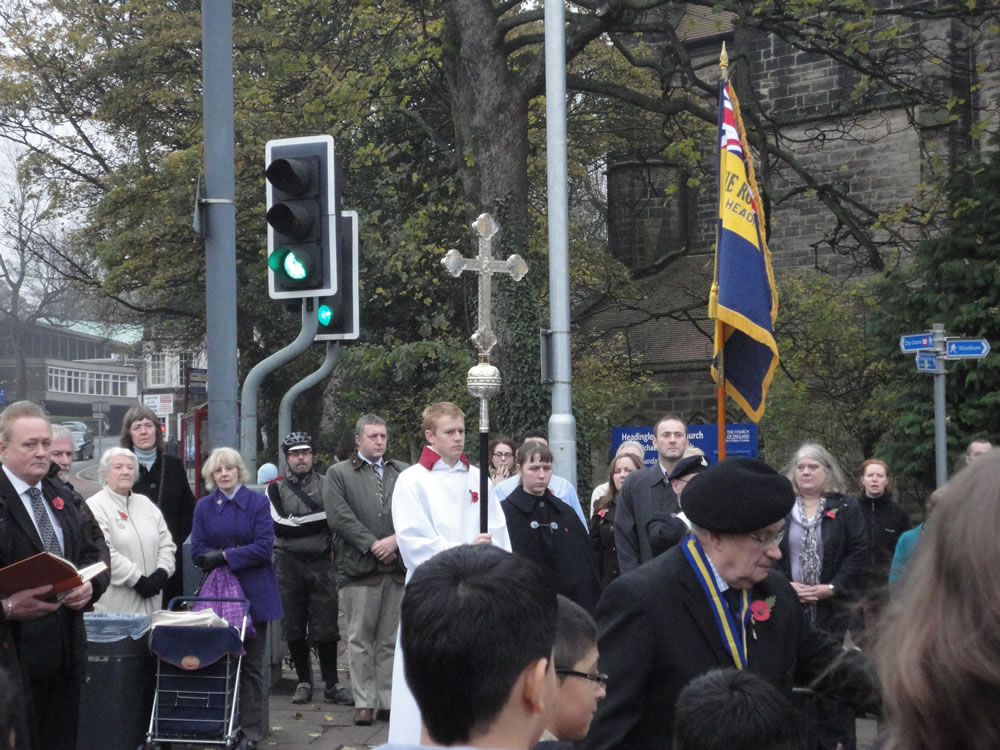
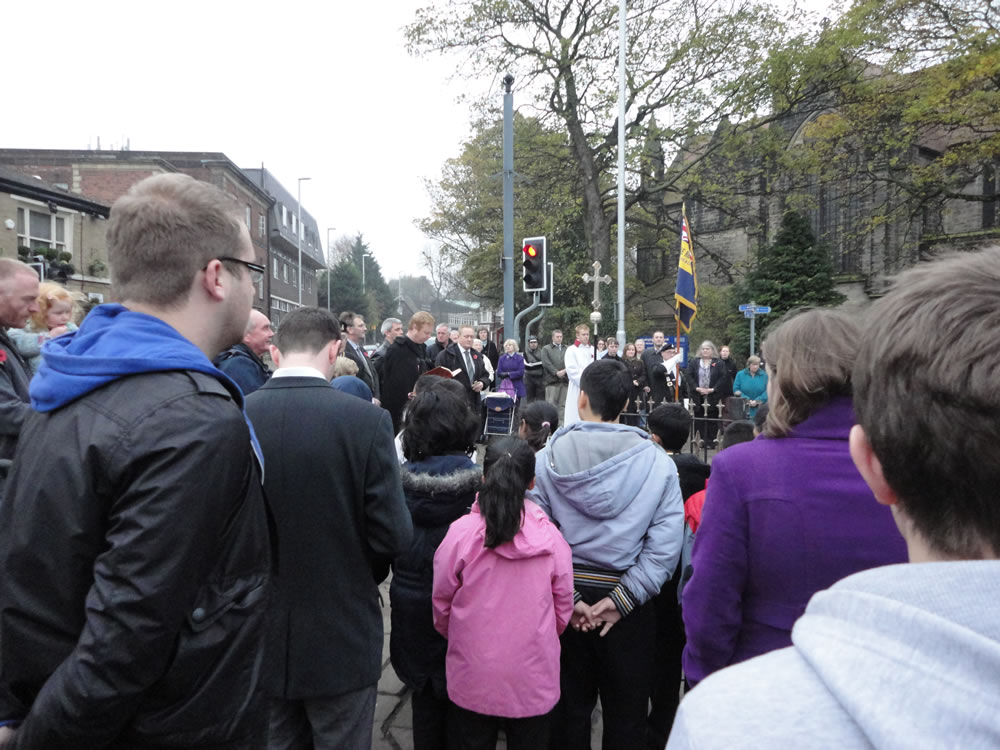
I’ve never really done much for Armistice Day since entering the world of work. However, given the opportunity to get out of work for five minutes, we headed down to the war memorial in Headingley for the short ceremony. The saddest part of the whole tragedy is that getting us out of work for five minutes was no more an unjustified reason for so many people to die, than war itself.

It was striking how religious the ceremony was. But then of course, non-religious people never really did anything for their country, so it only seems fair to forget them.

The age of maturity

Saturday, November 26th, 2011 | Religion & Politics, Thoughts

Ben brought up an interesting topic in this month’s Humanist Community of Leeds meeting. The topic was the discrepancy between the age of sexual consent and the age at which you can vote.

I’ve heard the argument before, and similar ones that I don’t buy in to – for example, you can pay tax at 16 but you can’t vote until you’re 18, therefore it could be suggested it is unfair that you pay tax to a government you can’t vote for.

I don’t find this a credible argument because you don’t necessarily pay tax as a way of gaining a vote in democracy. You’re vote in democracy is a guaranteed right, even if you’re not paying any tax at all – it simply isn’t available until you’re ready to make an informed decision. The reason you pay tax is primarily to pay for public services such as hospitals and schools, which you almost certainly have been making use of at the age of 16.

The argument for having a different age for sexual consent and voting is a less clear cut one though. Indeed, Ben made a very powerful argument that I think may be winning me over.

The reason we don’t let people vote until they are 18 is because we’re worried they would vote for the wrong political party – a lot of them might vote for the Monster Raving Looney Party, or the BNP, or the Greens, or one of the many other fringe parties and being the pretentious grown up real adults we are, we don’t approve of such free spiritedness.

But it’s very hard to make the case that they can do more damage with a vote, than they can do by having sexual relations.

Actually, having a vote probably won’t make any difference. Voter turn out is low in young people anyway, let along even younger people and at the end of the day, it’s only one vote and there are lots more people aged 18 or over than there are aged 16 or 17.

Sex however, can be quite damaging. Initially it could appear this is primarily damaging to themselves which is perhaps why we allow it (whereas voting for the wrong political party would be damaging to society and is therefore not allowed), but of course sexual relations can be incredibly damaging to society.

Unwanted children are a huge problem because they don’t get properly parented and therefore become out of control kids and eventually grow up to become criminals, breaking into your house and filling up those prisons that your tax money pays for. Not to mention the possibility of ending up in care, which our tax money also pays for.

In fact, one of the biggest reductions in crime has come from legalising abortion[1], simply because most of the unwanted pregnancies that would have previously been born and grown up to become criminals are now getting aborted. Unwanted pregnancies cause problems, as do STIs which are also prevalent with young people who engage in regular exual intercourse with multiple partners.

Therefore, giving how damaging it is in society, it is very difficult to justify having a higher age for voting than you do for sexual consent.

Venerating the military

Wednesday, November 23rd, 2011 | Religion & Politics, Thoughts

The Humanist Society of West Yorkshire recently had a discussion about whether we should participate in an official remembrance service, as many faith groups do and the BHA had encouraged local groups to join in by laying a wreath. In the end, the group decided not to, because there was a split feeling about whether it was a cause we should endorse.

After all, killing is wrong. The military is not a positive institution; it’s an institution of death. In a perfect world, it wouldn’t exist.

Of course, we don’t live in a perfect world and the military does exist in practically every country in the world. Even Switzerland has a small armed forces. War is even arguably necessary – though in some cases, significantly less so than others.

Yet we, as a society, have a great reverence for the military. The United States, significantly more so. Being a solider is something noble, something to be looked up to, people sacrificing themselves for their country. This is an attitude reinforced by many different groups within our society and is deeply ingrained in our traditions.

But, I would propose that this isn’t congruent with many peoples attitudes. Many people, humanists and religious people alike, strongly detest the idea of war. A million people marched through the streets of London to protest against the Iraq war.

And anyway, is it really that noble to sacrifice yourself in such a way? The military is quite well paid, not to mention you get accommodation, free meals, a company car (so the advert picturing a young soldier driving a tank would have me believe) and get to travel round the world going to a variety of interesting, if a little dangerous, places.

Not to mention the fact that many people sacrifice themselves in a similar way. Yes, soliders can be seen as putting their lives on the line to keep us safe (though when was the last time sovereign British territory was under threat – The Falklands?), but similarly fishing is a very dangerous industry, it has one of the highest mortality rates of any industry and yet we don’t have remembrance days for those who lost their lives filling Tesco with cod fillets. This special privilege is afforded to the military alone.

However, I think I have an idea why. Much like Doctor Who’s The Beast Below, it’s hiding a terrible secret that none of us really want to acknowledge – giving special reverence to the military is the only way we can trick poor people into going to fight the wars we want to fight, so that we don’t have to go ourselves.

That, I suspect, is the cold hard truth.

We always send the poor to go die in our wars. It’s not officially conscription but when you have little education, little chance of gaining a well paid job and improving your quality of life significantly, the military must sometimes seem like the only option. It’s called economic conscription. It’s a condition created intentionally by us as a society, to railroad poor people into joining the army.

However, simply by forcing people to join up, doesn’t mean that you can automatically get them to lay down their lives for their country. You can brainwash them of course, and that is essentially what basic training is, but the best way is to make them think there is some noble, higher cause for what they are doing.

In a way, there is. It’s just not one that we think is personally worth fighting for. Because given the choice, none of us are going to join the military. It’s not worth it – we might die, and there is nothing worse than dying. That’s the worst thing that can happen to you, the end of the line, nothing is worth your life.

But we have a problem. Wars need to be fought. This is a whole separate argument in itself, but lets agree that whether we personally agree that wars need to be fought or not – society on balance, especially the government, thinks that wars do need to be fought. More so in more clear cut examples like defending ourselves from invasion in World War II, but also you could argue that humanitarian intervention is countries like Iraq, Zimbabwe and North Korea are well worth while.

So the problem is this – how do you fight a just war, if you’re not willing to actually do it yourself because you don’t want to die and as a rational human being you therefore won’t go to war. The solution is simple. You convince other people, through a combination of creating a society which venerates the military and coerces poor people with economic conscription, that it is noble for them to lay down their lives for their country.

But what do you do about this? If you agree that there is in some situations an argument for war, such as those mentioned above, and you agree that as a rational human being you don’t want to go to war, then have you rationalised yourself into a corner where you can morally support the propagation of nobility in military sacrifice? I’m not sure what the answer to that question is yet. Answers on a post card.

Netherlands considers ritual slaughter ban

Tuesday, November 22nd, 2011 | News, Religion & Politics

The BBC recently published a report on the Dutch parliament voting on a proposal to ban ritually slaughtered meat – and it’s expected to pass.

I found the BBC news report rather biased. For example, when reporting on a Halal butcher, she said that if the law came into force he would “be forced to leave.” This is entirely misleading, it sounds like they are about to get kicked out of the country or something, not just having to sell meat slaughtered differently – which he could do. Or get another job. Or import his meat from outside The Netherlands. Or use pre-stunned Halal meat, like they have in New Zealand.

Not to mention that the debate genuinely is about animal welfare. There is a reason we have independent advisory boards, and the Farm Animal Welfare Council has spoken on the issue.

Of course, ultimately they lose the argument thanks to a good bit of Godwin’s Law. Much like Chanoch Kesselman’s offensive video broadcast on Channel 4, the rabbi in the news piece equated the banning of Kosher meat to Holocaust. I fail to see how one appalling act of slaughter justifies him committing another, but it doesn’t matter, he resorted to Godwin’s Law and therefore loses the argument by default.

Homosexuality and natural selection

Tuesday, November 15th, 2011 | Religion & Politics, Science

In my post on the taste of meat I briefly mentioned the problem of homosexuality and natural selection. That is to say, why does homosexuality persist, given you think natural selection would weed it out because gay men are not having babies and therefore not propagating their genes.

Many people have taken this to mean that homosexuality is some kind of defect, where something has gone wrong because the ultimate goal in life is making babies and these people aren’t doing it.

Luckily, Rich had written a talk to explain all about it. Having first delivered it at Rationalist Week 2009 he also delivered it to Leeds Skeptics later that year.

I’ll skip the interesting, but never the less skippable introduction and get straight to the answer.

Genes do different things based on their environment. So in one person with one set of genes, a specific gene may do one thing – but take that gene out and put it in someone else with a different set of genes and it may well do something else.

This is what we find with the so-called gay gene. In men, it is more likely to make them homosexuals. But put that same gene in a woman and it actually makes them more fertile. Therefore a woman carrying the gay gene is more likely to have children and even though some of them may turn out to be homosexual men, the women will continue to propagate the gene because of their increased fertility.

There are other factors at work as well of course – homosexuality is a combination of both nature and nurture. Having the gay gene doesn’t mean you will be gay – it just increases your chances. But that is Rich’s argument as far as the genetic side goes.

Car insurance discrimination

Sunday, October 9th, 2011 | Religion & Politics, Thoughts

Currently, car insurance providers offer cheaper premiums to women than they do to men. Purely because of your gender.

That’s discrimination, it’s immoral and thanks to a ruling by the European Court of Justice, it will be illegal from the end of next year. Yet most, if not all, still seem to carry on with the practice.

Having discussed the problem at work today, we decided to put it to the test on a price compassion site. Here were the results. The bottom quote I used the name Mr Chris Worfolk, whereas in the one above, I used the name Miss Chris Worfolk.

As you can see, there is a £60 difference. For Jason, the difference was far bigger – over one hundred pounds, just because of his gender.

Interestingly, just after I had generated the second quote, I received a call from Hastings Direct asking me if they could fill in some further details to complete my quote. I politely explained to the woman that I only generated the quote to prove they immorally, and soon to be illegally discriminate based on gender.

Now, you can argue that males should pay more for their car insurance because they cause more expensive accidents and so it is statically justified.

But, you would be wrong. This is exactly what discrimination law is designed to deal with. After all, just because a small minority of males do drive like boy racers have have some pretty big accidents, doesn’t mean that one individual, such as myself, is any more of a high risk than a female driver – so why should I be punished?

It’s easier to see how wrong it is, when you look at other factors you could discriminate on. Lets use the classic example – you wouldn’t charge someone more for their car insurance because of the colour of their skin, even though we have the same as to what skin colour we are born with as we do over what gender we are born into – none.

You could argue that there won’t be a statistical difference between sin colour, but again this doesn’t hold up because you could look at an area where there is a statistical difference – crime for example.

Non-white minorities are more likely to be convicted of a crime. There are a number of reasons for this, most notably that these minorities tend to be in lower social brackets and lower social brackets produce more crime, so even though for those social brackets minorities have a similar conviction rate to majorities, overall they have a higher conviction rate – but the one thing I think we can all agree on, it isn’t because they are black.

But if you go purely on statistics for an entire group alone, as car insurance companies do, we should be more suspicious of black people in the UK and police should stop and search them more.

We don’t do this, because it would be utterly wrong.

We treat people like individuals and don’t hold them accountable for what people who share arbitrary characteristics with them such as skin colour, ethnic origin, sexual preference or (usually) gender. Because to do so would be wrong. Including if you’re selling car insurance.