Archive for the ‘Books’ Category

The Expectant Dad’s Survival Guide

Thursday, May 19th, 2016 | Books

The Expectant Dad’s Survival Guide is a pregnancy book by Rom Kemp.

It cuts a nice channel between the super-factual but not very engaging What To Expect, and the highly engaging but far less informative Fatherhood: The Truth.

It covers the practical stuff that you need, what to expect during labour and the first few months after the birth. As with other books, he has surveyed his friends to back each point up with a range of anecdotes. More interestingly, there is also advice from a midwife (who is also a father himself), The book does a far-better-than-average job of not patronising (no “oh wow, you want to be involved with your baby – but you’re a man!” that is common with pregnancy books).

expectant-dads-survival-guide

Nordic Cookbook

Monday, May 16th, 2016 | Books, Food

the-nordic-cookbook

The Nordic Cookbook is a book on Nordic cooking by Magnus Nilsson. The first thing you notice about it, is it’s size. It’s not quite A4, but it’s not far off. The depth of it is even more impressive. It weights in at over 750 pages. It’s so heavy: a real struggle to lift with one hand.

It covers Finland, Sweden, Denmark, Norway, Iceland and the Faroe Islands.

It is well presented. Being so big, it does not have great structural integrity. The spine moves around a lot. It stays open really well though. It also comes with two ribbons for saving your place.

The chapters, organised by food type, are broken up with full-page photographs from across the Nordics. Many of which are very beautiful. It’s printed in quite a dull matte.

The recipes themselves are poor. Nilsson starts the book by explaining that you won’t be able to make a lot of the recipes because you will not be able to get the ingredients or do the cooking methods. He’s right. There are maybe five recipes to a spread, so there are probably somewhere in the region of 800 recipes in this book. How many did I manage to make? 19.

This is in-part by design. He explains that is a guide to Nordic food, rather than a recipe book. Some of the stuff is just boring. Everything is served with boiled potatoes. Some stuff you have to cook for six hours.

You also need some local knowledge. There is typically a paragraph or two for each recipe, one explaining where the dish comes from and a brief one explaining what to do. Other than that though, you are pretty much on your own. Photos are few and far between. Occasionally you get a full-page photo with six dishes on it, each one labelled. So there is sometimes a pictorial guide, sometimes not.

If you are after a book that captures the essence of Nordic cuisine, tells you how to make authentic recipes and contains some beautiful photography, this is a good book to get. As a straight-up cookbook, it’s less useful.

Fatherhood: The Truth

Saturday, April 23rd, 2016 | Books

Fatherhood: The Truth is a 2004 book by Marcus Berkmann.

Compared to other books I have read, this one is not showing its age too much. It is a world away from the carefully laid out fact-type books. Berkmann writes in rambling prose loosely grouped into chapters. This means that it is difficult to pick out the actual advice and facts from the book, but does make it far more entertaining. In many places, it is laugh-out-loud funny.

True to its word, it is also an honest book. It does go into detail about all the piss, shit and sick you can look forward to in your first year as a parent (and beyond).

And the sleep. Dear god, the sleep. Of anything I have read, this book has given me the most pause for thought as to what we have actually got ourselves into. Still, probably best to keep chipping away at those hopes now so that nothing remains by Christmas.

After all that, it would have been nice for a more positive ending to the book. There was one, but I was feeling pretty depressed by that point. Still, at least it inspired me to start researching babysitters…

fatherhood-the-truth

Year of the Hare

Thursday, April 21st, 2016 | Books

The Year of the Hare is a 1975 novel by Arto Paasilinna. It was originally written in his native language of Finnish, and has since been translated into many other languages, including the English I read it in.

It tells the story of a journalist who is bored with his life. He runs off into the wilderness with a tame hare he becomes friends with. He travels around Finland meeting people and picking up odd jobs.

Given it has been a best-seller in both Finland and France, and won several awards, I was expecting more. Perhaps it is the fault of the translation, but the language is uninspiring. I could not help myself wondering what Steinbeck could have done with such a tale. I probably missed the point though.

The plot is silly, and it is supposed to be. It is both a description of what it means to be a Finnish man, and a farce. Being British, some of this is lost on me. Looking back though, it does accurately and humorously sum up many of the elements of Finnish culture.

year-of-the-hare

Summer on the Horizon published

Sunday, April 17th, 2016 | Books, News

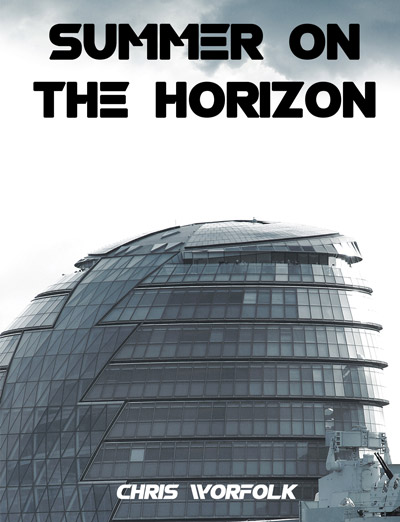
I am pleased to announce that my first novel, Summer on the Horizon, is now available for buy.

I will be honest with you, it is not the finest literary work ever produced. It was written for NaNoWriMo and while the first half has been proof read by someone other than me, the second half has not. There are no mistakes in it though. It is set 400 years in the future. Anything that appears to be a spelling or grammar mistake, it actually just the evolution of the English language.

Here is the description:

Four hundred years in the future, humanity is struggling with the impact of climate change. The population has been forced to retreat into enclosed cities. As one newspaper aptly puts it, ‘humanity is domed’.

I have had the proofs sitting around since January. Then began the long process of editing. It is a lot easier to do when you have a physical copy you can scribble in.

The book is available from the following locations:

summer-on-the-horizon

What to Expect When You’re Expecting

Wednesday, April 13th, 2016 | Books

What to Expect When You’re Expecting is a book by Heidi Murkoff and Sharon Mazel. I read the forth edition.

It is packed full of information. Hundreds of pages arranged into several columns per page. Chapters take you through each month of the pregnancy, as well as things like diet and exercise, and what to do in special situations such as twins, complications and even loss.

It covers labour, delivery and the first six weeks after giving birth as well, though with increasing references to “you can read more about this in our next book” style advertising.

The chapter on diet is just intimidating. You get the usual list of foods to avoid. It also suggests a pregnancy diet to ensure mum is getting everything she needs, and the list is long: 3 servings of protein, 4 servings of calcium, 3 servings of vitamin C, 3-4 servings of salad, 1-2 servings of fruit, 6 servings of whole grains, 1 serving of iron-rich food, 4 servings of fat, 8 glasses of water and a vitamin pill.

All of that while monitoring your salt intake and avoiding all the food on the banned list. I spend quite a bit of time planning our diet and I have no idea of much of that we are hitting. This was a guilt trip I did not need.

It is targeted almost exclusively at mums. There are occasional references to the other partner, but these are few and far between. There is a chapter for expectant dads, but it contains almost no useful information. It felt like a short Q&A that gives obvious and patronising suggestions: have you considered helping out around the house? Why yes, yes I have, because it isn’t the 50’s anymore.

It is also tediously American. If this the “bestselling pregnancy manual” as the cover claims, you would think they could put out a UK edition. Everything from the language used, to the medical information and drugs referenced, is a bit off for the UK. You would think given how similar our cultures are they you would not get such a wide gap. However, it often felt like it when reading.

I did appreciate it’s tip to skip the chapter on complicated pregnancies. As the book says, I can read that if we run into a complication.

There is loads of information in this book. From that perspective, I am glad I have read it. However, my guess is that there is probably another book out there that gives you the information in a much better way.

what-to-expect

She’s Having a Baby – and I’m Having a Breakdown

Sunday, April 3rd, 2016 | Books

She’s Having a Baby – and I’m Having a Breakdown is a 1998 book by James Douglas Barron. You can tell it has been around a while because you have to get a physical copy of it: no ebook or audiobook, just one of those old-fashioned tree-based things.

It was recommended to me by a friend and is designed to offer helpful advice to men.

It certainly has the format right. It is a bullet pointed list of 237 things. That is more than the amount of pages in the book. Each has a heading and a paragraph of text to read, making it very easy to consume. You can pick it up and read a little bit more in a minute, or you can find yourself spending an hour on it, telling yourself you will just read one more entry.

I found it was showing its age. Or perhaps its target demographic. It is clearly written by an involved dad, but feels like it was from a time when that was not the usual situation.

The advice contained in it is useful stuff to know, but I don’t feel like I learned much. Perhaps it helped reinforce what I had already guessed (be nice to your wife, buy a carseat, things will change, etc) and a few things I perhaps didn’t expect, but nothing I felt I would have missed if I had not read the book. It was quite a good laugh though.

shes-having-a-baby

Hugh’s Three Good Things

Saturday, April 2nd, 2016 | Books

Three Good Things on a Plate is a cookbook by Hugh Fearnley-Whittingstall. I am a self-admitted Fearnley fan. This book does even more to reinforce that. Sure, he is an Old Etonian toff who’s recipes take hours to prepare because he has nothing else to do than mess around at River Cottage. However, it is unfair to level him as a one dimensional chef.

In River Cottage: Light & Easy he threw off his traditional indulgence in complicated recipes to demonstrate dishes that could be made in 20 minutes. In Three Good Things he shows us what you can do with three simple, easily-accessible ingredients.

If you have the title of the book, you have the whole concept. Each recipe is based around three ingredients. This does not include basics such as salt, pepper, oil, etc, but for the most part sticks to the rules. Don’t like one of the three ingredients? He even includes a “swaps” section to suggest other ingredients you can replace it with.

As with the River Cottage cookbooks it is beautifully presented in hardback with a full-page photo for each recipe. As is also typical, the book contains a lot of recipes, coming in at 400 pages.

One of the downfalls of simple recipes is that you have to get on with the ingredients. I found myself skipping past quite a few recipes because, even given the swaps, I couldn’t make them work to suit both my own tastes and those of Elina. Many of the dishes are quite light and therefore perhaps more suitable for lunches than dinners.

However, we did get plenty of dinners out of the book and those that we did were usually wonderfully quick and simple to prepare.

hughs-three-good-things

Feel the Fear and Do It Anyway

Wednesday, March 30th, 2016 | Books

Feel the Fear and Do It Anyway is a book by Susan Jeffers.

You might think it is a book for people who have a lot of anxiety. However, in my opinion, it really isn’t. It’s a self-help book for people who like to be sold self-help books. There is a big difference there. Self-help books are generally full of unhelpful nonsense, for example.

The book does not read like something written by someone who has experienced anxiety, nor does it offer sensible advice to people who have. It’s in the title: feel the fear and do it anyway. Oh, if only we had to tell everyone that. It doesn’t matter if you are so wracked with anxiety that you have not been able to leave the house for six months. Just go to a party and talk to loads of strangers! Then you will feel much better. Problem solved.

Apparently, the answer is that people simply need to decide not to be afraid. Trying to adopt a positive attitude can be helpful of course. However, this goes back to my point that this book is for people who feel a little nervous about something, rather than people with genuine anxiety. If you’re pitching the book at those people, it might well be helpful.

She also recommends filling your life with positive people. This is a difficult line to walk. I want realistic friends. Friends that will provide me with some grounding in reality. Can you be both positive and offer rational, honest advice? I hope so, but I’m not sure.

In short, I don’t think this book is worth reading.

feel-the-fear-and-do-it-anyway

Mindfulness

Tuesday, March 29th, 2016 | Books

Mindfulness, “the life-changing bestseller”, is a book by Mark Williams and Danny Penman that offers an eight week course on mindfulness. If you have not come across mindfulness before, it is an attempt to take the clinically-useful bits of meditation and put them into a framework that improves people’s mental health.

I’ve now done it all, and it hasn’t changed my life.

The book comes with a CD that includes guided meditations. It’s 2016, so I don’t have a CD player, or an optical drive on my computer. In the past four years of not having one, this has been the first time it’s really been a problem as I couldn’t find all of the audio tracks online. In the end I had to resort to using my PS3.

It gets quite time consuming as you go on. In week five for example, you are doing three meditations per day: 8 minutes, 8 minutes and 10 minutes. This is more than half an hour once you had set up and cool down times. That is quite a lot. The default reaction of some is to say “just half an hour a day to improve your mental health? Surely that is worth it?” They’re probably right, but half an hour is still a long time. I could use the same time to go for a run every day, and look after my physical health, something which I don’t find time to do.

Nevertheless, I did want to give this an honest go, so I did make the time. Did it provide some benefit? I’m not sure. I don’t feel any different. However, given that I am not measuring my anxiety on a daily basis, and that you would expect to see fluctuations anyway, I find it very difficult to objectively say whether I have seen an improvement. However, it does not feel like I have. Perhaps I need some high-anxiety situations to come along to truly find out.

mindfulness-book