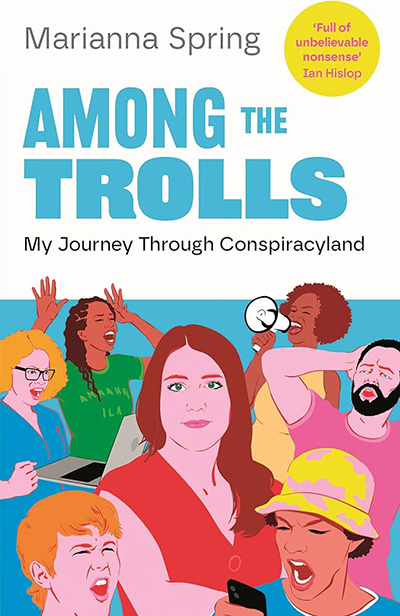
Among the Trolls: My Journey Through Conspiracyland is a book by Marianna Spring. Spring is an investigative journalist with the BBC and the book charts her work exploring conspiracy theories and disinformation. This ranges from some seemingly well-meaning but misguided COVID deniers to the state-sponsored disinformation campaigns being used to interfere with elections worldwide. It also gives an insider’s view on some of the hate that those speaking up for the truth, especially women, can be subjected to.
The conspiracy side of things broadly matches with what I would expect from years of sceptics, Humanism and psychology. Often, conspiracy theorists have these conspiracies as part of their identity, meaning that facts are broadly not important because there is a psychological need to be part of these communities. However, confronting them with the real harm they are doing to other people can be helpful.
In terms of disinformation, it was eye opening to have someone with a deep understanding elucidate how much this is going on. While I generally don’t give much weight to the comments on a political Facebook post, as it is likely to be a vocal and highly active minority, rather than a representative view, it could also increasingly likely to be bots or foreign state actors, while at the same time, the efforts of legitimate journalists are undermined by those in power making these exact same claims.
Spring comes across as someone with a lot of journalistic integrity. Which, in some ways, is annoying. People like and Michael Lewis and Malcolm Gladwell write captivating books, sometimes at the expense of sticking to the truth. Spring’s book is interesting, but not captivating, because she insists on there being complicated answers, rather than one simple but wrong one that is easier to digest. It was a good read, but I was able to put it down for large periods.
I was also aware that I was reading this at a time when multiple peer-reviewed research papers had shown the BBC was biased against the former Labour leadership (Schlosberg, 2016; Wring & Ward, 2020), and over 100 of its own staff had signed a letter saying the BBC’s coverage of Gaza was biased. These issues highlight how difficult it is to have an unbiased view.
Don't have time to check my blog? Get a weekly email with all the new posts. This is my personal blog, so obviously it is 100% spam free.
This entry was posted on Thursday, February 26th, 2026 at 11:00 am and is filed under Books. You can follow any responses to this entry through the RSS 2.0 feed. Both comments and pings are currently closed.