Posts Tagged ‘health’

Fatboy Christopher

Tuesday, March 8th, 2016 | Life

I’m concerned about my weight piling on as I approach 30 so I bought us a set of scales for the bathroom. When they arrived I climbed on – and received a nasty shock. Admittedly I have not been on the scales for quite a long time, but I have put on 9kg since I did.

This takes my BMI from a just healthy 24.9 to an officially overweight 26.1. I never really doubted BMI as a measurement, mostly because I was in the healthy zone. I accepted it doesn’t work at the edges (short people and tall people), but it seemed like an accurate measurement for me. Now, I am thinking about joining the angry club of deniers.

I have recently been looking up the NHS recommendations for diet and exercise. Here is how it compares:

What the NHS recommends What I do
“at least 150 minutes of moderate aerobic activity such as cycling or fast walking every week” At least four and a half hours (270 minutes) per week. I walk to work every day, 25 minutes each way, and walk to lots of other locations in town too, including running up and down the stairs from my apartment on the 4th floor. It’s not concentrated exercise, but it is quite a lot.
or “75 minutes of vigorous aerobic activity, such as running or a game of singles tennis every week” Two hours of vigorous aerobic exercise per week, on average. I spend 30 minutes doing the Parkrun on Saturday morning and three hours training with Leeds Samurai. I don’t always make both events, and sometimes there is standing around at training, but overall it averages to more than 75 minutes a week.

I consider my diet quite good as well. I eat fruit every day, home-cook most nights, always with a range of vegetables, and sometimes without meat. We limit out intake of junk food and processed meat and I try to take healthier snacks to work, though with limited success. Just one area strikes me as a problem: we have a pudding every night.

I won’t claim my diet is perfect but it has given me pause for thought. If I can apply so many good behaviours to my life, like walking to work, like exercising every week, like eating plenty of fruit and vegetables, like avoiding junk food, which is all hard and takes a lot of self-control on my part, and still put on weight, how hard is it to stay thin? For some people, who put on weight easier than I do, it must be almost impossible.

I’ve heard people advocating that obesity is entirely the fault of the individual and they should just eat less. To me, this seems like a gross over-simplification of a complex problem. Even to practice some of these positive behaviours requires significant lifestyle changes: much of my time is structured around planning my diet and my exercise, and actually doing them, and I’m not even winning. If someone says to you “right, you need to find an extra hour per day to fit in exercise and planning and preparing healthy meals” where would you find that time? How would you motivate yourself to carry through on that, every day, for the rest of your life?

Many of us have found that time of course. But probably not overnight. Chances are we were raised with some of those behaviours also. If you are a regular person, who hasn’t had that benefit, and has a lot to deal with in their lives, it is a difficult problem to solve.

And that’s the story of how I tried to turn my weight gain into a social justice issue.
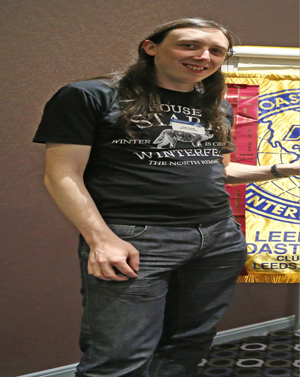
fat-chris
A recent photo of me

The mindful walk home

Wednesday, February 3rd, 2016 | Health & Wellbeing

city-street

My mindfulness book has recommended that I do one thing a day and really concentrate on it. I decided to do my walk home. I usually listen to an audiobook on the walk to and from work, so I decided to skip one of those and ‘be mindful’. Evening made the most sense as there was more light.

Here is what I noticed:

Not thinking about things is really difficult

Like super-difficult. My mind has no off switch. It wants to think about things. They are loads of things to think about. It doesn’t even need to search for things: there are already a bunch of topics rolling around in there that need some CPU time. How is one supposed to banish it all? I suppose that is the exercise.

The world is really noisy

Cars, planes, trains, alarms. They all make loads of noise. And when you are not allowed to think about anything, you think about that. It occurs to me that train tracks properly run alongside rivers because rivers have the flattest and most consistent ascent. However, that means the one potential haven of peace and quiet in cities often has trains running alongside it. The mode of transport I passed most frequently was the canal boat: all of which were silent.

I miss my thinking time

My mind jumps from topic to topic, but I actually enjoy most of the thoughts. My walk is good imagination time. I don’t really want to experience the world. It’s Leeds. It’s cold, dark and full of ugly buildings.

I don’t feel like I usually miss anything

According to the books, people experience this great awakening about how much of life they have been missing out on. I did not experience any of that. I probably did notice things more, but nothing that was interesting or memorable. It was just the regular world that is always there.

A big fat placebo

Saturday, June 6th, 2015 | Thoughts

A friend of mine, who works as doctor, told me that doctors were banned from prescribing placebos (and not telling them they are placebos) because of the ethical issues surrounding it.

However, I recently decided to verify the fact and it turns out it isn’t true. In fact an article on BBC News shows that 97% of doctor’s had admitted to prescribing a placebo at least once in their career.

This raises interesting questions for alternative medicine. Is there room for treatments that provide the proven clinical benefit of placebo even if that is all it is?

Things you should know about antidepressants

Sunday, April 26th, 2015 | Foundation, Health & Wellbeing

Recently we were discussing antidepressants at the mental health charity I run and I thought it would be worth sharing a few points that came out of the discussion.

Antidepressants are approved by NICE

There is often a lot of scepticism around antidepressants. Irving Kirsch has a whole book about it. However, not only have the drugs been shown to work in clinical trials (I’m not sure how much faith I put in this since All Trials) they are also approved by the National Institute of Clinical Excellence. They are not immune from bias of course, but they generally don’t mess around because the NHS has a limited budget and it’s their job to make sure it is spent on stuff that works.

Antidepressants are trial and error

There are a number of different drugs on the market, some of which do different things and at different doses. These affect people in different ways. That means that what helps some people might not help others, and what gives some people side effects will be fine for others.

It also means that your prescription is trial and error. There is a good chance the first one you get prescribed will not work, either because it is the wrong drug or because you need a different dose.

That means if the first thing you try does not work, try not to get disheartened.

A side effect of antidepressants is suicide

April is suicide month sadly. More people kill themselves in April than any other month. The working theory is that the improved weather conditions provide people suffering from depression to go out and doing something. Unfortunately, this something is sometimes taking their own life.

If true, this would also explain why one of the side effects of antidepressants is suicide. Luckily the limited data available on it suggests that if you inform patients to expect these feelings and be aware of them you mitigate the risk.

Has anyone else noticed medicine doesn’t really do anything

Tuesday, September 23rd, 2014 | Thoughts

I am sure this is mostly unjustified and when I am not in a lot of pain I will change my mind. However, I have been feeling this way a lot over the past year or two. That isn’t because the entirely field of medicine is useless. It would be stupid to say that. But it can feel that way.

I am sat here with a mouth ulcer. It really hurts. I have put the gel on it, and I am on ibuprofen, and it still hurts. They come every six months, sometimes more regularly, and there doesn’t seem to be anything that can be done about them.

Or how about my anxiety. Years and years working on that and it still rules my life.

Or how about my rhinitis? Making it so hard to breath that my 57 year old dad is significantly faster than me at Parkrun (that is my excuse anyway). Embarrassing nasal rinses, steroid sprays and even surgical intervention has not fixed it.

Or there was that time I got a sore on my leg. I got some cream and some steroids to apply to that one and still it didn’t go away. It was only months later after I had given up that it eventually disappeared.

Elina has issues two. Like many people, she suffers from migraines. It destroys many a weekend. Yet every time we got to the GP they give her the same medication and tell her to come back if anything changes. If something does change, she goes back and gets told the same thing.

If I was to come up with a list of problems that I had gone to my GP about and they had managed to fix, I am sure there would be some items. But not many. I can only think of one or two off the top of my head. Most of them, they haven’t.

Luckily, there are two people who have developed a somewhat-effective treatment that gets me through. Their names are Ben, and Jerry.

Is it time to hit the bottle?

Sunday, September 7th, 2014 | Health & Wellbeing

Last year, Business Insider and Time wrote about how non-drinkers die significantly younger than moderate (or even heavy!) drinkers. Non-drinkers and heavy drinkers are similar, while moderate drinks enjoy the longest life expectancy.

Of course I knew about similar studies already. These results have been floating around for a long time but it is difficult to apply it personally. Drinking is associated with being social and non-drinking is often associated with being a pessimist. Both of these factors would lead to drinkers living longer. However, those are all overall trends – whether I drink or not, I am still quite social (I think) and a pessimist.

However, Time then also linked to a 2009 study that indicated that non-drinkers are also at the highest risk from depression and anxiety. If true, the best think for your mental health would be to drink moderately. This study wasn’t controlled for underlying health conditions, so again it is difficult to draw conclusions about how to live my life.

Pacific Standard also wrote a lengthy article looking at a lot of different factors. They note that the biggest meta-analysis which looked at over a million people confirms the same results – drinking is the healthy option. Though again, it fails to control for underlying health problems that stop people from drinking.

Should we eat meat?

Thursday, September 4th, 2014 | Food, Health & Wellbeing

should-we-eat-meat

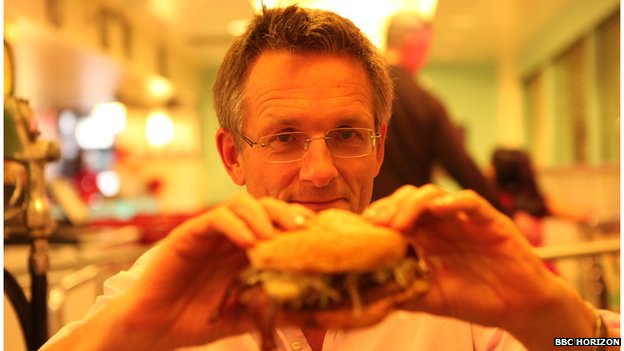
Last month Michael Mosley made a Horizon documentary on “should I eat meat?”.

The documentary started with a discussion similar to the one we recently held at Leeds Skeptics. The spoiler answer is yes. Meat is incredibly nutritious and often a centrepiece of family life. A non-meat diet can be very healthy (after all life-long vegetarian Lizzie Armitstead won an Olympic gold medal), but you do need to think a bit more about your nutrition. Meat makes it easy to get it.

The program dismissed white meat (chicken, poultry, fish) as not showing any signs of negative health effects, and so concentrated on red meat (beef, pork, lamb) and processed meat (bacon, sausage, ham).

Red meat comes out somewhat negative. It could have some positive health effects, but overall it is a negative. We’re just not sure why. Originally it was thought to be saturated fats, but this does not seem to be the case.

Processed meats come out hugely negative. 35 grams per day could increase your risk of premature death by as much as 30%. While the Harvard study and European EPIC study disagree on red meat, they come together on the danger of processed meat.

So what should we conclude?

Cutting down on your meat is probably helpful. Processed meat should be cut out entirely; red meat should be eaten 1-2 times per week at most. Such a diet will not only extend lives by as much as five years on average but will increase the quality of life of those years as well.

The holiest way to get healthy

Saturday, August 30th, 2014 | Health & Wellbeing, Video

Never felt better

Saturday, June 21st, 2014 | Religion & Politics

If Stephen Hawking were British, he would be dead. That is what one critic of Obamacare said.

You can probably safely assume then that the author did not consult the latest World Health Organisation rankings of the world’s healthcare systems. It was getting increasingly out of date, with the latest rankings being published in 2010. However, even back then it could be seen that Britain ranked a reasonable 18th while the United States could only manage 37th, equal with Costa Rica.

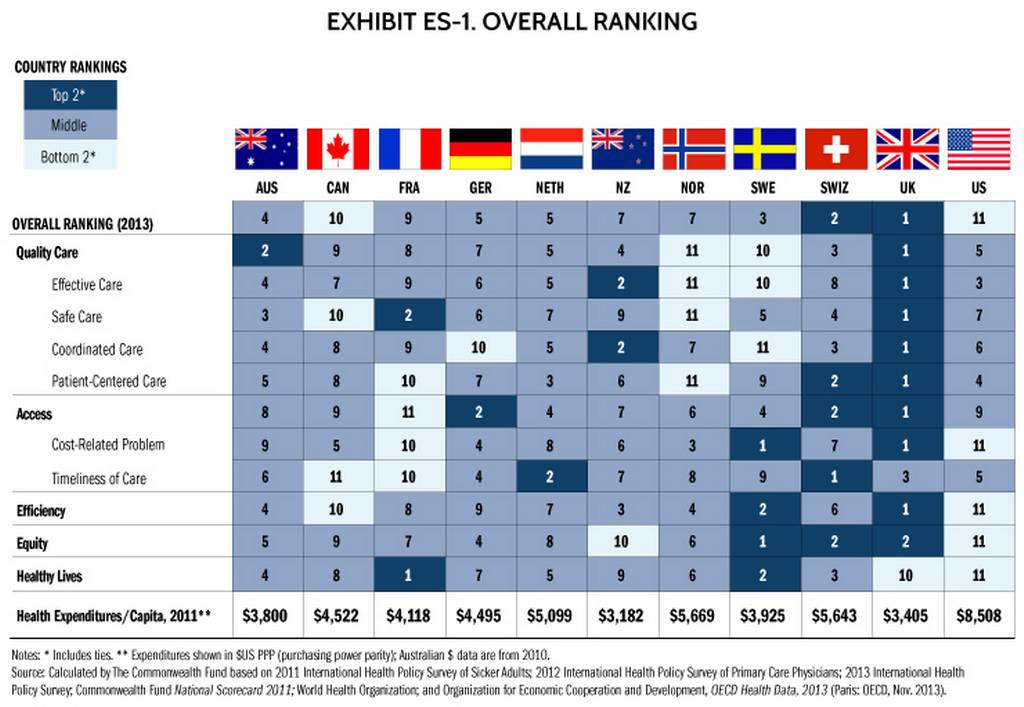
However, a new study by The Commonwealth Fund has ranked the NHS at the top.

It is quite a selective list. No Spain or Italy for example, both who ranked excellently in WHO’s 2000 report, along with many very small nations such as San Marino that arguably do not count. But does include a health selection of systems including France (the 2000 first place) and Sweden and Norway that you would expect to do very well in all things quality of life.

In fact Britain does so well that it comes first in every category but three – equity (joint second), timeliness (third) and healthy lifestyles (tenth).

Healthcare compared

Click for a larger view.

Not everyone agrees with the report though. The Euro Health Consumer Index (EHCI) produce rankings also and their 2013 report puts Britain a lot further down the list.

EHCI 2013

Click for a larger view.

However, as I will almost certainly lead a happy life in the belief that I do have the best healthcare in the world, I’m going to choose to believe the former. Go NHS!

Give me your organs

Tuesday, May 20th, 2014 | Religion & Politics, Thoughts

The UK currently has an opt-in system for organ donation. That means that unless you have specifically opted-in to donate your organs after you die, the NHS cannot have them. Sort of. Actually, whether you are signed up or not, they just ask the family. The NHS advice that making your views clear can be helpful. But actually, it is fairly irrelevant.

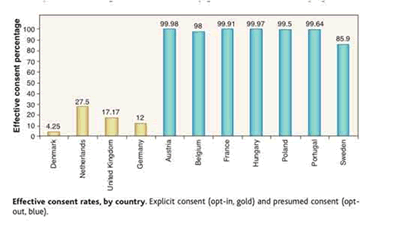
So a graph like this might look pretty scary:

organ_donation

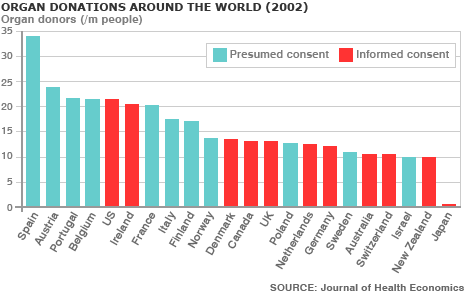
But actually, it is not a complete disaster, because they will just ask the family anyway. I still think it would be worthwhile for the UK to switch to an opt-out system though. In general, you get higher donation rates in countries with an opt-out system.

organ_donation_2

If they also just ask the next of kin, it is not immediately obvious why this should be the case. Perhaps the relatives are less likely to say no if they do not feel the individual felt strongly enough to opt out, or perhaps there is just a general culture of that being the done thing. I am just speculating, I have no idea.

To me though, I wonder why there would be an opt-out at all?

What is the point? I cannot think of a good reason why the NHS should not just have a free right to help themselves to my organs after I am dead.

Perhaps you could make the argument that the family don’t like the idea. Or that it makes some people uncomfortable with the idea that their organs will be removed after they are gone. But organ donations save lives. Are these the reasons that are worthy of condemning someone to death? I would argue they are not.