Introducing Rent A Goat
April 1st, 2018 | Life

Are you looking for an eco-friendly way to remove weeds from your garden or land? Then look no further than Rent A Goat.
Are you looking for an eco-friendly way to remove weeds from your garden or land? Then look no further than Rent A Goat.
Last month, I wrote about people wasting money on advertising. I said it happens a lot: and it does. Here are two more examples I found this month.
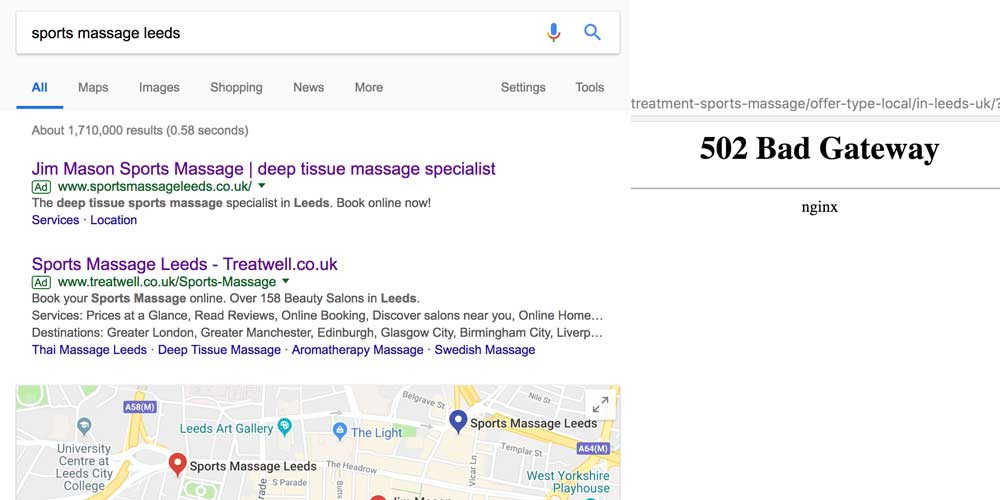
First, here is a Google AdWords advert by Treatwell. Except the page does not work.
And here is an advert from Live Strong. The link does work: it takes you to the article on tips for women over a 40. Bear in mind that you put the targeting parameters in when you create a Facebook ad. Facebook knows I a man under 40, so they could easily exclude me from seeing an ad I obviously have no interest it.

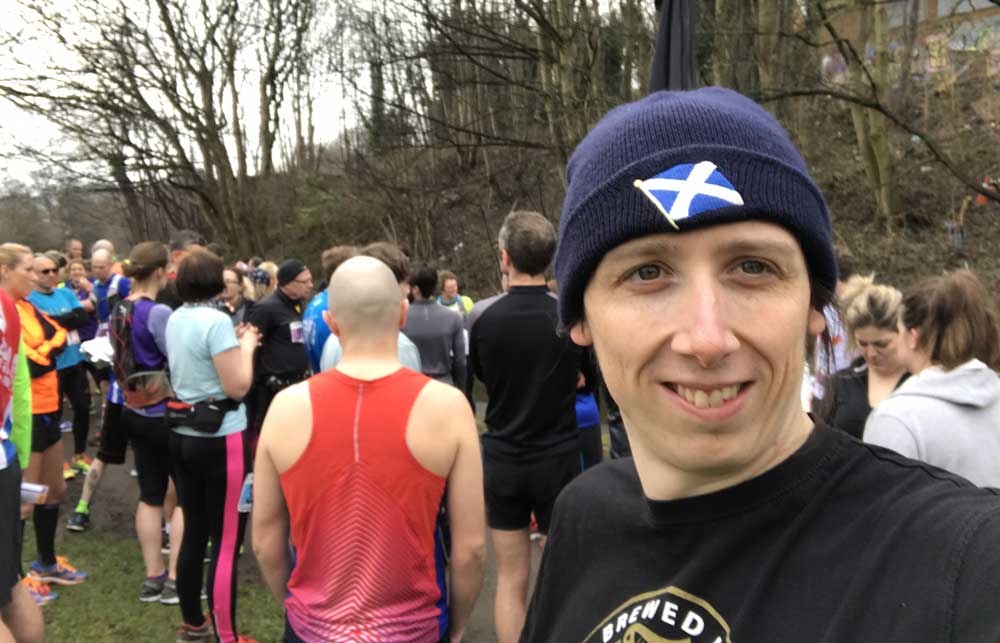
On Saturday I ran the Leeds Liverpool Canal Canter, organised by It’s Grim Up North Running.
I’ve set some big fitness goals for 2018, including running a sub-2 hour half marathon. It was looking like I would smash this really early as the Sir Titus Trot took place on the first Saturday of January. 6 days in and I could nail one of my goals. But, alas, I injured my foot and had to miss the race.
This was my next opportunity. Things didn’t start well: there was a big queue for registration. I thought 45 minutes would be enough time to get registered and prepared for the start time, but it wasn’t. So, I came to the line flustered and having forgotten my energy gels.
Armed with nothing but a handful of jelly babies from the water station, I set off. The start reminded me of Parkrun: hundreds of people trying to fit down a narrow canal towpath. I felt sorry for the cyclists coming the other way. But, as the race drew on, everything thinned out.
Despite going off faster than in training I managed to maintain the pace the whole way. In the end, I clocked in at:
1:52:24
This is slightly below my watch’s time of 1:52:36. This knocks the socks off my time of 2:03:42 from last year’s Leeds half marathon. They are not directly comparable, though. The Leeds half is much hillier and takes place in May when the weather is a lot warmer. So, 11 minutes is a hefty chunk to take off, but I wouldn’t be running the Leeds half as quick as I ran this.
Regardless, though, it is a new PB, strikes off a big fitness goal for the year and means that I beat Eliud Kipchoge to the sub-2 hour mark. Sure, he’s doing the full marathon, but then he’s a professional marathon runner from Keyna and I’m a computer programmer from England, so in terms of how hard it was to beat the 2-hour mark, I think it’s similar (and I did it without cheating).
Post-race, there were was a huge selection of free cake to be had.

The custom medals are pretty cool, too.

Fantastic Beasts and Where to Find Them is a book by J. K. Rowling. I listened to the audiobook, which is narrated Eddie Redmayne.
I had seen the film, which also stars Eddie Redmayne as Newt, but I wasn’t really sure how the original book would translate into an audiobook as it seemed like a picture book about monsters, something that wouldn’t lend itself well to being without said pictures.
But that wasn’t the case. In large part, because of the production values used. Each entry was accompanied by music and sound effects that added atmosphere. That, combined with my existing knowledge, provided a rich description.
It did make the entire thing quite short: around 2 hours. Which was fine; I like short books.
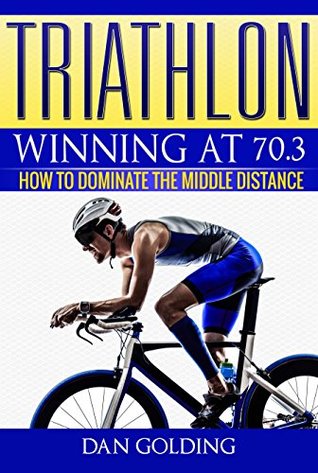
Triathlon: Winning at 70.3: How to Dominate the Middle Distance is a book by Dan Golding.
Golding is the same guy that wrote Triathlon For Beginners, which I wrote about in December. I think that Winning at 70.3 is probably even better.
Although it is focused on middle distance triathlon (also known as 70.3 or half-ironman), I think this is worthwhile reading for anyone doing Olympic distance because it will put you in good habits. Sure, you can get away with less core strength training at Olympic. But do you want to get away with it, or do you want to stay injury free and put in place patterns that would allow you to move up if you ever wanted to? I would suggest the latter.
It’s not a beginners book, so if you’re not familiar with the basics of triathlon or the terminology, you might struggle. It’s not inaccessible, but it doesn’t break things down to anywhere near the same level as Golding’s other book.
For me, one of the most useful parts of the book was the specific exercises and tests to do. For example, how to measure your sweat rate so you know how much water to drink during a race. Others bit were a bit confusing. Golding talks about heart rate zones, for example, saying they are the “common” ones. But they don’t seem to map onto Garmin’s, or the 7 zones a lot of cyclists talk about, so it’s not clear how to incorporate them into training.
It’s also full of helpful tips, such as saving time by strategically weeing towards the end of your swim and thus avoiding the chance that you’ll have to go again.
All in all, an excellent guide to triathlon.
The Language Instinct: How the Mind Creates Language is a book by Steven Pinker.
I have raved about Steven Pinker before. How the Mind Works is a fascinating read and The Blank Slate has changed my worldview more than almost any other book. Along with two or three others, it is probably the more important book I have ever read.
Sadly, I could not get on with the The Language Instinct in the same was as Pinker’s other books. It was too technical for me, even as someone currently studying childhood language development (the book is about language more broadly, but can’t help but stray into development).
I found Pinker’s other books highly accessible, but, despite my best efforts, I couldn’t get into this one. Ultimately, I had to give up.
I have no doubt that the many positive reviews about this book are accurate. If you understand the material, or just stick with it, perhaps you get a lot out of it. It just wasn’t the case for me.
My new Udemy course is live, Sport Psychology for Athletes. Here is the blurb:
Are you interested in sport psychology? Maybe you’re an athlete or a coach looking for practical techniques. Or maybe a student or lifelong learner who loves sport.
If so, this is the course for you. It will provide you with a beginner-level grounding in the theory, but with a focus on practical application and how to use the techniques in your own life, whatever level of sport you play.
We won’t just be looking at slides, we’ll be out there exploring, with quizzes, workbooks and practical exercises to work through.
We’ll look at:
Click here to check it out.
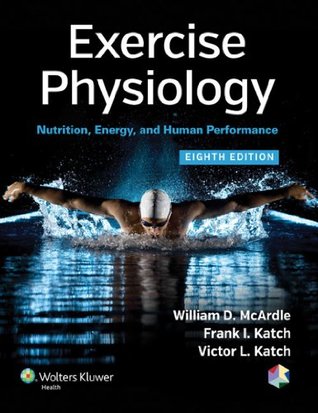
Exercise Physiology is a textbook by William D. McArdle, Frank L. Katch and Victor L. Katch. I read the eighth edition, which was also an international edition.
I wasn’t a big fan of the book. It’s dense: while there are lots of sections and graphics, it felt like a lot of heavy text and I struggled to focus on taking so much in. A lot of it got very technical, which may or may not be a good thing depending on what your current knowledge of the subject is.
As a minor point, they re-use the same full-page photos for the chapter title pages, which is disappointing.
It’s a comprehensive textbook, but a bit too heavy for me. Literally: it’s 2.9kg.
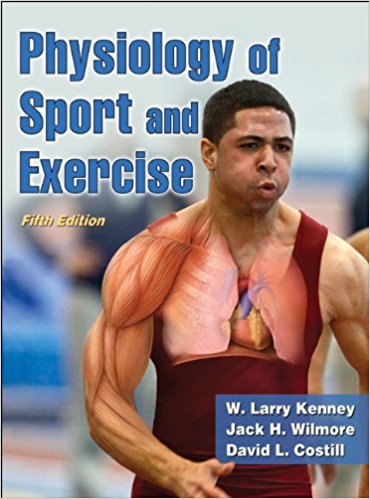
Physiology of Sport and Exercise is a textbook by W. Larry Kenney, Jack H. Wilmore and David L. Costill. I read the fifth edition.
I got on well with this book. I was able to read in detail the sections I was interested in and skip straight to the “in review” summaries of the sections I wasn’t. There are case studies which help add a bit of colour to the otherwise dry science.
It starts with a description of what happens to the body when you exercise, before moving to talk about the theory behind training. It has sections for environmental factors and individual differences such as age and sex.
There is a lengthy discussion of nutrition and doping, too. Though, unfortunately, I haven’t found any safe and easy ways to dope. I don’t fancy withdrawing a load of blood and re-injecting it six weeks later, so it looks like I’ll just have to keep puffing away on the old salbutamol.
Keep on Running: Science of Training and Performance is a book by Eric Newsholme, Anthony Leech and Glenda Duester.
It’s a popular title for books: a search on Good Reads turned up over a dozen books with the same title. This one is to do with what it says on the tin. That is, it is about how to run faster and longer.
The key takeaway message is that you are slowed down by your weakest system. So, you have a great vo2 max, but if your lactate threshold is terrible, you’re not going to be setting any records. Similarly, you can have all the slow twitch fibres in the world, but you need a decent running economy to run a marathon fast.
This means working on all of the bodies systems. It’s not enough to just do the same thing over and over again. You need variety in your training routine to work on each part of the body.
Of course, vary your training system is nothing new or surprising. But the book breaks down the details in a clear and easy-to-follow manner.