Chris Worfolk's Blog


Mr Foley’s

July 12th, 2010 | Events, Humanism

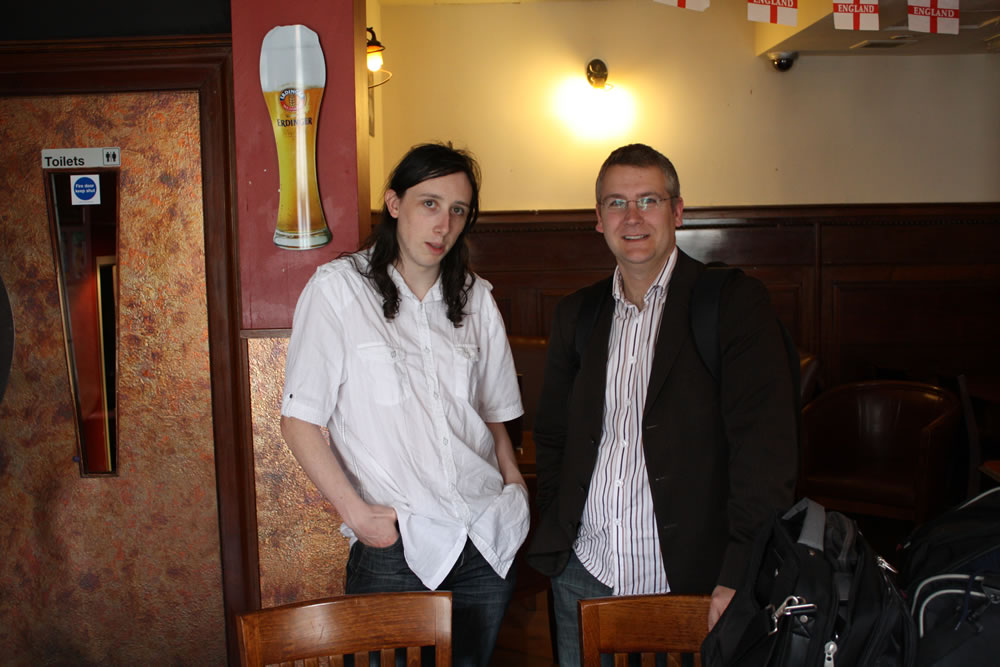
The June Skeptics in the Pub meeting was held at Mr Foley’s on The Headrow. It’s interesting that when you describe it as “opposite the art gallery” nobody really knows where you mean but as soon as you say “next door to Wildcats” everyone knows exactly where it is!

For the innocent of you, Wildcats is one of Leeds’ many strip joints.

June’s talk was by Stewart Richmond who is the man that proved magnetic bracelets are of course a load of nonsense. Good times.

Secular Portal Resource Library launches

July 8th, 2010 | Foundation

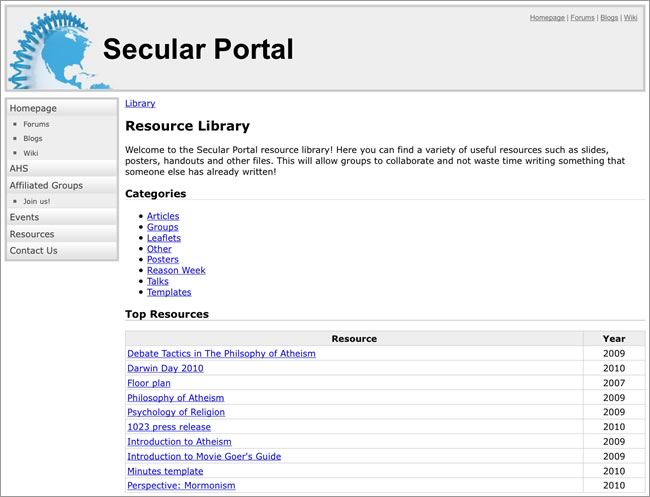
We’re pleased to announce the launch of our latest web resource, the Secular Portal Resource Library! This is exactly what it says on the tin – a library of resources for secular groups. It houses a huge variety of talks, slides, presentations, letters, forms, document templates and much more all available for secular groups to make use of.

Many groups develop some fantastic resources which would be of great value to other groups and we’re hoping this will provide a great way for groups to exchange material and save time and energy on not having to start from scratch every time they want to put together a top quality presentation, leaflet or document.

There are already several hundred documents in the system with more on there way so do browse around and see if you can find anything which may be of use to you. If you would like to contribute any documents for other groups too, please email them over to us!

Freakonomics

July 6th, 2010 | Books

Freakonomics: A Rogue Economist Explores the Hidden Side of Everything is a book co-written by Steve Levitt and Stephen Dubner. It explores quirks of society and challenge some commonly held ideas about how the world works, providing better explanations.

For example, why do drug dealers most drug dealers live with their mothers? The answer is that they are earning less than they could make at McDonald’s. Drug dealing is a pyramid scheme at the people at the bottom are on less than minimum wage.

The most controversial chapter of the book looks at falling crime rates in New York. This is the shining example of broken window theory, as Malcolm Gladwell discusses in The Tipping Point. Dubner and Levitt show this is nonsense. Other cities in America that did not implement zero-tolerance also experienced this drop in crime. What fits the actual data far better is that it was a result of legalising abortion, which leads to would-be-criminals simply never being born.

freakonomics

Engage launches

July 4th, 2010 | Foundation

We’re pleased to announce the launch of the foundation’s newsletter, Engage. This will be a quarterly newsletter containing all the latest news, events and projects that the foundation is working on. The first issue looks at Enquiry 2010, Atheist, Sunrise and several other initiatives. You can read the online version here.

Gluttons for punishment

June 27th, 2010 | Tech

There was a really interesting poll on SitePoint today asking whether freelance web developers were working this weekend. The results were as follows:

  • 43% said they always worked weekends
  • 34% said they sometimes worked weekends
  • 20% said they worked weekends if necessary
  • Only 3% said they never worked weekends

What we can probably assume from this is that on any given weekend, more than half of people who do freelance web development are working. Crazy people. Anyway, I would love to chat more about this but I have code to write…

Gijsbert elected to E&D Committee

June 18th, 2010 | Foundation

I’m pleased to congratulate our trustee Gijsbert who has been elected to serve onto the University of Leeds Equality & Diversity Committee for the next three years.

The Equality & Diversity Committee is the highest body at the university for deciding on relevant issues, being chaired by Pro-Vice-Chancellor for Students and Staff Professor Stephen Scott. Members are elected by their fellow university staff members to serve on the committee.

Dr Stoet beat off both other candidates to win the election with a manifesto promising to ensure everyone was given fair representation including majority groups such as the non-religious community on campus who are often discriminated against leading to the atheist student group having to file several discrimination complaints over their three years of existence.

Inspiring ideas

June 12th, 2010 | Humanism, Thoughts

One of the aims I always wanted for the foundation, was that we would be an organisation that got out there and did stuff. Not just talked about it, or planned it, but actually got out there and got something going. I’m pleased to say that our work seems to be inspiring other organisations to do the same.

Having just read the latest copy of the BHA News which arrived through my door a few days ago, I noticed they have now formally launched their equivalent to our One Life course, Exploring Humanism, complete with a overtly stock image as I am a sucker for using on our projects too.

Just a week after our Enquiry 2010 conference took place, the BHA have announced the return of their annual residential weekend conference and following our public announcement of the Humanist Chaplaincy Network during the weekend, they have also announced they will soon be launching the Humanist Chaplaincy Working Group too.

I’m really proud that despite only being a year old, the work of the foundation is already inspiring many others in the non-religious community to get out there and make a difference. Long may it continue!

Enquiry 2010 Conference

June 9th, 2010 | Foundation

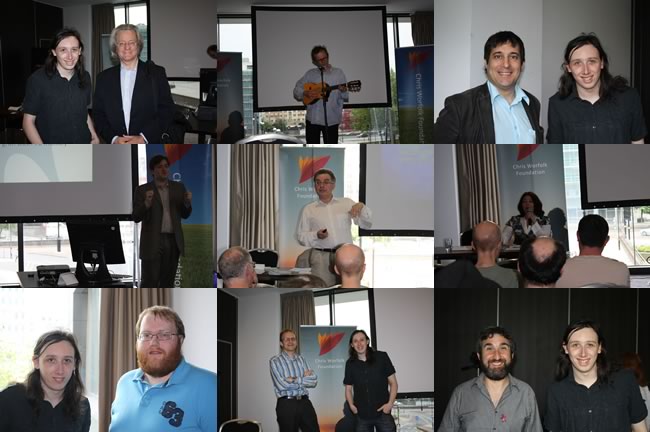
Last weekend saw people from all across the country flock to the Crowne Plaza Hotel Birmingham for the Enquiry 2010 Conference – a weekend on the topic of “atheism in the 21st century.”

Speaking at the conference were Professor A. C. Grayling, Professor Chris French, Andrew Copson, Norman Ralph, Maryam Namazie, Chris Worfolk, Dr Gijsbert Stoet, Dr Evan Harris, Dr Antony Lempert with Saturday night entertainment from Simon Munnery too!

If you missed the event you can see some of the photos from the event on Facebook and Flickr.

We would like to say a big thank you to all our guest speakers who gave their time to be with us over the weekend and indeed all those who attended the conference too. We hope you enjoyed it!

Fun facts (that aren’t even true)

May 31st, 2010 | Distractions, Science

Memes are incredible things. One good example I have noticed, is that there are quite a lot of fun facts that survive – despite not even being true, simply because they make a good story. Here are a few of my favourites…

You can see the Great Wall of China from space
Think about it. The United Kingdom is a dot from space, maybe a small blog at best. The city of Leeds is indistinguishable. It’s streets, rivers, buildings, Tesco Extras, all not even a speck. And you think you can see a wall four metres across? Didn’t think so 😀 .

The Americans spent millions developing a zero gravity pen. The Russians used a pencil.
This one is sort of true, but the Americans started out using pencils too. They just found they broke a lot and it’s irritating sharpening a pencil in zero gravity because the shavings go everywhere. It wasn’t like they just didn’t think to use a pencil.

If you put a frog in boiling water it will jump out, but if you heat it up slowly it will just slowly cook alive and won’t notice
Again, this is probably one of those that first makes sense but when you think about it is probably quite unlikely. To prove the point someone did it and found the opposite happens – if you heat the pot up slowly the frog soon jumps out when it gets too hot whereas if you throw it in a pan of boiling water it gets really badly scalded and dies.

On a hot day, it’s better to wearing white
This just isn’t true. This probably originates from the stereotypical image of Saudis wearing all white but many people in the Middle East wear black and are just fine. Actually there is no real evidence that light coloured clothes are any cooler in the warm weather than wearing all black.

Own brand painkillers are just as good as Nurofen
This might surprise the sceptics who read my blog, suprisingly. Actually research shows that Nurofen can often be more effective than own brand painkillers. Not because it is actually any better (they are exactly the same as own brand) but because a lot of people aren’t as sceptical as us and associate the fact that Nurofen has adverts on the telly box with medical efficacy. It is of course nothing more than a placebo effect but a measurable once none the less. Pat yourself on the back if you find the own brand ones just as effective because you know it’s the exact same ingredients – you’re one of us smart people.

In Australia, toilets swirl the other way round
It’s widely believed that when you flush a toilet in the Southern hemisphere it will swirl counter clockwise. But it doesn’t. The fact is the Coriolis effect simply isn’t strong enough to overpower other influences such as the way the drains are laid out, the way the jets are set up to go or even a draft in the bathroom.

Toffee tastes better when manufactured in high altitudes
I’ve tasted Lowland Toffee and it’s just as good.

Coca Cola made Santa Claus red
Smart people know that Santa Claus wasn’t always red. He used to dress in all kind of colours, often, green, until the Coca Cola Company re-branded him in red to fit with their advertising. Even smarter people know that actually, while the Coca Cola Company did go a long way to popularising Santa’s red outfit, the iconic modern image of Santa should really be credited to the American cartoonist Thomas Nast if anyone should receive the honour.

The death penalty still exists in the UK, but only for treason
This is something I hear from time to time although more people are becoming aware of it’s falsity. We actually did still have the death penalty in the UK until 1997 (not that it was ever used any more) but one of the first things New Labour did when coming to power was to see it out of law.

Calling the Brain Trust

May 31st, 2010 | Tech

Ok, here is the situation. I have a website which has two virtual hostnames pointed at it – domaim.com and sub.domain.com. They both point to the exact same location in the file system and serve the same content. However I need one of them to invoke a http authentication and the other not to.

The obvious solutions I see are…

Set up a rule in the .htaccess so it only requires a valid user when accessing the sub domain. This is the simplest solution but I don’t think such a rule exists.

Dynamically serve different .htaccess files based on the host being accessed. This ticks neither box of being simple or actually something you can actually make the computer do. But maybe it is if you start layering your .htaccess files.

Invoke the http authentication from the PHP script itself, detecting the server name and serving if appropriate. This is doable and straight forward to implement but requires quite a bit of coding.

Also maybe I can do the original solution, but only inside the vhosts.conf file? I haven’t really looked into that so that’s just speculation. Question is, which is the easiest solution to implement?