Chris Worfolk's Blog


The age of maturity

November 26th, 2011 | Religion & Politics, Thoughts

Ben brought up an interesting topic in this month’s Humanist Community of Leeds meeting. The topic was the discrepancy between the age of sexual consent and the age at which you can vote.

I’ve heard the argument before, and similar ones that I don’t buy in to – for example, you can pay tax at 16 but you can’t vote until you’re 18, therefore it could be suggested it is unfair that you pay tax to a government you can’t vote for.

I don’t find this a credible argument because you don’t necessarily pay tax as a way of gaining a vote in democracy. You’re vote in democracy is a guaranteed right, even if you’re not paying any tax at all – it simply isn’t available until you’re ready to make an informed decision. The reason you pay tax is primarily to pay for public services such as hospitals and schools, which you almost certainly have been making use of at the age of 16.

The argument for having a different age for sexual consent and voting is a less clear cut one though. Indeed, Ben made a very powerful argument that I think may be winning me over.

The reason we don’t let people vote until they are 18 is because we’re worried they would vote for the wrong political party – a lot of them might vote for the Monster Raving Looney Party, or the BNP, or the Greens, or one of the many other fringe parties and being the pretentious grown up real adults we are, we don’t approve of such free spiritedness.

But it’s very hard to make the case that they can do more damage with a vote, than they can do by having sexual relations.

Actually, having a vote probably won’t make any difference. Voter turn out is low in young people anyway, let along even younger people and at the end of the day, it’s only one vote and there are lots more people aged 18 or over than there are aged 16 or 17.

Sex however, can be quite damaging. Initially it could appear this is primarily damaging to themselves which is perhaps why we allow it (whereas voting for the wrong political party would be damaging to society and is therefore not allowed), but of course sexual relations can be incredibly damaging to society.

Unwanted children are a huge problem because they don’t get properly parented and therefore become out of control kids and eventually grow up to become criminals, breaking into your house and filling up those prisons that your tax money pays for. Not to mention the possibility of ending up in care, which our tax money also pays for.

In fact, one of the biggest reductions in crime has come from legalising abortion[1], simply because most of the unwanted pregnancies that would have previously been born and grown up to become criminals are now getting aborted. Unwanted pregnancies cause problems, as do STIs which are also prevalent with young people who engage in regular exual intercourse with multiple partners.

Therefore, giving how damaging it is in society, it is very difficult to justify having a higher age for voting than you do for sexual consent.

Karaoke congregations

November 25th, 2011 | Thoughts

music-audience

There are only two places you are allowed to sing in public – church and karaoke bars. Unfortunately, many people feel uncomfortable doing karaoke and you never get to sing anything good at church.

The solution – karaoke congregations! It’s a meeting, where you all turn up and do karaoke as a group. There are a number of different songs to suit people’s tastes (or as the movement grows separate meetings with different genres) and you come along and everyone sings along together. This way, you can sing popular songs and you don’t have to be embarrassed because everyone is singing so nobody can really hear you anyway.

It’s also important to point out that it is karaoke. That is an important term because it stresses that it is fun and you don’t need to be able to sing. As opposed to a term like choir where there is a focus, or at least an interest in signing properly, in a formal way and performing together, these meetings would just be fun meetings where you can turn up and sing badly because it’s just about having a laugh, just like when you go to a karaoke bar with friends.

Thoughts?

Saying goodbye to a hero

November 24th, 2011 | Thoughts

Earlier this month, Sir Jimmy Savile sadly passed away.

The reactions of the Leeds community showed just how much of an impact that he had. Having re-watched the Louis Theroux documentary, Jimmy estimated he has raised over £40,000 for charity. Now I like to think I’ve raised quite a bit in my time and yet, I’m fairly sure that you compared it as a percentage, it would be 0%.

It is no wonder, however. There doesn’t seem to be a person I can find who has a bad word about him. Indeed, the more people you ask the poor you seem to get a heartwarming story. Whether it was when he took time out to take a photo with Casual Dave or sign an autograph for my mum. Or the time he went to visit my dad while he was in the hospital or the time he gave my grandfather a lift.

Unfortunately, I was unable to go down and pay my respects as they moved the public viewing back from 9:00 to 9:45 and I had to be at work by then. Still, I’m never the less starting or getting involved with the following campaigns:

  • A Statue for Sir Jimmy. If Don Revie is getting a statue (http://donreviestatue.com/), who was someone who I’m sure what a great guy, but I had to ask my dad about, I think it’s the least we can do for Jimmy.
  • A Song for Jimmy. Jimmy is the new Princess Diana (the King of Hearts, if you will), I think it would be a fitting tribute for Elton John to write a song about him.
  • The Jimmy Savile Arena. We’re building a brand new arena in Leeds, so why not name it after him? Why not indeed?

Venerating the military

November 23rd, 2011 | Religion & Politics, Thoughts

The Humanist Society of West Yorkshire recently had a discussion about whether we should participate in an official remembrance service, as many faith groups do and the BHA had encouraged local groups to join in by laying a wreath. In the end, the group decided not to, because there was a split feeling about whether it was a cause we should endorse.

After all, killing is wrong. The military is not a positive institution; it’s an institution of death. In a perfect world, it wouldn’t exist.

Of course, we don’t live in a perfect world and the military does exist in practically every country in the world. Even Switzerland has a small armed forces. War is even arguably necessary – though in some cases, significantly less so than others.

Yet we, as a society, have a great reverence for the military. The United States, significantly more so. Being a solider is something noble, something to be looked up to, people sacrificing themselves for their country. This is an attitude reinforced by many different groups within our society and is deeply ingrained in our traditions.

But, I would propose that this isn’t congruent with many peoples attitudes. Many people, humanists and religious people alike, strongly detest the idea of war. A million people marched through the streets of London to protest against the Iraq war.

And anyway, is it really that noble to sacrifice yourself in such a way? The military is quite well paid, not to mention you get accommodation, free meals, a company car (so the advert picturing a young soldier driving a tank would have me believe) and get to travel round the world going to a variety of interesting, if a little dangerous, places.

Not to mention the fact that many people sacrifice themselves in a similar way. Yes, soliders can be seen as putting their lives on the line to keep us safe (though when was the last time sovereign British territory was under threat – The Falklands?), but similarly fishing is a very dangerous industry, it has one of the highest mortality rates of any industry and yet we don’t have remembrance days for those who lost their lives filling Tesco with cod fillets. This special privilege is afforded to the military alone.

However, I think I have an idea why. Much like Doctor Who’s The Beast Below, it’s hiding a terrible secret that none of us really want to acknowledge – giving special reverence to the military is the only way we can trick poor people into going to fight the wars we want to fight, so that we don’t have to go ourselves.

That, I suspect, is the cold hard truth.

We always send the poor to go die in our wars. It’s not officially conscription but when you have little education, little chance of gaining a well paid job and improving your quality of life significantly, the military must sometimes seem like the only option. It’s called economic conscription. It’s a condition created intentionally by us as a society, to railroad poor people into joining the army.

However, simply by forcing people to join up, doesn’t mean that you can automatically get them to lay down their lives for their country. You can brainwash them of course, and that is essentially what basic training is, but the best way is to make them think there is some noble, higher cause for what they are doing.

In a way, there is. It’s just not one that we think is personally worth fighting for. Because given the choice, none of us are going to join the military. It’s not worth it – we might die, and there is nothing worse than dying. That’s the worst thing that can happen to you, the end of the line, nothing is worth your life.

But we have a problem. Wars need to be fought. This is a whole separate argument in itself, but lets agree that whether we personally agree that wars need to be fought or not – society on balance, especially the government, thinks that wars do need to be fought. More so in more clear cut examples like defending ourselves from invasion in World War II, but also you could argue that humanitarian intervention is countries like Iraq, Zimbabwe and North Korea are well worth while.

So the problem is this – how do you fight a just war, if you’re not willing to actually do it yourself because you don’t want to die and as a rational human being you therefore won’t go to war. The solution is simple. You convince other people, through a combination of creating a society which venerates the military and coerces poor people with economic conscription, that it is noble for them to lay down their lives for their country.

But what do you do about this? If you agree that there is in some situations an argument for war, such as those mentioned above, and you agree that as a rational human being you don’t want to go to war, then have you rationalised yourself into a corner where you can morally support the propagation of nobility in military sacrifice? I’m not sure what the answer to that question is yet. Answers on a post card.

SocietasPro v0.2

November 23rd, 2011 | Foundation

We’re pleased to announce the second iteration of SocietasPro is now available to download! As we mentioned in our last release, we were hoping to have this iteration out by the end of the month and we’ll pleased to see we’re well within that deadline.

What has changed in this release:

  • So many bug fixes they aren’t even worth listing 😉
  • Ability to order pages
  • Ability to filter audit trails
  • Magic getters added to objects
  • Added Bug Scanner to pick up on coding errors
  • Audit trail now translates
  • Restructured the file and directory layout
  • Added Klingon translation
  • Implementing namespaces into coding framework
  • Implementing stackable error messages
  • Partial saving is now done even when there are errors
  • Improved handling of database errors
  • Added submenus to each controller
  • Custom columns for the members system
  • Adding group name option
  • Admin module has a fresh new look
  • Expanding the control panel

Here are some screenshots too:

Netherlands considers ritual slaughter ban

November 22nd, 2011 | News, Religion & Politics

The BBC recently published a report on the Dutch parliament voting on a proposal to ban ritually slaughtered meat – and it’s expected to pass.

I found the BBC news report rather biased. For example, when reporting on a Halal butcher, she said that if the law came into force he would “be forced to leave.” This is entirely misleading, it sounds like they are about to get kicked out of the country or something, not just having to sell meat slaughtered differently – which he could do. Or get another job. Or import his meat from outside The Netherlands. Or use pre-stunned Halal meat, like they have in New Zealand.

Not to mention that the debate genuinely is about animal welfare. There is a reason we have independent advisory boards, and the Farm Animal Welfare Council has spoken on the issue.

Of course, ultimately they lose the argument thanks to a good bit of Godwin’s Law. Much like Chanoch Kesselman’s offensive video broadcast on Channel 4, the rabbi in the news piece equated the banning of Kosher meat to Holocaust. I fail to see how one appalling act of slaughter justifies him committing another, but it doesn’t matter, he resorted to Godwin’s Law and therefore loses the argument by default.

Speed debating

November 21st, 2011 | Humanism

As part of their Give It A Go, the Atheist Society finally got a session of speed debating organised. The concept is similar to speed dating, but instead of finding out about each other, you just basically argue.

The turn out was quite good, though unfortunately the implementation was disappointingly poor in all honestly. The sessions were also 10-12 minutes long, and so you only got four topics – I would have much preferred to be on each topic for five minutes and got through many more topics.

Still, an enjoyable evening none the less.

Saturday night dinner

November 20th, 2011 | Life

Having left the cinema from seeing Johnny English Reborn, we decided to find somewhere to grab dinner.

It was Saturday night and a lot of restaurants would be busy – so we decided to hit Thai Edge as they always have a table free :D. Of course, I was hoping they didn’t remember me after the now infamous change incident.

Dinner was good and I almost finished my main – something which I would have considered quite an impressive feat given I had a starter as well and I’m not getting any younger.

The only thing you can count on, is change

November 19th, 2011 | Friends

I’ve been blogging a lot about great losses to the world recently. Sir Jimmy Savile, Steve Jobs and the Space Shuttle program to name a few. Sadly, I must now blog about a loss I have personally experienced too.

Two and a half years ago, I left Open Door Design and started a new job at Buzz.

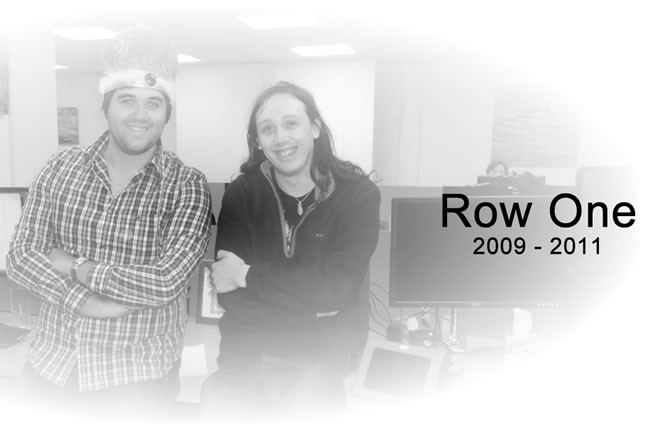
On my first day, I was given a seat on the first row of the office. The man sat next to me, a fellow University of Leeds graduate was named Jason. Little did we know, this was the start of a friendship that would define us both.

Over the next 30 months we would become part of the furniture at Buzz, always there on Row One as others would come and go. We would engineer Suit Day, come to dominate the office keepy uppy competition, achieve Pub Week and share many happy memories.

However, yesterday I worked my last day at my desk. On Monday, technical will be moving to the other side of the office, and Jason won’t be moving with us. Of course, we will always be Row One no matter where we are – but it will never be the same again.

Johnny English Reborn

November 18th, 2011 | Distractions, Reviews

Given we were all a big fan of the original Johnny English film, myself, Elina and Norm headed out to the cinema to see Johnny English Reborn.

The film was good, not great. It was entertaining, I didn’t find myself clock watching, which I often do at the cinema, and presented quite a few laugh out loud moments, but it was always going to get compared to the original and in the end, wasn’t quite as funny.

More of a concern though was the fact that my ticket into the cinema was £9.25! I’m sure when I was a kid it was like £4 to go to the cinema, now it’s more expensive than being a DVD to own :S.

I also got an earful off the guy checking out tickets in on the way in because I had bought Elina a student ticket but she didn’t have her student card on her. I understand they need to check it occasionally, but given we had bought full price tickets for myself and Norm, it seems pretty obvious that we were being honest – if we were trying to scam them we would have just bought three student tickets.