Chris Worfolk's Blog


Getting serious about anxiety

May 26th, 2014 | Foundation, Thoughts

I was recently passed an article by The Priory Group entitled “Anxiety – are you taking it serious?

It talks about how common anxiety is and how people do not take it seriously. It then shows twenty photos of people holding up signs with messages such as “don’t be such a drama queen” and “it must be horrible being you!”.

Powerful stuff. But is it accurate? Because if it isn’t, we could be unnecessarily worrying people from being open about their issues.

It is easy to pick out a couple of anecdotes that reflect badly on a certain situation. Doing so proves nothing more than that you are entirely qualified to become a journalist for the Huffington Post. However, if you want to make an important point, I think you need to back it up with some actual statistics. How many people were surveyed? What percentage of people report a negative experience?

The reason I ask is that I do not believe the percentage would be high. I have usually found the experience of being open about anxiety a positive one. So have many people. Indeed an overwhelming majority of people who attend Anxiety Leeds have. Of course I am working of anecdotal evidence as well, but the least we can say is that do not know either way whether most people have a positive or negative experience.

How about the control group?

Further, I would argue that you need to factor in a control group.

Yes, some people might make negative comments about anxiety. However, people make negative comments about a variety of conditions. Have you tried having flu as a man? Nobody has any sympathy for you. “Oh, man flu again, poor you.” It’s horrible. I have never experienced anything like that regarding anxiety.

Okay, but why is it important?

Selecting anecdotes without publishing evidence to back it up is harmful because you cannot substantiate the claims you making. Which means they might not be true. But people might believe them anyway.

This is primarily harmful to people suffering from anxiety. Mental health is the new gay and we need people to come out about it. Publishing articles that suggest that anyone who does will be subject to ridicule and abuse will only encourage people to keep their problems suppressed.

This is bad for them and bad for society. If we want to encourage people to be open about mental health difficulties they are facing, we need to reassure them coming out is a good move.
His Last Bow

May 25th, 2014 | Books

His Last Bow is another of the collection of short stories written by Arthur Conan Doyle around Sherlock Holmes. They continued Doyle’s improved storytelling style and offered some further interesting insight into the characters, particularly Mycroft.

Some of it made me think I had read before, particularly when Holmes describes how he reads Watson’s thoughts. I’m not sure if it actually was the same as an earlier story or not. It also jumps around quite a bit in terms of when the stories were set and so a bit more of an explanation at the start would have been nice.

His Last Bow

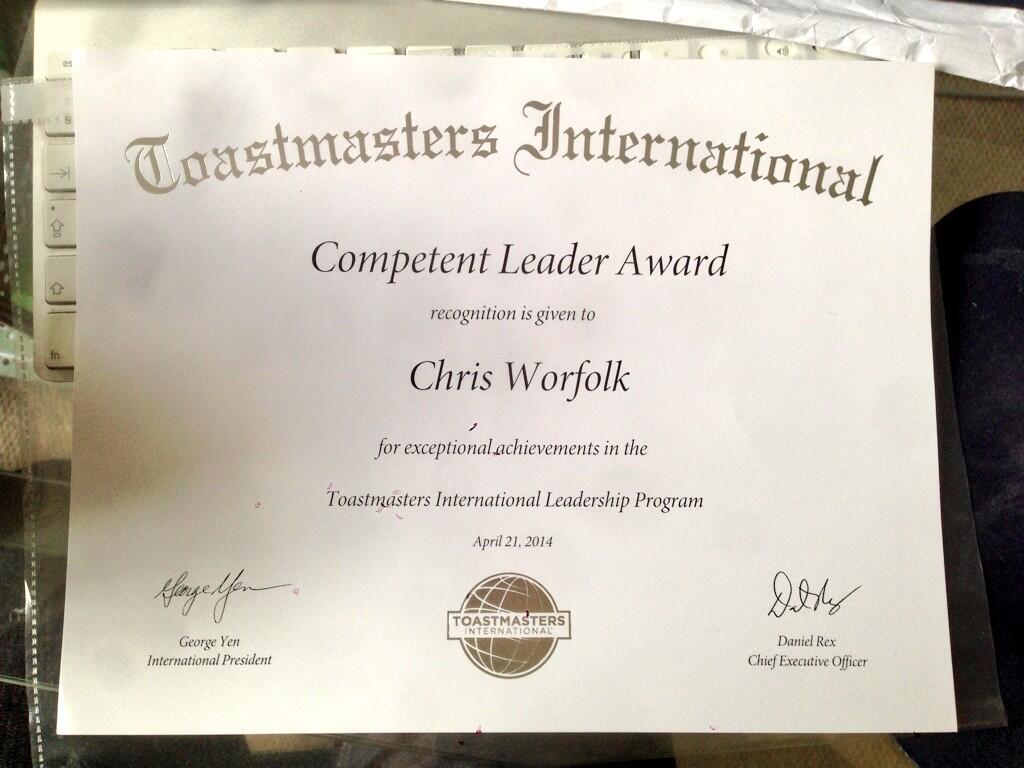
Competent Leader

May 24th, 2014 | Photos, Public Speaking

cl-award

Will be adding this to my CV, alongside my BSc (bronze swimming certificate).

Lint

May 23rd, 2014 | Tech

Recently my iPhone had stopped charging properly. Every time I would plug the lightning connector in, it would either not start charging or start and then immediately stop. I had to plug it in over and over again until it started working.

After having a search around, someone suggested that it might be due to an accumulation of crap inside the lighting connector port and that you could get it out with a toothpick.

I straightened a paperclip and had a dig around to see what I could find. It is amazing how much lint came out!

lint

Sheffield Predators at Yorkshire Rams

May 22nd, 2014 | Distractions

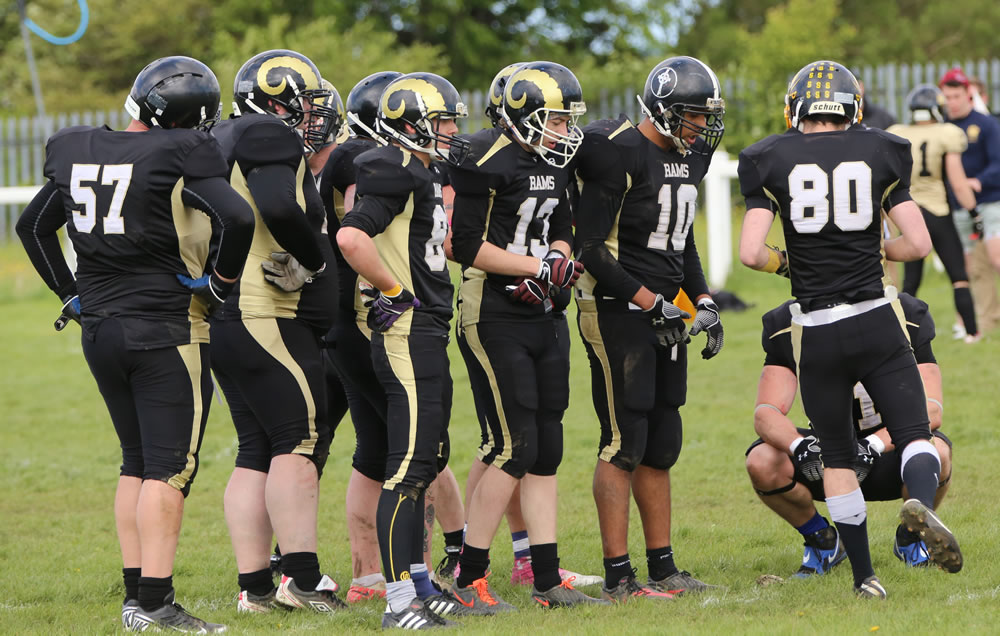
The Yorkshire Rams kicked off their 2014 american football season by hosting the Sheffield Predators. The won thanks to a well earned touch down and Sheffield twice snapping the ball over the punters head and into their own end zone for a safety. The Predators scored a late touch down and converted for two, but it wasn’t enough.

IMG_4108 IMG_4110 IMG_4119 IMG_4121 IMG_4134 IMG_4137 IMG_4151 IMG_4165 IMG_4215 IMG_4265

Using WordPress on real websites

May 21st, 2014 | Thoughts

WordPress is a super piece of software. It has made it easier and quicker to get a website up and running than any other content management system out there. It has a great range of plugins and themes, and is reasonably easy to add your own too.

That said, there are a couple of issues that I think make it a questionable choice for using on an important website.

It works fine if you deploy it to one location and just build everything there. However, often I will have a development version, a staging version and a production version. This allows me to pass a website through each stage while making sure it is working.

With WordPress, this is difficult.

You need to put the site URL into two different places in the config. This means that you have to update these values every time you deploy content to another server. So for example a typical use case would be to copy all your production data over to staging so you can perform major testing, and then potentially copy it back again. Or you want to develop the site locally and then push everything up to your server.

Unfortunately WordPress uses these URLs for the login process, so you cannot just log in and change them in the admin panel because you will not be able to get in. You have to do it via a script or by editing the database directly.

Secondly, it uses absolute URLs everywhere. Every time you upload a piece of media, or a post, it will store a URL for it in the database with the hostname included in it. When you insert the media into the post, it puts a absolute URL and SRC in there too.

This means that you have to do two things. Firstly, take our all the hostnames from the SRC and URL HTML content that WordPress generates every time it inserts a piece of media for you.

You also have to update the database to change all the URLs in there too. There does not seem to be any support to do this at all. I had to write a little plugin to change these. Arguably, you could use this plugin as well.

I am not sure why it does this. There does not seem to be any compelling argument to use absolute URLs. I had a look around for one, and the closest article was by Joost de Valk, none of which I think really stand up (certainly not in comparison to “is your site probably tested?”).

As pointed out here, if you really need to use absolute URLs, you could implement a short code to allow it to remain dynamic.

WordPress is a super piece of software, and indeed runs my blog. But I think it has it’s place in a certain set of use-cases and large production systems do not seem to be one of them.

Give me your organs

May 20th, 2014 | Religion & Politics, Thoughts

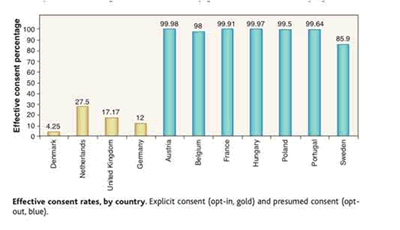
The UK currently has an opt-in system for organ donation. That means that unless you have specifically opted-in to donate your organs after you die, the NHS cannot have them. Sort of. Actually, whether you are signed up or not, they just ask the family. The NHS advice that making your views clear can be helpful. But actually, it is fairly irrelevant.

So a graph like this might look pretty scary:

organ_donation

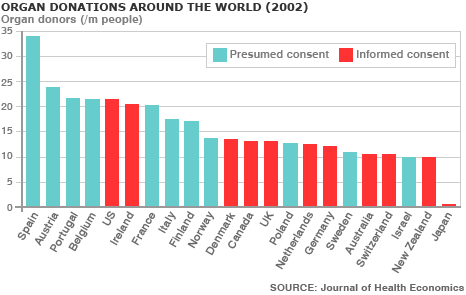
But actually, it is not a complete disaster, because they will just ask the family anyway. I still think it would be worthwhile for the UK to switch to an opt-out system though. In general, you get higher donation rates in countries with an opt-out system.

organ_donation_2

If they also just ask the next of kin, it is not immediately obvious why this should be the case. Perhaps the relatives are less likely to say no if they do not feel the individual felt strongly enough to opt out, or perhaps there is just a general culture of that being the done thing. I am just speculating, I have no idea.

To me though, I wonder why there would be an opt-out at all?

What is the point? I cannot think of a good reason why the NHS should not just have a free right to help themselves to my organs after I am dead.

Perhaps you could make the argument that the family don’t like the idea. Or that it makes some people uncomfortable with the idea that their organs will be removed after they are gone. But organ donations save lives. Are these the reasons that are worthy of condemning someone to death? I would argue they are not.

Flash Boys

May 19th, 2014 | Books

When someone says the phrase “high frequency trading” (HFT), most of us have no idea what it means. Even those of us with some idea, probably think it is trading by computers, but essentially doing what traders do – wheeling and dealing in an attempt to make some money.

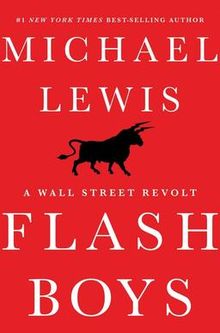
Michael Lewis’s book “Flash Boys” tells a different story. High frequency trading is all about front-running. You want to buy 10,000 shares in Apple? Great, I’m going to buy them before you can and then sell them to you at a higher price. It’s illegal, or it was, but with the deregulation of central stock markets in favour of competition between markets, you can now exploit milliseconds it takes for them to talk to each other.

This caused huge investment into the history with HTF firms making enormous profits. The banks didn’t say anything because they were making money from selling the HFT companies the data they needed. The stock markets didn’t say anything because they were making money from the huge increase in trading activity. Everyone was getting rich from scalping the ordinary investor.

I say was, but the problem has not gone away. However, the book also discusses how former trader Brad Katsuyama has gone on to set up IEX, a private stock exchange that tries to eliminate all the unfairness in the market.

It is a fascinating by scary read. To see how totally wrong the entire banking industry is. We all kind of know it, but it really brings it home.

Flash Boys

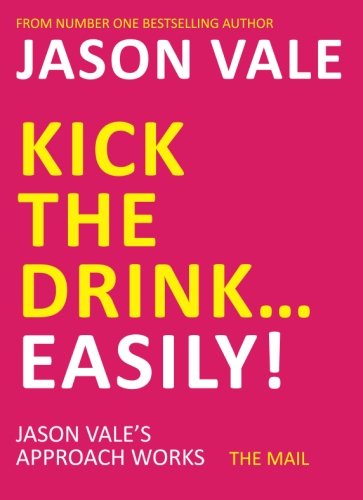
Kick the Drink… Easily!

May 18th, 2014 | Books

Jason Vale’s book “Kick the Drink… Easily!” suggests that it is easy for someone to stop drinking because there is no such thing as an alcoholic. Alcohol completely leaves your system within 10 days so the idea that it is a lifelong problem is “brainwashing”. Once you remove it, you can just stop drinking.

It was an interesting read, though I do not agree with all of it.

He makes a lot of astute points. Alcohol gets a special treatment among recreational drugs. When you say you don’t drink, people ask you why. Nobody has ever asked me why I don’t take crack. Alcohol is a drug and it messes up the human body.

It also tastes like piss. We all know it. We all had that first drink, it was horrible. But we kept at it because it was the socially acceptable thing to do and gradually built up a tolerance to the horrible taste. But at the end of the day it is still a poison that our body does not like.

It goes on. Does it make you more sociable? Probably not when you think about it. People slur their words, withdraw themselves from conversation and become violent. 75% of stabbings involve intoxication. It’s expensive. It’s had for our health. It makes us feel horrible the next day. Why then do we do it?

I don’t agree with all his points. For example, it could offer a pleasurable effect. Being “numb to the world” as it he puts it, could be thought of as pleasurable if you are not happy with your live.

It also does grease the wheels of social interaction. While I do not think being intoxicated actually does make it any easier for me to talk to new people at parties, or make me a more interesting or lively person, it does help many of us get together with long-term partners.

As for his tenet that there is no such thing as alcoholism, that is less clear. Mainly because nobody can really agree on what alcoholism is.

Overall, I think it makes a good case against alcohol. It is more a large collection of anecdotes than a well cited review of the evidence. However, we all know that this evidence is out there. The book is designed to convince people to stop drinking, and people often respond better to anecdotes than hard evidence.

Kick the drink easily

Although, that does appear to be a quote from the Daily Mail on there.

The Valley of Fear

May 17th, 2014 | Books

The last full Sherlock Holmes novel that Arthur Conan Doyle wrote is The Valley of Fear. It is a great example of how Doyle’s writing progressed as his career went on. It has a similar structure to that of his first novel A Study in Scarlet but is delivered in a far more coherent and logical way as to make the pleasure of reading it greatly increased.

It does, however, like quite a number of the stories in the Sherlock Holmes canon, lack an entirely-satisfying ending. However, there have been worse conclusions of stories in the series.

The_Valley_of_fear