Chris Worfolk's Blog


Is it time to hit the bottle?

September 7th, 2014 | Health & Wellbeing

Last year, Business Insider and Time wrote about how non-drinkers die significantly younger than moderate (or even heavy!) drinkers. Non-drinkers and heavy drinkers are similar, while moderate drinks enjoy the longest life expectancy.

Of course I knew about similar studies already. These results have been floating around for a long time but it is difficult to apply it personally. Drinking is associated with being social and non-drinking is often associated with being a pessimist. Both of these factors would lead to drinkers living longer. However, those are all overall trends – whether I drink or not, I am still quite social (I think) and a pessimist.

However, Time then also linked to a 2009 study that indicated that non-drinkers are also at the highest risk from depression and anxiety. If true, the best think for your mental health would be to drink moderately. This study wasn’t controlled for underlying health conditions, so again it is difficult to draw conclusions about how to live my life.

Pacific Standard also wrote a lengthy article looking at a lot of different factors. They note that the biggest meta-analysis which looked at over a million people confirms the same results – drinking is the healthy option. Though again, it fails to control for underlying health problems that stop people from drinking.
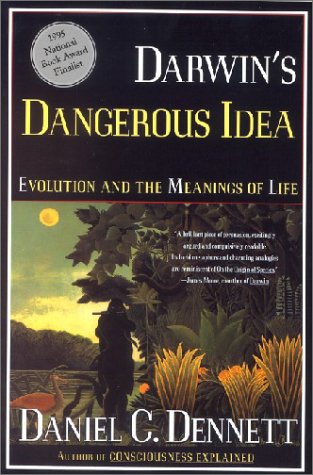
Darwin’s Dangerous Idea

September 6th, 2014 | Books

In Darwin’s Dangerous Idea, Daniel Dennett looks at Darwinian theory and what follows from that.

It is packed with interesting ideas but is also incredibly long. When your book is significantly longer than Dostoyevsky’s Crime and Punishment, your book is probably too long. I struggled to take a lot of it in, partly because there were so many ideas, but partly also because it was such a huge text to really look at in perspective.

Dennett explains how evolution is a algorithmic process and yet is simultaneously capable of creating the entire tree of life. This includes the human mind of course, which is perhaps the most controversial part of the theory, even though the only alternative theory that has been proposed so far is “god did it”.

Many of the concepts he uses to explain the theory are well-thought-out too. For example, skyhooks and cranes. SKyhooks are a miracle that just happen (Dennett claims none exist) whereas cranes are structures that build on top of each other in slow steps (how things actually work). Notably, once the structure has been built, the crane may then disappear, though there is often a trace of it left.

It is also important to look at things from an evolutionary perspective. Take sleep for example. One of my friends once said to me “you know, there is no reason for sleep – we can’t find any biological reason why we need to do it! What’s it for?”

I never knew the answer to that question. However, as Dennett points out, the answer could be that we are looking at it from the wrong way round. Sleep is safe. Plants, and many simple lifeforms spend their entire lives in this state. It is the default state. We assume that we are supposed to be awake but from an evolutionary perspective this might not be the case. It could be that being awake is something Mother Nature cooked up to allow us to find food and procreate easier, but once that is done there is no point wasting more energy.

Overall, I am not suggesting that the 3.7 billion years of life fighting for survive can be compared with my struggle to read Darwin’s Dangerous Idea and its many big words. They are different things entirely. Despite it being tough going, I am glad I read it as it contains some incredibly insightful ideas packaged into one text about the origin of life from a philosophical perspective.

We should feel special because most genetic lines are now dead. But not us. We have an unbroken chain of ancestors right back to 3.7 billion years ago. That is amazing. But do not feel too special, as every blade of grass you can see has that too…

Darwin's_Dangerous_Idea

If retailers were like Google

September 5th, 2014 | Video

Should we eat meat?

September 4th, 2014 | Food, Health & Wellbeing

should-we-eat-meat

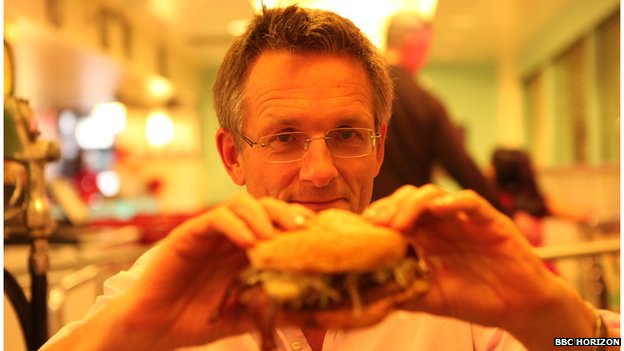
Last month Michael Mosley made a Horizon documentary on “should I eat meat?”.

The documentary started with a discussion similar to the one we recently held at Leeds Skeptics. The spoiler answer is yes. Meat is incredibly nutritious and often a centrepiece of family life. A non-meat diet can be very healthy (after all life-long vegetarian Lizzie Armitstead won an Olympic gold medal), but you do need to think a bit more about your nutrition. Meat makes it easy to get it.

The program dismissed white meat (chicken, poultry, fish) as not showing any signs of negative health effects, and so concentrated on red meat (beef, pork, lamb) and processed meat (bacon, sausage, ham).

Red meat comes out somewhat negative. It could have some positive health effects, but overall it is a negative. We’re just not sure why. Originally it was thought to be saturated fats, but this does not seem to be the case.

Processed meats come out hugely negative. 35 grams per day could increase your risk of premature death by as much as 30%. While the Harvard study and European EPIC study disagree on red meat, they come together on the danger of processed meat.

So what should we conclude?

Cutting down on your meat is probably helpful. Processed meat should be cut out entirely; red meat should be eaten 1-2 times per week at most. Such a diet will not only extend lives by as much as five years on average but will increase the quality of life of those years as well.

Night Watch

September 3rd, 2014 | Books

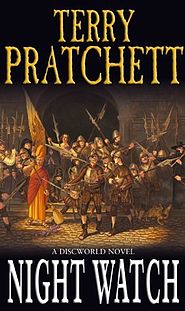
The 29th book in Terry Pratchett’s Discworld series is “Night Watch”. Sam Vimes, the History Monks, time travel – what is there not to love about this novel? Nothing, that’s the answer. I love Lu-Tze and the City Watch is awesome too. It also reminded me of one of the half a dozen Star Trek episode plots that almost all of the 300 episodes are based around.

Night Watch

More Money Than God

September 2nd, 2014 | Books

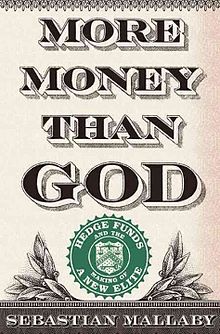
Sebastian Mallaby’s book, More Money Than God: Hedge Funds and the Making of the New Elite, looks at the birth and rise of the hedge funds. Perhaps more interestingly, it seeks to answer the question of how those funds made money if you subscribe to efficient market theory (which you should).

A. W. Jones, the original hedge fund (or “hedged” as he called it) could explain it’s profits by an inefficient market. Before Jones, the concept of a hedge fund did not exist and he and his team began doing things that nobody else was doing. They were simply more efficient.

In the late 1960s and 1970s, Steinhardt, Fine, Berkowitz & Co. were the biggest players. This could be explained by two factors. First, they could have simply been lucky. By the time they came along there were 200 hedge funds, so the chance of one of them consistently beating the market was fairly high. Secondly, there was what you could argue was insider trading. Perhaps not to an illegal level, and it is unfair to level this claim just at hedge funds, however, it was clearly going on.

Over the next few decades, hedge funds continued to generate money. Can this be reconciled with efficient market theory? Yes and no. A lot of the profits came from exploiting loopholes and finding inefficiencies in the market. The fact that this was possible shows that markets are not always efficient.

However, if you take Malkiel’s argument that this might be there, but is just not useful, that view holds. Firstly, you have to keep exploiting new ideas because pretty soon everyone else copies you. Secondly, for an investor, there is no way to know in advance who will find the inefficiencies. It is easy to work out which hedge funds found them after the fact, but picking them in advance could well be impossible.

Also, while some funds do have amazing performance, most are not. In a 2006 paper, “The A,B,Cs of Hedge Funds: Alphas, Betas, and Costs” Roger Ibbotson and Peng Chen calculated that after adjusting for biases, the average return was 9%.

The book’s conclusion is generally agreeable. Index funds represent the best way forward for consumers, but hedge funds maybe represent good value for institutional investors.

More Money Than God

Search Google with an image

September 1st, 2014 | Tech

I was dragging an image from my desktop into a folder when it happened to pass over my browser with Google open on it. Suddenly, Google suggested that I might want to search the web using the image.

How well it works is debatable, but it is certainly interesting.

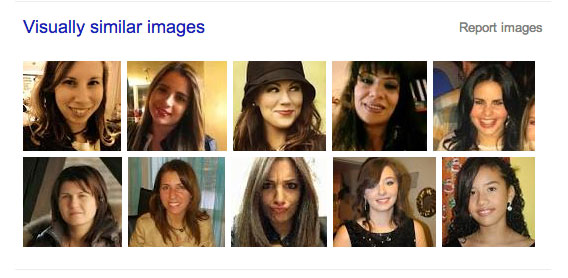
For example, if I upload the image I use as my avatar I get a series of pages that that image is used on. It also shows me visually similar images, but none of them are me.

visually-similar-images

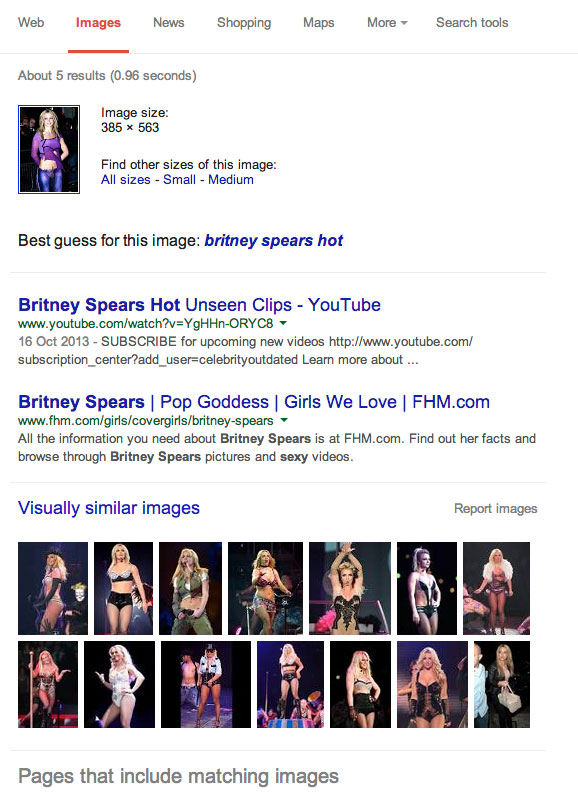
I can see that finding where an image has been used can be useful. Not sure about the similar images though. However, it works better if you use a photo of a celebrity. It identifies the person and then tries to find relevant pages.

britney-spears-search

The image I uploaded was just called 11.jpg and doesn’t have much metadata, so it is quite impressive that it worked all that out from the image.

Madness in the Fast Lane

August 31st, 2014 | Distractions

Madness in the Fast Lane is a BBC documentary that Louis Theroux recommended. It tells the take of two Swedish sisters that one day ran across the M6, repeatedly getting struck my vehicles. One of the sisters then went on stab a man to death.

The style was very odd as it reminded me a lot of Brass Eye. There were lots of unnecessary caption slides, weird music and blurry camera effects. It felt rather cheesy. But the story was certainly an interesting one. It was just mad (literally, according to the court psychologists).

Without a satisfying conclusion to the story though (there has not been one in real life), all we can really take away from it is that Swedish people are crazy.

The holiest way to get healthy

August 30th, 2014 | Health & Wellbeing, Video

You can’t handle the truth!

August 29th, 2014 | Religion & Politics, Thoughts, Video

In the film A Few Good Men Colonel Jessep speaks the often quoted, though perhaps not very well understood, “the truth? You can’t handle the truth.”

I used to consider myself more right-wing in that I was (and still am) a libertarian. Though as I have grown older I have come round to more of a lefty socialist world view. However, my attitude towards the military has changed in the opposite direction.

As a libertarian I was anti-military. My view was that we should just let other countries get on with it and you should not be classified as a hero for taking government money to go murder black and brown people. Consistent with my libertarianism, though not a view in line with what many other people on the right would think, most of whom want to see aggressive military spending.

As a socialist, I am now not no so sure. If we are going to say that the machinery of governments should be used to maximise equality instead of liberty, then why should it stop at an arbitrary national border? Why insist that money be taken from the rich and given to the poor, while at the same time reconciling North Koreans to their horrible fate of oppression and starvation?

Of course one message to take away from this is that the whole left-right issues are not so easily pigeon-holed. But also, that the left-right view points are often inconsistent within themselves – the right do not want the state to interfere (except in the bedroom), the left do want the state to interfere (but not in the bedroom).

Back on the video though, it illustrates an important point. This issue is not an easy one. How do you balance the desire for peace with the desire for justice and liberty?