Archive for the ‘Religion & Politics’ Category

Body dissatisfaction

Wednesday, May 16th, 2012 | Religion & Politics, Science, Thoughts

I’ve started to pile on some pounds (we really need to come up with an updated term that reflects the metric system I know and love) recently, to the point where I’ve gone from the most perfect weight a human being has ever weighed to having only four kilograms of wiggle room before I’m no longer in my target BMI.

It’s very distressing because I lead, on the whole, a very healthily lifestyle and if Rob Lyons is to be believed you could probably even drop the “on the whole” qualification.

Still, after a long day of carrying my fat body around, I do enjoy sitting down and catching up on Stuart Ritchie’s Twitter feed, which provides a refreshing change from the normally interlectually void stream of inane nonsense that normally comes through (Alex, Lil and George while at Fab, though I enjoy that stuff as well).

Recently, he tweeted about a new report which suggests that female body dissatisfaction is primary caused by inter-peer competitiveness, and not the media.

Based on the results of the study, the report concludes that media exposure actually has minimal impact on how unhappy women are with their bodies, in comparison to the significant effect that inter-peer competitiveness has.

So why are we always being told that it’s the media that are ruining our teenage daughters?

This reminds me the video games cause violent crime argument. It was a fact that a lot of people spread, and then we looked at the actual evidence and it turned out that video games do not cause violent crime. Though even after that, people continue to toot that horn.

In both cases, you have to wonder who is spreading this? Presumedly, it isn’t the media trying to give themselves a bad name (of course it could be different sectors of the media attacking each other). Is it just genuinely honest but misinformed people running pressure groups? Do we just assume that it is the case because it seems to fit the puzzle?

Pacifism

Saturday, May 5th, 2012 | Humanism, Religion & Politics

At the rather delayed meeting of the Humanist Society of West Yorkshire which had to be moved back to accomodate term times at the Swarthmore Centre that took place recently, Gijsbert presented a talk on Pacifism and Humanism.

It’s a tricky subject and one which has been debated before in the group – notably when there was a suggestion that as a society we should lay a wreath on Remembrance Day.

It was a really interesting talk, and I agreed with Gijsbert that going to war simply doesn’t make sense in modern times. However, as I blogged about in December, the real question facing most of us today is are we willing to go along with the state’s brainwashing of the lower working class to convince them go die in Afghanistan on our behalf.

You would assume the answer would be no, but it becomes more tricky when, as a Humanist, I am also an interventionist when it comes to things like genocide. How do we work out whether someone really is going the military voluntarily, knowing what the reality of war is, or simply because of “it’s noble to die for your country” propaganda and economic conscription. Such issues cause me a great struggle in trying to reconcile both my Pacifism and my Interventionism, with my Humanism.

Tackling the Immigration Issue

Saturday, April 28th, 2012 | Religion & Politics

Immigration has been a hot topic over the past decade. Many people are concerned about the level of immigrants coming into the UK, while other groups argue that we need immigrants to continue flooding to the UK in order to promote growth and ensure there is still a bit of money left in the pension pot.

Realistically though, there is really just one group of immigrants causing more problems in our society than any other. Addressing this one specific area would bring far more equality and fairness to our society.

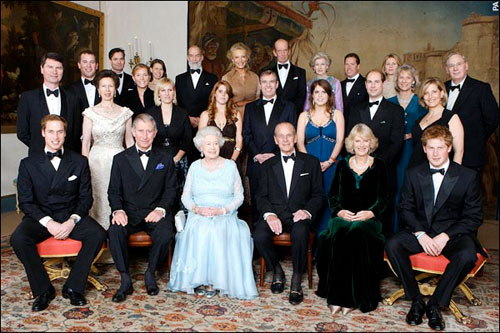
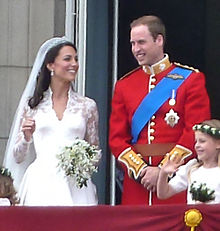
That’s why I’m launching my new campaign Deport the Sax-Cobergs.

Royal Family

They come over here, they take our jobs…

They take our women…

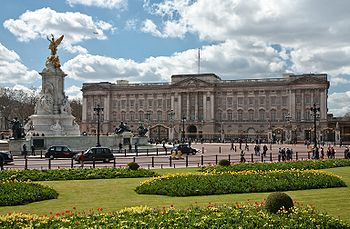
And they live in massive council houses funded by the tax payer…

So, I’ll be handing round a petition…

Smoking in pubs

Wednesday, April 25th, 2012 | Religion & Politics, Thoughts

Hey, remember ten years ago when everyone smoked in pubs and it was rubbish?

I just thought I would remind us all because it’s a good example of a paradigm shift. A decade ago most of us thought that it was acceptable to smoke on confined spaces, now most of us think that it isn’t OK because the evidence shows that passive smoking does genuinely kill people[1].

Actually, it feels, at least to me, like a hole different world now. It’s not just that I’ve changed my opinion, but society itself has now fundamentally shifted its opinion to the point where I simply can’t imagine going back to the dark ages where everything smelt of smoke and your pint was served with a free topping of lung cancer.

Torture

Tuesday, April 24th, 2012 | Religion & Politics, Thoughts

Recently, Jack Straw was sued for being complicit in torture.

It’s a difficult issue – one one hand, torture is very bad. On the other hand, if you are able to extract information that could save lives, perhaps sometimes it could be justified? Or at least that is the argument that has been proposed by many people, including Sam Harris. At least that is the argument he made in 2005 when he published “In Defense of Torture” in the Huffington Post, though he qualifies this extensively on his website.

I personally think the argument is far more clear-cut, however.

Firstly, the evidence just isn’t there that torture works. I would like to say simply that “torture doesn’t work” but that is perhaps an unjustifiable claim. It’s very hard to do controlled trials of torture (thankfully) but there is evidence on both sides to suggest the efficacy of torture. Ultimately, it probably does yield information, that information is almost certainly unreliable, but if you are able to verify what is true and what isn’t, you can then argue there is some advantage to torture. Then again, you can argue there isn’t. We can’t conclusively say either way.

More importantly, however, even from a utilitarian perspective, which is similar to the position put forward by Harris in The Moral Landscape, torture is not justifiable.

The reason is, in order to allow torture in a utilitarian world, we all have to live in a world where people are tortured. So yes, the needs of the many may outweigh the needs of the one, and extracting information by force to save more lives could seem like a good idea at first. But what you’re actually doing is making everyone suffer because then everyone has to live in a world where we torture people.

This isn’t a nice world to live in. I really, really don’t like the idea that the government could wrongly suspect me of something and try to torture information out of me. But even if I knew it was never going to happen to me, someone has to actually do the torture as well, and someone was to authorise the torture. That’s a horrible job in itself. I don’t want torture to be any part of my world, no matter what side I’m on.

From that perspective then, the lives we would save from torture (which as we’ve already discussed, there is no conclusive evidence we would save anyway) are outweighed by the needs of the over six billion people on this planet who should have the right to live in a torture-free world.

Sunday trading laws

Sunday, April 22nd, 2012 | Religion & Politics, Thoughts

If there is one thing we need to be embarrassed about as a nation, it’s Sunday trading laws (you know, if you ignore complicity in torture, public transport, lack of a constitution, etc). Some of us need to be able to buy baking ingredients at 3am on a Sunday. I say as a nation, but I don’t wish to tarnish Scotland’s good name with this as they have long since abolished such nonsense.

I for one am very excited about the start of the Olympics, as it means these restrictions will be temporarily suspended to allow businesses to cash in on the hype as much as possible.

How this really works I’m not sure. I could understand if the limits were just being relaxed in London around the Olympic Village, but they’re not, they’re being relaxed everywhere. Why? What is the point of allowing B&Q to open until 10pm on a Sunday in Newcastle, during the Olympics? But as I said, I’m not complaining. It’s incredibly irritating having my Sunday shopping limited to 11am-5pm.

The question is though – once we do this for the duration of the Olympics and see that we can indeed buy a loaf of bread and a mango from Asda at 7pm on a Sunday without god smiting us, what is the argument for bringing such restrictions back into place?

Of course you can argue that we should have one day a week where shops are closed so people spend time with their families (which is of course strictly forbidden at all other times; god help you if you wanted to have family time on a Wednesday) but if this is the case, how does this fit into letting shops open for the first six hours? The answer is, it doesn’t, nor so it fit with the idea that only large stores are restricted from opening on a Sunday while smaller shops, offices, call centres, pubs, restaurants and many, many other business types do open because whether we like it or not we’re now living in a 24/7 society (and I do like it).

Sunday trading laws need to go the way of fox hunting and smoking in pubs – an archaic practice that is detrimental and unjustifiable in modern society.

A future for horse racing?

Friday, April 20th, 2012 | Religion & Politics, Thoughts

Last week, the 2012 Grand National took place.

Two horses died – According To Pete and former favourite Synchronised were both put down after taking nasty falls during the race. Despite attempts to reduce the danger, such incidents aren’t a surprise. Indeed, it’s more of a surprise when we get through a Grand National without any horses losing their life.

Take a look at the list on Wikipedia. Two this year, two last year, a total of 11 over the past decade – and this is just from one race! Open it up to wider events and we see the same trend – this year’s Cheltenham Festival saw no less than five horses put down.

No wonder people are starting to question whether there is a future for horse racing.

On your bike

Friday, April 13th, 2012 | Religion & Politics, Thoughts

Cyclists on the road have long been a contentious issue for drivers. Many drivers argue that they slow down traffic and don’t pay any road tax. Meanwhile, cyclists argue that not enough care is taken by drivers to maintain safe roads and that they are often the victims of accidents in which they come off much worse.

The issue seems to be that they are very much in limbo. They are road users in many aspects, but then they are also similar to pedestrians in many ways (so in some aspects, pedestrians are road users also).

Traffic lights are a very good example of this. I would say the majority of cyclists I see on the roads, that is to say at least over 50% of them, do not pay attention to traffic lights. They ride straight through them or sometimes mount the pavement in order to avoid them if you would go as far as to describing it as that.

My problem with this is that you can’t expect to be treated as a valid road user, if you’re going to jump red lights.

First of all, it isn’t safe. You can make the argument that it is safe because obviously a cyclist wouldn’t jump a red light when there was someone crossing but if you’re going to make this argument there is no reason why cars should still be restricted to stopping for red lights – after all, we promise to check if there are people on the crossing. Obviously, this would end badly. Why? Because it’s just not safe to let people jump red lights, whoever they are (including emergency vehicles, but there are greater risk of not stopping).

Secondly, it creates a separation between cars and bikes. If we’re going to maintain that cyclists are full road users who deserve just as much respect as drivers, then they need to be held to the same standards as cars and motorbikes – if you say “the law doesn’t apply to me because I don’t have an engine”, you’re unlikely to be granted the respect you are looking for either.

As a society, we need to make the roads safer for cyclists – and that is only going to happen when drivers change their attitude towards cyclists. But, when the majority of cyclists don’t follow the rules of the road, can we really blame drivers for not giving them that respect?

God’s Way or the Highway

Monday, April 9th, 2012 | Religion & Politics

I’ve just started watching Diarmaid MacCulloch’s documentary series, “How God Made The English.” The premise of the series is that the one common identifier over the past thousand years in Britain has been religion. I’ve heard good and bad things about it, so I decided to give it a watch.

One of the points he discusses in the first episode is the idea that once we had abolished the slave trade in our own country, we then set about forcing this on the rest of the world. In MacCulloch’s words, we became God’s policemen.

An interesting parellel could be drawn between this and today when the United States, an anomaly in being the only major developed world to contain such high levels of piety, now takes on a similar role perhaps best illustrated in Parker & Stone’s Team America: World Police.

Is there then, a connection between religious devotion and a feeling that you can tell the rest of the world what to do?

Almost certainly. As luck would have it, we didn’t have to work out whether it was wrong or right to go into Iraq and kill a lot of civilians based on some fictional weapons of mass destruction. Why? Because both George Bush and Tony Blair both spoke to God, and he confirmed that that was exactly what he wanted.

That isn’t to say that political positions didn’t play a part in this too. In both cases, we and America not only had the will to enforce our view on the rest of the world, but the power to as well. As the saying goes, power corrupts.

But it is this power, combined with divine right – the knowledge that you are unquestionability doing the right thing because you have God on your side and God can never be wrong, that seems to lead to such totalitarian attitudes towards the rest of the world.

Not that I’m all together against interventionism.

Sexism and domestic violence

Saturday, April 7th, 2012 | Religion & Politics, Thoughts

You may have heard the campaign that kicked off regarding a t-shirt on sale by Topman.

It seems pretty justified to kick off a campaign about it – the t-shirt itself is a list of “excuses” for domestic violence. That’s in incredibly poor taste and how anyone could think that was a good idea to put it on a t-shirt is beyond me. Only a complete moron would read that copy and think “yes, it would be clever to put that on a t-shirt.”

The t-shirt in question is:

Topman t-shirt

However, the campaign itself doesn’t actually seem to go after the idea that the t-shirt is in poor taste, but rather makes the claim that it is sexist.

This I have to take exception to. Nothing on that t-shirt suggests that it was a man that perpetrated the violence or that a woman was the victim. It could be a quote from a woman who has just beaten up her husband. Or one partner from a same sex relationship. It is in itself sexist to presume it’s male on female violence.

This is one of the biggest areas for Men’s Issues. Research shows that women are just as violent as men but thanks to the social stigma, domestic violence in which men are the victims goes significantly underreported.

So, while we’re boycotting Topman for selling this crap, lets remember why such items are so offensive. Domestic violence is unpalatable, regardless of who is the perpetrator and who is the victim.