Chris Worfolk's Blog


ROKA SL-1 sunglasses
November 27th, 2018 | Reviews

ROKA has gained a lot of traction in the triathlon world. Until now, their products have been out of reach to many European customers because of the prohibitive shipping costs. But those dark days are over and ROKA is now doing UK and European distribution.

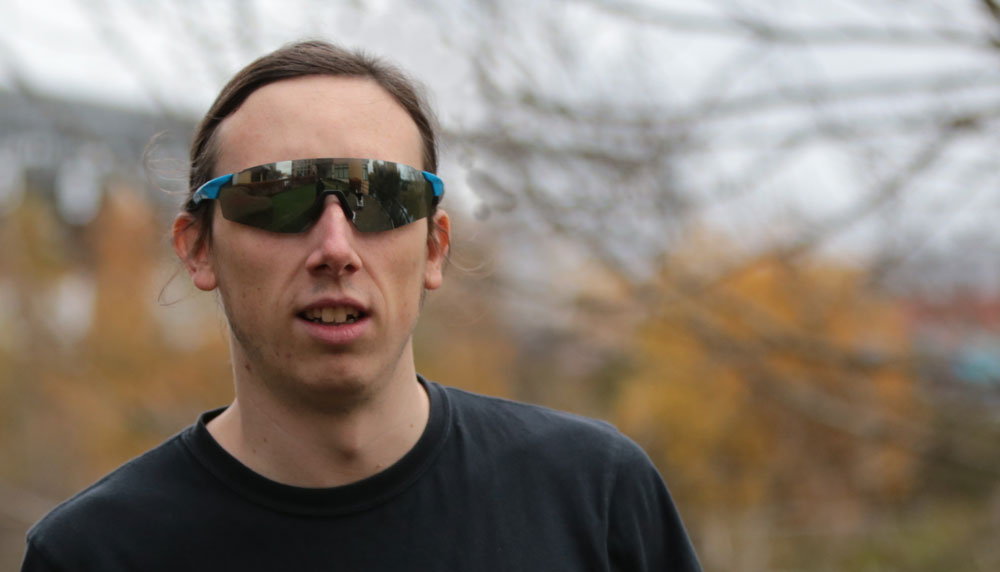
Following on from my recent review of the ROKA Phantom sunglasses, I’ve also been testing the ROKA SL-1s. ROKA offer frames along the top, bottom or all around, but who needs frames when you’re living in the future? My personal preference is to do away with them, and the SL-1 does, putting it squarely in competition with the Oakley EVZero.

Here’s the unboxing:

The glasses are supplied with a hard case, filled with foam on the inside. This is perfect for stuffing into the bottom of your kit bag without worrying it will get crushed or shaken about. It’s not unusual for high-end sunglasses to come with a hard case, but most are empty, allowing the glasses to be shaken around, so the foam is a nice touch.

The frames represent what you would expect from performance sunglasses: rubber ends to hold them against your face and a satisfying click as they open or close so you won’t end up with the frames being stuck half open. They’re flexible enough that you can still slide the arms into your helmet when racking them in transition.

Coverage is wide, offering near perfect side to side and lower vision. Upper vision is fine on the hoods of your bike but I found I could see over them slightly when I got down on the drops. If that annoys you, you may want to opt for the SL-1X instead, which rises over the top to give you that extra vision while in the TT position. The nose bridge is noticeable in a way that it isn’t with the Phantom, but arguably that is a tradeoff you accept when you choose frameless glasses.

These things are absolutely glued to my face. I could get a bit of movement on the Phantom when I deliberately tried to invoke it. But even when rocking out to Lordi, the SL-1 remained exactly where I had put them.

The dark artic mirror lens make a good choice in the sun, and most importantly, they’re mirror lens and mirror just looks cooler than anything else. It’s the lowest light transmission ROKA do for the SL-1, so if you’re going to be out in other conditions, you might want to look at some of the other lenses (some of which also come in mirror). That said, they can still hold their own against other sunglasses I’ve tested in lower light conditions.

Summary

There is a lot to like about the ROKA SL-1. Other sunglasses are often hard to put on or don’t stick in place, but the SL-1 is both flexible enough to slide on easily and glued to your face. They look cool and they’re comfortable to wear, although the nose bridge is a little annoying. If you’re running or road cycling, these make a great choice. If you spend most of your time in the TT position, I would recommend checking out the SL-1X instead, as you’ll appreciate the extra vision at the top.
ROKA Phantom sunglasses

November 26th, 2018 | Reviews

ROKA make some amazing looking stuff. However, as I wrote about in October, their shipping costs were incredibly high. Well, great news: the bad old days are gone! ROKA now has a UK distribution centre allowing them to serve UK and European customers without adding 50% on to the price of your order.

To celebrate, I’ve been testing the ROKA Phantom sunglasses. First up, here is the unboxing:

These are the carbon (polarised) lenses. The packaging looks excellent. It feels like you’re opening an Apple product. Inside you’ll find your glasses, along with a pretty rugged soft case. Not something I would want to be thrown around in the bottom of a suitcase, but sturdy enough to leave in the outer pocket of your backpack without worry.

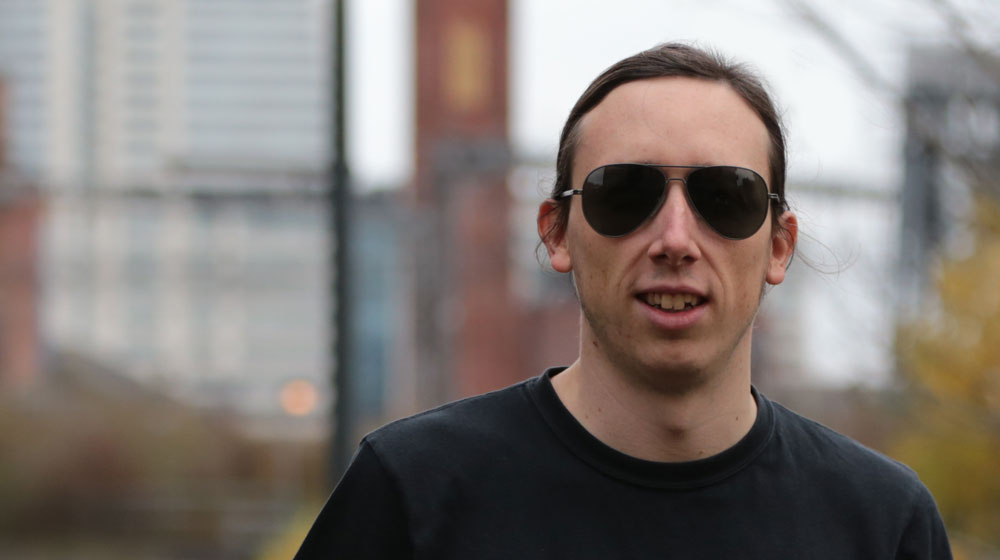
They weigh in at just under 20 grams. I also weighted my existing sets of sunglasses, all of which weighed in at somewhere between 30 and 35 grams. Whether you can tell the difference, I’m not sure, but they do feel super light when I’m putting them on.

The light transmission works well in most environments. Admittedly, the British winter isn’t the best time to test them in bright, sunny conditions. But my usage so far has been positive. You can’t stare directly into the sun (I didn’t test this intentionally, but the sun is pretty low around here during winter), but you can get close, and they function well in low light scenarios, too: walking into the office and driving at dusk both left me with enough detail to see clearly.

Racing in aviators isn’t something I’ve previously considered but ROKA insists they will stick to your face. So far, they’re holding pretty true. I can make them jump forward if I rock out to Metallica on maximum. But anything that would actually happen in a race wouldn’t be enough to disturb them: see the video above for my own shake test.

What you won’t get with the aviators is an ultra-wide field of vision. They’re more than adequate on the run, but on the bike, you can see around the side of them and as soon as you get on the drops or TT bars, you can see over the top of them, too. If you’re looking for a wide field of vision, check out my upcoming ROKA SL-1 review. That said, the inner vision is arguably better. The nose bridge entirely disappears on the Phantoms in a way that it doesn’t quite on the SL-1.

Summary

ROKA set out to make a set of aviators that was built for racing. They’ve done an excellent job. I don’t think I’ll be trading in my sport style glasses for these while on the bike due to the extra vision I get with the former. But, when the on run, the low weight and invisible frames come into their own.

Good stress talk

November 14th, 2018 | Life

Last week, Leeds Anxiety Clinic held its first public talk “How to build good stress into your life to make you immune to bad stress”.

As a first event, it has been a success. It was more than sold out: we had a waiting list with people emailing us asking how they could get tickets or just stand at the back. So, it is great to see there is demand for what we do.

Chris delivered the talk with confidence and the feedback we received via Survey Monkey afterwards was generally positive. We’re looking forward to announcing more events in the near future.

In-body analysis

November 13th, 2018 | Life

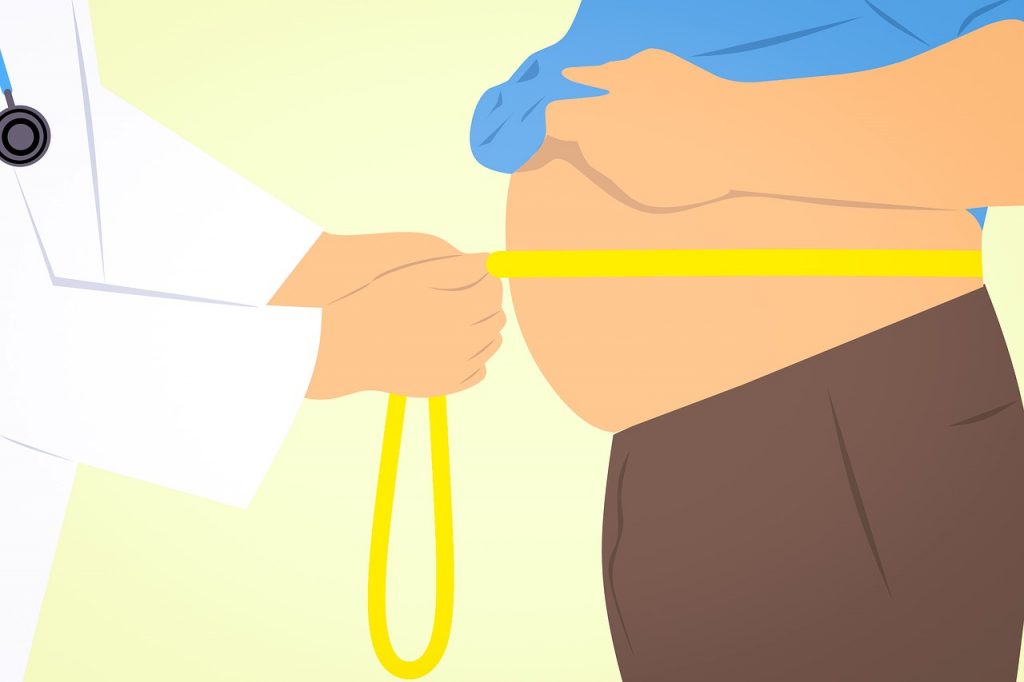
In April I did my first body analysis at the gym and came out with a body fat percentage of 16.5%. A few weeks ago I did another and discovered I had increased my body fat percentage to 18.3%. Bad times.

With them being so far apart, it’s impossible to say when it changed. But after an entire summer of triathlon and running, I wasn’t expecting it to go up. I’ve also lost muscle mass, entirely from the upper body, while gaining it in my legs.

It’s the off-season now so I will be gaining body fat as I eat a lot much ice cream. But come January it’s probably time to look at my strength work.

Abbey Dash 2018

November 12th, 2018 | Family & Parenting, Sport

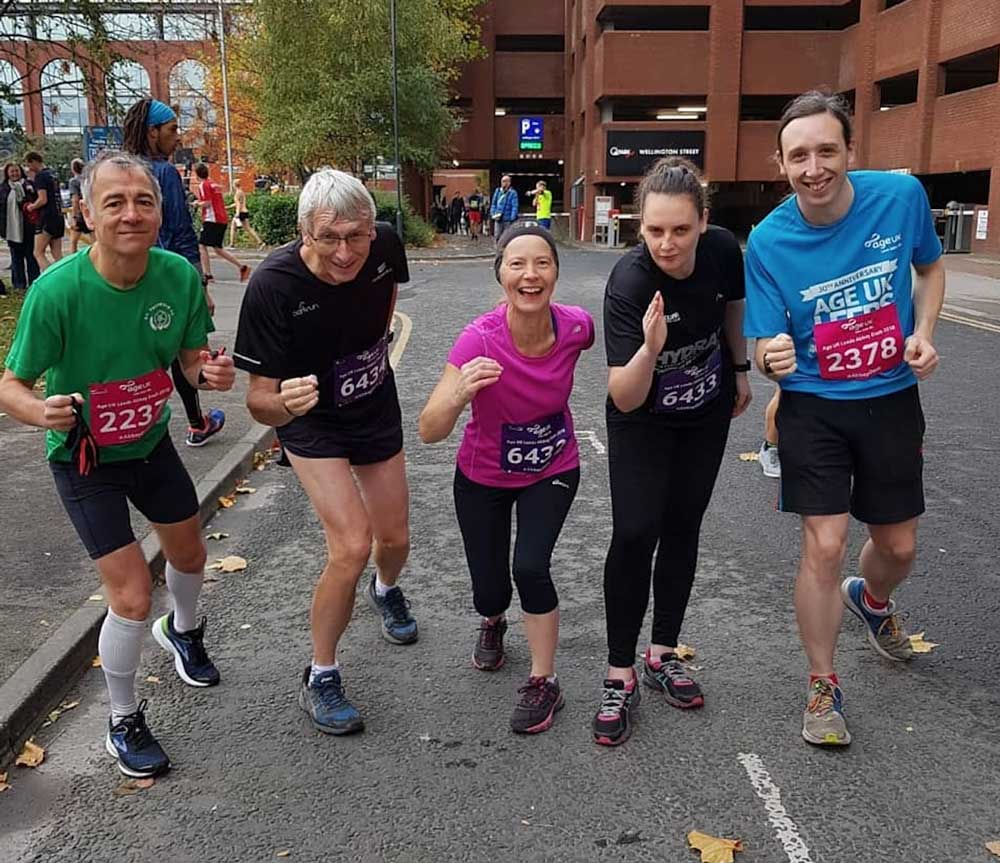
Earlier this month, myself, my dad and my sister ran the 33rd annual Abbey Dash.

It’s a 10km road race from Leeds to Kirkstall Abbey and back to raise money for Age UK. I first ran the Abbey Dash in 2014. However, I first attended the Abbey Dash in around 1987 when I watched my dad run one of the first few dashes from the comfort of my buggy.

We decided to run as a group. After all, there are plenty of 10ks, but rarely a chance to run together. And as it was only a week after the Hubble Hubble ultramaraton and my foot was still pretty beat-up.

In the end, we made it home in:

59:24

Comfortably within the hour, so happy days. Well done one and all! After the race, I headed to Headrow House for some drinks with Hyde Park Harriers before moving on to The Midnight Bell for Sunday lunch. Despite some very dubious Yorkshire puddings, the food was good.

MSc results

November 9th, 2018 | Life

After two months of waiting, our psychology MSc dissertation results have finally been published. I’m pleased to announce that they’re great! My final submission achieved 82%. Although I don’t have my official overall MSc result yet, this grade is good enough to secure a distinction.

Well done to all of my friends and peers on the course, many of whom did exceptionally well. It was such a fun year studying with you all and I can’t wait to see the exciting directions you all take your knowledge in.

Read my research paper here.

Fire in the building

November 8th, 2018 | Life

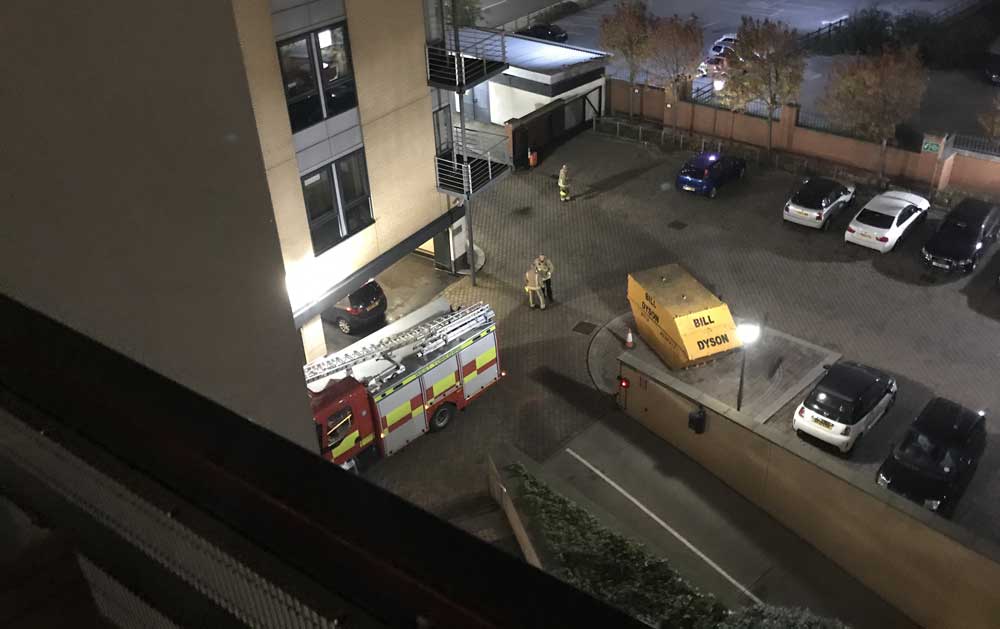
What a start to the week we had. Our apartment block caught fire. Nothing too serious. But what exactly is the line between small non-serious fire and large mega-dangerous fire?

The fire alarm went off at 3am. However, it wasn’t really clear what was going on because it would do a few rings and then turn off. Then occasionally turn on again. We assumed it was faulty and a grumpy Venla insisted we “turn it off!”.

But as this kept going on we decided it was safest to evacuate just in case. As we did, one of our neighbours came knocking on all the doors to let everyone know that there was a bit of smoke in the building and so it probably wasn’t a fault.

West Yorkshire Fire & Rescue responded in force. They had five fire engines there within five or ten minutes of us getting outside, including a big platform cherry-picker.

It turned out that someone had left a pan on the stove, which had been left on, and eventually headed up until it ignited the plastic parts. The fire was quickly dispatched and didn’t cause much damage to the apartment’s kitchen, let alone the rest of the flat or the building. But you never know how close it was to a bigger disaster.

No-Release methodology

November 7th, 2018 | Tech

You’ve no doubt heard of us at Glorry, the exciting Silicon Valley startup that is taking the world by storm. We’re best known for raising £17 billion in funding on Kickstart in less than 38 minutes, despite having no discernable business model. Still, that’s what they said about Instagram and look who is laughing now. Mark Zuckerberg, that’s who.

We’re pushing the limits of Agile delivery to see how we can deliver the most value to our customers. But our Service Delivery team are also looking to ensure a consistent and stable customer experience that doesn’t allow new features to compromise on quality.

The result is a methodology we’ve called “No-Release” and I’m excited to share some details of it with you today.

What is No-Release?

Simply put, we don’t release any code.

What are the results like?

They’ve been outstanding. Since we adopted this approach, we’ve had zero bugs introduced to the live system. That’s not a misprint: zero bugs. Not one single incident has been released related to the new code we’ve been writing.

Since adopting this approach, our velocity has increased. Developers feel more confident that their work will not cause issues in live. Product Owners are happy to prioritise tech debt because they know it won’t delay new features arriving in live. Service Delivery is less jittery about degradation due to changes to the product.

How does it work?

We based our workflow on a traditional Scrum methodology. We operate in two-week sprints with a backlog of features prioritised by the Product Owner. Each ticket begins with a Business Analyst sitting down with a Developer and a Tester to work out how we can deliver and test the acceptance criteria of the ticket.

When a ticket is complete and signed off, including going through our continuous integration pipeline where a series of automated tests are run, we then merge the ticket into our develop branch. At this point, the ticket reaches our Definition of Done and we can close it.

Our master branch contains a copy of the code deployed to live, while our develop branch contains all of the new features. Because we operate under No-Release, we almost never have to deal with merge conflicts because we never merge develop into master. Or anything else for that matter.

What are the drawbacks?

One of the biggest drawbacks to No-Release is that you do not release any code. This means that no new features and improvements ever make it to the end user.

Making this work requires buy-in across the organisation. Without everyone being on board you can easily get developers saying “this is pointless, what am I doing here” every stand-up, and upper management suggesting they can fire the entire team and get the same results for much less money. Therefore, it’s important to get everything to embrace the methodology before starting.

Each organisation needs to make its own decision as to whether this drawback is acceptable to gain the benefits discussed above.

Conclusion

No-Release methodology allows you to increase your development velocity while eliminating any risk of service disruption to the end user.

Battle of the buggies

November 6th, 2018 | Sport

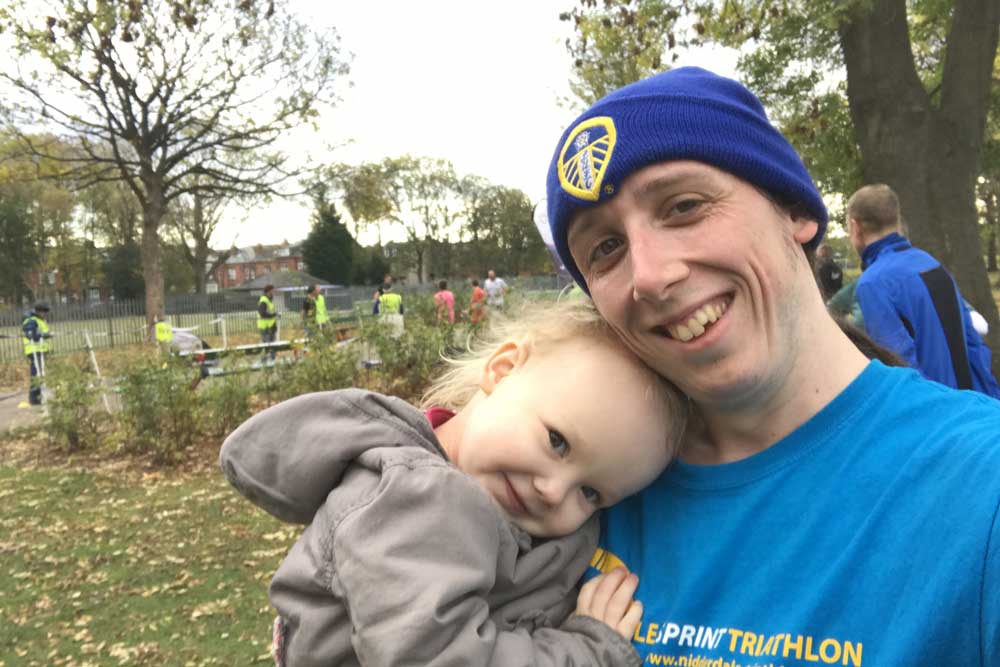
Last weekend, Venla and I headed over to Cross Flatts park to do Parkrun. It’s pretty empty at 8:30am, when it’s six degrees, surprisingly, so Venla had the swing park all to herself. After that, we headed off to the start line in the buggy.

I wasn’t sure if I was going to be able to run given I was still recovering from Hubble Bubble, but I felt good once I started. Until I pulled a muscle in my neck, at least.

Buggies go fast downhill and slow uphill. But I can’t have been too far off form because in the end I managed a 26:26, finishing a couple of minutes ahead of the next buggy. I don’t think I could do that at Woodhouse Moor where the super-runners smash out Olympic buggy times, but it felt good to steam home to victory.

People who aren’t real doctors

November 1st, 2018 | Distractions

Dr Dre

He may be an awesome wrapper, but he doesn’t have a PhD in music. Or in anything.

Dr Evil

There is no such place as evil medical school. It’s just made up.

Dr Pepper

The drink was created by pharmacist Charles Alderton and named by Wade Morrison. Neither of them are doctors.

The Doctor

Sure, he’s a Time Lord with more knowledge of human physiology than probably any human alive. But he’s not registered with the General Medical Council and therefore it doesn’t exist.

Gillian McKeith

Gillian McKeith used to tell people she was a doctor, and use it in advertising until the Advertising Standards Authority told her not to. That’s because the qualification she had could be bought on the internet. Ben Goldacre bought one for his cat.

Dr Fox

More musicians (or in this case DJs) pretending to be doctors. He studied management at the University of Bath and has no higher qualifications.

Dr Seuss

Of all the pretenders, Dr Seuss may well have the best case. He did go to Oxford University to pursue a PhD in English literature. However, he never completed it.