Chris Worfolk's Blog


Best places to live in Leeds

July 12th, 2014 | Thoughts

A few months ago we had a discussion about housing. As people who are approaching thirty and thinking about settling down probably tend to do. It got me thinking about how much perception affects your thinking. For example Hugh said he was looking at West Leeds because that has the nicest areas, whereas I would sheer clear of West Leeds because I think the nicest areas are in North and East Leeds.

The Sunday Times is a big North Leeds fan apparently. They named Chapel Allerton and Otley as two of the best places to live. Leeds List suggested Horsforth, Calverley and Ilkley as the places to be, while avoiding Headingley, Beeston and Seacroft.

Anyway, I thought it might be interesting to lay out where I think are the most desirable places to live and compare it to what everyone else thinks. So do post your thoughts. I’ve tried to stop where it becomes it’s own place (Wakefield, Bradford, Ikley, etc) but there is very subjective also so there is no clear cut off point. There is a similar problem with want counts as an area in its own right.

North Leeds
Desirable Chapel Allerton, Moortown, Shadwell, Alwoodly, Adel, Roundhay
Indifferent Headingley, Meanwood, Oakwood
Undesirable Chapeltown, Woodhouse, Little London

East Leeds
Desirable Colton, Temple Newham, Garforth, Swillington, Kippax
Indifferent Halton, Cross Gates
Undesirable Harehills, Seacroft, Whinmoor

South Leeds
Desirable Morley
Indifferent Batley
Undesirable Holbeck, Hunslet, Beeston, Middleton, Belle Isle

West Leeds
Desirable Horsforth
Indifferent Pudsey
Undesirable Kirkstall, Burley, Bramley

I’m not convinced Morley actually is a desirable place to live, but I didn’t know what else to put in that box.

As I said in the introduction, a lot of this depends on perception. Thus, I think a lot of you will feel differently. This also explains why you should not be offended when I have described your neck-of-the-woods as undesirable. I am sure it is full of lovely people.
Tenth anniversary

July 11th, 2014 | Life
10

Today is the tenth anniversary of my blog. That is a long time. If it was a child, it would soon be finishing primary school! For the fifth anniversary I had balloons. No such care has been taken for this one. Though I do hope you have been “overwhelmed by fun” as my first blog post declared as an aim.

I have not gone back and read a lot of my old posts. They’re probably horrible. My views have changed a lot over the past decade, especially during the past year. I was an idiot when I was 17. I am an idiot now, but at least I know enough to know that. By the time I reach my grandparent’s age, I might actually know something useful.

Stats

  • I have written 3,284 posts
  • That represents 6.3 posts per week
  • 1,444,814 spam comments have been posted
  • Last month 15,214 people visited my blog
  • The most popular month was June 2013 when 17,651 people visited
  • The most popular search term for reaching my blog is “charles darwin”

The Rise of Darwin is a new one. For years the most popular way for people to find my blog was searching for my food chain diagram.

Learning to Read Music

July 10th, 2014 | Books

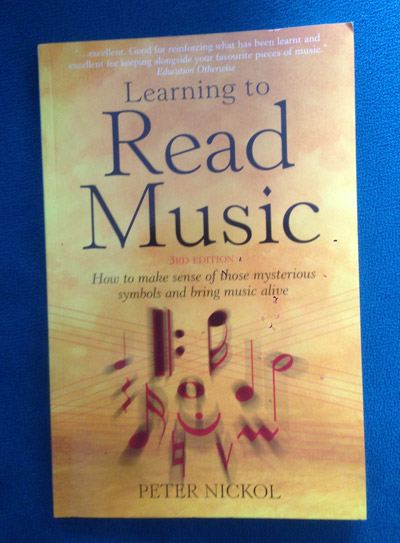
For once I went out and actually bought an old-fashioned printed book. For some things, it is nice to have a physical reference than you can scribble on and twist into various shapes for convenient viewing. This was one of those times.

The book was pretty short, explaining what I wanted to know in a concise manner. This was great because I got through it all in an afternoon and can use it as a reference going forward as well. Top marks.

Learning-to-read-music

Fin-Global Development Index

July 9th, 2014 | Religion & Politics

There are lots of different reports that rank nations according to various criteria to tell you who is best at something. Education, healthcare, equality, prosperity, the lists go on. The problem with these lists is that they can be very subjective and so it is difficult to trust which ones are a) accurate and b) measuring something meaningful.

The Fin Global Development Index solves this problem. We have taken 23 different indexes and averaged them to produce a score for each country. This helps prevent bias in any one report from moving a countries position.

Secondly, I took ensure that a fair criteria was used. Rather than measure on the criteria that was used to build the report, I took a simple premise.

We all know that Finland is the happiest, most developed, generally best place in the world. It has an unmatched education system, high social mobility, and achieves such levels of happiness that most of its population manage to not kill themselves even though it is dark, miserable and freezing cold six months of the year.

Therefore, based on this premise, countries were awarded points based on how close they were to Finland in each of the rankings. Having an equal score resulted in zero points, being one place away was one point, and so on. Therefore if Finland ranked 4th in the world, you would earn zero points by being joint-forth, one point for being 3rd or 5th, and so on. The object being to score the lowest amount of points.

Countries represented

A selection of countries were chosen to represent the world. These included a selection of developed nations, as well as developing nations to use as comparisons. The complete list of countries included were:

  • Norway
  • Sweden
  • United Kingdom
  • France
  • Spain
  • Germany
  • Estonia
  • United States
  • Canada
  • Australia
  • Japan
  • India
  • China
  • Brazil
  • Saudi Arabia

Indexes

The following index were used to compile the report:

  • GDP (PPP) per capita
  • Life expectancy
  • Infant mortality
  • Press Freedom Index
  • Pearson education index
  • Education Index
  • European Health Consumer Index
  • WHO healthcare rankings
  • Human Development Index
  • World Happiness Report
  • Long-term unemployment (OECD)
  • Government transparency (OECD)
  • Global Slavery Index
  • Social Progress Index
  • Cancer rate (OECD)
  • Health care quality (OECD)
  • Suicide rate (OECD)
  • Corruption Perceptions Index
  • Globalisation Index
  • Failed States Index
  • International Property Rights Index
  • Legatum Prosperity Index
  • Alcohol consumption (OECD)

Results

Rank Country Score
1 Sweden 7.0
2 Norway 8.3
3 Canada 8.4
4 United Kingdom 10.1
5 Australia 10.6
6 Germany 11.7
7 France 14.1
8 United States 14.8
9 Japan 17.0
10 Spain 17.0
11 Estonia 13.9
12 Brazil 55.9
13 Saudi Arabia 57.9
14 China 81.8
15 India 100.0

Analysis

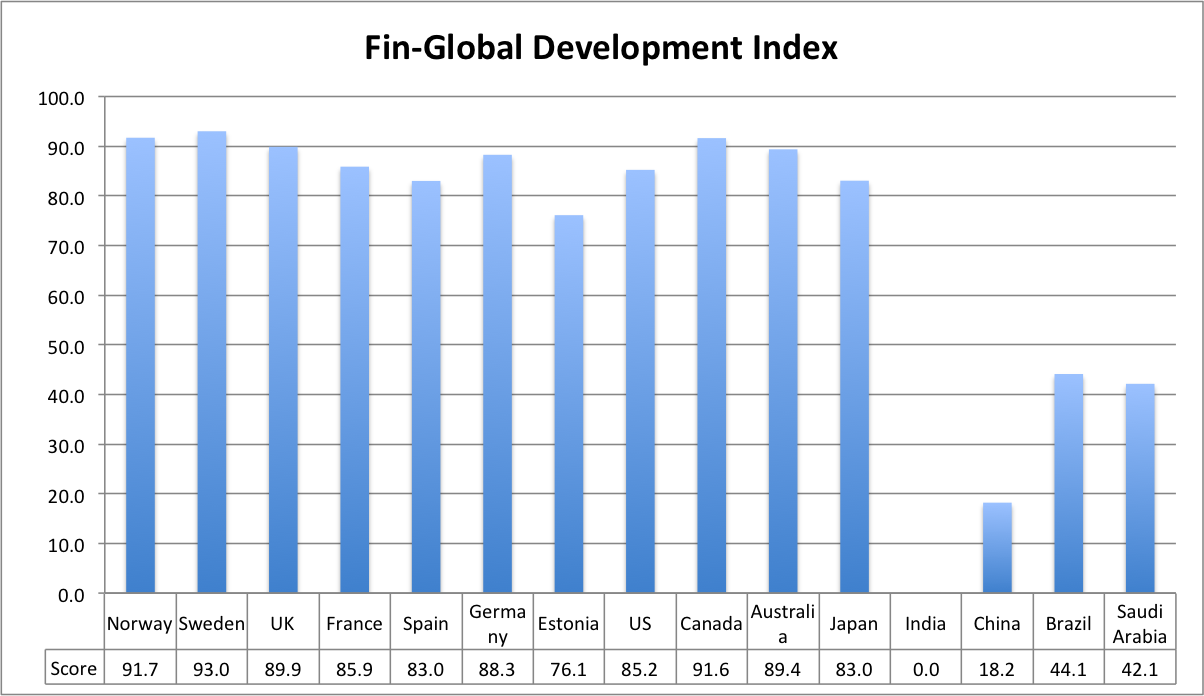
When plotted as a percentage graph with zero representing a perfect score and India (who scored the highest) representing the worst possible score, most developed countries represent similar levels of development.

chart

Click for a larger version.

The highest ranking countries were Sweden, Norway and Canada. There is a possible bias for Northern Europe to share a similar culture and therefore score better on some of the metrics, or it could simply be that these countries are uniformly excellent (or more likely both).

It is also possible that OECD countries benefited from the inclusion of those lists as because there are less states on there, they may be moved closer together. This is unlikely to have had a large effect, as most non-OECD countries would not score that highly, but will have had some effect.

Conclusion

Northern Europe and Canada are the best places to live. Unless you dislike freezing your balls off, in which case you might want to consider the United Kingdom or Australia. You probably do not want to live in India.

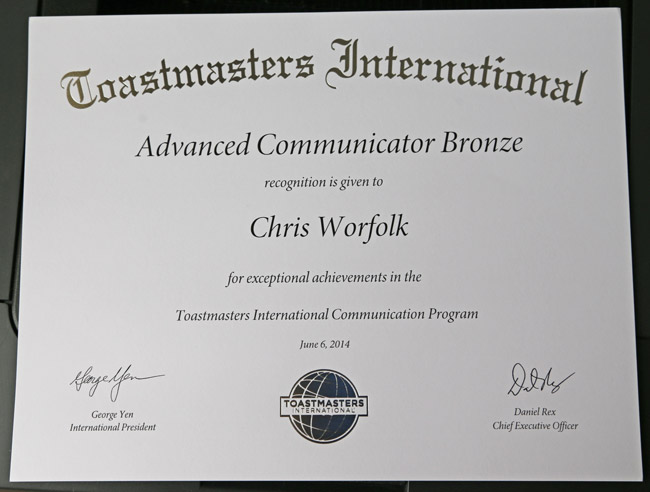
Advanced Communicator Bronze

July 8th, 2014 | Public Speaking

Advanced-Communicator-Bronze

You know you have truly made it in your life when you become eligible to judge at the Public Speaking World Championships.

Independence days

July 7th, 2014 | Religion & Politics

4th of July, Higgs Day, is a big thing for Americans. To the rest of the world however, it is just another day.

Being British, you can sometimes receive a gentle ribbing from Americans about the issue. The day they broke free from the Britain Empire. The truth is though, this happens to us a lot. We used to own almost everyone, so statistically, more than once a week someone is celebrating their independence from us.

Month Countries Count
January Australia, Brunei, Sudan, Burma, Nauru 5
February Sri Lanka, Grenada, Gambia, Egypt, Saint Lucia, New Zealand, Kuwait 7
March Ghana, Mauritius 2
April Zimbabwe, Ireland, Sierra Leone 3
May Israel, Jordan, Guyana, Cameroon 4
June Seychelles, Tonga 2
July Canada, United States, Malawi, Solomon Islands, Bahamas, Maldives, Vanuatu, Kiribati 8
August Jamaica, Pakistan, India, Afghanistan, Malaysia, Trinidad and Tobago 6
September Swaziland, Saint Kitts and Nevis, Belize, Malta, Botswana 5
October Tuvalu, Uganda, Cyprus, Nigeria, Lesotho, Fiji, Zambia, Iraq, Saint Vincent and the Grenadines 9
November Antigua and Barbuda, Dominica, Barbados, Yemen 4
December Qatar, United Arab Emirates, Tanzania, Kenya, Bahrain, South Africa 6

Grand total: 61

Picking which football team to support

July 6th, 2014 | Sport, Thoughts

Like many football fans, I have an incredibly complex system of national prejustices to work out what football team to support. Take Iran v Argentina for example. Which team am I supposed to support in this match? Iran has a terrible human rights record. However, Argentina was the last country to invade British soil, and worse cheated their way to a World Cup win in 1986.

How is one supposed to decide?

Ideally, someone would come up with a formula for working it all out. Geographic proximity, ancestry in a certain country, what you think of their politics, and how cool you think their flags and shirts are are all potentially important factors in deciding.

Once England are out, Germany are usually my B team (it is an unfortunate reality that being English you have to have a B team for when England get knocked out, but that is also true of all but a handful of countries) as having a Germanic name, it is the closest thing I can trace my ancestry to.

After that it is a question of geographic proximity. I hope France do well for example. Of course, I am supposed to hate the French, but it is very difficult to maintain such levels of casual racism against them in the 21st century. This then expands out in a circle in a “kilometres from me” fashion working out who to support.

It’s not quite that simple however. There are exclusions. I would not support Saudi Arabia for example, at least until they de-classify atheism as terrorism. Nor will I be supporting Qatar until they stop executing gay people.

Then you have to factor in the underdog level as well. We have been conditioned by decades of Hollywood films to support the underdog. In many ways it just glory supporting as if these films have taught me anything, it is that the underdogs always win. Plus it is just nicer when they do. Of course this runs in direct contradiction to the geographic rules as most of the best football teams are in Europe whereas the underdogs are on the “edge of the world” – Australia, Japan, South Korea, USA, Costa Rica, etc.

How do you balance it all? These first world problems just seem to go on and on…

Mölkky

July 5th, 2014 | Life, Sport

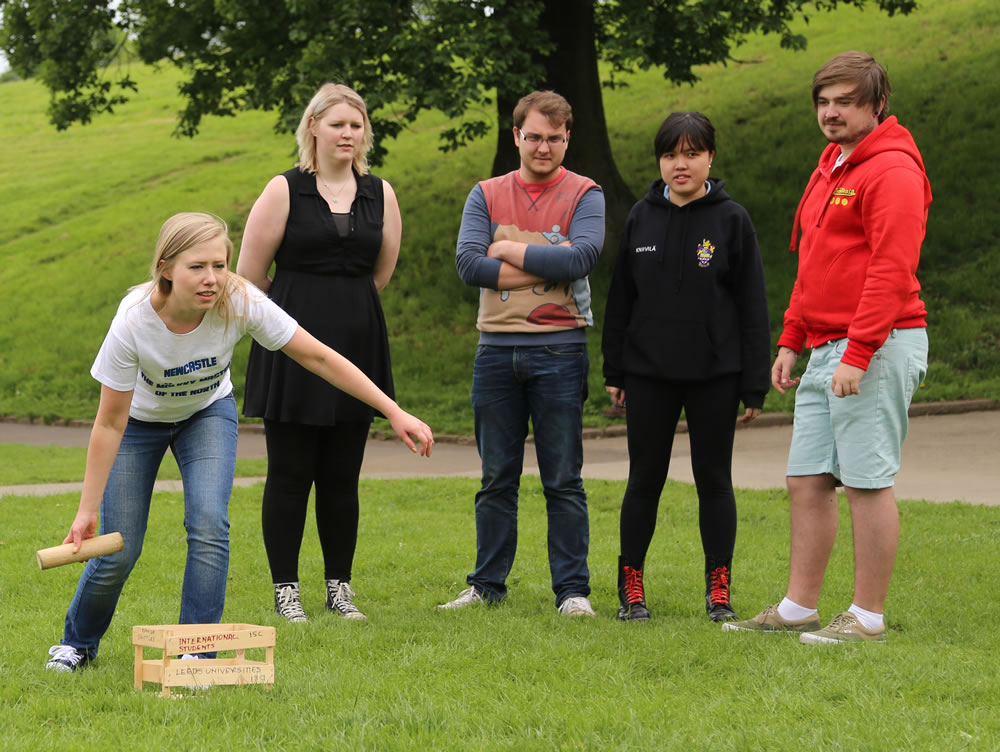
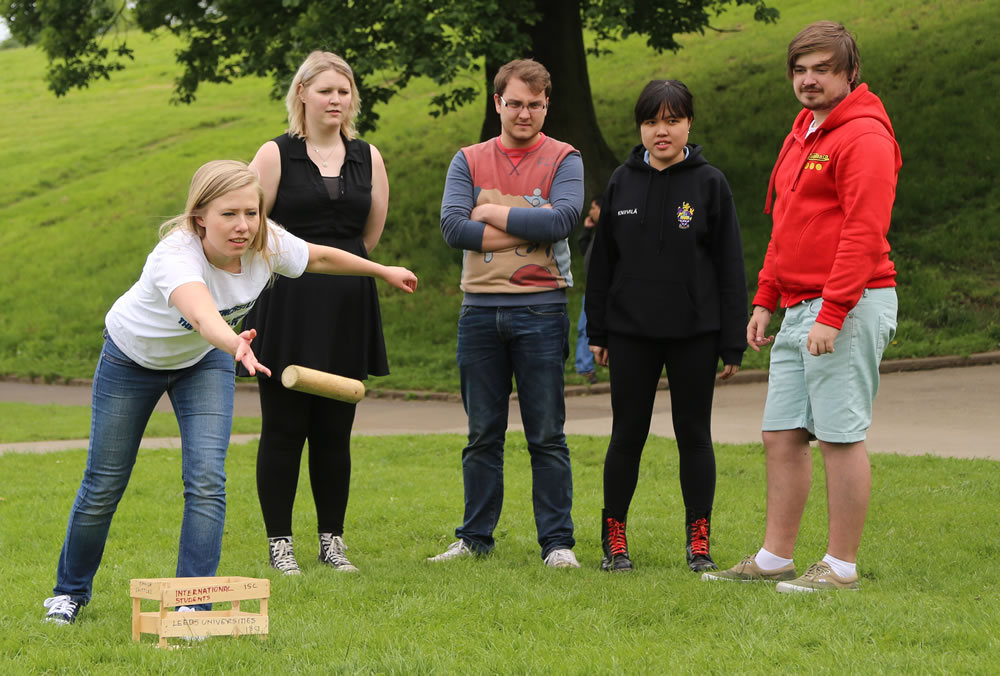
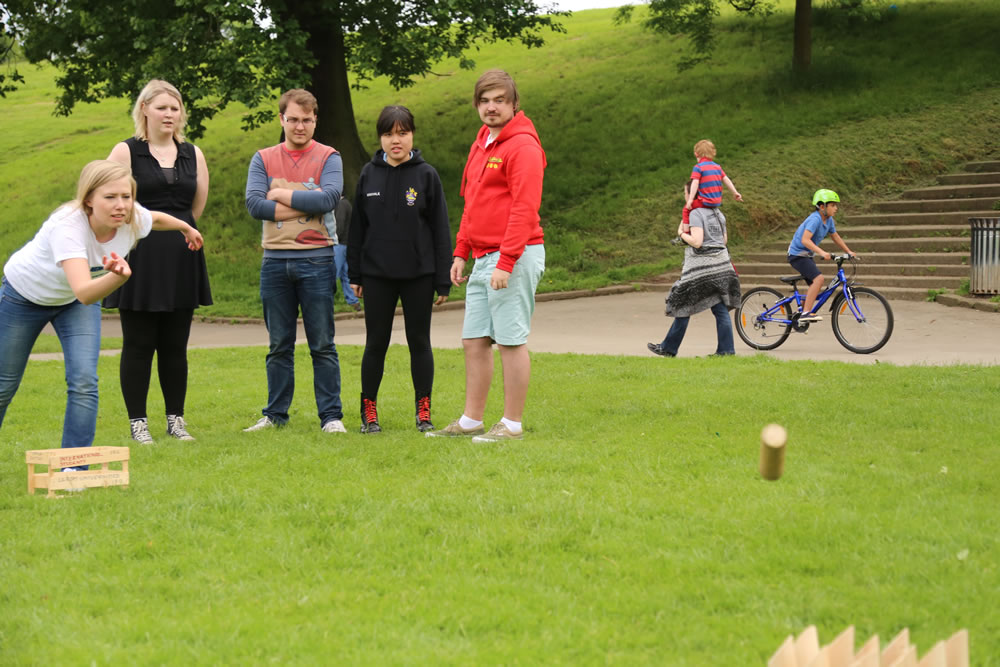
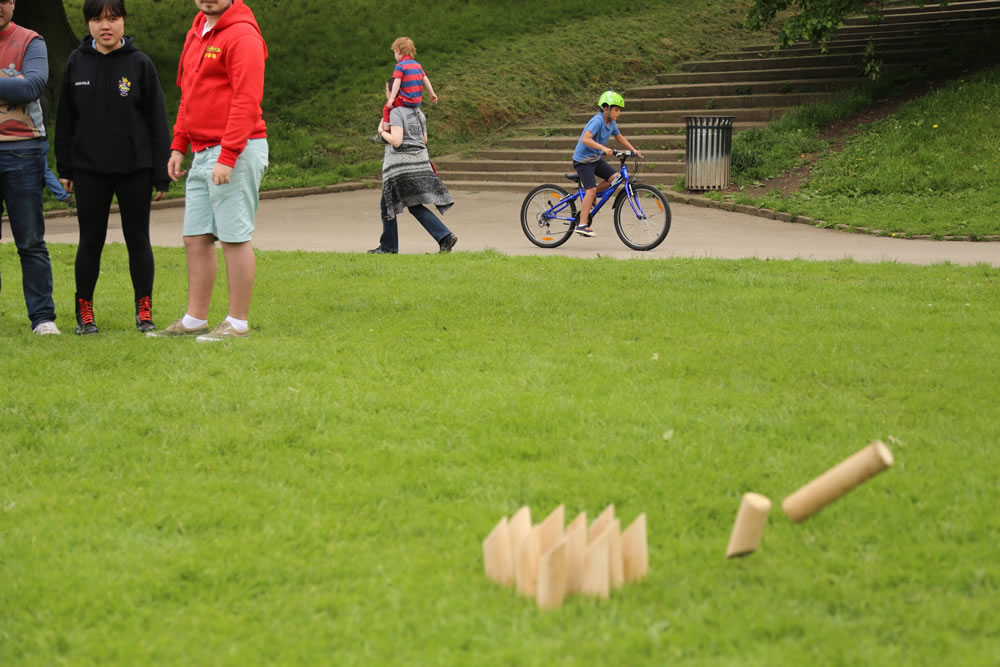
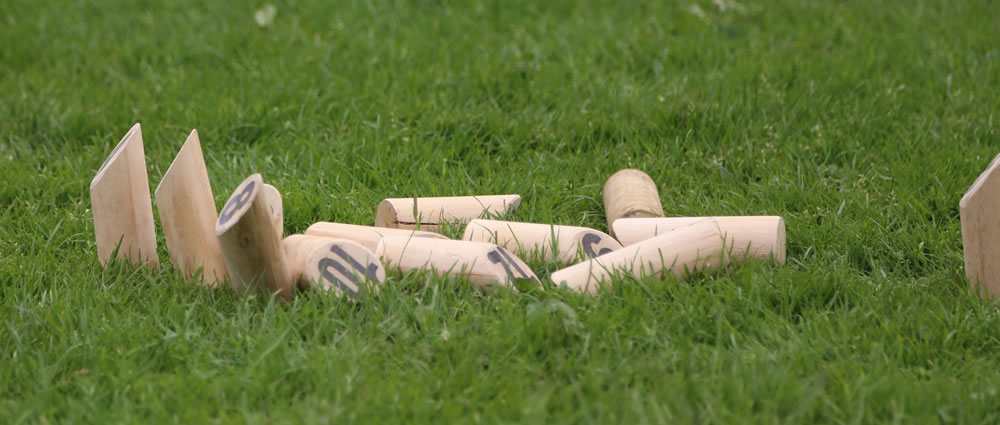
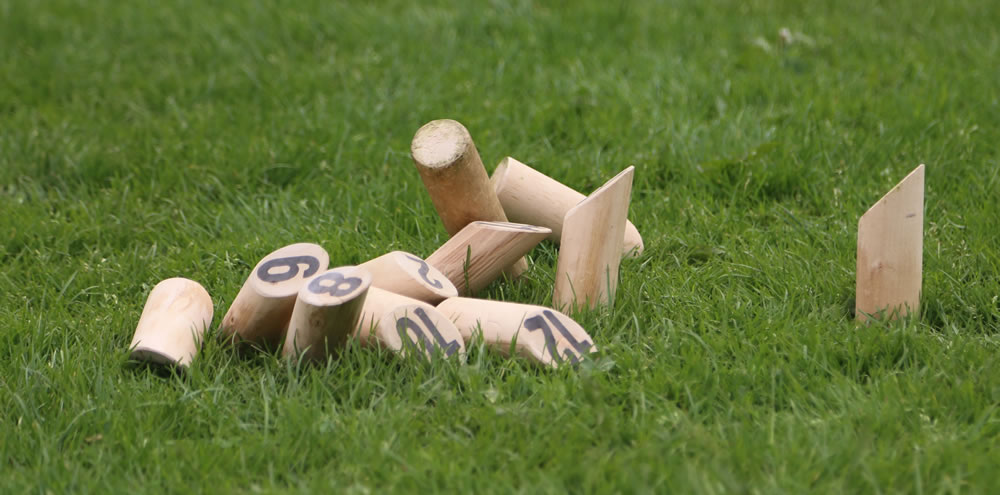
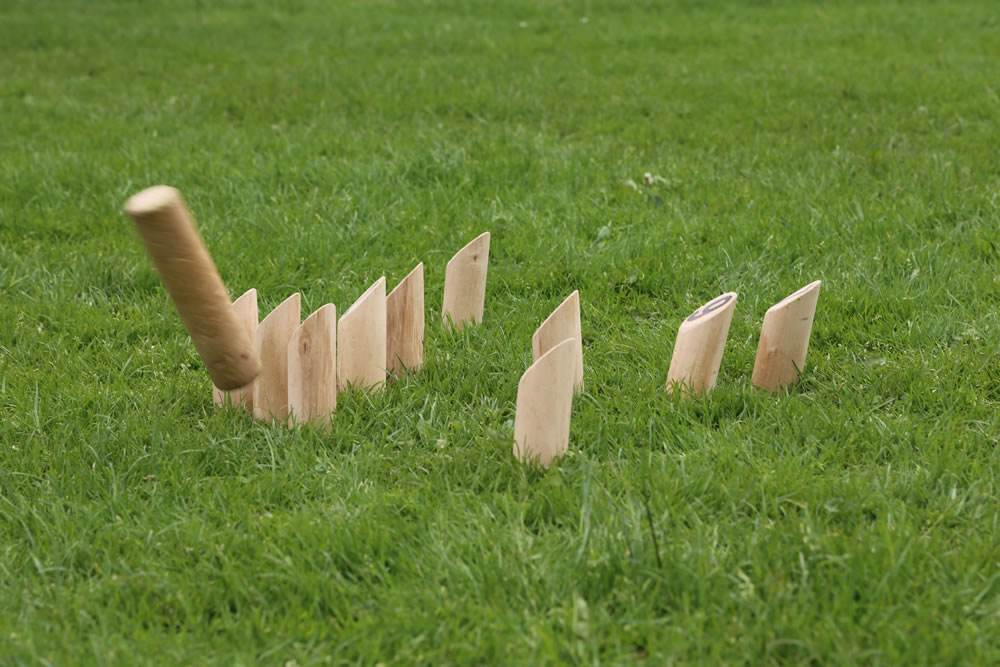
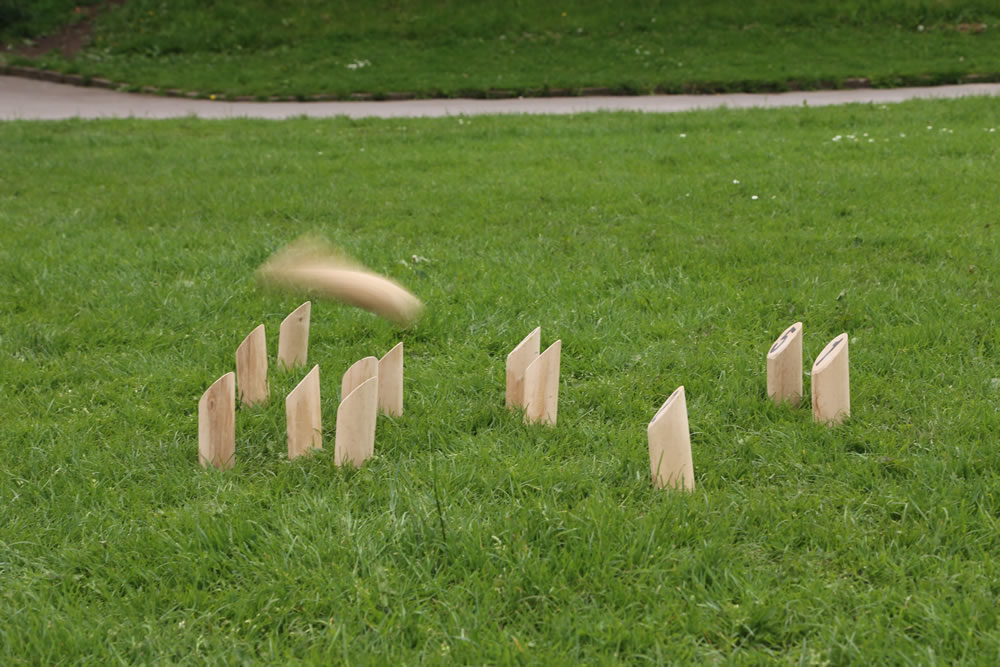
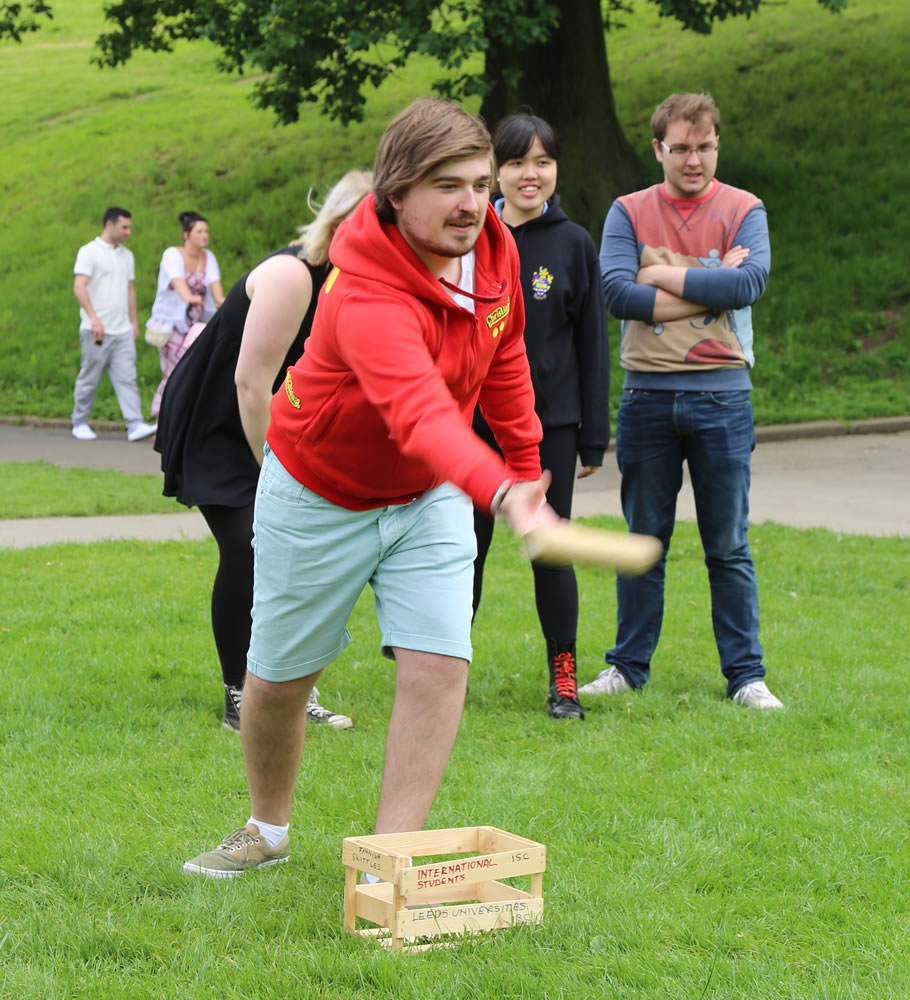
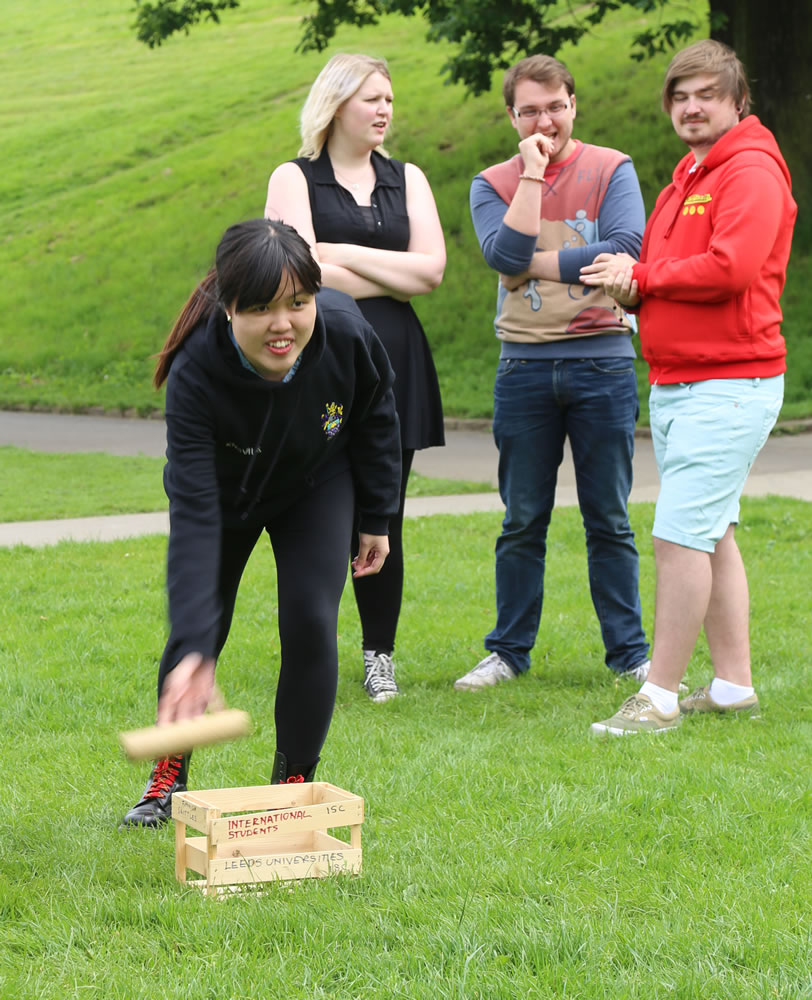
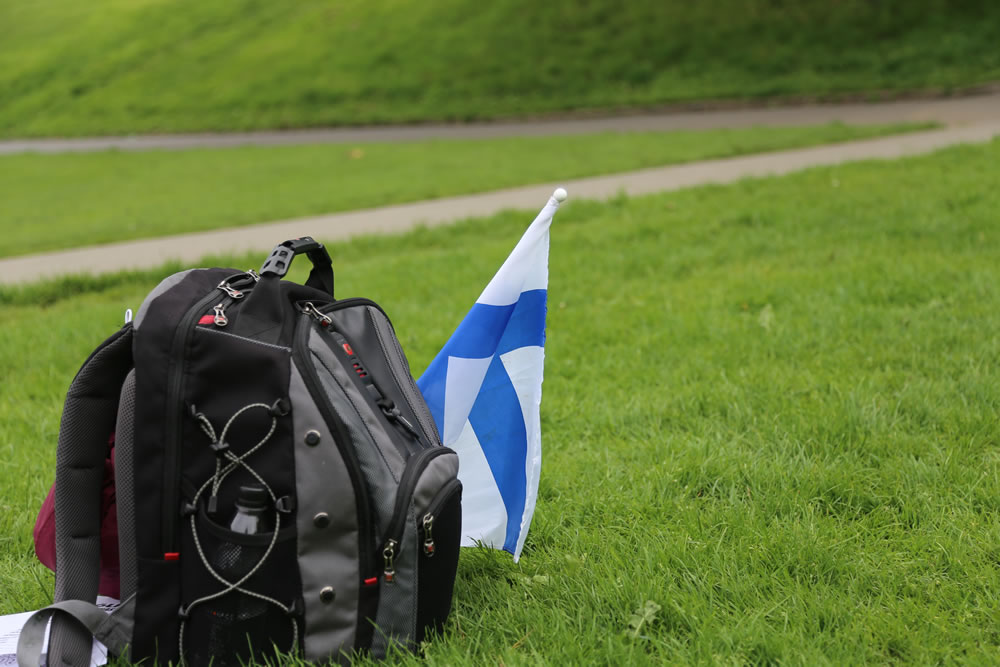
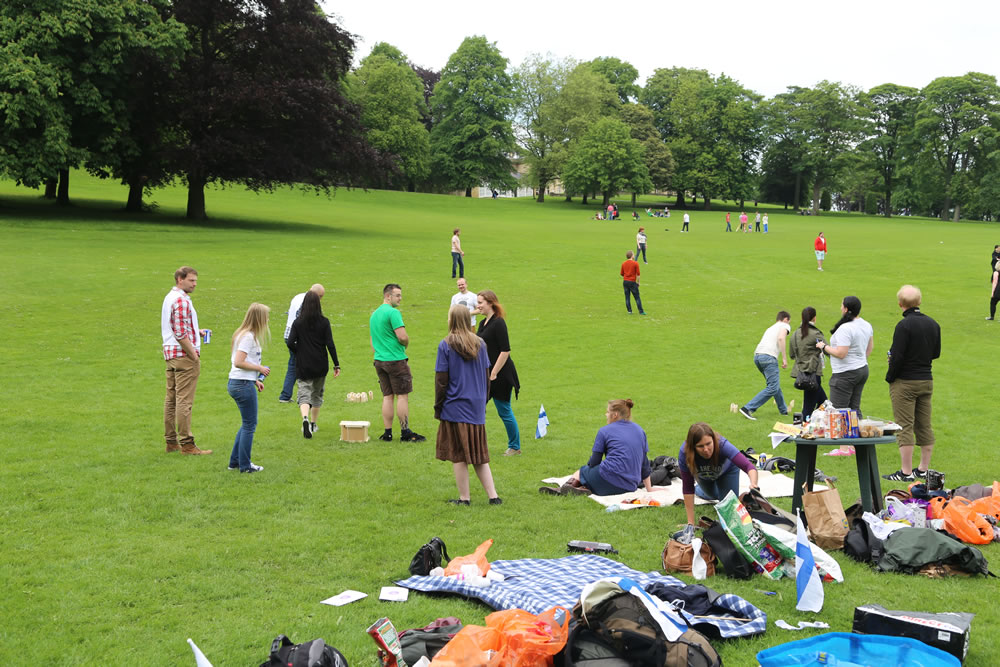
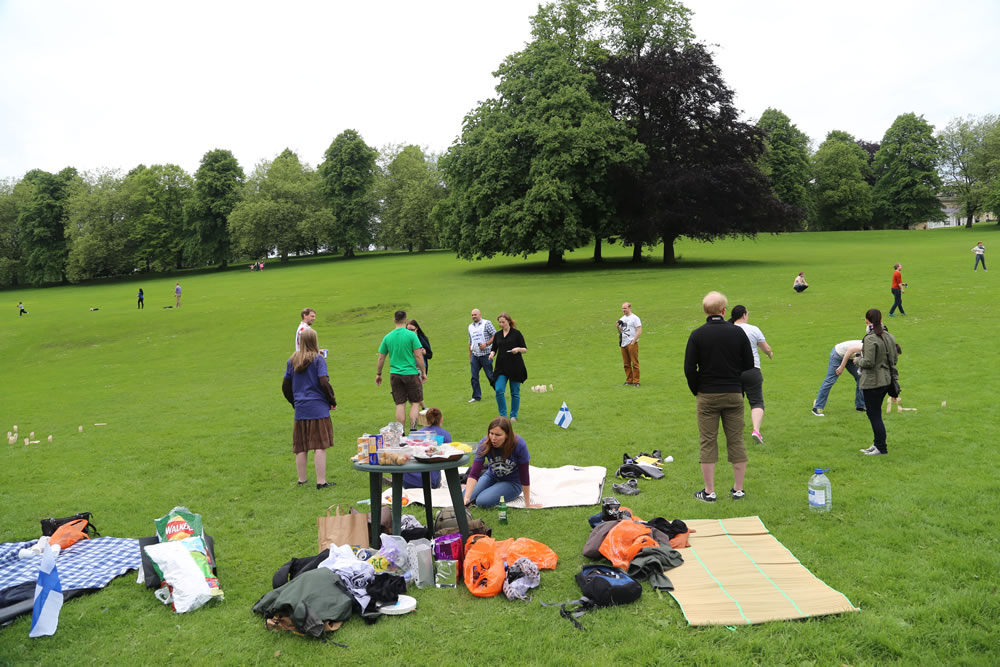
Last month we went to a Finn Guild event at Roundhay Park to take part in a mölkky championship. Mölkky is a game that combines darts and skittles. You have a wooden block and have to use it to knok over other wooden blocks to reach a certain score. Our team, Thar She Blows, was named after the £1 team t-shirts one of our members kindly provided. We ended up winning bronze.

IMG_4494 IMG_4495 IMG_4496 IMG_4497 IMG_4498 IMG_4499 IMG_4501 IMG_4506 IMG_4516 IMG_4519 IMG_4531 IMG_4541 IMG_4547 IMG_4549 IMG_4552 IMG_4553 IMG_4554 IMG_4556 IMG_4557 IMG_4559

Higgs Day 2014

July 4th, 2014 | Life, Science

Peter-Higgs

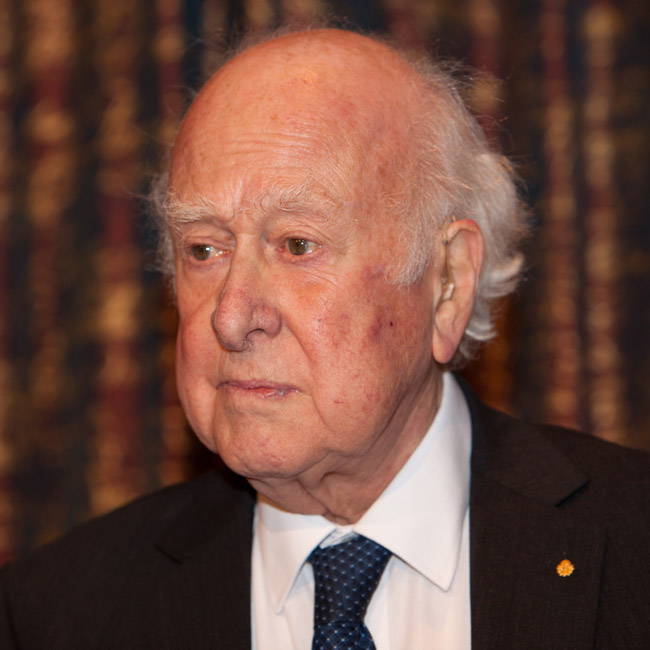
Happy Higgs Day!

A Look at James Joyce and Photography

July 3rd, 2014 | Foundation, Humanism

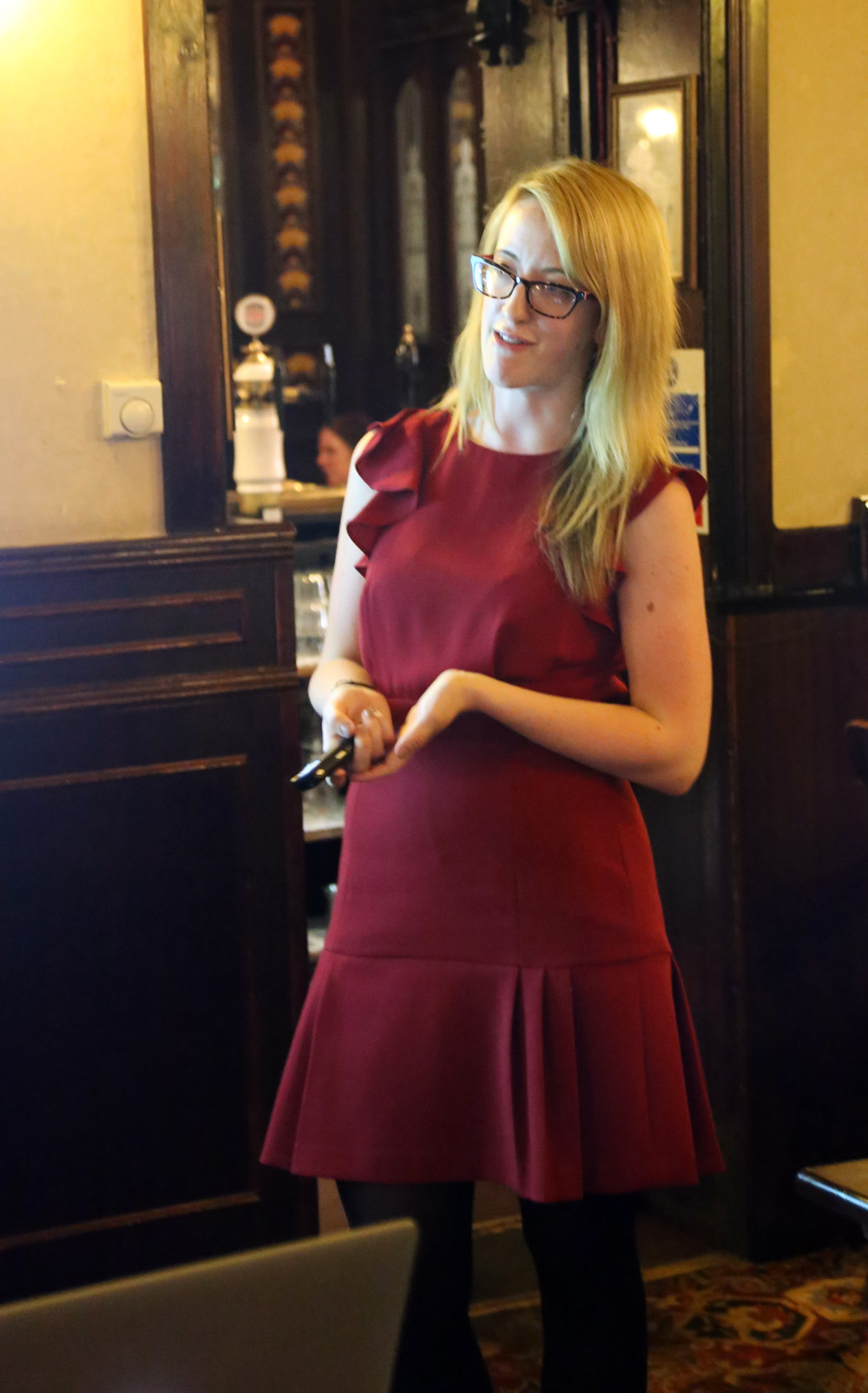
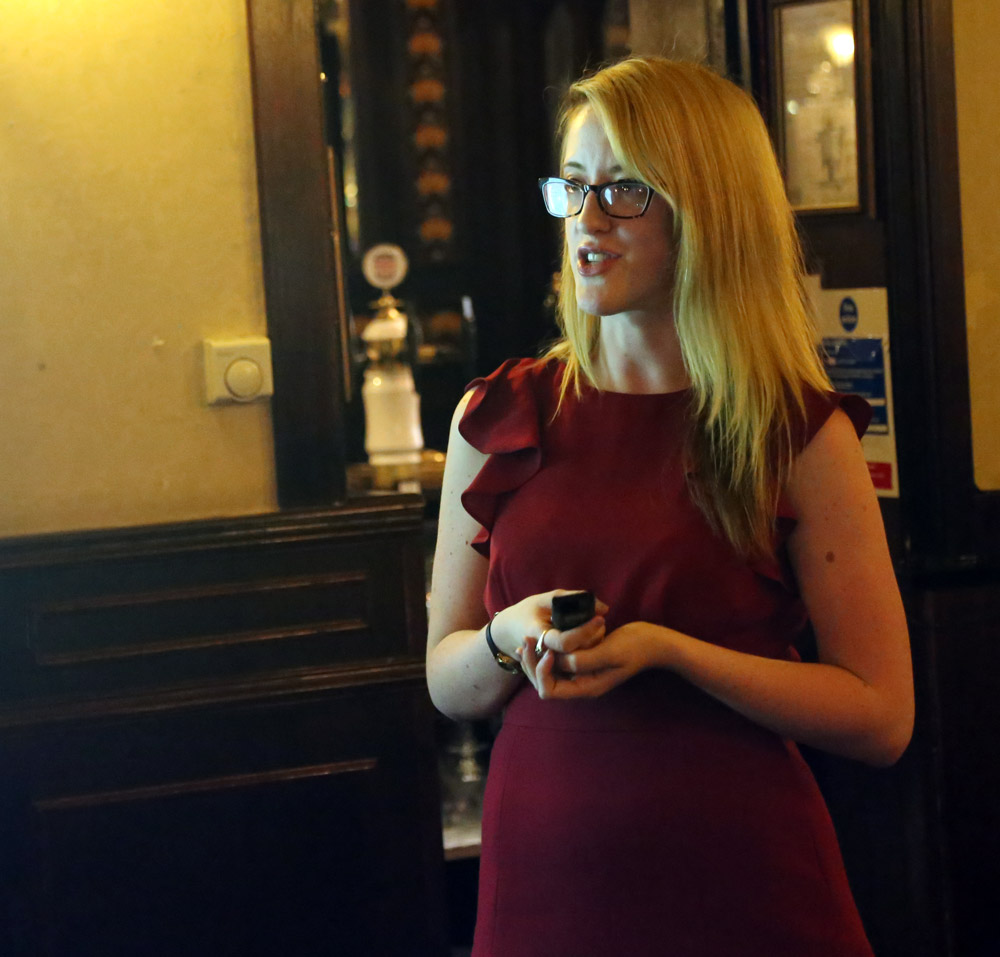
For the June meeting of Leeds Skeptics, Georgina Binnie presented a talk “A Look at James Joyce and Photography”.

skeptics-1 skeptics-2