Chris Worfolk's Blog


Reference points, and pay reviews

August 2nd, 2014 | Thoughts

In 2012 I wrote about the economic advantages I had experienced by moving companies. Although it is, of course, an extremely limited data set, I had witnessed a consistent and pronounced difference between increases in my income when I stayed with the same company and moved to a different one.

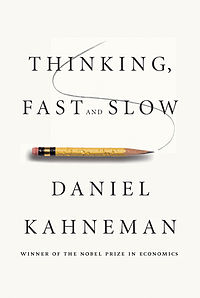
Some of this could perhaps be explained by the concept of reference points, as discussed by Daniel Kahneman in his book Thinking, Fast and Slow.

One of the issues with gaining a large salary increase with your current employer is that your current salary forms a reference point. Say you are a graduate and took a £18,000 a year job. It is now a year or two after and your skills are now worth £28,000. All of that seems reasonable in the software industry.

The problem is that to your current employer, they would have to accept a £10,000 increase in costs – a 56% increase! So they probably make you a far more modest offer of £23,000. This then also becomes a reference point. When you ask for £28,000 that is not only £10,000 more than they pay you now, but £5,000 more than they had mentally prepared themselves for. They are left feeling like they are losing £5-10,000 a year.

In comparison, a different company can come at this from a neutral perspective. They look at what someone with your experience is worth and price you accordingly. This could result in a wider range of offers. Some high, but some even lower. However, this is of no consequence as obviously you will cherry-pick the high offers and pursue those.

Thinking, Fast and Slow

August 1st, 2014 | Books

Daniel Kahneman is a psychologist who won the 2002 Nobel Prize in Economics. His book “Thinking, Fast and Slow” summarises a lot of the research he has done and proves to be a fascinating reading.

As someone who isn’t a psychologist I found some of it heavy going, but very interesting. The book is arranged into sections and these are then broken down into short chapters, which made it more readable.

Some of it was shocking too. For example, when it comes to making parol decisions, one of the biggest factors is how recently the parol office has eaten! Just after a meal they are far likely to grand you parol than just before a meal.

His discussion on priming reminded me a lot of what Richard Wiseman talks about in his book Rip It Up. Behaviour can drive emotion, even though we always think of it as emotion that drives behaviour.

The question of how effective pure branding advertising is gains some support. “Familiarity is not easy to distinguish from truth”. The more you show something to people the more confident they feel about it. Other times a lack of clarity is helpful. For example, using a bad font makes exam scores go up, because people have to concentrate more than they normally would and so make less mistakes.

Much of the book discusses the differences between System 1 (that does the fast thinking) and System 2 (that does the slower, more considered thinking). Elina often reproaches me for not noticing snails on the path, suggesting that I need to notice things or one day I will be eaten by a lion (metaphorically, these days). I now maintain that my System 1 is keeping an eye on things and simply not bothering to engage my System 2 because there is no danger.

Kahneman also adds weight o Burton Malkiel’s book A Random Walk Down Wall Street, which both discuss how the stock market is almost entirely unpredictable and therefore stock market traders actually add no value to what they do. Indeed, as 60% of mutual funds do worse-than-guessing, they actually subtract value.

Ultimately, people are just really bad at making judgements. 90% of drivers rate themselves as above average. Similarly, the majority of new businesses fail, yet the people who start them almost always believe they are exempt from such rules.

The answer to many of these issues is to replace judgement with a formula. This is essentially the entire point of Michael Lewis’s book Moneyball. Even a simple formula will do, according to Kahneman multiple regression does not even make it much more accurate.

One of the most useful points I took away from the book (almost certainly not the objectively most useful) is the idea of taking small gambles. In one chapter, Kahneman describes how people are unwilling to take profitable one-off gambles, such as a 50/50 chance of winning £20 or losing £10, but would be willing to take it if they knew they could take it 100 times in a row. The larger sample size means they are very likely to come out on top. However, they fear doing it once because there is a 50% chance they will lose and that will go down in their mental accounting.

Kahneman makes the point that we are “not on our death bed” and thus we will get chance to get even with the universe over time. Extended warranties are a great example of this. You pay a premium to insure your products, so it costs you money in the long term. A better strategy is not to buy the warranty and accept that sometimes you are going to have to replace a product – but over your lifetime you will almost certainly be up.

Thinking,_Fast_and_Slow

Leeds 10k

July 31st, 2014 | Sport

Recently I ran the Leeds 10k. I think it was the hardest run I have ever done. I was not expecting it to be that difficult as I run 10k quite regularly. However, it proved much more of a challenge doing it as an organised event.

That is not entirely unsurprising as my Parkrun times are usually slightly slower too. However, why it is, I am not entirely sure. The race is later in the morning and has less shade than my usual route, so I think heat had an effect. Also possibly lack of familiarity with the route.

At the start, you also spend half an hour crammed in with 10,000 other runners too, which was quite anxiety-provoking, so that probably took a bit out of me,

I finished in 1:06:14, which is about 8 minutes slower than my personal best when out running by myself. Not the complete disaster I was expecting though, from my pace on the home stretch I remember thinking I was on for a 1:20:00!

The event was well organised. They had water stations along the route, lots of volunteers to hand out goodie bags and you were texted your result within a minute of crossing the finish line.

I was very grateful for Elina coming to meet me too. I felt really ill after I ran 10k last week before attempting to run up to the park, so it was awesome to have someone bring me drinks and snacks.

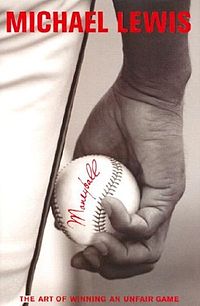
Moneyball: The Art of Winning an Unfair Game

July 30th, 2014 | Books

Moneyball is a Michael Lewis book about Billy Beane revolutionised baseball by replacing the scouting staff of Oakland Athletics with one geek and his computer named Paul DePodesta. They started drafting based on statistics, rather than whether someone looked like a traditional baseball player. The result was that with one of the lowest payrolls in baseball, they became the first team ever to win 20 games in a row.

It is written in Lewis’ usual style of presenting the information in a story narrative and is essentially the same theme as many of his other books – how people have had a huge amount of success by exploiting inefficiencies in the market.

A very interesting read and makes you wonder how many areas of human affairs suffer from such inefficiencies. The answer is almost certainly, a lot.

Moneyball

Fahrenheit 451

July 29th, 2014 | Books

Imagine a world in which all books are banned. Where all books are burned because they might contain conflicting ideas. Where thinking is actively discouraged in favour of accepting the simple truth presented by authority. In short, imagine the Bible Belt.

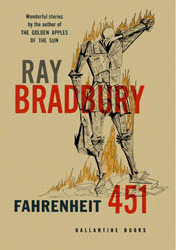
This is the setting for Ray Bradbury‘s dystopian novel, Fahrenheit 451.

I had already seen the movie, which I enjoyed, and I enjoyed the book as well. However, I would not go as far as Tom to suggest that it is better than Nineteen Eighty-Four or Brave New World. I enjoyed both of those far more whereas I cannot say I imagine myself re-reading Fahrenheit 451. Definitely worth reading though.

Fahrenheit_451

War Horse

July 28th, 2014 | Books

A friend recommended I read War Horse. I sounded quite a good idea at the time, because I thought they said “war whores”, and thus assumed it was about sex workers from 1914 to 1918. In fact, even when I found out there was a horse in it, I assumed it was just on the more risque end of the spectrum.

However, it turns out that it is actually a story about a horse that goes to war.

The book was good, though I imagine the stage production is far more moving.

War_Horse

Lessons from the Purpose Driven Church

July 27th, 2014 | Thoughts

I recently wrote about Rick Warren’s book, The Purpose Driven Church. Today, I wanted to share some of the ideas that I really identified with in the book, especially with those I can provide examples of here in Leeds. I imagine these ideas are mostly for faith & belief groups such as Humanism and Sunday Assembly, but can also have wider applications to all community groups.

Of course, the central tenant of the book is that a group should do things with purpose. This can be seen to varying degrees in such groups. Leeds Atheist Society always had a clear threefold purpose – to provide education on, fellowship for and open debate about the non-religious. It’s the first thing on our about page.

West Yorkshire Humanists is perhaps less clear, and probably in need of a mission statement. Sunday Assembly is a bit of mixed bag. We have a great slogan: “Live better. Help Often. Wonder more.” However, because we’re not allowed to use the term Humanism, it does not really connect to anything. This has lead to some of our attends describing it as “like playing church without for no reason”, and others as a cult of Sanderson Jones.

Toastmasters is the organisation with the clearest mission of any organisation I am involved in.

We empower individuals to become more effective communicators and leaders.

With a quarter of a million members in 122 countries, I think it is fair to say we are doing pretty well.

Having a clear purpose is critical because then you can then measure everything you do based on that. Everything else is derived from your purpose. That is true of any organisation you will ever be involved in and is probably the most important thing you can learn when it comes to running organisations effectively.

However, I think these points are also interesting…

Do away with committees

Committees decide things, doers do things. Which does your group need? Doers! Sunday Assembly Leeds does not really have a formal committee. We have monthly organisers meetings that are open to all members. There is no election process, you can just turn up and start helping.

Give the power to people implementing the plan. Rather than having committee approval for something, empower people by giving them to decision for the area they are working on. That way you will get much more engaged volunteers.

Provide stability

Warren talks about having a pastor for decades. The best churches are the ones that have the same pastor for a long time.

I am not advocating having the same person lead the group permanently. As secular groups we like to bring in new ideas, new people, have an open democracy. Having a leader-for-life is incompatible with these views. However, we do need to build trust that the organisation people invest their time into, and the friendships that they make, are not suddenly going to disappear.

In my personal life, I often feel more included to people who are more likely to stick around. I would suggest that a community is the same. If you are trying to decide whether to invest a significant amount of time and money into a community, you do so because you think you will get a return out of it over the long term. Therefore are you going to be more predisposed to give to a stable community that looks like it has solid leadership and a strong future, or a community that is constantly scrambling to find new find new leadership?

Write to people

Warren wrote and hand-addressed 15,000 letters to people in the local area. Today, targeted mailings will only get you a response rate of around 1%, untargeted even less. But even if you only get a quarter of one percent, that is still 38 people turning up. Of course, the stamps would now cost you nearly £8,000. This could be a good strategy if you happen to have a postman (we need a British-sounding gender-neutral term for this) in your group.

When I was at GRAM a few years ago, a member of a local Humanist group spoke about how they gathered a group of volunteers and went around posting leaflets through peoples doors. They did thousands of them, and in the end got two members. That does not sound like a lot, but actually for a relatively low-cost exercise, in a group of 20 people, is a 10% growth.

Ask people for a commitment

Saddleback allow people to attend their church every week. But they do not become a member of the church until they make a commitment. This involves taking a membership course, an initiation ceremony, and agreeing the support the church with your time and money. The more he asks them to commit, the more they are willing to do it.

Probably because it offers people real buy in. At Toastmasters, we charge £180 for the first year. There is a £30 sign-up fee and £12.50 per month dues, which by the end of the year adds up. I tend not to mention it when responding to emails about people coming for the first time. I am scared it will put them off. But once they see Toastmasters in action, most of them join. It doesn’t put them off. If anything, it inspires them to turn up to meetings and process through the educational programme.

Research your demographics

Who lives in your local area? Are you in a student town or a retirement community? Young and old, single and married, rich and poor, each of these groups will have different wants and needs and if you want to target your marketing and the content of your group effectively, you need to know who you are targeting.

These days such information is easier than ever before to get hold of. The Census data seems a good start but many local and national authorities, as well as NGOs publish information as well.

Play music as people enter

Warren noticed that the louder he played music when people entered, the more animated people were when talking to each other. People like to be anonymous, especially if they are a guest. Having music on allows them to talk without it being noticed.

In comparison, several times in Skeptics and Toastmasters I will stand at the front a little before we are scheduled to start and everything will go quiet. Getting the conversation restarted for the final two minutes is almost impossible after this. You just end up with two minutes of awkward silence.

Imagine through the eyes of a guest

In software development, you should have a developer and a tester. The developer should test their own code, but it is critical to have another eyes look at the software they have written. Why? Because the developer always uses it from a developer’s perspective! The tester looks at it from a user’s perspective. “It broke when I pushed this button?” “You’re not supposed to push that button.” But somebody might!

When doing anything with your group, you should always keep in mind that as an organiser you are probably a long-established member who knows what is going on. Always take the time to try and imagine how things might also look to a first-time guest who has come to the group to see what it is like. It is clear what is going on? Is it engaging? It is welcoming?

Always use plenty of lighting

Often I will go to a talk, and they will turn the lights off so that you can see the slides. This is the last thing you should be doing! Turn the lights on to as bright as they can be.

Firstly, a bright environment is more friendly and welcoming and keeps people awake. A dimly lit room is intimidating to guests and encourages existing members to take a nap. Keep a buzz in the atmosphere by keeping it bright and upbeat.

Secondly, who cares if people can see the slides? It is not important! People who rely on slides are bad public speakers. I can see slides on the internet. I want to see the speaker actually speak! I want to see their face. Lowering the lights encourages me to look at the slides rather than at the speaker, which is the opposite of what you want to do if you want people to find the talk engaging.

People come for the events, but stay for the friends

Atheist Society runs all year round, including now in summer when the students have gone home and the talks have finished. Why? Because people want to see their friends every week. People come to the group, and stay with the group for different reasons. Or sometimes they come because they have a lack of friends. Either way, social connections are the true glue of a group.
purpose-driven-church

Crime and Punishment

July 26th, 2014 | Books

When I started on Crime and Punishment I expected a rather long and drawn-out exploration of human psychology. What I found was a rather short story about a murderer. Perhaps it would have been longer if I had not have stopped reading after the murder itself, but with the main event over, I assume the rest was just a conclusion (it is difficult to tell with Kindle editions).

The important thing is that I learned murdering people can be bad, because you might feel about it afterwards.

Elina said that Sofia Semyonovna was her favourite character when she read it. She was quite offended when I suggested that might be because they are both of a similar personality. I am not sure whether there was a tension point because of the home truths in this statement, or because Sofia had worked as a prostitute, while Elina never has (to my knowledge).

crime and punishment

The Purpose Driven Church

July 25th, 2014 | Books

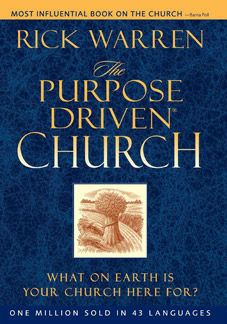
Rick Warren is probably a bad man. He doesn’t like gay marriage. It doesn’t support gay rights. He doesn’t like the idea of two men having anal sex with each other, even though he has never tried it. But my god (pun intended) does he know how to run a church.

The Purpose Driven Church talks about grow to run a church, which a specific reference to how we started Saddleback Church in California – that now has 20,000 a week attending. It is a gold mine of information. A lot of the strategies he discusses are things I found very effective in running Atheist Society, and there is so much more besides that.

There is a lot of stuff about Jesus in there, as you would expect, but still a useful book for anyone running a Humanist group, Sunday Assembly, etc.

purpose-driven-church

Using Tampermonkey to fix HSBC online banking

July 24th, 2014 | Tech

Recently, I wrote about some of the poor user experience encountered when using HSBC’s online banking.

Today, I am going to show you how to fix some of it. These instructions are for users of the Google Chrome web browser. If you use Mozilla Firefox, you can probably achieve a similar effect using Greesemonkey.

Tampermonkey is a browser add-on that allows you to run custom user scripts on existing websites. The first thing you will need to do is install it.

Once you have done that, the Tampermonkey icon will appear in your browser. Click this and when the menu appears select “Add a new script…”. Wait for the page to load, then copy and paste the following in:

// ==UserScript==
// @name       HSBC online banking
// @namespace  https://www.business.hsbc.co.uk/
// @version    0.1
// @description  Improves HSBC's online banking
// @match      https://www.business.hsbc.co.uk/*
// @copyright  2014
// @require http://code.jquery.com/jquery-latest.js
// ==/UserScript==

$('#benSortCode').attr('size', '8');
$('#benAccountNumber').attr('size', '10');

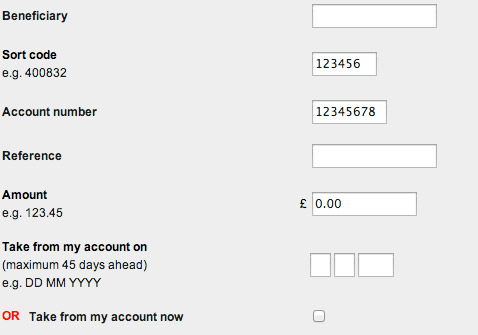
This code will then be run every time you access a HSBC online banking page. So, as if by magic, when you try and create a new payee, the boxes will be big enough:

hsbc-online-banking-fixed