Chris Worfolk's Blog


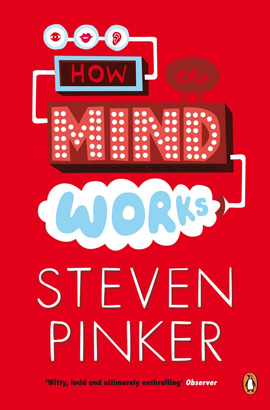
How the Mind Works

July 13th, 2015 | Books

Explaining how the mind works is a big topic to take on. However, if anyone is up to the challenge, I imagine Steven Pinker has to be on the shortlist.

His central premise is that the brain is a series of specialised systems. Rather than being one general problem solver, it is a collection of machines designed to do different things.

For example, we have a language module and a facial recognition module. We know this because one system can be damaged. In a condition called prosopagnosia people are unable to recognise faces. They can recognise every day objects and show no cognitive impairment, except when it comes to recognising faces, when even their own family are a mystery to them.

This is perhaps why we have been unable to recreate human intelligence with computers (though why would we, artificial intelligence is just a different kind of intelligence). It’s not that computers are too specific, following their specific code – it is that they are general problem solvers and the brain is not!

That does not mean of course that the brain cannot adapt and repurpose. If you lose the sight of an eye, for example, that part of the brain will be used up processing imagery from the other eye. However, there is design (albeit naturally guided by evolution) and purpose behind the modules of the brain.

The brain does some things really well. Colour for example. How do we know what colour snow is? It sounds easy, but it isn’t! In direct sunlight, snow reflects lots of light. Indoors, it reflects less. But it is the same thing. A camera struggles to tell. That is why you often need to set the white balance, to tell it is looking at white snow in poor light rather than grey snow in good light. The brain does all this for us though.

It takes our sensory input and presents us with the world. Tilt your head, and notice the world doesn’t move. Again, if you did this on a camera it would list. Your brain, however, keeps things steady.

Other things it is less good at though. We are not great at recognising left from right. Why? Because any rule regarding left or right had to be generalised to both sides in our hunter-gatherer evolved brain. Hence we have no problems with up and down, but often struggle with left and right.

This is all a result of the environment in which we evolved. Phobias, for example, are all things we used to be scared of. Snakes and spiders for example. You do not need to teach a monkey, or a human for that matter, to be scared of a snake – they are innate. Yet similarly, we never develop of a phobia of electricity, even though that kills far more people.

We also calibrate our happiness based on other people. Pinker claims that there is no objective measure, we just use society to gauge what can be reasonably expected and set our levels based on that. Again, it makes sense from an evolutionary perspective, that we would balance our pursuit of happiness.

This makes a case for reducing income inequality. If one person makes £50 and someone else makes £500 it is not an everybody wins situation. Of course, you have to balance that with fairness and freedom, which is difficult.

He then talks about reproduction, which is quite a depressing section. Like most animals, we use sexual reproduction. The advantage of this is that you swap half of your DNA out every generation, thus making it harder for pathogens to crack the safe as it were. Good stuff there, we all enjoy sex. However, then he talks about babies and children.

It’s a war. The baby wants as much from its mother as it can, fighting her body to draw all the nutrients into the womb. Then once it is born it fights for all the attention, trying to stop the mother from having further children as this would reduce its own attention. To an extent anyway – eventually the chance of 50% of its DNA being in a sibling becomes worth it and it gives up screaming.

Pinker also discusses the sexes in nature. Most species operate with the female bearing the offspring and therefore having the most investment in it. Therefore females tend to be most picky about selecting mates of which there are plenty of options, whereas males want to spread their DNA as far and wide as possible, and compete with each other to do so.

This has interesting social implications. For example, the idea of men being “players” and women being “sluts” is, dare I say it, natural. This does not make it moral or right of course! However, these are not social constructs, but in fact the very opposite! These are naturally occurring tendencies that we are now overcoming thanks to society.

Indeed if people could be conformed to socially constructed gender roles this would soon be selected out because the powerful men in society would force them all to be celibate and cuckolded.

He also offers an explanation for the irrationally of love. Irrationally is actually a good way to fall in love. If you did it for rational reasons, you would just leave when you found someone better, which statically speaking if you get together in the first 30 years of your life, you probably would. Therefore falling in love for irrational reasons helps nature maintain monogamous relationships.

All interesting stuff. It felt a bit disjointed at times. It wasn’t one cohesive story but then that is the point of the book. The mind is not one unified general problem solver but a series of systems.

To me, this is Pinker’s “how it works” manual while The Blank Slate is the “what the consequences of that are” book, both of them together forming the full story. It has not changed my thinking is the radical way The Blank Slate did, but it s certainly is fascinating.

If you enjoy this, you will almost certainly enjoy Dan Dennett’s Consciousness Explained too.
how-the-mind-works

FIFA Women’s World Cup 2015

July 12th, 2015 | Sport

I really enjoy international women’s football because it punishes countries with high gender inequality more than anything the UN could ever do.

The Ivory Coast’s 10-0 drubbing at the hands of Germany is a classic example.

It is interesting though that whenever I asked anyone whether they had “seen the world cup?” the response was usually “oh the women’s football?”. In fairness, most of them had seen it. And why not? England did brilliantly! We should really look at this as our best opportunity to win a trophy.

We were (as an Englishman, and a supporter, I’m part of the team of course) unlucky to have lost to Japan and could easily have been in the final. That showed with our first ever victory over Germany – 21st time lucky!

FinnStore Self Storage

July 11th, 2015 | News

finnstore

Now that I will soon be marrying into a large estate, I’m pleased to announce my new business venture, FinnStore Self Storage.

Why pay Leeds city centre prices for self storage? We will beat their quotes and provide an even better experience. Self storage solutions for all sizes available at our site in Laitila.

Top features:

  • Unlimited room – the sky is the limit when there is no roof!
  • 24-7 access – simply fly to Finland, take the three hour drive to Laitila and access your stuff anytime
  • Theft-proof – nobody is going to make the 18 hour round trip to steal your worthless possessions
  • During the winter your items will be protected by a thick covering of ice and snow
  • Tough security – the area is regularly patrolled by bears and wolverines
  • Minimal chance of your documents being eaten by an elk thanks to our newly installed “no elk” signs

Contact us now to get a 80% introductory discount on your first 6 hours of storage!

Should you read the news?

July 10th, 2015 | Thoughts

An email went round work last week announcing that we were going to be having a minute’s silence for the victims of the Tunisian beach attack. As it happens everyone forgot when the time came but it brought up an interesting point.

I didn’t really know about it.

People were shocked, but it just had not entered my radar. I hadn’t seen the news and while there were probably some references to it, perhaps in conversation or on Facebook, I had just filtered them out.

I have gone through periods of my life where I thought it was really important to read the news. I would diligently check BBC News every day to find out what was going on in the world.

I have also gone through periods, such as now, where I just do not read the news. Why? Because it is generally full of unfortunate things happening to people. In fact, it is almost exclusively full of that.

It is extremely sad that those people died in Tunisia. In some ways it is an odd story to focus on. 50,000 people died of a preventable cause yesterday. That is 30 just during the minute’s silence. That isn’t in the news.

Similarly a story such as this might put people off from travelling to Tunisia. However, statistically the most likely way for me to die if I was to go there for a holiday, would be as it always is – in a car crash travelling to or from the airport.

It feels an odd thing to admit to being not just ignorant of something, but wilfully ignorant of it. However, my life does not seem to be much affected by my screening out of the non-stop string of mongering and negative news reporting that the media engages in, so it is hard to see how I am not better off without it.

Caught in the Pulpit

July 9th, 2015 | Books

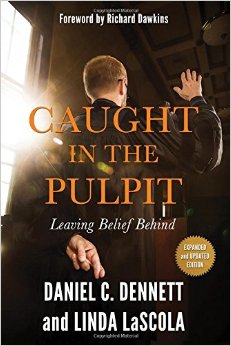
Not only does the audiobook of Caught in the Pulpit: Leaving Belief Behind feature Daniel Dennett and Linda LaScola reading their work, but it also includes a foreword by Richard Dawkins, also read by the man himself. I was hard before it had even finished downloading.

The book itself is about a study by Dennett and LaScola on ministers who have stopped believing. Most of them are trapped in this difficult situation – their family, friends, and livelihoods are tied up in church ministry, so admitting their non-belief is typically not an option.

Yet it is apparently widespread. Many of the people they interviewed share a common desire to help people, but think that the stories contained within their holy texts are nonsense.

Caught-in-the-Pulpit

Asselby Advanced Speakers

July 8th, 2015 | Public Speaking

Asselby-Speakers

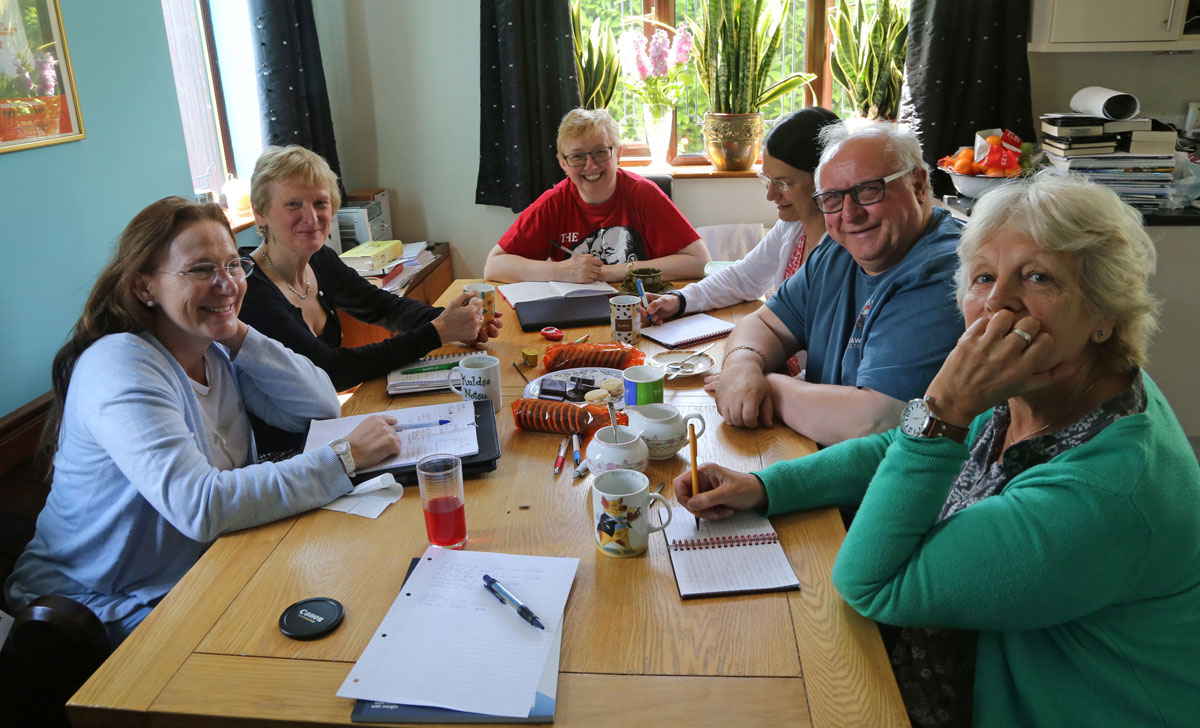
In June I was able to attend my second meeting of the newly formed Asselby Advanced Speakers. We even had time for a group photo. Thanks to Gillian and Michael for hosting every month – I got through a lot of their biscuits!

Maneesh

July 7th, 2015 | Food

maneesh

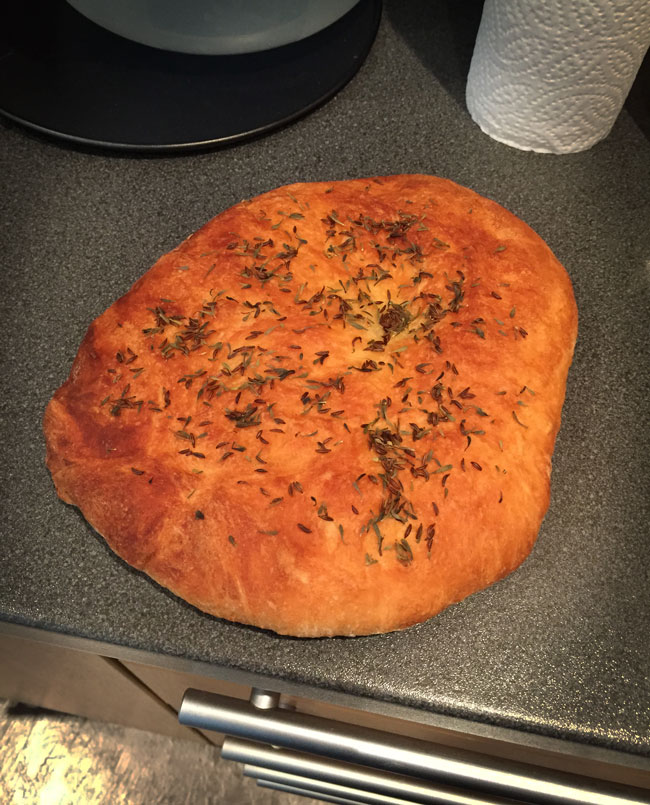
From Paul Hollywood’s Bread. This is a really nice flatbread recipe because the breads come out incredibly 3D. I like this. Regular flatbreads are nice but as you know, they only exist in two dimensions. These things are fat.

Of course I could just bake a bloomer. However, these are designed to be big and round. It is the surprisingly bonus of a light airy well-risen bread that makes these so tasty.

I did not have most of the ingredients he recommended for the topping so I combined thyme and caraway with olive oil. They did not stick well at all; they just fall off as soon as you pick the bread up sideways. However, they are tasty.

The Assembly Line June 2015

July 6th, 2015 | Humanism, Music

The Assembly Line is our new name for the in-house Sunday Assembly Leeds band. Our June event was on the theme of technology so we had some very vaguely related technology songs.

The Beatles – Drive My Car

This went pretty well, until the end, where I lost it. Listen out for Rich shredding the lead guitar.

Oasis – She’s Electric

Notable for my short guitar solo after the first chorus. It didn’t feel great at the time but on listening back it actually sounds pretty good.

R.E.M. – Man on the Moon

This also features a short guitar solo for myself. I also spent my Christmas vouchers on an analogue delay pedal which I used throughout the song, regardless of whether it was justifiable or not.

The Sound and the Fury

July 5th, 2015 | Books

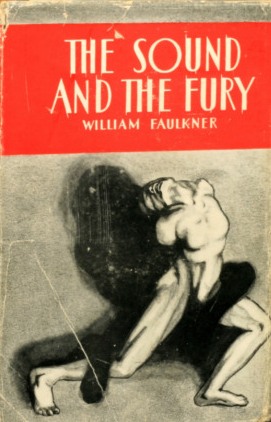
Sometimes I can make it quite a way into a novel before I can work out what it is actually about. Very occasionally, I get the whole way through. This is one of those times.

For the first chapter, I wouldn’t even work out who the characters work. I thought they might be anthropomorphised animals. It eventually turned out they were children. That is about all I got until I read through the Wikipedia article.

It reminds me a lot of Ulysses and indeed does use the stream of consciousness narrative employed by Joyce. However, unlike Joyce, who paints a beautiful and linguistically-inspiring picture which his rambles, William Faulkner failed to capture my imagination, leaving only the barely-intelligible plot.

From a literary perspective, it is certainly interesting. However, it ranks 6th on Modern Library’s list of 100 best novels. Is that justified on a list that puts The Grapes of Wrath at 10th and Nineteen Eighty-Four at 14th? No.

The-Sound-and-the-Fury

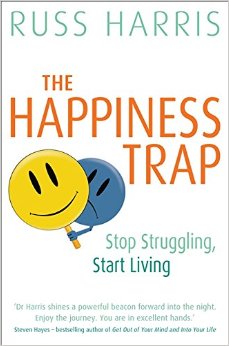
The Happiness Trap

July 4th, 2015 | Books

The Happiness Trap is a self-help book based on ACT (acceptance and commitment therapy).

It starts with a simple but profound message. Humans are not happy to be default. They are not designed to be happy. Happiness is not required to continue the species along. So if you’re not happy with your life, that might just make you completely normal.

It puts aside things like cognitive therapy, point out that we have a lot less control over our thoughts and feelings than we would like to think. Instead it focuses on accepting negative thoughts and feelings (indeed, it claims all feelings are just feelings, rather than good and bad ones).

The techniques it teaches including connecting with the world around you and accessing the observing self. Which is a fancy way of saying mindfulness, being in the moment rather than over-thinking life.

It gives you exercises to do, and tells you off if you do not do them! I stopped reading the book for maybe two months because it said I could not continue until I had done one the exercises and I did not want to go back and do it. When I did, it turned out it was really easy. As are almost all of the exercises – they are designed for busy people. This is kind of stupid really, how can I be too busy to look after my health? But I also suspect many of us all into this trap.

The end of the book is a little more strange. It has a section about how ACT is not a religion. I know that. But stating it puts up a red flag against the book’s version of ACT (Scientology isn’t a cult remember…).

Then it talks about connecting with your values, the things you think are genuinely important in life and pursuing those. This is a good thing to do, but not something I expected in a book about managing my feelings and anxieties.

The-Happiness-Trap