Chris Worfolk's Blog


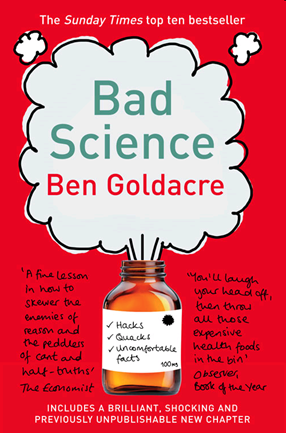
Bad Science

July 27th, 2015 | Books

It’s ironic that after five years of running Leeds Skeptics, it is only now that I have stepped down that I have had time to sit down and read Ben Goldacre’s Bad Science. It is, after all, somewhat of a Skeptics bible.

I think I am a poor judge of how good this book is. Having spent so much time in skeptics, I knew everything in it. Literally almost everything. Not just the topics but a lot of the anecdotes and examples too.

It is a journey into what is wrong with medicine, science, the media and society’s inability to filter out the crap. Quite a big area to cover. Goldacre uses specific examples so show you what is wrong with the prevailing opinion generally.

He dedicates an entire chapter to rubbishing Brain Gym. He discusses how the media’s MRSA expert was working from a free-standing wooden structure with household-quality fittings. That would be a garden shed then. He goes into detail about how ageing creams. It’s a mixture of chemicals that actually work in trace amounts, vegetable matter that provides a short-term benefit only, and a bunch of other substances thrown in there on the off chance.

He also provides a reminder that we don’t really know how general anaesthetic works. Coupled with Dan Denett pointing out that anaesthetics also contain a memory eraser in case things go wrong, I felt rather uncomfortable with all that. Almost certainly better not to think about…

We also levies some criticism at the research behind antidepressants. This is similar to what Irving Kirsch said in The Emperor’s New Drugs. To be clear, I’m not saying Goldacre says SSRIs don’t work, but Kirsch doesn’t say that either, just that it is difficult to know given the data has not been made clearly available and thus may provide nothing more than an enhanced placebo.

Goldacre also discusses p values. Very important for science. A p value of 0.05 for example would mean that for every 100 times you do the test, you would get an anomalous result 5 times. He finishes up by discussing the MMR vaccine. He is quite kind to Andrew Wakefield and points the finger squarely at the media.

In summary, if you’re not familiar with how evidenced-based evidence works and why it is so important, this is definitely worth a read. If you’re already familiar with all this stuff, you probably won’t learn anything new.
Bad Science

The arguments against tuition fees

July 26th, 2015 | Religion & Politics, Thoughts

Last year I argued that there is little difference between having and not having university tuition fees. The arguments placed against it were largely insubstantial and I have yet to have a decisive point against tuition fees.

However, in this article I will offer some arguments that could be used to defeat the idea.

Putting poorer students off

There has been a decline in university applications since the rise in tuition fees. According the BBC, the number of applicants dropped nearly 10%.

This is in itself not a problem. When people realise the full cost of university, perhaps people decide that it is not worth it. Which could legitimately be the case. Wages are market-driven thus the skills we need could continue to attract applicants while those we don’t could see a drop-off, and this would be the system working.

It would, however, be a problem if it turned out that there was a substantial drop in applicants from poorer backgrounds while wealthier backgrounds did not see such a drop as this would suggest we are creating a less egalitarian society.

However, this is not the case, and thus this argument falls down. According to the UCAS figure discussed in the previously mentioned BBC article, applicants from disadvantaged backgrounds dropped only 0.2%, while those from privileged backgrounds dropped 2.5%.

Supply and demand

In theory you might expect tuition fees to better match the demand for labour. This is because people might be more inclined to choose professions such as doctors, lawyers, engineers, etc, that give them a chance to pay off their loan. Whereas my guess (and it is a guess, I have no figures to back this up) is that people who study English or contemporary art, will be less likely to pay the loans off.

This does not necessarily follow though. If you are going to be a penniless artist you do not need to worry about paying your loan off because it is income dependent.

Also this assumes that people pick their courses both rationally and with financial ends in mind, neither of which may be true.

An alternative system that better match skills shortages to labour is a system such as Finland operate. In Finland, it’s free to go to university. You get like five years free, including a maintenance grant, which is enough time to do a bachelors and a masters. It’s open to all EU citizens for free too!

The catch is that there is a cap. They only take so many people, so if you want to go study sports science for example, there may be say 50 places per year and if you don’t make the cut, you don’t be doing that subject (or any subject).

This system means that people could potentially miss out on higher education. Though more likely they will just switch onto an under-subscribed course. However it does do a good job of making sure that the best people are fulfilling the countries labour needs.

Long term equality

In Capital in the Twenty-First Century Thomas Piketty suggests there is evidence that a more highly educated population leads to higher levels of equality in the long term, as shown by the Nordics.

Therefore we may decide that as tuition fees put people off attending university (this point is debatable, though applications have gone down in the short term), we may want to pay for as many people to go to university so that in the long term we create a better, more equal society.

Self-sufficiency Leeds

July 25th, 2015 | Thoughts

Someone should definitely start this group.

That someone will not be me given the number of groups I already run, but I would definitely come along to some meetings out of curiosity.

In the final section of The New Complete Guide to Self-Sufficiency John Seymour talks about starting local groups to work on self-sufficiency projects. This could be doing small things like brewing beer or baking bread, or maybe a foraging club.

It sounds like he speaks from experience. Phrases along the lines of “doing all the organising” and “not being an instant success” sound to me like a fellow group organiser! And that is before the pendants have bemoaned being self-sufficient in a group.

Anyway, hopefully, you will have searched for a group, found my blog and been inspired to start such a group. If so, ignore that last paragraph and get going!

Jon & Kate Plus 8

July 24th, 2015 | Distractions

Fertility treatment can have a number of side effects. One of which is that it can work too well. This is what The Gosselins found out when they decided to add one more to their twin girls – and got an extra six!

Someone recommended it to me I watched the one hour special and a few of the 23-minute episodes out of morbid curiosity. They seem to cope very well. Their shopping is done at a wholesalers and they drive a full-size van but otherwise they live isn’t too crazy.

I imagine the family adapts. For example Kate sleeps in until 8am! Jon having already gone to work by this point. I didn’t think parents got to do that, let alone when you have eight kids. That is not to say it does not look like hard work – they pretty much have no other life, obviously.

They do totally cash in when they go to Shady Maple (a buffet restaurant). Under 4’s eat free!

Aside from the entertainment, the show might actually provide a useful purpose too. As Kate points out when they are invited onto a TV chat show, if they can cope with eight, it must give new and prospective parents hope that they can cope with one.

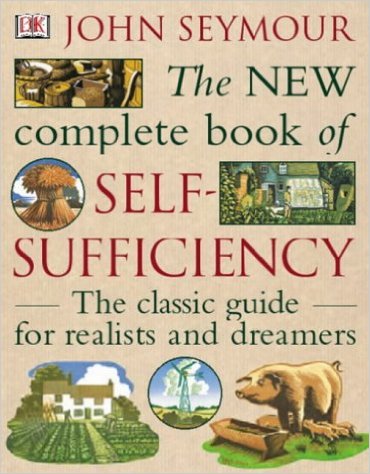
The New Complete Book of Self-Sufficiency

July 23rd, 2015 | Books

It is quite a mouthful of a book title. It is also a very big book. At A4-sized in hardback it makes a good addition to the coffee table. Though if you have a coffee table you might not be the target audience.

It is written by John Seymour, now deceased, and updated by his protégé Will Sutherland who is himself now 70. It also comes with a wonderful strap line.

The classic guide for realists and dreamers

It covers everything about running a smallholding. Literally, loads of stuff. How to divide up your land, what to grow where, how to grow different types of plants, rearing animals, butchery, harvesting, foraging, making cheese, pickles, chutneys, curing and preserving meat and vegetables, and crafts and skills.

The crafts section alone is a treasure trove. Composting your toilet waste, renewable energy, wood and metal work, basket making, rope, pottery, spinning wool, building, thatching and even making your own soap are just a selection of the activities covered.

There is also a whole section on brewing beer and making wine. I am now forever going to be disappointed in any book that does not have a section on brewing beer in it.

The advice is literally down to the ground (and below) and practical. Sometimes brutally so. Check out this passage on lambing.

If a single lamb dies and you have another ewe with twins it is a good thing to fob one of the twins off on the bereaved ewe. Put the bereaved ewe in a small pen, rub the twin lamb with the dead body of her lamb, and try to see if she will accept the new lamb.

If she won’t, skin the dead lamb, keeping the skin rather like a jersey, and pull the skin over the live lamb. Almost invariably the foster mother ewe will accept him.

Genuinely good advice, but a bit of a shock to us city-dwellers.

In some ways this book put me off adopting a more rural River Cottage-style lifestyle (Hugh recommends this book in one of his River Cottage Q&A). It sounds like a lot of hard work. By comparison, going to work five days a week and using the money to get Sainsbury’s deliver me my weekly goodies is probably a lot easier, even if it is less satisfying.

John encourages the reader to start small however. Perhaps baking your own bread or a small vegetable garden (I know have both of these things). Or maybe even brewing your own beer. I have not tried that one yet.

If nothing else, it is a nice piece of escapism, away from the highs and lows of that Monday morning feeling and it’s far more pleasant companion, the Friday feeling. Though I do plan to try out a number of his recommendations.

Complete-book-of-self-sufficiency

cURL SSLv3 calls failing

July 22nd, 2015 | Programming, Tech

If you try and connect over HTTPS/SSL with cURL you may get an error similar to:

sslv3 alert handshake failure

Or:

Unknown SSL protocol error in connection

If you cannot see a descriptive error message, use –verbose to report everything.

The cause of this often that hosts have disabled SSLv3 because it has now been compromised. The solution is to use TLS, which is a newer more secure protocol.

curl --tlsv1 --verbose hostname

If you are using cURL in PHP you can change the SSL version to use TLSv1.2.

CURLOPT_SSLVERSION => 6

You should then be able to make the cURL request over SSL successfully.

The benefits of Austen

July 22nd, 2015 | Thoughts

I try to vary my reading. Should I read books on science and scepticism? Or science fiction novels? Or classics? I aspire to a mix of all three.

Sometimes this seems like a silly thing to do. Take Jane Austen for example. I remember reading Pride and Prejudice and thinking to myself “why am I reading this? It is just a bunch of women gossiping, this is neither entertaining nor useful to my life.”

Little did I realise that a year later I would be reading Thomas Piketty, who decides to illustrate the otherwise very dry economic theory with comparisons to the characters of Austen’s novels.

There is a use for the petty troubles of the landed gentry after all…

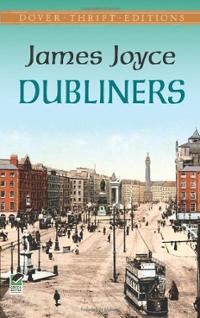
Dubliners

July 21st, 2015 | Books

1914 was a simple time. Back then, you could actually work out what was happening in a James Joyce novel. This is why the description of the book includes the following helpful line.

This book holds none of the difficulties of Joyce’s later novels, such as Ulysses, yet in its way it is just as radical.

It is indeed more comprehensible. The opening dialogue of each story may not be quite as verbose as a Jane Austen novel, but you can pretty much work out what is going on within the first half of the story (the book itself being a collection of short stories).

In some ways though, this takes away a little piece of the James Joyce magic. The descriptions, by being less surreal, become a little less vivid as well.

Dubliners

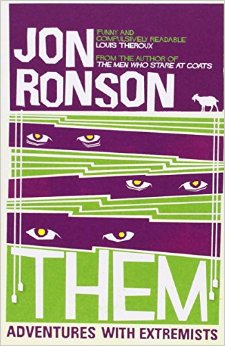
Them: Adventures with Extremists

July 20th, 2015 | Books

In Them Jon Ronson spends a few years hanging round with people considered extremists.

He begins with Omar Bakri, who he says is labelled as “Osama bin Laden’s man in Great Britain”. This was pre-2001 mind you. He also goes to meet the Conservative MP trying to get him denied citizenship. It’s soon clear that both sides are right-wing idiots.

Some of it is at least humorously stupid though. For example at one of Omar’s rallies they plan to release blank balloons carrying postcards containing a call to war against the West. Unfortunately the postcards are too heavy and so his follows spend a fruitless day trying to waft the balloons into the air. It sounded very Four Lions.

He goes to visit Ruby Ridge, or at least would have done if such a place existed. Turns out the media just merged the names of the two closest places when they turned up to report on the US government killing half of the weaver family, coincidently (so I assume) just before Wacko happened.

He follows David Icke around. You know, the man who thinks that the people running the world are lizards. Actual lizards, that disguise themselves as humans. You might also remember him as the man who declared he was the son of god and predicted earthquakes and other natural disasters on the Terry Wogan show.

Unfortunately the Anti-Defamation League (ADL) think that he uses lizards as a codeword for Jew. Thus you get a very rich, powerful organisation bullying a man who almost is almost certainly mentally ill. It feels like everyone comes out a loser in that one.

He goes chasing after the Bilderberg Group, which was probably pretty secret when the book came out, but now has an official website and Wikipedia page. Though it’s not all clean fun as they did actually seem to follow Ronson around for a while.

He even follows Ian Paisley around on a preaching tour of Africa. He seems to hate everyone and have a terrible sense of humour. Though I am sure most people had guessed that already.

There is no coherent narrative or structure to this book. Ronson just finds people that have been labelled as crazy and follows them around until interesting stories come out. Sometimes he will go back to them later, sometimes not.

All of this makes for a slightly random, but definitely entertaining read.

Them Adventures with Extremists

Psych out

July 19th, 2015 | Science

Last week we had dinner with Gijsbert who pointed me to the new version of his PsyToolkit. This is a piece of software for building psychological experiments, though more relevant to us civilians are the tests and scales available on the website

There are now over 60 on them, so myself and Elina spent Saturday night filling them all out. Of course how much you can take from them is questionable. However, they are all academically published scales.

I came up with some interesting results:

  • I am not a psychopath – which was the result I was hoping for
  • I am only slightly dissatified with my life – win
  • I’m only minimally depressed
  • I have high self-esteem – probably thanks to me being so great
  • I’m not narcissistic – pretty surprised at that!
  • I am highly sceptical of adverts
  • I have high general anxiety
  • I do not have internet addiction – apparently
  • I am a perfectionist – did not expect that!

Of course I am now basically going to do nothing with this information. However, it was fun to do the tests.

I also suggested he added the Edinburgh Postnatal Depression Scale (EPDS) which he prompted did. Pleasingly, my score dropped from 11 to 9 this week, meaning I am no longer postnatally depressed!