Chris Worfolk's Blog


How to plan a dinner party
September 15th, 2016 | Food

dinner-party

You probably know how to cook a meal for a group of people. You do not need the many gems of wisdom on offer from Pippa Middleton. Nevertheless, I have a clear and well-defined process for how I prepare for a dinner party, and I thought it might be useful to share that so that we can compare notes.

Decide what to cook well in advance

I do my grocery shop weekly and I don’t really want to have to spend any other time shopping. Therefore, ideally I want to know what I am going to take a week in advance of the event so that I can get it included in that. If I need something fresh I might go out a day or two before to get it, but I want all of the dry and store cupboard ingredients to already be there.

At the planning stage, I make sure everything will work together. Like most people, I have just one oven and four hobs. Therefore everything has to fit on them at one time. This is a limit that is easily reached if you have your starter and your main overlapping.

Draw up a plan

I get pretty detailed with my plan. I tak an A4 sheet and divide it into 5-minute segments. In each of these I can list actions like “turn potato on” and “remove chicken from oven”. If required, I can put multiple columns into the sheet to deal with each part of the meal. This means I don’t have to worry about what I am supposed to be doing while in the heat of battle because I just need to check what is on the plan.

This normally includes two sections before the clock starts rolling: morning prep and evening prep, both discussed below.

The other thing you need is a clock. This is a strange thing to have these days. Many people have replaced their clocks and watches with using their phone to tell the time. However, if you don’t want to be constantly checking your phone every few minutes, you will want a nice big visible clock so you know when each 5-minute segment is up. The solution: more technology. I have an alarm clock on my iPad that I put in a prominent position in the kitchen.
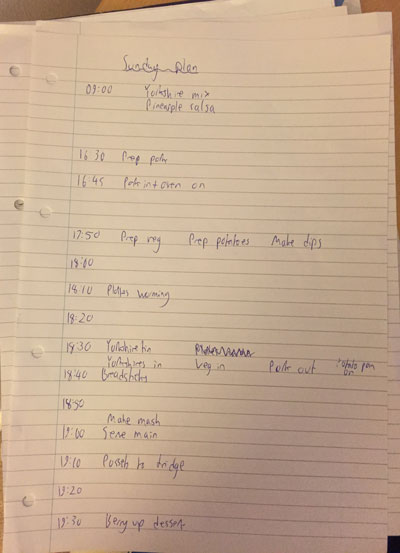
dinner-party-plan

Morning prep

The first stage of prep I do for the party. This is anything that can be done on the morning, or even the day before. This could include baking bread, making a marinade, preparing batter mix for Yorkshires or baking and chilling a dessert.

Evening prep

Second round of prep. This is stuff that I want to do as late as possible, while still doing before my guests arrive. Things like chopping vegetables and pealing potatoes for example. I want to do these as late as possible to keep everything fresh. However, it’s not as important as talking to my guests, so it is stuff I want to get out of the way ideally just before they walk in the door.

This section should include as much stuff as possible, such as:

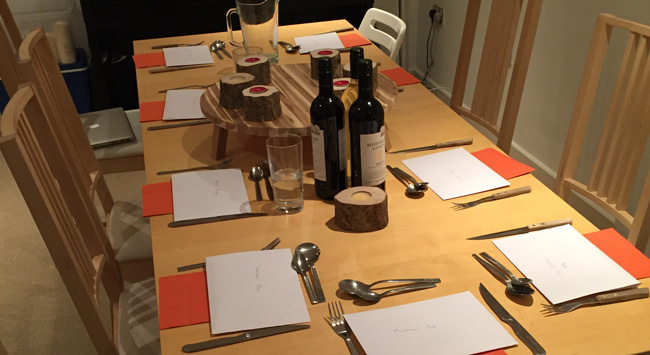
  • Laying the table
  • Lighting candles
  • Putting some plates in the plate warmer
  • Getting all the utensils and making trays out
  • Cleaning the kitchen
  • Preparing a pan full of potatoes so I can literally just turn the pan on
  • Slicing bread

Cleaning

Nobody has a kitchen as big as they would like, so I find it important to keep it as clean and tidy as possible. That means ensuring it is clean and tidy before I start. I make sure that the dishwasher is empty and after it runs its last cycle in the afternoon I tend to wash everything by hand to ensure I have everything I want to hand: the only things that go in there are things I know I definitely will not need.

Then I clean as I go. If I find myself with a spare minute as I bring a pan to boil I will wash something up. Or, when I clear the table I will load it straight into the dishwasher, rather than dumping it on the side for later. This does take a bit of time away from my guests, but also makes for a far less depressing end to the evening when I am left with a far smaller pile of clearing up to do.
TED Talks: The Official TED Guide to Public Speaking

September 14th, 2016 | Books

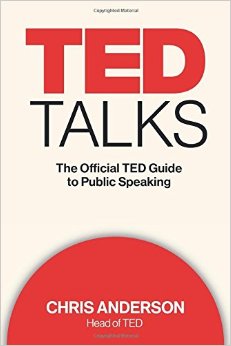
TED Talks: The Official TED Guide to Public Speaking is a book by Chris Anderson, curator of TED, on how to deliver a great talk. It is aimed to give advice to everyone, not just people speaking at TED, and while all the examples are from TED, there is much to be learned from anyone looking to give a speech.

As with a great TED talk, Anderson starts the book by creating a vision. An idea is a thought pattern in your head, and your challenge is to replicate that thought pattern inside the mind of each of your audience members. He then goes on to explain how to do this, step by step.

Most of the book concentrates on the idea of getting your message correct. This makes sense because it is more important than delivery and you can do in written form. If your body language or voice is not perfect, this matters less than having a great message. Nor can you teach these skills effectively in a book.

There are also discussions of the fine lines you run into when speaking. Sharing personal stories for example. Generally speakers don’t do enough of this. Showing an audience your vulnerabilities and being open about some of the challenges you have faced really helps you connect with an audience. But you can overshare and even make them feel uncomfortable if you go too far.

Similarly, how much should you rehearse. Should you do it word-for-word or just rehearse ideas? Word-for-words means you will know it better and get it right: but it can also sound forced and unnatural. Both approaches can work. However, in general word-for-word is better. Many speakers, usually with high opinions of themselves, will talk about how they just blag it and it comes out brilliantly. For a tiny proportion of speakers this may be true. However, for most they simply do not sound as good as they think they do. In comparison, I am often complement for how natural and unrehearsed I sound. The speeches that people usually make those comments are the ones I have rehearsed to death: my guess is that that style only comes from the confidence of knowing your speech inside out.

I was quite pleased when the book suggested you should use blank slides to bring the audience back to you. I use this in my speeches, but I have never seen or heard anyone else suggest it before, so it was nice to see TED recommends it too.

One interesting point of contention was the pace you should speak at. At Toastmasters, we always tell people to slow down. TED says the opposite. People can digest faster than you can physically say things, so why would you slow down for anything other than the complicated bits that cause a high cognitive load on your audience? I see their point. If your audience can comprehend you speaking at normal conversation speed, why not pack in more information?

I think both these points of view can be reconciled. A Toastmasters, we’re typically teaching nervous speakers to get over their fears. When people are anxious they speak faster. Slowing down is a skill you need to learn and practice because otherwise you will go a million miles per hour. However, once you have learned to go at your own paces, to add pauses in the right places and to speed up and slow down as required, then you can use that skill to speed up as appropriate.

ted-talks

The Paradox of Choice

September 13th, 2016 | Books

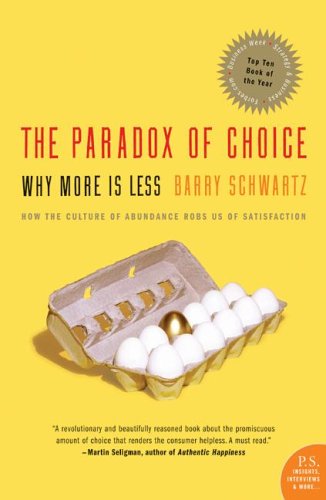
More choice is always better, right? Not according to Barry Schwartz, author of The Paradox of Choice. In his book, he argues that more choices actually make us less happy.

He begins by talking about buying a pair of jeans. He went into a shop and asked for some. The shop assistant asked him a lot of questions: what colour, what fit, what treatment, what distressing, and what type of fly did he want. His answer: “I want the kind that used to be the only kind.” Not only did he now have to make a decision, which takes cognitive effort if you want to make the right decision, but the increased choice raises our expectations that we will get something better.

This is something I strongly identify with. When I need some new trainers I walk into a shoe shop and look at the choices. If you head down to Sports Direct in Leeds you will find literally a thousand shoes on the wall (I might be over-estimating, but not by much: it’s huge!). Does that make it easier to find the shoes I want? No! It makes it harder. Much harder. I spend time searching for the perfect shoe. If there were just six choices my life would be so much easier.

All of this choice might be okay if we made good decisions and were happier for it. But neither of these are true. Humans are terrible at making rational decisions and Schwartz summaries a lot of Thinking, Fast and Slow as well as other research to prove it. Anchoring is a big one, but there are many. Sunk cost fallacy is another big one: why continue to eat when you are uncomfortably full? I do that all of the time.

He goes on to say that people fear regret and try to avoid it. Therefore people often opt for reversal decisions: buying items you can return, booking things you can cancel for free, etc. However, the research shows that this makes us less happy because we continue to meditate on the choice after having made it. Whereas, if it is reversible we just get on with it. This affects small decisions, like ordering food from a restaurant menu, to life-changing decisions like marriage.

How does Schwartz recommend we remedy this? He has a number of suggestions. The most important is be a satisficer, not a maximiser. A satisficer wants something that is “good enough”. A maximiser will spend as much time as possible making the perfect decision. You could spend a month of weekends travelling around stores to find the perfect coffee table. Or you could buy the first one that would look good enough in your house. Which option do you think will make you the happiest?

It’s option B by a long way. Option A not only wastes all of your weekends, but you will regret all the possible coffee tables you did not buy, and the happiness of finding the best one will wear off over time. Which brings me onto another one of his suggestions: be aware that your happiness is making a good decision will wear off over time. If you expect it, it is not as bad.

Finally, consider artificially limiting your choices sometimes. Do you know one of those people who always choose the same thing when you go to a restaurant? They’re usually really happy with their food. Instead of considering twenty different locations to visit on holiday, consider two or three. Make a non-refundable booking so you don’t get tempted to change your mind and you will enjoy it more.

The-Pardox-of-Choice

It is also worth noting that not everyone agrees with Schwartz. I wrote about this last month in a blog post about Schwartz’s TED talk on the same topic.

A Man’s Guide to Having a Baby

September 12th, 2016 | Books

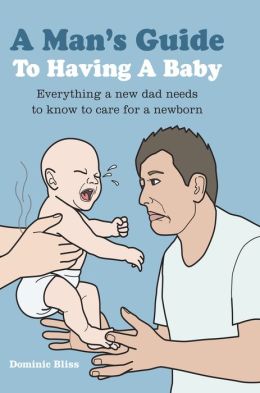
A Man’s Guide to Having a Baby is a book on parenting by Dominic Bliss. I picked up the hardback edition. It’s a short book and you can knock through the entire thing in an hour or so if you’re not religiously re-reading everything. I have read a few books already, so I was pretty relaxed about it.

It is straight forward as to what it offers. It is for men and makes no bones about it. It strikes me as a book that is more useful than most out there. There are diagrams on how to do things. That is far more useful than the books that say “you’ll pick it up” or talk you through it in general terms. There is even a short troubleshooting guide for common problems and how to fix them.

a-mans-guide-to-having-a-baby

Breaded pork tenderloin

September 11th, 2016 | Food

breaded-pork-tenderloin

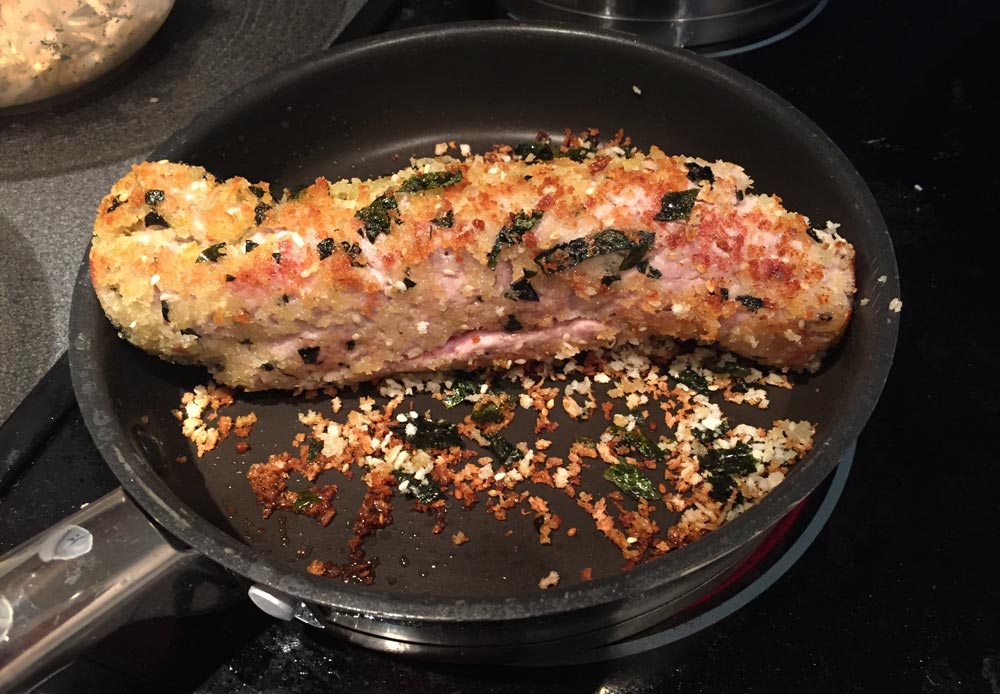
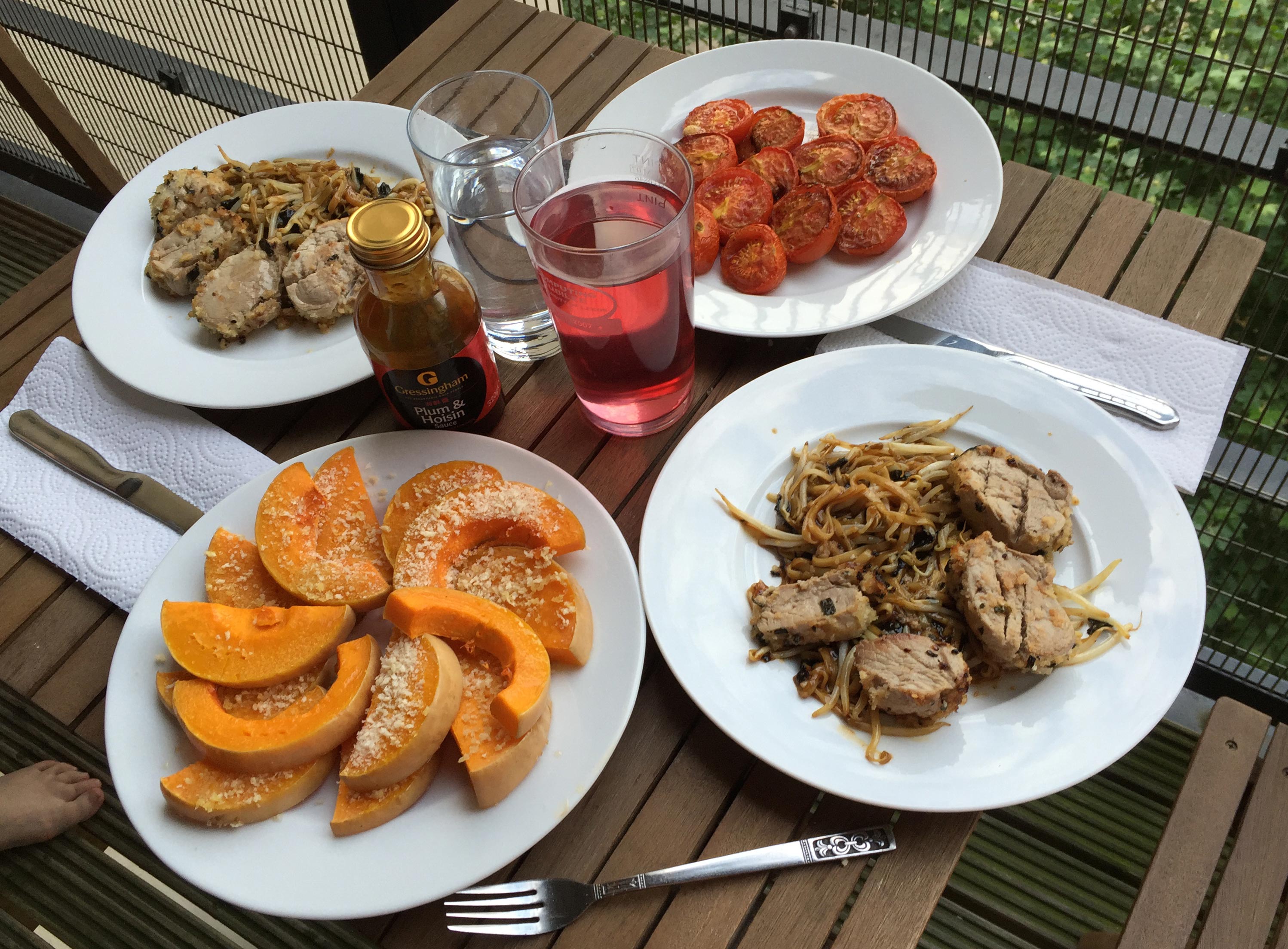
Another recipe for the Fish Market cookbook. It is difficult to get the tenderloin cooked all the way through while still keeping the breadcrumbs crispy. The green bits were seaweed, which could do to be smaller too.

tenderloin-table

To serve, I stole some ideas from Cara’s Anglesey Come Dine With Me.

Thai beef

September 10th, 2016 | Food

thai-beef

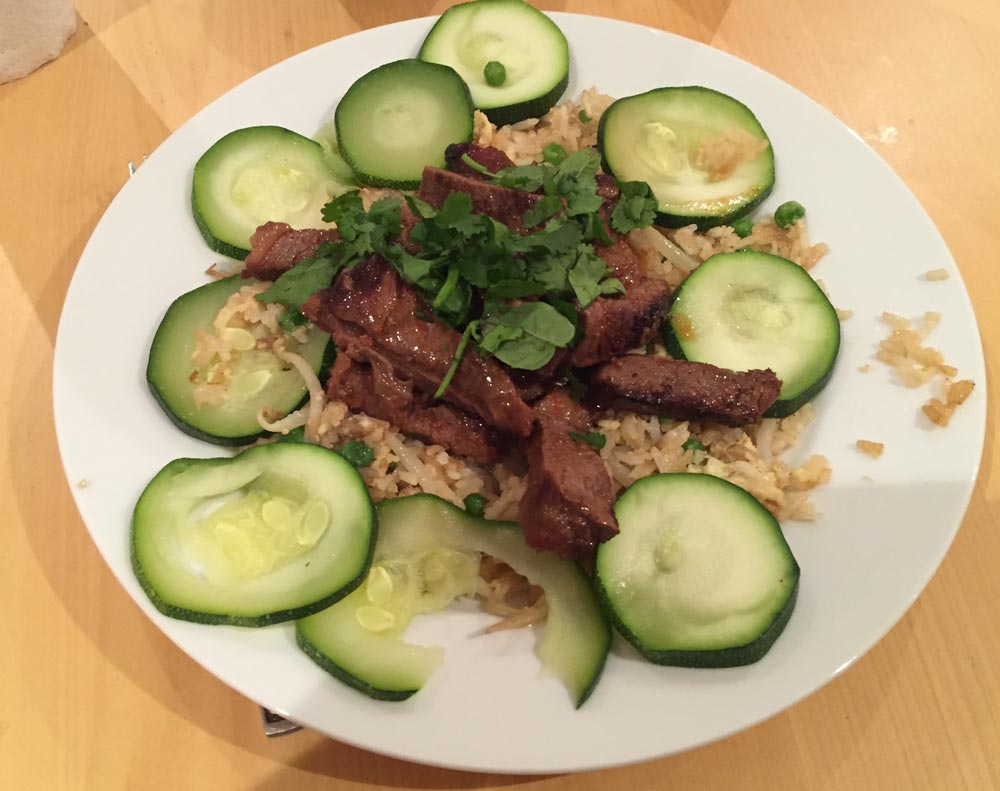
This is the Thai beef recipe from Le Cordon Bleu’s Complete Cooking Techniques. It’s pretty straight forward and not that tasty. I think I lost some of the flavour having to cook the meat to pregnancy-safe.

Making your own fried rice turns out to be very straightforward. Pre-cook some price, then stir-fry some vegetables and bean sprouts, add the rice, and finally crack an egg into the centre and mix it all up.

The courgette comes courtesy of my sister who has grown the biggest courgettes I have ever seen. They steam very well.

Not the perfect pizza

September 9th, 2016 | Food

imperfect-pizza

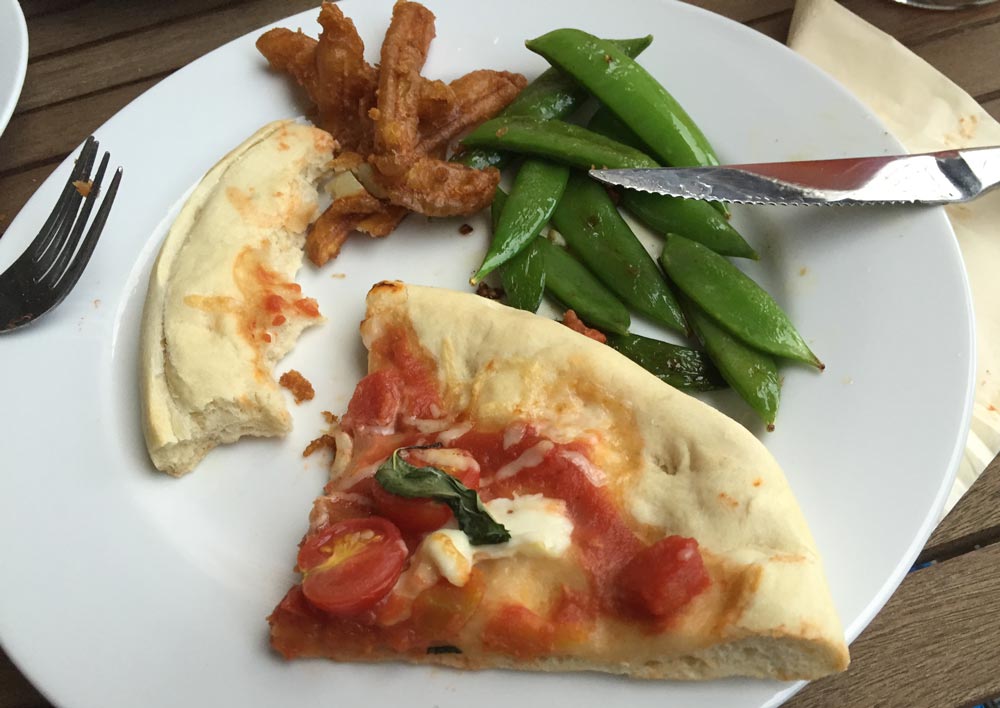
After watching Heston Blumenthal’s In Search of Perfection on making the perfect pizza, I thought I would try and apply some techniques to my own. If anything, I think it made the situation worse.

I tried giving the dough a double rise and heating the pizza stone in the oven for an hour before I put the pizza in. It still did not crisp up very well though. I think I might have to try and build a wood-fired pizza oven on the balcony.

At the top of the photo, there are some Asahi beer french fries from the Fish Market cookbook. I managed to keep them separate by dropping the chips in separately but I think they could do to be thicker: they tasted too much of oil the whole way through the chip.

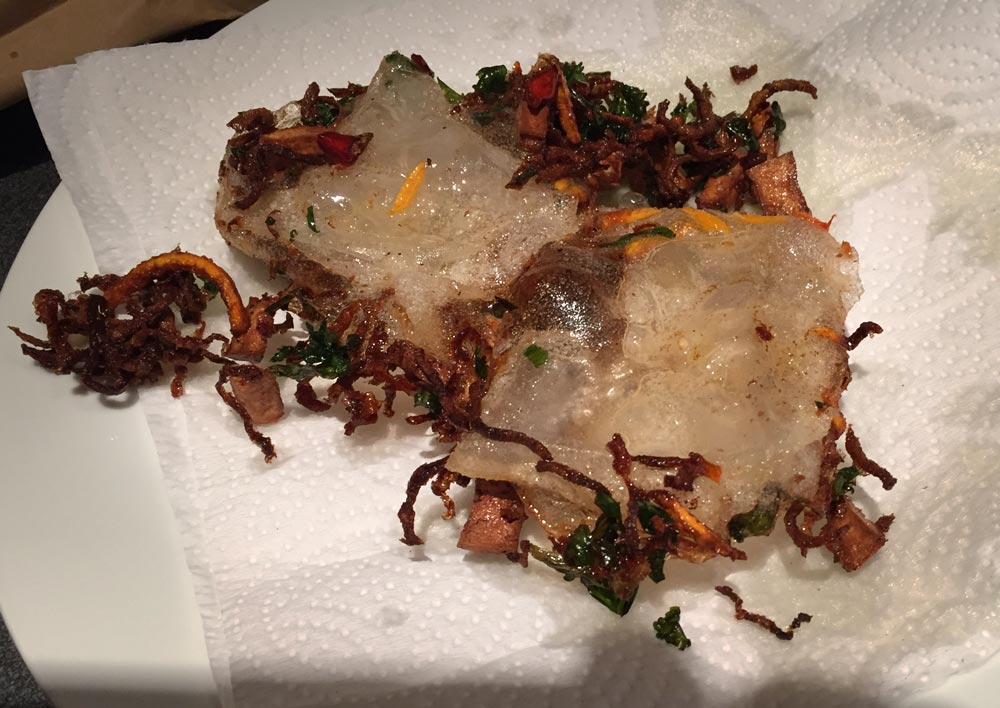
Speaking of imperfect things, here is my first attempt at spring rolls…

spring-rolls

Definitely not a success. It took me a couple of attempts to keep the stuffing inside the spring roll case and even then they did not look very neat. In the end, I took the stuffing and turned it into a wrap.

Humanist picnic 2016

September 8th, 2016 | Humanism

humanist-picnic-2016

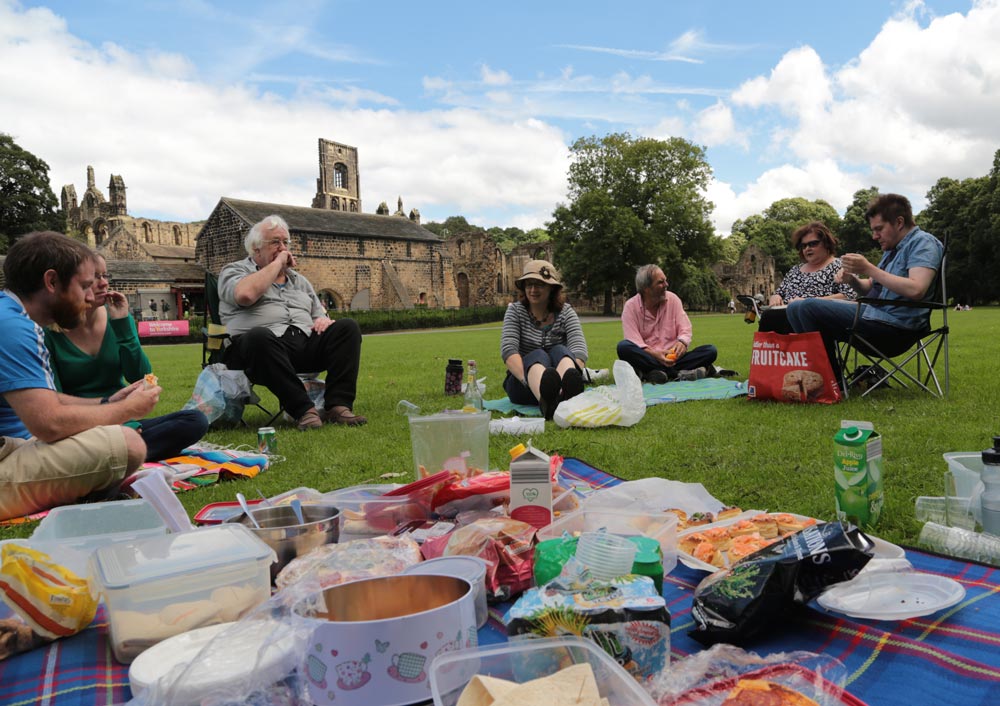
After the success of our summer picnic last year, we decided to repeat the same event for this year’s summer social. Kirkstall Abbey once again played host and the weather was once again kind to us.

Around 15 people turned up, along with loads of food. Michael even repeated his guided tour of the Abbey for those who wanted to attend. A good day all round.

Introducing Rena Men

September 7th, 2016 | News

rena-men

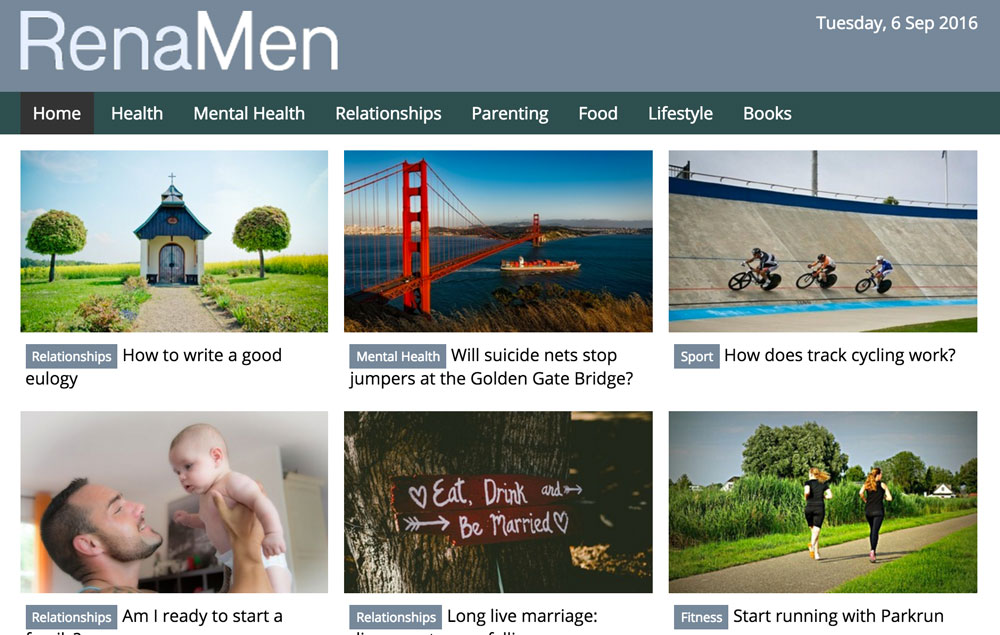
Ren Men is a men’s portal designed to be the antidote to the traditional image of lad-ish publications. I like sex as well, but I’m also interested in mental health, relationships, parenting and a whole array of issues that modern men have to grapple with.

You can visit the website, like us on Facebook and follow us on Twitter.

Gabriele’s birthday

September 6th, 2016 | Friends

tgi-fridays

Do not tell TGI Friday’s know it is your birthday. They will make a lot of noise.