Just going outside and running is simple. But for us adults, we often need something a little more structured to get started. Parkrun is a great option.
If you are thinking about getting started with running, Parkrun is a great way to go. Founded in the UK it was quickly spread to almost every town and is rapidly spreading across the rest of the world too.
So what is it? It is a timed 5km run that takes place every Saturday. It is free, so you can simply turn up and do the run. At most Parkruns there is a huge ability difference between runners: some will complete it in 15 minutes, others will take 50. Everyone goes at their own pace.
As a Yorkshireman, one of the major appeals to me are the free t-shirts. When you reach 50 runs, 100 runs and 250 runs you get access to a special t-shirt for that “Clubâ€. Actually, it is not free, but all you pay for is a few pounds postage. There is also a “25 Club†for those who volunteer as marshals.
Here are the technical details. You register on the website and are given a unique barcode to print out. Take this along with you to the run and when you complete the course a volunteer will scan your barcode so that your time can be sent to you.
Men have an almost one in ten chance of having nobody to turn to. Could peer support fill a much-needed gap?
In June, mental health charity Mind published research suggesting that men were twice as likely to have nobody to rely on for emotional support. 9% of men, compared with 5% of women, said that they have nobody to turn to in times of need. The research also suggested men are less likely to feel comfortable talking to the people close to them about their problems, with 52% agreeing.
This is a big problem for a number of reasons.
As Susan Pinker explains in her book _The Village Effect_, having a strong social network and close emotional support is critical to both good mental and physical health. When you eliminate the bias for women to have a stronger circle of close friends to rely on, you find that the disparity between men’s and women’s life expectancies closes dramatically.
Second, with men three times more likely to take their own lives than women, having someone to turn to at the crisis point could mean the difference between an intervention that saves someone’s life, and a successful suicide attempt.
The question is, that can be done about this problem?
To an extent, the problem could lie with our gender itself. If we built stronger relationships and invested more time in building those relationships, we would have a wider circle. However, many men feel like they simply don’t have the connections to do this, that it would not be viewed upon as socially acceptable in their circle, or simply that they feel too uncomfortable to do this.
Another option would be to increase the number of peer support groups available. The advantage of being able to talk to people going through similar problems, and therefore being able to bypass the chance of people not understanding, or judging, may provide a critical avenue for men to get the emotional support they need.
Organic food sellers are constantly touting the superior taste and health benefits of their products. But can they back this up with any evidence?
Organic food can often cost far more than the “non-organic†alternative. But is it really worth paying more for it? Is it any better for you, or for the environment?
So far, the scientific consensus is clear: no. Organic food is not any more nutritious, does not taste any better, nor is any safer than traditionally grown crops. It does not seem to be any better for the environment either, especially compared to genetically engineered crops that, by design, require fewer pesticides that traditionally-grown or organic food.
In 2012, a study by Stanford University confirmed what the rest of the scientific community had already been saying. There is just no evidence that organic is better.
So why do some people swear by it? The most obvious reason is the placebo effect. Because the branding will typically make claims about it tasting better, and because people will almost certainly have paid more for it, they are likely to receive some placebo effect from expecting it to be better.
However, when it comes down to the option of buying a luxury brand or an organic brand, the choice is clear. Even if the luxury brand is no better either, the placebo will probably be even bigger. For the rest of us, it is time to save some money guilt free.
Paracetamol is widely viewed as an effective and safe painkiller. However, mounting evidence suggests that neither of these facts is true.
When it comes to painkillers, few are as prevalent as paracetamol. Safe, easy and effective it has become the first choice of painkiller for many people. But is all of this actually the case?
Increasingly, the evidence is no. Writing on Evidently Cochrane, Andrew Moore points out that a lot of the Cochrane reviews of paracetamol suggest there is a little evidence for its effectiveness.
Review after review seems to dismiss the effects. It does not help for acute or chronic back pain. It does not reduce pain in newborns. It only helps half of patients, or less, after an operation, and only when mixed with codeine.
Nor is a paracetamol without risks. Not only is it a drug you can overdose on, but even at non-overdose levels it is associated with liver damage, and can increase the risk of strokes, heart attacks and ulcers. One study suggested it was no worse than ibuprofen, but at least ibuprofen seems to work.
Ultimately, we may need to rethink our approach to paracetamol. For some, it may work. However, for others, it seems to have little or no effect. If so, other options are just as safe to explore.
BMI is much despised by the public. However, before it is written off completely, we should consider what the implications are for the medical world.
People are constantly railing against BMI. They insist that it is simply stupid and insulting to label them as obese and that BMI doesn’t mean anything anyway.
But is that the case?
The answer is somewhere in the middle. From a medical perspective, there is little doubt that BMI is useful. A 2016 study published in the British Medical Journal (BMJ) confirmed that a high BMI was indeed associated with an increased risk of death.
However, a 2006 paper by the U.S. National Bureau of Economic Research, points out that there are some serious flaws in the simplicity of BMI as it fails to distinguish between fat from muscle.
Another paper in the BMJ suggested that BMI was indeed useful, but that what was considered a “normal†weight should be redefined. A weight of 18.5 to 20, for example, is defined as normal, but could actually be correlated with higher mortality.
Therefore, it seems BMI is a useful tool, but only when taken as a guide. It could be that the normal weight needs to be adjusted upwards slightly and that those with high muscle density will find they have an inaccurate reading.
In an age when Theresa May seems determined to read every email you write, abolish human rights and arrest everyone on terror charges, it can feel like our freedoms are under threat (they are). However, on a more positive note, we British people enjoy some freedoms that a lot of the world does not.
Nothing on this list will be a surprise to you. However, what I think will be a surprise, is that the rest of the world does not have these freedoms. These are things we take for granted but are not always the norm.
Naming your child
In Britain, you can name a baby anything as long as the powers that be do not label it as offensive or rude. People take liberal advantage of this, regularly naming their babies after TV characters, inanimate objects or obviously incorrect spellings of real names.
This is not a freedom most of Europe enjoys: many countries have set lists of accepted names. You have to pick from the list and you cannot change the spelling.
Homeschooling
Only wacky religious people tend to homeschool. However, you do have the option if you so wish. If you are tired of the school forcing facts down your child’s throat, you can pretend to be a teacher and give them an education yourself. You will seriously damage the child’s intellectual and social skills, but at least you will feel better.
We and around half the countries in the world enjoy this freedom. Each country has different levels of restrictions. For the rest of the world, homeschooling is illegal.
Jaywalking
At some point in the history of the United States, the government and the people had the following conversation:
Government: “Can we take away some of the really big guns so that children stop getting massacred?”
People: “No! Keep your hands off our second amendment!”
Government: “Okay. Can we make it illegal to cross the street wherever you want?”
People: “Sure, that’s fine.”
It seems a bizarre way round to me. I like living in a culture where assault rifles are not allowed, but crossing an empty street when it is safe to do so is. But what do I know as a humble British person?
Germany also criminalises jaywalking. There is something odd about watching clearly inebriated Germans stumbling home, yet stopping at every crossing to wait for the green man.
Moving house without telling everyone
Do you find junk mail annoying? I do. When I move house, I do not want everyone to know that I have moved. I will tell the people I think are worthy of knowing: banks, utility companies, etc. For everyone else, I do not want your nuisance mail.
In Finland, when you move house, you tell the state. The state then tells everyone else. This is convenient because it means all of your banks know that you have moved house. However, what if you do not want to tell a bunch of for-profit companies about your new address?
Free healthcare, including birth control
We tend to think of free healthcare as something that all civilised countries have, with the notable exception of the United States. However, this is not always the case. Take Finland again, for example.
When you go into hospital, there is a charge per day. It is not the full cost of your hospital stay, but it is not insignificant. You also pay to visit your GP and pay higher prescription charges. For birth control, for example, you will be paying around €15 per month.
In the UK, we pay for prescriptions (not in Scotland or Wales) and dental, but these are both capped at relatively low amounts. Hospital treatment is without cost entirely (unless you want to watch the TV).
ID cards
Compulsory ID cards are overwhelmingly the norm. Britain is one of only nine countries[ref] in the world that does not have any ID cards.
Flag burning
Flag desecration varies by countries. In many, it is illegal. In some, it is prosecuted under wider laws.
In the UK, we are pretty relaxed about it. If you want to burn the Union Jack, feel free. There is no law against it. There have been some moves to tighten up on it, but none have come to fruition.
Of course, you may struggle if it is made of fire-resistant material. As this EU flag was, for example:
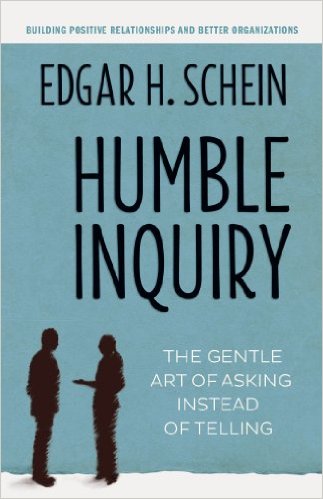
Humble Inquiry: The Gentle Art of Asking Instead of Telling is a book by Edgar Schein. It is a relatively short book and the title gives most of it away: we need to do more asking and do less telling.
Making this change is tough. We live in a culture that celebrates task accomplishment, It is a world where the boss tells and the worker does not. Often, the subordinate will be too fearful to be honest with their superior. This is even true in emergency situations. Fatal mistakes during surgery, for example, or airline crashes can often be traced back to this.
I want you to be completely honest with me. Even if it costs you your job.
As a leader, it is your job to establish an atmosphere where people can speak up. You need to understand the cultural and generation differences regarding the risk of humiliation. People will try to avoid humiliating you at all costs. This is fine most of the time, but not when you are about to give the wrong medication or make a terminal mistake in business.
The best way to achieve this is to create a personal relationship. Professionalism will not win out: it would be unprofessional to embarrass your boss. Instead, you need to build a relationship where subordinates feel they can overcome these barriers. And, as the boss, it is up to you to set how much personal disclosure is appropriate.
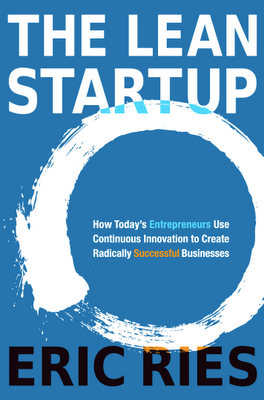
The Lean Startup is a book by Eric Reis. In it, he discusses the concept of running a business using principles translated from lean manufacturing. He argues that the true purpose of a startup is to find a way to make a profitable business in the shortest amount of time and that any company of any size can implement these principles.
Reis argues that one of the most important things is to get a product in front of the customer. We often shy away from this because we do not want to tarnish our reputation or have people think we build rubbish products and put them off in the future. However, there is something far worse than having a bad product: building something that nobody wants.
Pouring time into a product customers do not want is a massive waste of time. Then, because you have invested that time, you will be reluctant to let it go, even though it is a dead-end from a business perspective. Instead, using a minimal viable product (MVP) to attract early adopters and then using those adopters to find out what you should build avoids all of this heartache. You can start with a concierge service. Solve a problem for just one customer and do it perfectly. The time for automated support systems is later.
Critically, you need to gather this data through revealed preferences. Asking people what they want is a bad idea: they do not know and cannot articulate it when they do. Instead, you need actionable metrics: what are people doing?
The way to get actionable metrics is to plan them in. Whenever you want to add a new feature, ask yourself how you will test whether it is an improvement. Propose an experiment, put a system of measurement in place, roll out the feature and see what happens. If to does not make things better, scrap the feature.
As the data comes in, you will have to decide whether to pivot or persevere. There are several different types if pivots:
Zoom-in: focus on a specific area of the product
Customer segment: focus on a different type of customer
Customer need: keep the customer but change the problem you are solving
Business model: B2B, B2C, margin levels, etc
Value & growth: what is the monetisation method? What is the growth engine?
The key to much of this is to break things down into single piece flow. Much of our manufacturing is based on batch production. We reduced costs by standardising everything and making it in huge quantities. However, this has disadvantages: things cannot adapt or be individualised.
Batch is not the always the most efficient process, either. Take the example Ries gives: folding stuffing and writing the address for 100 letters. Should you batch each stage, or use single piece flow to fold, then stuff, then write out each letter before moving on to the next one?
Experimentation gives us the answer: single piece flow is faster. Batch seems the most efficient choice. However, this it is counterintuitive. Our mind does not factor in all of the time we spend moving piles around. Even in the best case scenario, batch processing is slower. And it can get much worse: if you fold the letters to find the envelopes are too small, you face disaster.
Lean startup methodology attempts to move the process back to single piece flow: each feature is isolated, testable and developed in its entirety before moving on to the next one. Reducing the amount of work-in-progress may feel less productive when you are stuck on a few slow-moving tickets, but is more efficient for the organisation overall (and the goal of producing a viable business).
Team efficiency is what is important here. For developers, it can often feel like you are constantly being interrupted by meetings. Which is true. However, your productivity is not what is important. The key metric is “is the team producing features that customers want”, not how much code you write.
When things do go wrong, the “five whys” method can help. It is simple: just ask why five times. For example:
Why did the website go down? Because we introduced faulty code.
Why did we introduce faulty code? Because the CI layer did not pick up on it.
Why did the CI layer not pick up on it? Because the CI layer is not working, so we are manually running the tests.
Why is the CI layer not working? Because Dev Ops have not been able to fix it.
Why have Dev Ops not been able to fix it? Because they have not had the proper training.
This gets us to the root of the problem. It seems like a coding problem. To an extent, it is. However, bad code is always going to get written at some point because developers are human. The five whys method also exposes problems with the pipeline and lack of training within the organisation.
Summary
The Lean Startup is essential reading for anyone who wants to make their business more efficient. Successful businesses build things that customers want. The lean startup methodology attempts to uncover that and bring it to market as fast as possible. Everything else is a waste.
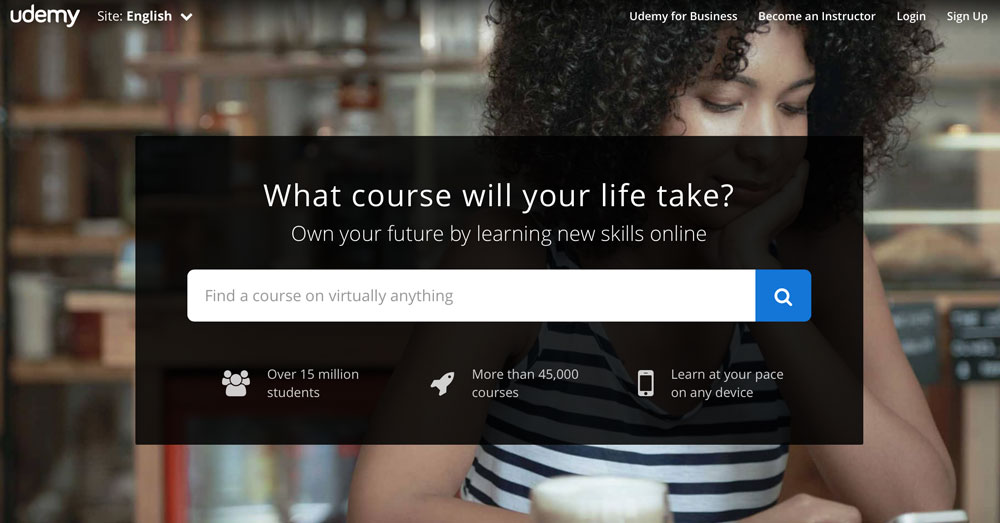
I have been binge-learning on Udemy. If you have not heard of it, Udemy is an online education platform where people can buy and sell courses. They offer a range of features such as text, slides, quizzes and exercises. In practice, though, everyone just uses video lessons.
The pricing is a bit of a joke as well. You regularly see courses marked at £100-200. However, you never pay that. It is like the sofa store with a never-ending sale. My three most recent courses cost me £10, £15 and £15. At this point, you would be a sucker to pay more: if the sale ever did end you could just wait for the next one to start.
Here are the ones I have enjoyed:
Graphic Design Masterclass
This teaches the basics of graphic design using Photoshop, Illustrator and InDesign. I was hoping that there were some core concepts that by learning I could greatly improve my graphic design skills. However, I knew almost all of it. There is no big secret: it is just being able to apply it that makes a great designer.
Nevertheless, the course was fun and it was useful to have a refresher on all of those principles.
The Complete Video Production Bootcamp
This teaches you everything you need to know about producing high-quality videos. It is delivered by a set of three instructors. As film-makers, their video lessons are excellent, of course. They cover setting up shots, lighting, sound, editing and distribution.
Modern React with Redux
I have used React before, but my Redux knowledge was limited. This was a great course to get me up-to-speed. The instructor, Stephen Grider, takes the time to explain everything he is doing. This can be a little slow at times but does ensure you come away with a solid understanding. I have just started his course Webpack 2.
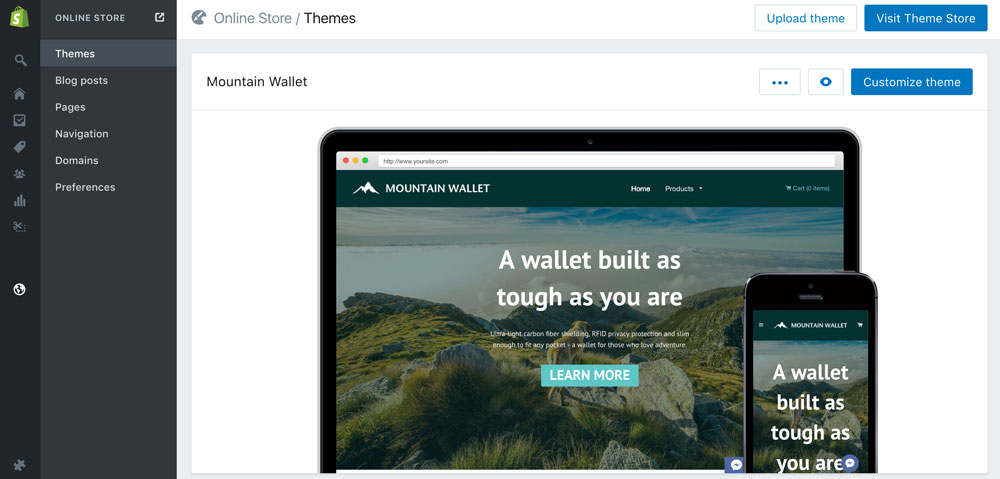
I have been using Shopify to build out an e-commerce store. It has a lot of love it and hate it features.
It is easy to set up. You create your store and select a theme. Then you upload your products with some images and at this point, you are basically done. They have an integrated cart system and credit card processing, or you can add in a third-party payment processor. They have an apps store where you can install add-ons to your shop.
All of this for $30 per month.
On the downside, there is very little customisation. Making basic changes to the layout are impossible. Just adding extra text, for example, is not possible. The only way you can really make the store look the way you want is to create a custom template. There is some good documentation for this, but it requires a lot of diving into code and the propriety systems that Shopify use.
The store configuration is also limited. Products get a description field and that it is. You have to put everything in there. There are no features or specifications, or anything you could use to filter on later. The only way to do it is to use product categories.
The add-ons are good, but most charge you an extra $10 per month. You can only accept payments in your local currency: so if you are based in the UK, you cannot sell in dollars.
Overall, Shopify allows you to get set up and selling very quickly. However, it lacks the customisation you will want down the road.