Archive for the ‘Books’ Category

The Psychopath Test

Tuesday, July 14th, 2015 | Books

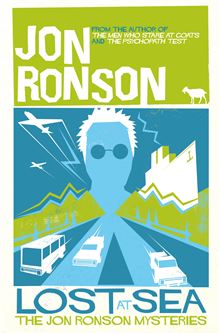
Jon Ronson is a journalist who writes books the same way Louis Theroux makes documentaries. He goes and interviews odd people and pokes them gently but persistently until interesting stories fall out.

In his book The Psychopath Test: A Journey Through the Madness Industry he looks at what psychopathy is, how it is diagnosed (there is a checklist), what can be done about it (very little) and where you might find psychopaths. The answer to the last question is apparently prisons and CEOs.

He starts off by narcissistically whining about his own problems and anxieties. I find this annoying at first as he sounds too similar to myself for comfort, but gradually come round to it as the book goes on. He is very much a character in the story. Given a preference, I think I would opt-out of that, but it doesn’t ruin the book.

If you ever worry that you are a psychopath, then good news, that probably means you are not one. Psychopaths typically do not suffer from anxiety. However, if you want to double check, you could use the PCL-R, a checklist developed by Robert Hare.

Ronson also provides advice for psychopaths looking to avoid the media spotlight – be as boring as possible because then no journalist will want to write about you. Statically, that should be useful to just under 1% of my visitors…

The-Psychopath-Test

How the Mind Works

Monday, July 13th, 2015 | Books

Explaining how the mind works is a big topic to take on. However, if anyone is up to the challenge, I imagine Steven Pinker has to be on the shortlist.

His central premise is that the brain is a series of specialised systems. Rather than being one general problem solver, it is a collection of machines designed to do different things.

For example, we have a language module and a facial recognition module. We know this because one system can be damaged. In a condition called prosopagnosia people are unable to recognise faces. They can recognise every day objects and show no cognitive impairment, except when it comes to recognising faces, when even their own family are a mystery to them.

This is perhaps why we have been unable to recreate human intelligence with computers (though why would we, artificial intelligence is just a different kind of intelligence). It’s not that computers are too specific, following their specific code – it is that they are general problem solvers and the brain is not!

That does not mean of course that the brain cannot adapt and repurpose. If you lose the sight of an eye, for example, that part of the brain will be used up processing imagery from the other eye. However, there is design (albeit naturally guided by evolution) and purpose behind the modules of the brain.

The brain does some things really well. Colour for example. How do we know what colour snow is? It sounds easy, but it isn’t! In direct sunlight, snow reflects lots of light. Indoors, it reflects less. But it is the same thing. A camera struggles to tell. That is why you often need to set the white balance, to tell it is looking at white snow in poor light rather than grey snow in good light. The brain does all this for us though.

It takes our sensory input and presents us with the world. Tilt your head, and notice the world doesn’t move. Again, if you did this on a camera it would list. Your brain, however, keeps things steady.

Other things it is less good at though. We are not great at recognising left from right. Why? Because any rule regarding left or right had to be generalised to both sides in our hunter-gatherer evolved brain. Hence we have no problems with up and down, but often struggle with left and right.

This is all a result of the environment in which we evolved. Phobias, for example, are all things we used to be scared of. Snakes and spiders for example. You do not need to teach a monkey, or a human for that matter, to be scared of a snake – they are innate. Yet similarly, we never develop of a phobia of electricity, even though that kills far more people.

We also calibrate our happiness based on other people. Pinker claims that there is no objective measure, we just use society to gauge what can be reasonably expected and set our levels based on that. Again, it makes sense from an evolutionary perspective, that we would balance our pursuit of happiness.

This makes a case for reducing income inequality. If one person makes £50 and someone else makes £500 it is not an everybody wins situation. Of course, you have to balance that with fairness and freedom, which is difficult.

He then talks about reproduction, which is quite a depressing section. Like most animals, we use sexual reproduction. The advantage of this is that you swap half of your DNA out every generation, thus making it harder for pathogens to crack the safe as it were. Good stuff there, we all enjoy sex. However, then he talks about babies and children.

It’s a war. The baby wants as much from its mother as it can, fighting her body to draw all the nutrients into the womb. Then once it is born it fights for all the attention, trying to stop the mother from having further children as this would reduce its own attention. To an extent anyway – eventually the chance of 50% of its DNA being in a sibling becomes worth it and it gives up screaming.

Pinker also discusses the sexes in nature. Most species operate with the female bearing the offspring and therefore having the most investment in it. Therefore females tend to be most picky about selecting mates of which there are plenty of options, whereas males want to spread their DNA as far and wide as possible, and compete with each other to do so.

This has interesting social implications. For example, the idea of men being “players” and women being “sluts” is, dare I say it, natural. This does not make it moral or right of course! However, these are not social constructs, but in fact the very opposite! These are naturally occurring tendencies that we are now overcoming thanks to society.

Indeed if people could be conformed to socially constructed gender roles this would soon be selected out because the powerful men in society would force them all to be celibate and cuckolded.

He also offers an explanation for the irrationally of love. Irrationally is actually a good way to fall in love. If you did it for rational reasons, you would just leave when you found someone better, which statically speaking if you get together in the first 30 years of your life, you probably would. Therefore falling in love for irrational reasons helps nature maintain monogamous relationships.

All interesting stuff. It felt a bit disjointed at times. It wasn’t one cohesive story but then that is the point of the book. The mind is not one unified general problem solver but a series of systems.

To me, this is Pinker’s “how it works” manual while The Blank Slate is the “what the consequences of that are” book, both of them together forming the full story. It has not changed my thinking is the radical way The Blank Slate did, but it s certainly is fascinating.

If you enjoy this, you will almost certainly enjoy Dan Dennett’s Consciousness Explained too.

how-the-mind-works

Caught in the Pulpit

Thursday, July 9th, 2015 | Books

Not only does the audiobook of Caught in the Pulpit: Leaving Belief Behind feature Daniel Dennett and Linda LaScola reading their work, but it also includes a foreword by Richard Dawkins, also read by the man himself. I was hard before it had even finished downloading.

The book itself is about a study by Dennett and LaScola on ministers who have stopped believing. Most of them are trapped in this difficult situation – their family, friends, and livelihoods are tied up in church ministry, so admitting their non-belief is typically not an option.

Yet it is apparently widespread. Many of the people they interviewed share a common desire to help people, but think that the stories contained within their holy texts are nonsense.

Caught-in-the-Pulpit

The Sound and the Fury

Sunday, July 5th, 2015 | Books

Sometimes I can make it quite a way into a novel before I can work out what it is actually about. Very occasionally, I get the whole way through. This is one of those times.

For the first chapter, I wouldn’t even work out who the characters work. I thought they might be anthropomorphised animals. It eventually turned out they were children. That is about all I got until I read through the Wikipedia article.

It reminds me a lot of Ulysses and indeed does use the stream of consciousness narrative employed by Joyce. However, unlike Joyce, who paints a beautiful and linguistically-inspiring picture which his rambles, William Faulkner failed to capture my imagination, leaving only the barely-intelligible plot.

From a literary perspective, it is certainly interesting. However, it ranks 6th on Modern Library’s list of 100 best novels. Is that justified on a list that puts The Grapes of Wrath at 10th and Nineteen Eighty-Four at 14th? No.

The-Sound-and-the-Fury

The Happiness Trap

Saturday, July 4th, 2015 | Books

The Happiness Trap is a self-help book based on ACT (acceptance and commitment therapy).

It starts with a simple but profound message. Humans are not happy to be default. They are not designed to be happy. Happiness is not required to continue the species along. So if you’re not happy with your life, that might just make you completely normal.

It puts aside things like cognitive therapy, point out that we have a lot less control over our thoughts and feelings than we would like to think. Instead it focuses on accepting negative thoughts and feelings (indeed, it claims all feelings are just feelings, rather than good and bad ones).

The techniques it teaches including connecting with the world around you and accessing the observing self. Which is a fancy way of saying mindfulness, being in the moment rather than over-thinking life.

It gives you exercises to do, and tells you off if you do not do them! I stopped reading the book for maybe two months because it said I could not continue until I had done one the exercises and I did not want to go back and do it. When I did, it turned out it was really easy. As are almost all of the exercises – they are designed for busy people. This is kind of stupid really, how can I be too busy to look after my health? But I also suspect many of us all into this trap.

The end of the book is a little more strange. It has a section about how ACT is not a religion. I know that. But stating it puts up a red flag against the book’s version of ACT (Scientology isn’t a cult remember…).

Then it talks about connecting with your values, the things you think are genuinely important in life and pursuing those. This is a good thing to do, but not something I expected in a book about managing my feelings and anxieties.

The-Happiness-Trap

Travels with Charley

Friday, July 3rd, 2015 | Books

Travels with Charley is a non-fiction book by John Steinbeck about his travels across America. Indeed it is titled “In search of America”.

He is not a man who messes around. When he decided to go travelling he wrote to the truck company and design him a special truck. They did. When his boat was in danger he jumped into the stormy water and swam out to it. It was a time when men were real men, women were real women, and everyone suffered because of gender inequality.

He does not go alone however. He takes his dog, Charley, who is as much a part of the story as Steinbeck himself. He begins by driving across the northern states (Steinbeck, not Charley, who does none of the driving) and then comes down the west coast and back across.

It is an interesting story. Steinbeck writes about his experiences in the colourful and descriptive way you would expect.

It is not, however, a description of Americana. Probably because, as Steinbeck points out, summing it up would be impossible. However, it is more a collection of anecdotes in sequence than a description of the areas he passes through.

It also all gets a bit horrible near the end when he visits the southern states and runs into a lot of racists. He quickly falls out with them. Thankfully he is then on the road again heading back to New York.

Travels with Charley

A Storm of Swords: Part 2 Blood and Gold

Thursday, July 2nd, 2015 | Books

If you are a big reader you may well read A Storm of Swords as one book. However, if you are like me, reading a book longer than Anna Karenina is no small undertaking.

To make it easier I read Part 1 earlier. Even so, it is still a meaty novel, twice as long as your typical one. What a novel it is though. The more I got into it, the more I could not put it down.

I have only seen Game of Thrones up until the end of series 3 and A Storm of Swords goes beyond that so for the first time in the series I was breaking new ground.

There is a special circle of Hell in which George R. R. Martin will be subjected to all the things he has done to my favourite characters.

As with any instalment of A Song of Ice and Fire, lots of people died. Some of them I was pleased about, some I was annoyed about, some of which I was just surprised at.

Storm of Swords part 2

The Handmaid’s Tale

Monday, June 29th, 2015 | Books

The Handmaid’s Tale is a novel Margaret Atwood. It describes a near-future dystopian world in which democracy has been replaced by a fundamentalist Christian military government and re-structured society.

In said society women are divided into functions for men. The protagonist, Offred, is a handmaid. She is used for breeding purposes only. Still, better than being a Martha, or shipped off to the colonies…

the-handmaids-tale

Forward the Foundation

Saturday, June 27th, 2015 | Books

The final piece of the puzzle of Isaac Asimov’s Foundation series (a trilogy in seven parts). Forward the Foundation follows Hari Seldon from the time he decides to work on psychohistory (at the end of Prelude to Foundation) and the founding of the First Foundation on Terminus.

Once you have read all the other books, you pretty much know what is going to happen. However, it is still an entertaining read. Everything slots in and completes the story.

Forward-the-Foundation

Food For Free

Friday, June 26th, 2015 | Books, Food

Food For Free is a book by Richard Mabey on foraging. I got the pocket-sized edition which is great for travelling around with.

It contains descriptions of loads of different plants you will find it Britain and each one comes with an illustration and a photo. It describes what it looks like and what you can do with it. All good stuff.

On the negative side, it is very insistent that you use a real identification guide, which it claims this is not. I felt that distracted a lot from the purpose of the book. Why make it pocket-sized for example if you’re not taking it into the field?

It is also arranged alphabetically whereas I felt grouping similar plants together would be more useful. If I see a plant I want to be able to find that section and work out which one it is. That way also has difficulties – how do you find the section you want if you already know what it is, and how do you judge what is similar? However, on balance I think the trade off would have been worth it.

It does however address any concerns you might have that you could accidentally pick something poisonous by telling you it will probably be fine. I feel much better after that…

Food For Free