Given our recent blows in the sporting world (we’ve just lost at the European Cup, and by the time I publish this I’m sure Andy Murray will be out of Wimbledon too), it’s easy to think that we’re just rubbish at sport (as a nation).
But there is at least one sport were Britain dominates the world – Formula One. Although a lot of the key names thrown around are people like Vettel and Schumacher, when you look at the figures, Formula One simply revolves around this country. Here are some key figures.
8 of the 12 manufacturers are based in Britain
9 of the 14 technical directors are British
2 of the 4 engine manufacturers are based in Britain
Britain has 3 drivers – only Germany has more (with 5), everyone else has less (Finland, Australia, Spain, France and Brazil have 2)
Here is a full breakdown of each team and where they are from. I’ve highlighed the British connections in yellow, though with hindsight, I probably should have highlighed the non-British connections!
Team
Nationality
Key people
History
Engine
Caterham
Malaysian, but based in British
Mike Gascoyne (technical director) and Mark Smith (technical director) are both British
Originally British, until Tony Fernandes bought Caterham Cars
Renault
Ferrari
Italian
Pat Fry (technical director) is British
Ferrari
Force India
Indian, but based in Britain
Andrew Green (technical director) are Paul di Resta (driver) are British.
Buy out of Eddie Jordan’s team.
Mercedes AMG
HRT
Spanish
Cosworth
Lotus
British
James Allison (technical director) is British
Originally Toleman Motorsport (British)
Renault
Marrusia
Russian, but based in Britain
John Booth (team principal) is British
Founded by Manor Motorsport and Wirth Research (both British). Taken on by Virgin Racing (British).
Cosworth
McLaren
British
Martin Whitmarsh (team principal), Neil Oatley (technical director), Jenson Button (driver), Lewis Hamilton (driver) are all British.
Founded by New Zealander Bruce McLaren.
Mercedes AMG
Mercedes
German, but based in Britain
Ross Brawn (team principal), Nick Fry (CEO) and Bob Bell (technical director) are all British.
Mercedes AGM is a separate company – a buy out of British engine manufacturers Ilmor.
Mercedes AMG
Red Bull
Austrian, but based in Britain
Christian Horner (team principal) and Adrian Newey (technical director) are both British.
Originally Stewart Racing, founded by British driver Sir Jackie Stewart
Renault
Sauber
Swiss
Ferrari
Toro Rosso
Austrian, but based in Italy
Ferrari
Williams
British
Sir Frank Williams (team principal) and Mike Coughlan (technical director) are both British.
Founded by Sir Frank Williams and Patrick Head.
Renault
…and this is before I’ve even founded Worfolk Racing.
I wasn’t going to write about this, but so many people have now mentioned it to me that I’ve decided it is worth while commenting after all…
It’s now been six months since Lloyds TSB started the processing of correcting the account they had incorrectly set up and then started billing our charity for. They’re still working on it. After all this time, you really have to wonder if they ever will get it done.
This is a bank of truly incompetent scale – no wonder they had to sell 77% of it to the government as part of a £37,000,000,000 bailout from public funds to the major banks. That’s about £800 each btw.
So what did such a bank do with all it’s ill-gotten gains from hard-working taxpayers?
They spent £40,000,000 sponsoring London 2012. As if the tax payer hadn’t paid enough for the Olympics already, Lloyds TSB are now taking our emergency bailout money and spending it on making itself a sponsor of London 2012!
Not only that, but this is only the money paid for the sponsorship deal – and one imagines that the expenses of having a party bus follow the Olympic torch around and anything else rack up to quite a bit. In fact, they’ve even made a website about everything their blowing money on this summer.
Hosting the Olympics has been a harsh affair. We’ve had to temporarily (hopefully!) transformed into a semi-totalitarian state.
But on the flip side, we get to go to the Olympics. Or do we?
The Olympic Stadium holds 80,000 people. So even if you allocate a rather large amount of 800 tickets to sponsors and other interests in the private sector, that still means we can sell 99% of tickets to the generic public. But apparently not. Only 75% of the tickets have gone on sale to the general public. When it comes to the high profile events, that already rather low number of 75% drops to 35%!
But, of course, you have to give some to the private sector. They’re paying for the games after all. Otherwise, the tax payer would have to foot the bill. But, as it turns out, and we all knew already, we are footing the bill.
According to the Guardian, sponsors have contributed £1 billion of funding. They’ve made the data available for free too. The Guardian is actually being generous here – a report by Parliament puts the figure even lower.
Meanwhile, the total cost was reported to the House of Parliament as being around £12 billion. Jules Boykoff points out this isn’t entirely accurate though and, indeed, according to Sky Sports, the figure is actually around the £24 billion mark.
So do the maths on that one. We’re footing 92% to 96% of the cost, yet we’re getting 35% – 75% of the tickets.
Earlier today, I wrote about best before dates, suggesting that one way to reduce food waste would be to ban them. It ended on a “why not?” question. But there is a reason why, which would have totally changed the tone of the blog post, so I’ve put it in a separate one.
The reason is, people actually like living in a nanny state when it comes to these things. I like the fact that it tells me on the packaging when I should throw something away and the reality is that it will probably be reasonably close to the actual time it will be past its best, so what is the harm?
Of course, you can argue that reducing food waste would be beneficial, but as Rob Lyons points out, reducing our own food waste doesn’t help feed the third world – people aren’t starving in Africa because we’re eating all their food. It’s economics that drives food production and if we weren’t buying their food, they simple wouldn’t grow it.
In fact, you can go even further to say that because we buy more food than we need and simply bin a lot of it, it actually increases the amount we buy from the third world and thereby helps to support their economy by essentially subsidising unrequired food production.
In recent years, there has been a lot made of food waste, and some of this has been attributed to supermarkets putting very conservative “best before” dates on products that result in people throwing perfectly editable food away.
This might be down to a combination of supermarkets protecting themselves from lawsuits if anyone gets food poisoning, and encouraging people to throw food away early so they will buy more. But I don’t know, maybe they have some other reason. Maybe they genuinely believe their best before dates are appropriate. In any case, it’s not important to this post.
As a solution, why don’t we just ban supermarkets putting best before dates on things?
Surely that would solve the problem, forcing people to use their own common sense. You could argue that relying on common sense is an issue, but any common sense people are lacking is almost certainly down to the nanny state situation of having too many best before dates to rely on in the first place. But even if you consider that a problem, which I don’t think it is, it’s pretty easy to work out when bread is past its best.
I often find that, on some occasions, the law works very well as a blunt instrument. Remember when they banned smoking in pubs, and lots of people said there should be lots of complicated rules and exceptions, but instead they just banned everything, and now everyone is much happier because it worked really well? To be clear, I’m not being sarcastic there, that is actually what happened. Clamping is another good example.
Just tell producers they’re not allowed, people use their common sense and food stops getting wasted. Problem solved.
Last month, I went to Temple Newsam to see my mum perform at the Olympic torch celebration. The choir were fantastic, well done to everyone involved!
Getting in was a struggle. After the padding down and the cavity search you then have to have a long argument about whether the folding furniture you have brought counts as genuine folding furniture. No prizes for guessing who was sponsoring the event either…
Another month goes by, and, as usual, another senseless gun-related massacre occurs in the United States. Around 50 people in total were shot, 12 of them are already dead.
I was going to say “with another 12 people dead” but this would simply be nieve. Based on the statistical average, somewhere in the region of 33 people were gunned down across the United States today anyway. And yesterday. And there will be another 33 victims tomorrow.
Surely it is time to adopt a more progressive attitude towards guns? To be clear, by progressive attitude, I mean get rid of them all.
The sadistic irony of this video increases with every victim.
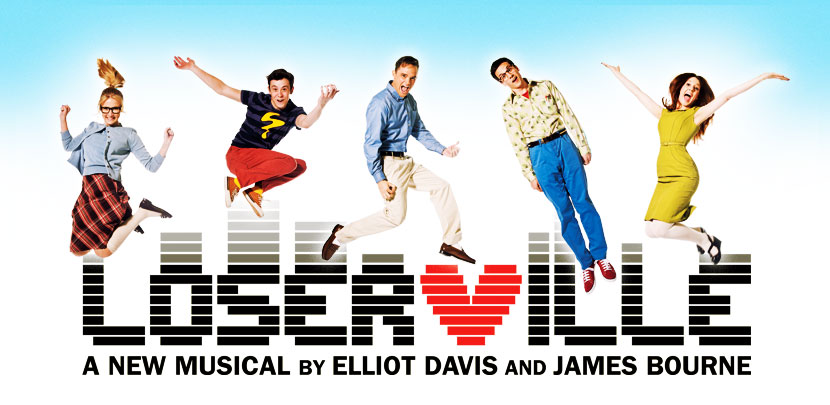
Last month, we went to see the new musical Loserville, at the West Yorkshire Playhouse. While the play itself was very entertaining, I have to say that I’m really not comfortable about them making a musical about my life without offering me any royalties, or even asking my permission.