Chris Worfolk's Blog


Digging to the roots

August 30th, 2012 | Religion & Politics, Thoughts

I think sometimes, we forget what the problem with a diversity imbalance is.

Take the example of students studying psychology. As of 2005, men made up 28% of students starting or continuing a degree; women made up the remaining 72%. On the face of it, this is an inequality issue. Why is it that men aren’t studying psychology? Are we being discriminated against, victims of stereotype threat, perhaps?

But it might simply be naive to assume that it is because of discrimination. Maybe it is an entirely benign reason behind the gender gap. Maybe it’s just a coincidence, maybe it’s just that men are less interested in psychology than women.

In that case, there would actually be no inequality issue – after all, inequality is about providing everyone with equal opportunities, not about forcing everyone to be the same. Suggesting that there is a problem, merely because the diversity of a particular field doesn’t exactly match the diversity of society, needs a dose of our old friend “correlation doesn’t apply causation” – and how many times have we each had to stress that to a religious person?

The reason that we often consider these issues a problem is that a lack of diversity in a particular field is usually indicative of a problem – such as discrimination- that needs to be dealt with it. But it’s important to remember that a lack of diversity isn’t inherently an inequality issue.

Converting CVS to Git, with branches

August 30th, 2012 | Life, Tech

There are quite a number of tools to convert a CVS repository to a Git repository out there. However, most of them don’t seem to be able to copy over the branches properly. A work around is to convert it to Mercurial first, then convert it to Git.

In this example I’m using a repository called RedDog.

First, we need to get Mercurial on the system.

yum install mercurial

Next we need to add the convert extension to the .hrc file. This might be a global file, or might be in your home directory, can’t quite remember.

[extensions]
hgext.convert=

Check out from CVS and convert to Mercurial.

cvs checkout RedDog
hg convert RedDog

This will create a Mercurial repository called RedDog-hg. Now we need to get hold of Fast Export.

git clone git://repo.or.cz/fast-export.git

Once we have the software we can initialise a new Git repository that we’re going to use and then CD into the folder.

git init RedDog-git
cd RedDog-git

Run the Fast Export tool, specifying the location of the Mercurial repository.

../fast-export/hg-fast-export.sh -r ../RedDog-hg

This will migrate everything into your new Git repository. If you run an ls -a you should see the .git folder, which you may want to rename to RedDog.git (something.git locations are actually just .git directories).

You may optionally also want to do a check out into that folder.

git checkout HEAD

However, you don’t have to – you can begin using it remotely without doing a local checkout.

In the public interest?

August 29th, 2012 | Religion & Politics, Thoughts

Recently, The Sun broke ranks and published naked photos of Price Harry in Las Vegas.

The Sun claimed that the pictures are in the public domain, so they might as well print them. Which, I think most of us can agree, is a really rubbish excuse for breaching someone’s privacy.

Their other defence was to suggest that it was in the public interest to see naked pictures of Prince Harry.

Now, perhaps I am a little out of touch with the old generation, but I utterly fail to see how someone being naked at a party in Las Vegas is in the public interest. He might be third in line to the throne, but first in line to the thrown is Prince Charles – a man who supports homoeopathy and suggested he should be defender of the faiths, even though the title defender of the faith was specifically given to Henry VIII for attacking other religions.

More importantly, though, public interest is an important defence. Sometimes you need to break the rules because it’s important for the media to support something – take the New York Times publishing some of the information Wikileaks released about the US military gunning down innocent civilians for example.

Using it for this kind of nonsense (naked photos of Prince Harry) is a real problem because it weakens the argument when newspapers actually need to publish something that is in the public interest, and hands the government a loaded weapon when it comes to shooting down the need for a public interest defence.

The Sun has been journalistically irresponsible. But what should we expect from the same scumbags that shat all over 168 years of British newspaper history because it turned out they were doing very illegal things.

A reluctant hero

August 28th, 2012 | Science, Thoughts

Having just touched down in Dublin (not bragging, just sets the story up…), I’m saddened to hear that Neil Armstrong, the first man to ever walk on the Moon, has died.

Tributes flooded in from all corners and as you would imagine, Twitter was awash with people talking about how sad it was to hear. All of us, despite many of us not even being born at the time, know the phrase “one small step for man, one giant leap for mankind”.

But despite all that, I’m going to suggest that Armstrong wasn’t actually the hero I wished he had been.

He was the first man to walk on the Moon. That’s incredible! As my friend Norman wrote, “landing on the moon was probably man’s greatest ever achievement.” It was an event that brought the world together – despite it’s inspiration being a metaphorical war that was driving the two dominant ideologies of the world, apart.

But Armstrong almost never made public appearances.

The man was a hero – we all looked up to him as a real life superhero, someone who had actually gone and walked on a different planet (I know the Moon isn’t a planet, but it sounds more effective to use the word).

His words, his actions, his public appearances could have inspired a new generation to pursue a space programme with just as much zeal as we fought to get to the Moon. But he didn’t. He shrank away from the spotlight and rarely talked about his experiences.

That isn’t to say the reason we haven’t walked on other planets is his fault. That would be ridiculous – the problem was primarily the race for the Moon was spurred on by a clash of political ideologies and once capitalism had won, there was no justification for such a emphasis on the space race.

But I think it’s a shame that Armstrong never became the hero he should have been.

Exam results

August 27th, 2012 | Thoughts

Yes, it’s that time of the year again when we compare exam results to previous years.

It seems silly. If the exam results get better there is a big news story about how the exams have got easier, if the results get worse, there is a big news story about how we’ve let an entire generation down. What do they want, exactly the same results every single year?

Actually, that is exactly what I suggested last year. Standardised exams are really for comparing people against each other (if they were for the benefit of those taking them, we would personalise, or destandardise them), so why not just hand out a certain amount of each grades. It also avoids many other issues – but you can read last year’s post for the full story.

According to the BBC News story, they are also changing the way GCSEs are assessed.

Modular GCSEs are being dropped in England so that pupils starting GCSE courses this September will have to sit all their exams at the end of the course.

It has been suggested before that the modular system is partly responsible for the gender gap in education so it will be interesting to see how this change affects it in years to come.

Mystic Moon

August 26th, 2012 | Distractions

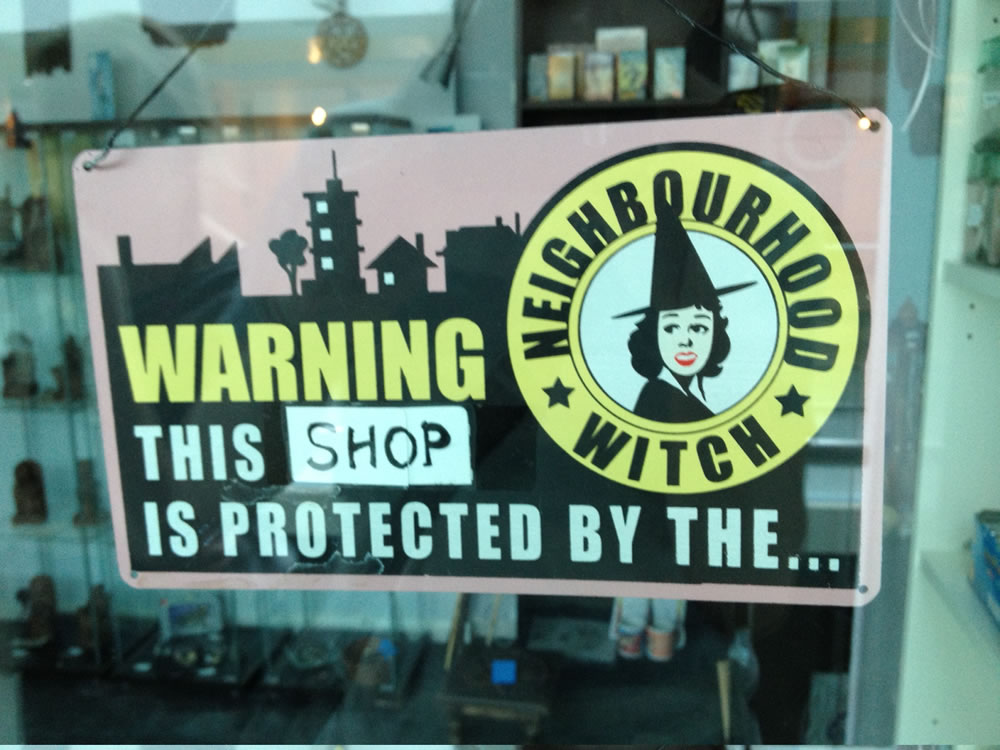
We went for a wander round the newly renovated Central Arcade on Briggate. Turns out the Woo pushers have already moved in their and opened a shop named Mystic Moon. They even do tarot readings.

Panic on a Plate

August 25th, 2012 | Public Speaking

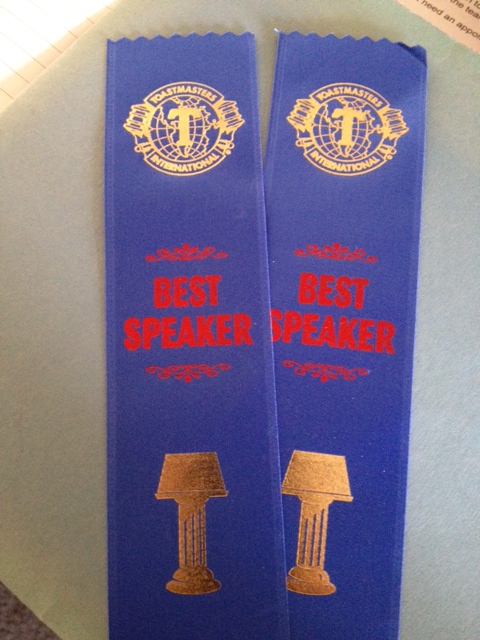
Having really enjoyed Rob Lyon’s Skeptics talk on his book Panic on a Plate, I decided it would be a great topic to give a talk on at Toastmasters. Turns out it worked quite well, and I was lucky enough to pick up my second Best Speaker ribbon.

Ribbons

ActiveRecord::ConnectionNotEstablished in Rails

August 24th, 2012 | Programming, Tech

I ran into this error while trying to get Ruby on Rails 3.1.1 which I installed from the Rails Installer to talk to MySQL. My stack is built from WAMP, so it might not have been as easily as it would be on a standlone MySQL installation.

Here is are the steps I took to fix it.

Edit Gemfile in project and add the following line.

gem 'mysql2', '< 0.3'

Rebuild the MySQL adapter with your version of MySQL.

gem uninstall mysql2
gem install mysql2 -- --with-mysql-config="C:/wamp/bin/mysql/mysql5.5.16/bin/mysql_config.pl"

Download the MySQL connector from the MySQL website.

http://dev.mysql.com/get/Downloads/Connector-C/mysql-connector-c-noinstall-6.0.2-win32.zip/from/pick

Once you have the zip file, uncompress it and copy lib/libmysql.dll to the Ruby bin directory. Finally, go back to your Rails project and run the following command.

bundle install

I was finally then able to run a command such as the following.

rails generate model Something name:string

Without it throwing any errors up.

Wrestling the Troll

August 24th, 2012 | Religion & Politics

A few months ago, Paula Kirby, executive director of the Richard Dawkins Foundation, publicly wrote about some of the problems see saw in the freethought movement, in her essay Sisterhood of the Oppressed .

Since then I’ve found an increasing number of blog post and other links arriving in my inbox regarding the current splits in opinion. I hadn’t actually seen The Amazing Atheist’s Don’t Take This The Wrong Way video, nor indeed had I see Rebecca Watson’s original video until I saw it embedded in that one. I hadn’t heard about Thunderf00t getting kicked off FTB for daring not to toe the party line either.

PZ Myers video response is worth a watch too, as it lays out a good dogma for atheist. Perhaps dogma isn’t the right word, but I’m not being sarcastic there, if you wanted to lay out what movement was about, it was a great way to do it.

Unfortunately, I didn’t feel the video ended as strongly as it began. PZ then to try and what I can only describe as deliberately trying to divide people into an “us and them” mentality when he suggests that FTB is going to continue to promote “equal respect for everyone at conferences and in everyday life”, suggesting (or in Thunderf00t’s case, openly stating) that anyone who doesn’t conform to the FTB dogma is against equality. This is obviously nonsense.

It’s concerning how often PZ and FTB’s name keeps coming up in a wide range of criticism from lots of other atheist writers. As I mentioned at the start, Paul Kirby was already aired her concerns, and now Sam Harris has become the next big name to speak out against how he feels mistreated in his blog post Wrestling the Troll.

Wine

August 23rd, 2012 | Science

At last year’s Edinburgh Science Festival, Richard Wiseman demonstrated that people can’t tell the difference between expensive wine and cheap wine. It was covered in both The Guardian and The Telegraph. In fact, one of the funniest things about the whole business was some of the snobbery from the Guardian’s readers.

“Expensive is when you get to the £50 – £100 plus range. That’s when you really taste the difference.”

“Let’s do this with £2.99 against £299 instead. I think you might find the results aren’t quite the same.”

“£10 is expensive eh?
Pour them a glass of 2000 Domaine de Chevalier Blanc (the besr white I have ever tasted) at £60 a bottle and see if you get the same responses.”

“I ‘ve had £100 a bottle wine I CAN TELL THE DIFFERENCE!”

The wine community didn’t seem to appreciate the results. Wine of the Week bolding told his readers that new evidence would be just around the corner.

WineOfTheWeek is aghast at such claims of label snobbery, and will bet his Tommy Hilfiger jeans that contradictory evidence will soon follow.

I presume he meant to say “against”. Unfortunately for him, more than a year on, and the new evidence has still yet to arrive. Wine Anorak did a slightly better job of arguing against, pointing out that members of the public weren’t given two wines to directly compare, but only one, and asked to say whether it was a cheap or expensive one.

Actually, this makes perfect sense though. You never (or at least I never) buy two bottles of wine, do a quick taste test and throw the bad one away. You just buy one bottle of wine (with others perhaps to follow later) and your enjoyment is based solely on that. As Richard himself said, “to keep it as realistic as possible, we presented them with a single glass of wine and they had to say whether inexpensive or expensive”.

Even if you want to poke your nose up at Richard’s experiment, a full paper has been previously published on the topic by the University of Minnesota. Here is what they concluded.

Individuals who are unaware of the price do not derive more enjoyment from more expensive wine. In a sample of more than 6,000 blind tastings, we find that the correlation between price and overall rating is small and negative, suggesting that individuals on average enjoy more expensive wines slightly less. For individuals with wine training, however, we find indications of a positive relationship between price and enjoyment. Our results are robust to the inclusion of individual fixed effects, and are not driven by outliers: when omitting the top and bottom deciles of the price distribution, our qualitative results are strengthened, and the statistical significance is improved further. Our results indicate that both the prices of wines and wine recommendations by experts may be poor guides for non-expert wine consumers.

So there you have it. You can’t tell the difference between an expensive wine and a cheap wine. So you might as well pick up the cheap bottle. Indeed, with the money you’ll save, why not buy two bottles of the cheap stuff, taste them, and throw the least pleasant one away.