Salad
January 16th, 2013 | Photos
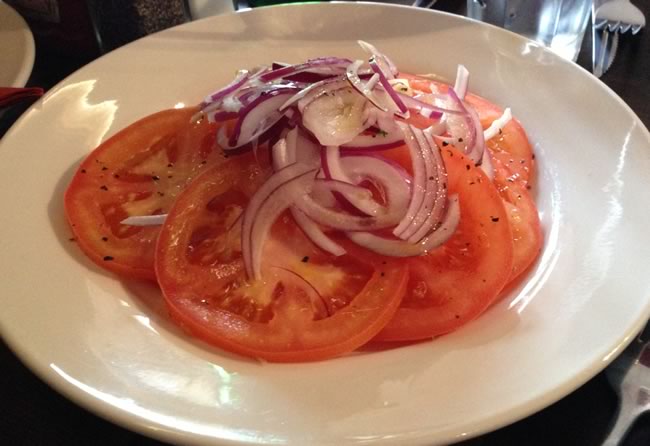
Elina strongly dislikes onions and tomatoes, so I think I was pretty safe from her stealing some of my salad.
Elina strongly dislikes onions and tomatoes, so I think I was pretty safe from her stealing some of my salad.
Last week, Paul Hopwood delivered a talk to the Humanist Society of West Yorkshire entitled “You Know Less Than You Think”.
Though, for the sake of those being busy, he included a more accurate title that went something along the lines of “you may or may not know more, less or the same as you may or may not think you know.”
It is a really interesting talk and one that he has previously given at Leeds Skeptics, as well as round the country. So interesting in fact that I actually went away from the event and read The Invisible Gorilla – one of the books Paul recommends in the talk.
I think what it comes down to is that Paul is just a really interesting guy. We went for a couple of drinks after the talk and settled in to some fascinating conversations – it was only realising I had to be at work in eight hours that made me call it a night.
If you missed it, don’t worry, you can see the version he gave to Leeds Skeptics online via Worfolk Lectures. Or, why not see it in person – Paul will be speaking at Sheffield Skeptics on 28 January!
Last week, we attended BettaKultcha for the first time.
It’s an idea that seems to have sprung up across the UK – the idea is that you have lots of speakers, usually at least a dozen, and they each get to speak for five minutes. They have twenty sides, and these automatically transition every 15 seconds – so you have to fit your talk around that!
This event was the first one they had held at Leeds Town Hall, and an audience of 100-150 people were probably there. Talks included competitive dominos, fashion blogging, things you can do your body in the name of art, pet psychics (mocking of) and many others. All in all, a really good night of entertainment.
These days, its trendy for companies to control the entire mobile stack – Apple, Blackberry, Nokia (until recently) and several other companies all make their own hardware and mobile OS, claiming that it provides a better user experience.
However, I have to wonder if this is always the case. As mobile becomes the dominant form for computer use (in many sectors, mobile use already exceeds desktop use, in others it is rapidly catching up), it may well be that the market matures in the same way that the PC market did.
Think back to before you knew what a computer was (I originally said before you were born, but we’re probably getting too old for that now). All the PC manufacturers produced their own operating system and shipped it with the computer. It was a nightmare, nothing worked with anything else and there was no consistency – you switched hardware, you had to switch software too.
Then a young man came along, named Bill Gates (and Paul Allen of course). He had the idea of an operating system that would work across everything. Thanks to that, today, you can buy whatever hardware you want, load Windows onto it and you have a consistent experience across all hardware configurations, and all your software works on it.
It can be argued that mobile is currently in a similar fragmentation at the moment. A recent report suggested that there were now 4,000 Android devices – and that was published in May and they’ve been growing since then. Add this to the number of Windows phones, iOS devices and many other smaller operating systems (Nokia still have a huge market share in the developer world, RIM are still in there too, Samsung have their own operating system, the list goes on) – that is a huge range of devices to support.
No wonder so many companies fail to provide a consistent mobile experience, or end up saying “we’re only going to support iOS.” It would help if everyone implemented web standards to the letter, but what we really need is a Windows equivalent for the mobile world.
In a few months, the Public Speaking World Championship qualifiers begin. Last year’s winner, Ryan Avery won with a talk entitled “Trust is a Must.” The talk combines superb use of language, a strong moral message, gestures, humour and many other techniques to form a phenomenal competition speech.
Trying to get ImageMagick and it’s PHP extension working on OS X Lion is a frustrating process. It will often fail and even if you try to configure it manually you may get an error like the following.
checking ImageMagick MagickWand API configuration program...
configure: error: not found. Please provide a path to MagickWand-config or Wand-config program.
First of all, install ImageMagick via MacPorts.
sudo port install ImageMagick
Now install the imagick PECL module.
sudo pecl install imagick
Very importantly however, make sure you specify the path when prompted, to be /opt/local, do not let it auto detect! Once this is done it should compile successfully and you will be prompted to add imagick.so to your php.ini file.
The sixth project in your Competent Communicator module is all about vocal variety. So I decided to do a retelling of an old classic, the one about the man who prays to god to save him from the flood, then goes on to ignore all the help god sends, expecting a miracle instead.
This worked well for the project as it allowed me to use a quiet slow voice when the man is praying, and a fast loud voice when his would-be rescuers are trying to convincing him to come to safety.
While I personally thought I was well beaten by one of our Distinguished Toastmasters, who gave a brilliant speech about how he was trying to play the blues harp (also known as a harmonica to those outside the trade, so I’m told), the voting went my way and I ended up adding another Best Speaker ribbon to my collection.
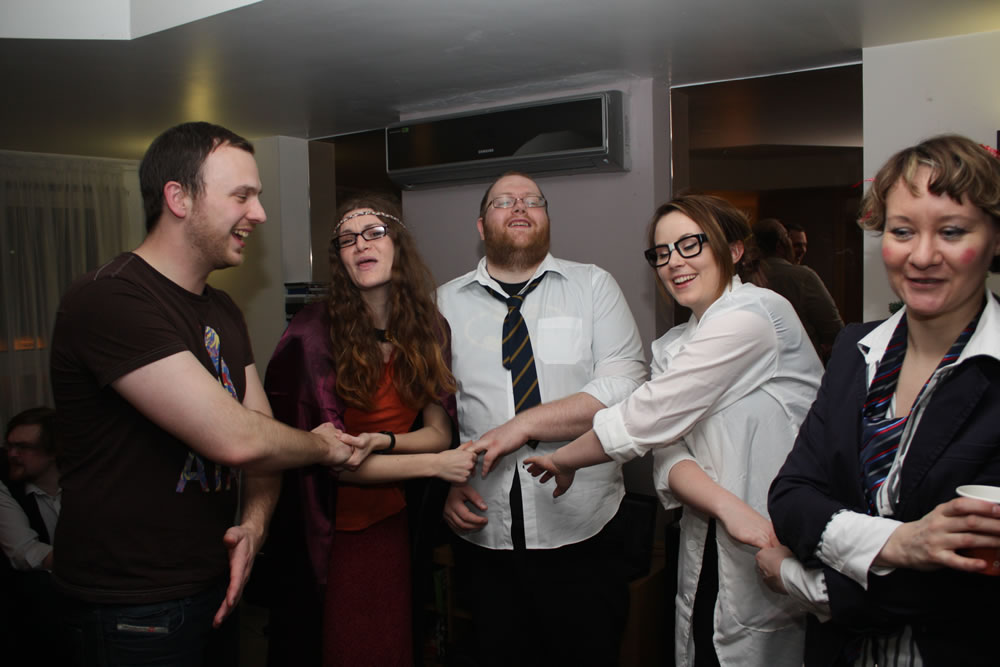
Turns out they’ve added two new things to Twister – a hands on the air result, and a “twister’s choice” result. It’s not like when we were young…
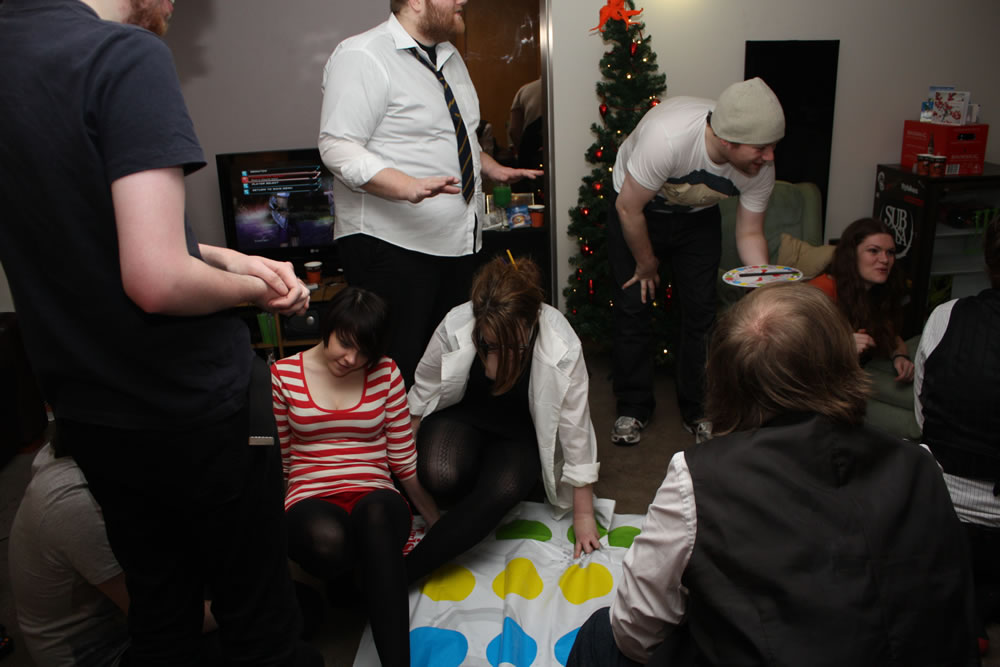
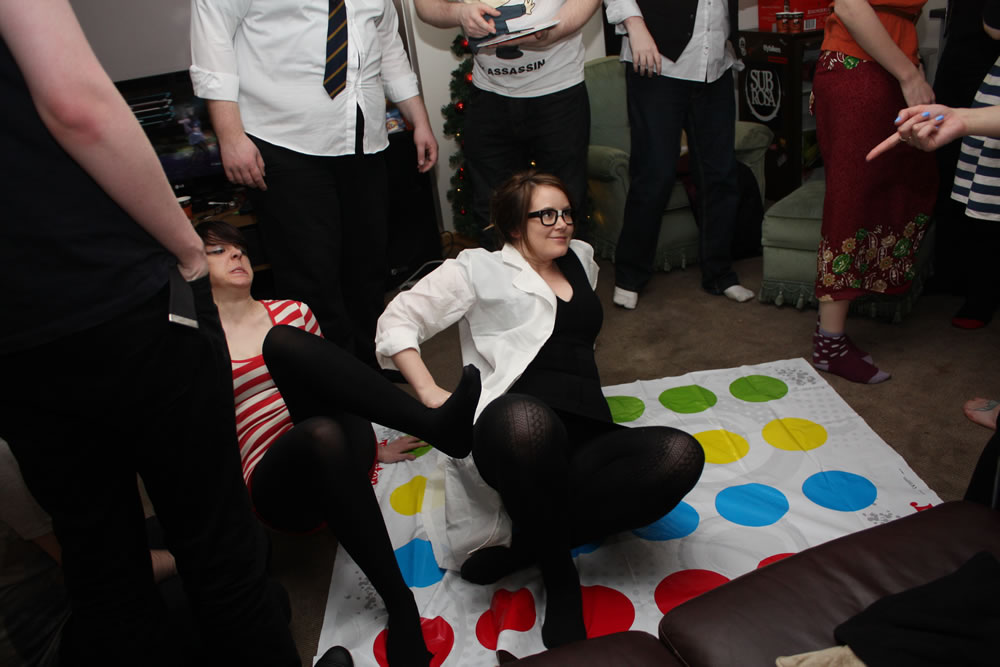
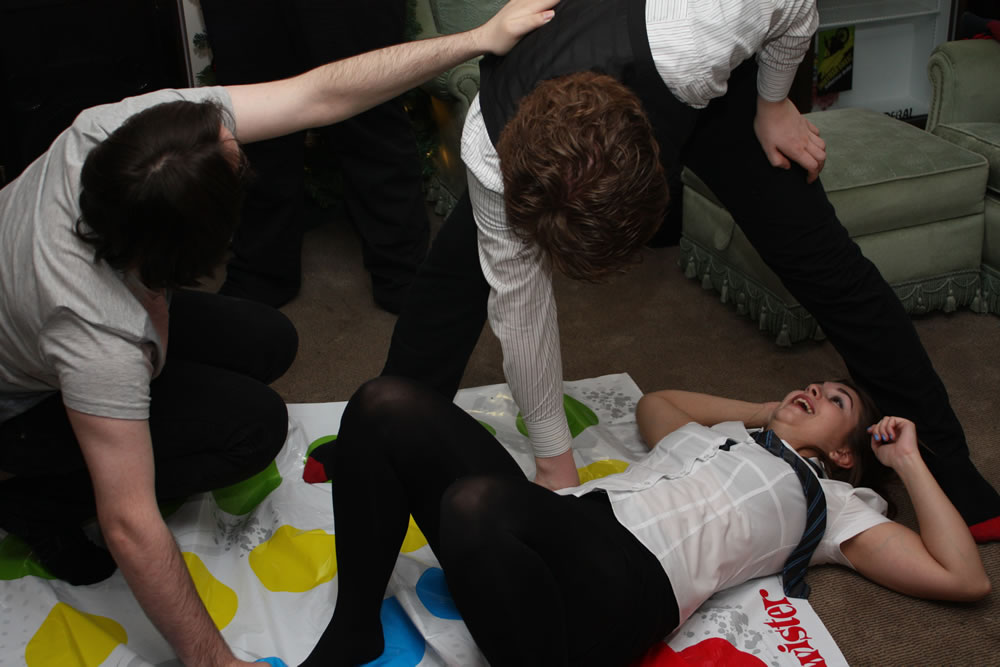
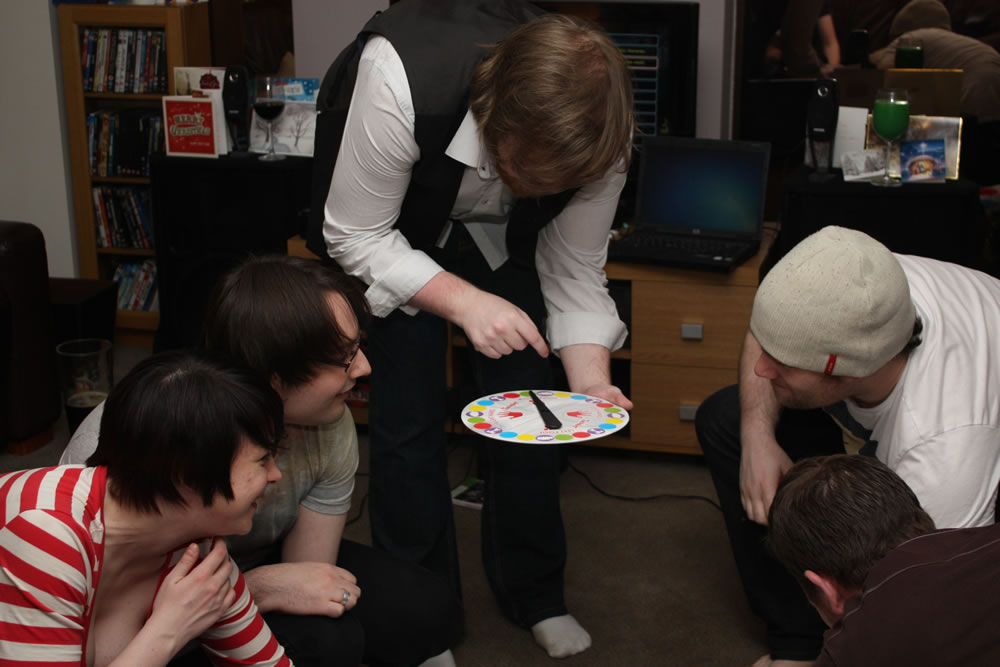
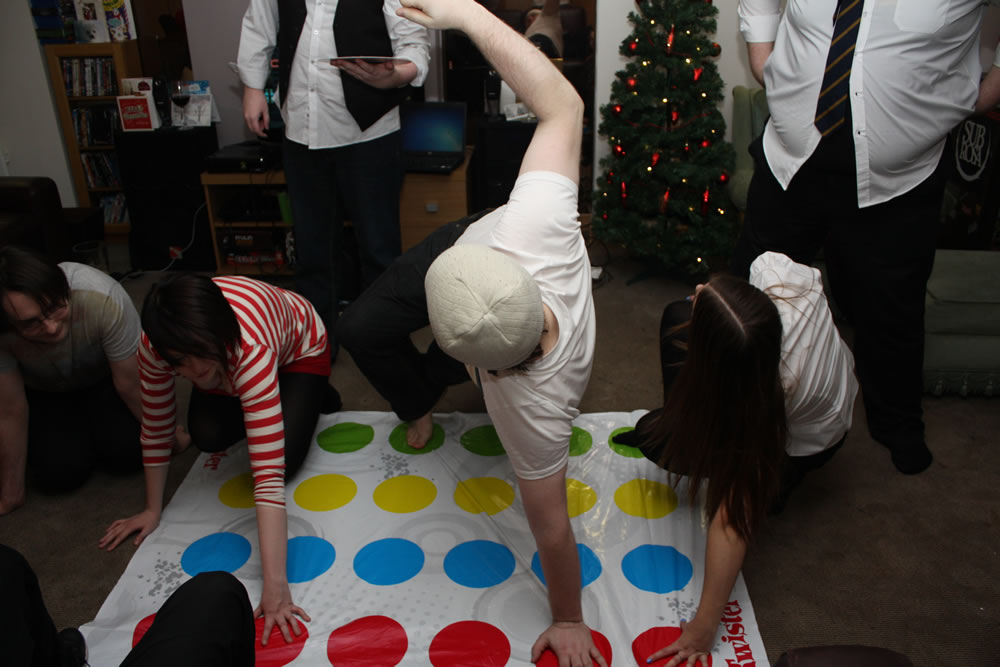
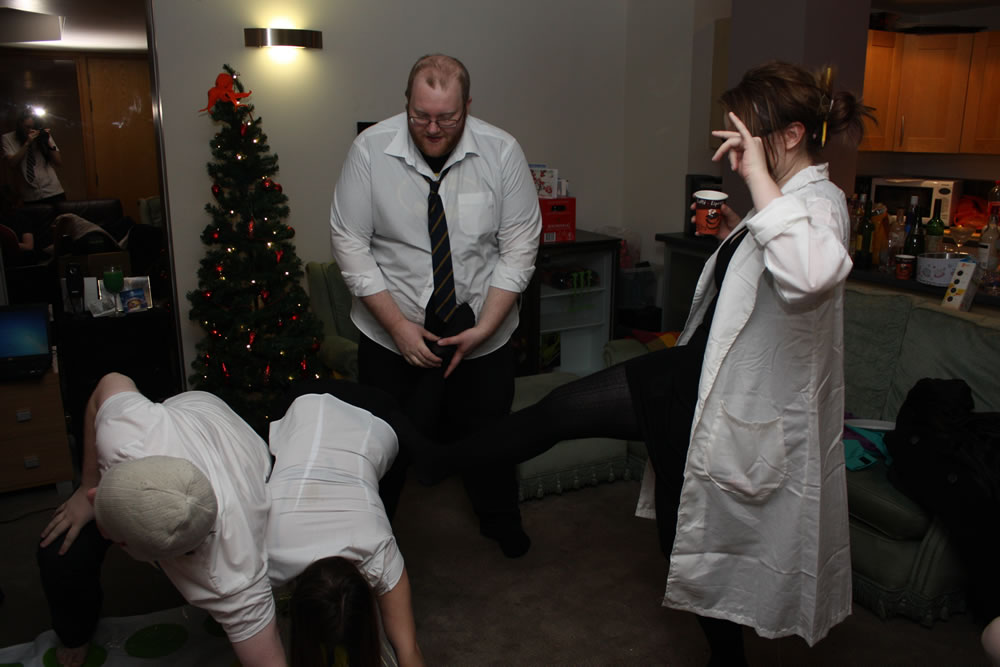

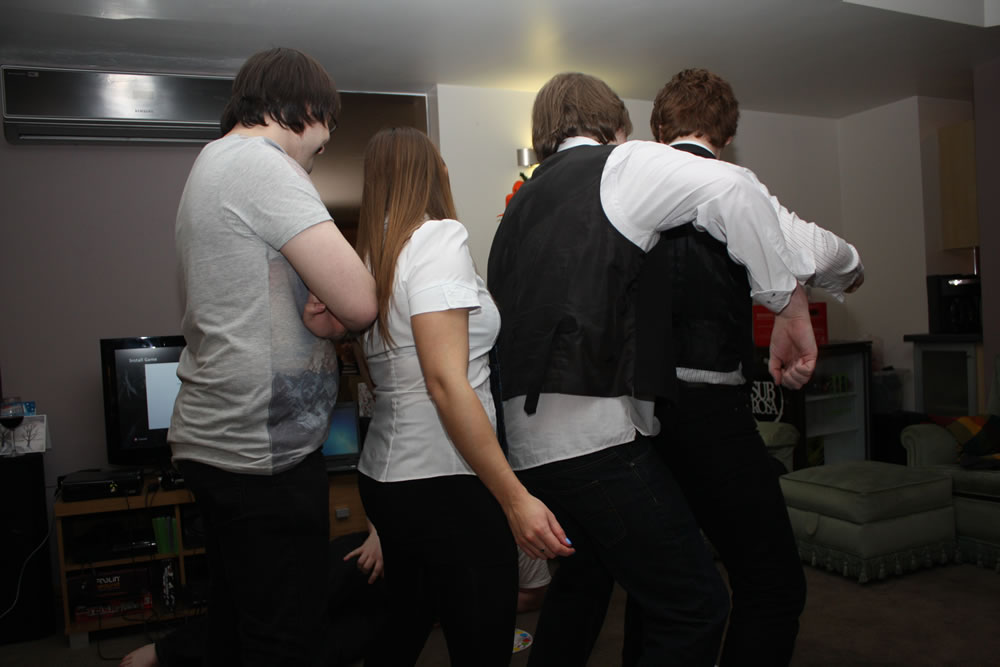
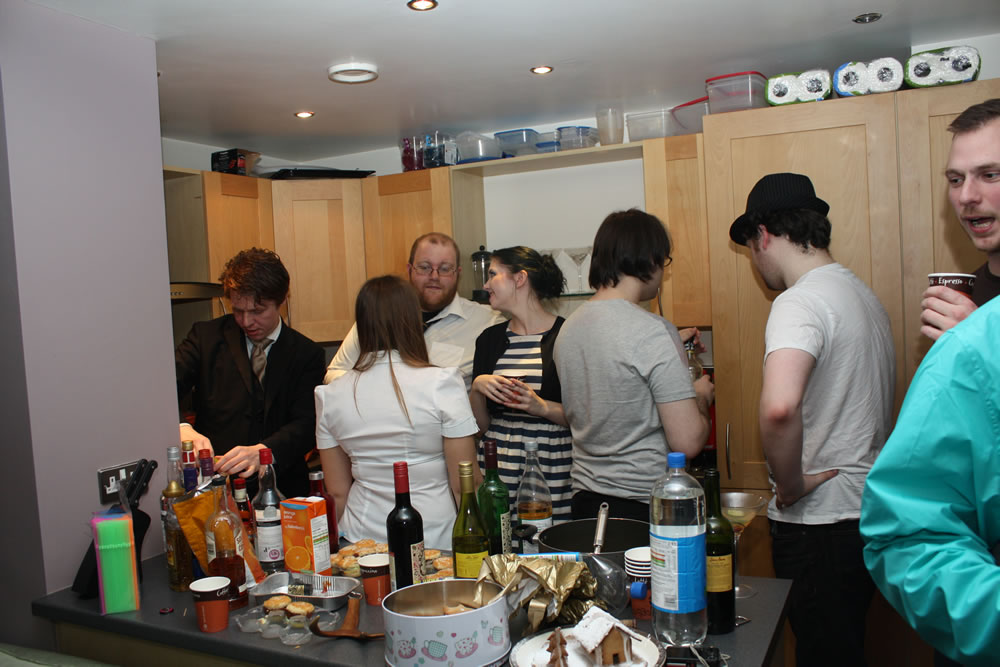
For the fifth year in a row, there was only one place to be to properly ring in the new year. We had cocktails, sausage roles and Twister!

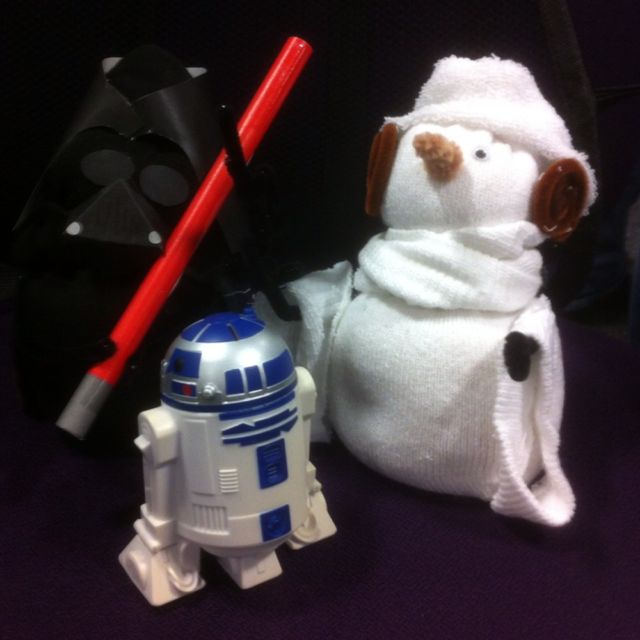
Recently, some of the great people got together at Sky Bet and auctioned off their hand made Christmas decorations – Princess Leia and Darth Vader sock snowmen – to raise money for the Humanist Action Group’s homeless programme. Brilliant idea!