Good and Evil in the Gospel Myth
March 25th, 2013 | Humanism
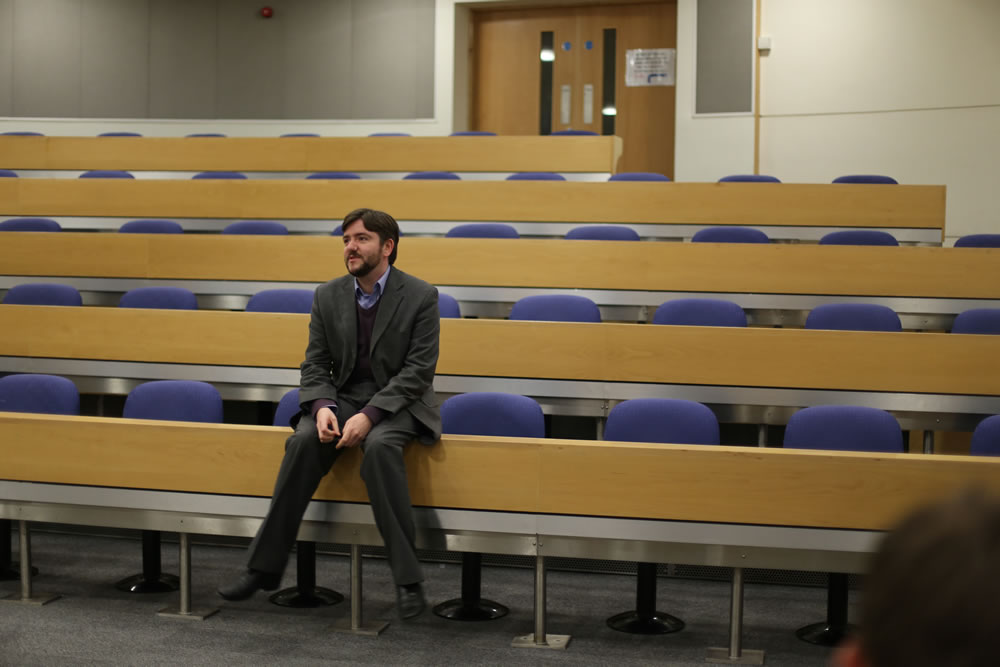
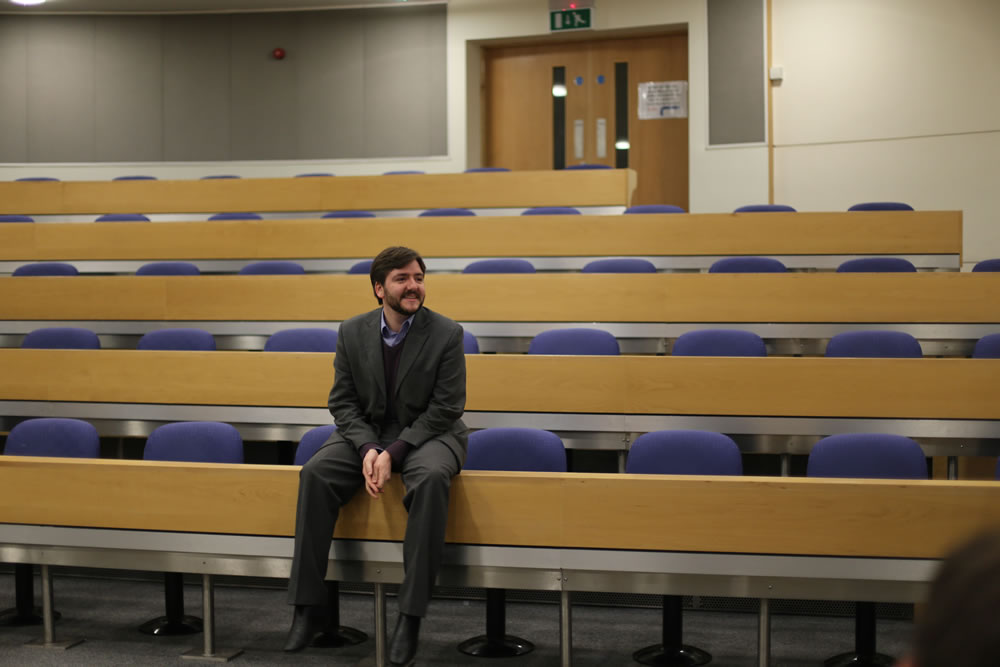
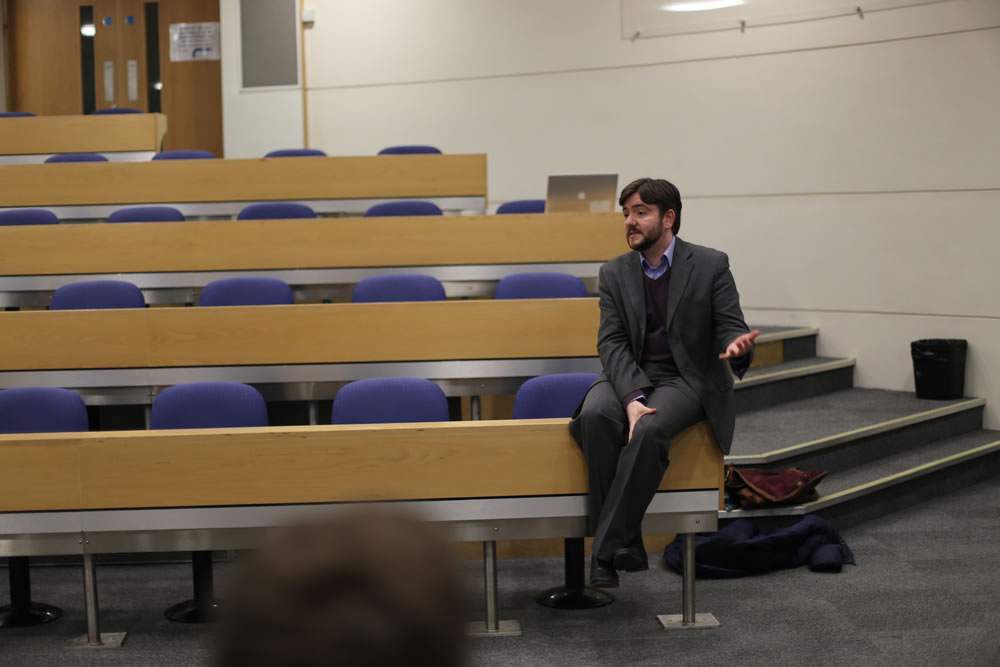
For the March meeting of the Humanist Society of West Yorkshire, Jim Hatfield presented a talk entitled “Good and Evil in the Gospel Myth”.




For the March meeting of the Humanist Society of West Yorkshire, Jim Hatfield presented a talk entitled “Good and Evil in the Gospel Myth”.
Recently, Leeds Engage hosted Andrew Copson, chief executive of the British Humanist Association. It was a good talk, as we would expect from Andrew, though it would have been nice to see more people there – I don’t think Leeds Engage spoke to Atheist Society as they had 25 people at an attend the night before, and only a few of us turned up to this.


Can a restaurant that only serves chicken and lamb produced a mixed grill? Yes, apparently they can.
While dining at Home Town Chinese Restaurant, we were going to order two soups, but the waiter recommended one would be enough. No wonder – I don’t think I could have finished that as a main course!


Last week, someone called Aston Merrygold came to visit the office. Apparently he is a member of the band JLS and is on Got To Dance, which I understand is a TV show. I might not have been too fussed, but apparently lots of people were.
My suggestion that we should get some guest scientists in didn’t seem to be a popular suggestion.
If you’ve tried to switch to a different Nvidia graphics driver on Ubuntu and suddenly found that X / Gnome will no longer load and all you have is a command line, you can fix it by switching back to the original driver.
jockey-text -l
jockey-text -e xorg:nvidia_current
These commands will show you a list of drivers available, and then activate the standard Nvidia driver.

The panorama function on my phone does not produce flattering results.
The Simpsons has entertained the world for a quarter of a century. Star Trek has become one of the biggest cultural phenomenons of the 20th century. But there is one TV franchise that has arguably eclipsed them all. That franchise, is Miami Vice creator Dick Wolf’s Law & Order.
While other glitzy shows such as CSI: Crime Scene Investigation focused on solving exciting crimes and interpersonal relationships, one man had the vision to predict that what people really wanted, was a show about the paperwork, procedure and bureaucracy of the justice system.
It’s interesting then, that so many people may not have heard of Law & Order, even fewer will have watched an episode – at least in comparison to The Simpsons, which everyone ever has seen.
But the figures don’t lie. In terms of longevity, Law & Order has provided a staying power that is arguable unmatched by anything else the TV studies of the United States have ever produced.
The Simpsons has produced 24 seasons, with no spin off shows. Even if you throw in Futurama, that only takes them to 28.
Star Trek produced three original series, seven of The Next Generation, seven of Deep Space Nine, seven of Voyager and five of Enterprise, as well as one animated series – giving them a total of 30.
Meanwhile, the Law & Order franchise has produced…
That makes a total of 46 seasons, with SVU still going, and that isn’t counting Law & Order: UK which has been going since 2009, and similar versions in Paris and Moscow as well.
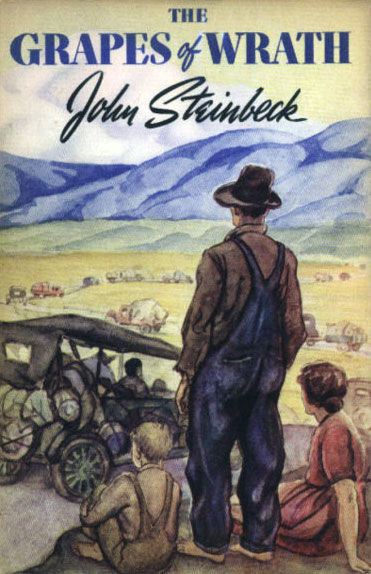
Having finished the very serious, adult and deep prose of J. K. Rowling’s Harry Potter series recently, I decided it was time to read something a bit more lighthearted. John Steinbeck’s The Grapes of Wrath seemed a good choice. I had already read Of Mice and Men, which is enjoyable and I would recommend if only so people get my references, and was eager to read his works further.
It’s considered Steinbeck’s seminal work, winning the Pulitzer Prize and being cited as a key reason for Steinbeck being awarded the Nobel Prize for Literature in 1962. It’s easy to see why – the powerful, touching and vivid description of people struggling through the Great Depression is one of the most moving texts I have ever read.
The book tells the family of the Joad family, who lose their farm in Oklahoma, and are forced to travel to California to find work, only to find the grass isn’t so green as they were lead to believe. Or, more accurately, that the grass is greener, but the machinery of society we have build up – the banks, the economics and the systems of government – prevent the poorest from walking on it.
Steinbeck’s vivid language paints a detailed picture of life during the Great Depression, providing a thought provoking insight to the suffering, without dwelling on it any longer than required. The monster of the system we have created is deconstructed in a way still relevant today. As the story goes on, you feel their frustration, their anger and the unfairness of their plight.
Like many for the Great Depression, the novel doesn’t have a happy ending. Or more accurately, an ending. It isn’t an unhappy one – just one without conclusion, as the family are left to continue to struggle on, without much food or money, and with winter on the way.
On a lighter note though, I have fallen in love with the name Rose of Sharon, pronounced Rosasharn. Definitely a contentor if I ever have a daughter.
I’m trained in first aid. I have a certificate to prove it and everything. There is a good chance you do too. If you haven’t, some people at your work will do – it’s a legal requirement.
I wonder what the evidence for its efficacy though.
Think about how much you remember from your first aid course. Probably very little. Indeed, in my experience speaking to first aid reps at various companies, they say they can remember very little from their course.
Even if they do remember something, those that do usually admit that when they were actually called on to deal with an accident, they were in such a panic that even though knowledge blanked from their mind. Given what we know about psychology, that is no surprise – unless you do this every day, you’re going to struggle with the pressure.
The one thing people do tend to remember is CPR, presumably because having to kiss a dummy seems rather strange and therefore sticks in the mind. This is unfortunate as CPR isn’t a particularly useful piece of first aid because the survival rates are so low, as I’ll go into detail about.
CPR is bad. If you need to give CPR, it means someone’s heart has stopped, so they’re probably going to die. In fact, as my first aid instructor explained, all you’re doing is keeping the meat warm until the paramedics get there. You probably won’t manage it, and even if you do, they will probably die in hospital as a result anyway. Survival rates from by standers giving CPR is 5%; you have a 1 in 20 chance of making it.
That isn’t because people aren’t trained to do CPR, it’s because when someone’s heart has stopped, they’re fucked. Even if you are in a hospital at the time, and a doctor is watching you, the odds are against you, and if a doctor isn’t watching, the unfavourable odds drop to 1 in 50.
My point isn’t that first aid isn’t useful – I think it is. But I think we need to teach it in a far more effective way. A way in which people come away with more than only one piece of knowledge, that probably won’t save anyone’s life anyway.
Ideally, we would teach it in schools so that everybody knows it too. Then hopefully at least one person will be calm enough to remember what they learned.