Chris Worfolk's Blog


The Black Swan

August 15th, 2014 | Books

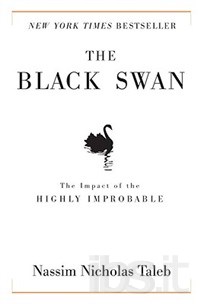
A number of books on probability I have read recently talk about Nassim Taleb’s book, The Black Swan: The Impact of the Highly Improbable.

Sometimes I wonder if some of the citations and due to the Black Swan meme. It is a great term to use for unexpected events. Capturing the phrase makes it more citable. However, that is not to take anything away from the book. Many have called it one of the most influential books of the past 50 years. The Nobel laureate Daniel Kahneman is quoted as saying

The Black Swan changed my view of how the world works

Interesting Taleb goes on a small rant about the Nobel Prize. He questions the validity of some of the winners (though this is increasingly looking correct to do so) and also quotes others who have suggested that the Nobel Prize was a PR stunt designed to put economics on the same step as the natural sciences. Of course, he has not won one yet…

Anyway, the premise of the book is that we often assume that we live in a world known as Mediocristan in which distribution is on a bell curve. Outliers can only go so far. Height for example, you can only deviate so far from the average. However, the great challenge for society is that we actually live in Extremistan, where outliers can deviate significantly. These are the unknown unknowns as Donald Rumsfeld would put it.

How we deal with them is a difficult one. They are the unpredictable, and therefore by their very nature, we cannot predict them. Rather, we need to be prepared to handle them when they inevitably do happen. Forget trying to predict the next outlier that is completely missed by our models and instead try to robust enough to cope when negative ones happen (as well as taking advantage of the positive ones).

The book also deals with human thought processes, in particular our need to turn everything into a narrative. Most skeptics will know that one of the problems with the world is that anecdotes are more easily accepted than data, which makes it so far to get the skeptical point of view across. The issue also causes a lot of bad thinking – we fit things into a narrative that simply do not belong in one.

It is however, something we can turn to our advantage when we recognise it. For example, when going over an unpleasant situation or memory, insert it into a narrative that makes it unavoidable. Also writing down your problems in a narrative can make you feel less guilty about them. Anyway, that is just a small aside.

One of the key messages that I think we should take from Taleb, is the same message that we can take from most of the books I have read recently – that our thinking is flawed, but by recognising those flaws and trying to spot the weakness we know are there, we can be a little less stupid.
The Black Swan

100 years of Tove Jansson

August 14th, 2014 | Distractions

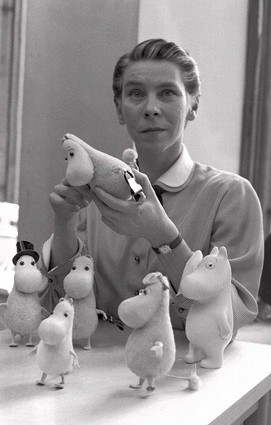
Tove_Jansson

Last Saturday was the 100th anniversary of the birth of Tove Jansson. She died in 2001 and is best known for creating The Moomins. In 1966, she received Hans Christian Andersen Medal for it. She also wrote an array of adult novels, but that kind of thing wouldn’t really interest me.

She also drew quite a few cartoons mocking Hilter, so it’s nice to know that not everyone in Finland was a collaborator ;).

The Moomins were originally comic strips, but if you are from the UK, you probably remember them from this animated series:

If you are ever on the south west coast of Finland, you may want to visit Moomin World. It is in Turku, which is two hours drive from Helsinki. Be ware though that it is only open in summer – which is quite a limited period in Finland. Though they also open briefly in the Christmas period too.

To celebrate her birthday they did a special event that included discounts on loads of stuff including free entry for people over 100.

Robin Williams, 1951-2014

August 13th, 2014 | Foundation, News

robin-williams

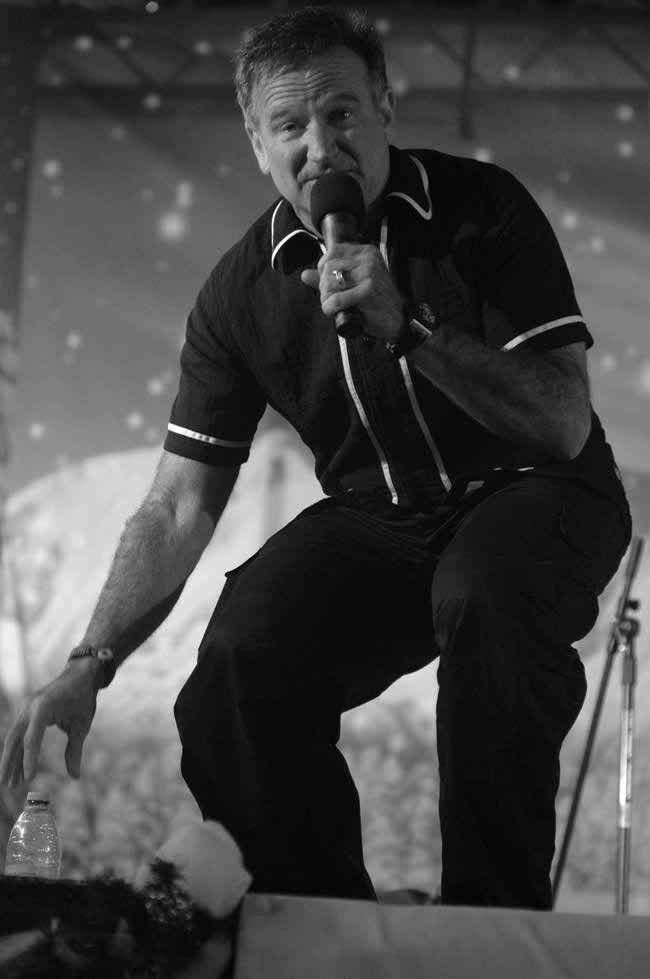
I, like many people, was saddened to hear about the apparent suicide of Robin Williams. Loved by many for his work as an actor in Aladdin, Jumanji, Dead Poets Society, Good Morning Vietnam, Patch Adams, Flubber and above all here in the UK – Mrs. Doubtfire. This is to list just a few of the films he has starred in and to say nothing of his stand-up career.

Williams death has, at least briefly, shed a light on mental health issues in the wider public consciousness. I think this is a good thing. The more light we can bring to it, the better.

However, this only has value if we can capitalise on this attention and use it to make a positive difference for society. Which is why I am going to shamelessly use this opportunity to ask you to donate to Anxiety Leeds. You only get these opportunities every so often, and my pride is definitely less important than working to prevent more people who are struggling with mental health issues trying to take their own life.

At Anxiety Leeds we run a monthly peer-support group. To be most effective, we need to move to fortnightly. We have the volunteers ready, but currently we lack the funds to do this. Can you help us?

In defence of social science

August 12th, 2014 | Science, Thoughts

Like everyone with a degree in real science (that is I have a Bachelor of Science in a subject that does not contain the word “science” in the title), I have often mocked social sciences. The “soft” sciences. You know, the ones that are not real science.

I think that perhaps it is time for us to stop such mocking though.

I am not sure whether we actually believe our own jokes or not. I imagine that we do; that a lot of scientists actually think social science is a load of nonsense.

There are some understandable reasons for this. Physics gives us very definite answers. Even in the days of quantum physics, which you could argue have introduced greater uncertainty, our body of knowledge and accuracy of predictions has only increased. In comparison, psychology and sociology are not able to give us the definite answers or universal rules that the natural sciences bring to the table.

However, there are a number of good reasons for this. First of all, they are new. While you can trace anything back far enough if you loosen the definition, psychology as we know today really only began 130 years ago. In comparison to the thousands of years physics has had, it is a baby. It has not had time to develop the body of knowledge that the natural sciences have.

Consider that it took Newton building on hundreds of years of research to bring together a unified theory of physics into a working body of knowledge. In his own words:

If I have seen further it is by standing on the shoulders of giants.

Similarly another few centuries for Einstein to bring together relatively, with quantum being even newer – and these are summations were are only just building. In may be that there simply has not been time yet for psychology to to have their scientist who brings it all together.

Or perhaps there may be no universally applicable laws, which brings me on to my second reason – social science might just be a lot more complicated than natural science! That is perhaps heretical to suggest, but I think I can make a case for it.

Natural science is very difficult. There are huge equations, our brains are not designed to deal with imaging the sub-atomic level, it is incredibly difficult to measure, etc. Yet we have managed to work out the composition of stars millions of light years away. It is doable.

Social science on the other hand, is not rocket science. It is arguably a lot harder! It might be difficult to work out the composition of fuel you need in a rocket, especially without blowing yourself up, but once you have done it, it is done. The laws of chemistry hold and you can almost guarantee the same result every time.

Not so with social science. The brain is such a complex machine that everyone is slightly, or significantly, different. You cannot predict what a person will do. And that is on the micro level! Scale that up the macro level, trying to make forecasts for global politics or economics, and you have to try and model the behaviour of 7,000,000,000 individuals that make almost entirely unpredictable decisions. That is difficult.

But why do we need to take social sciences more seriously?

I would argue that they are perhaps more important. Few people would deny that being able to bring back rocks from Mars is awesome. I am sure it is also valuable for scientists. However, consider the benefits of focusing on psychological research.

We, humans, are rubbish at making decisions. We use common sense, which is a collection of biases that we think is real knowledge. We build a world model that only somewhat reflects reality. When something does not fit our worldview, we ignore it. We form beliefs and then justify them. We are subconsciously prejudice and we do not even know it.

Now imagine how much better hard science we could do if we learned to spot, mediate and perhaps even remove these issues. Imagine the happier, more peaceful, progressive societies we could live in once we properly understand why people make all the stupid decisions that cause problems in the world. My guess, is that it would be a massive improvement.

I don’t mean to wine on about it…

August 11th, 2014 | Science

…but wine tasting it a load of nonsense.

I will point out at this point that I do know how whine is spelt. However, as this is a post about wine, I have deliberately used an out-of-context spelling for this purpose. I realise it is a shame to have to point this out, but it will save some of you from having to write a tedious comment.

Anyway…

In 2012 I wrote about how people could not tell the difference between cheap and expensive wine. Multiple studies have now shown this. But what about wine experts? Surely they are good at determining whether a wine is a good one or not?

Apparently not, according to Robert Hodgson, writing in the Journal of Wine Economics, according to The Guardian. Most judges cannot consistently tell if a wine is good or not, and the judges that manage it vary from year to year – no judge is able to be consistent. It seems that even the experts are not able to tell whether a wine is any good or not.

Boomerang

August 10th, 2014 | Books

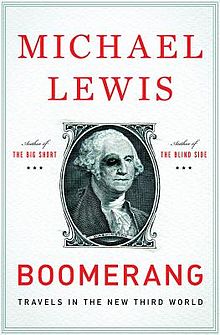
Boomerang is almost a follow-up book to Michael Lewis’s The Big Short, looking at the fall out of the global recession across the rest of the world. And by the “rest of the world”, it is basically Europe.

He first looks at Iceland in which he talks to a fisherman that became an investment banker. The whole financial crises can be summed up in the following conversation.

“You spend seven years learning to be a fisherman?” “Yes.” “And after that, you spent months training at the feet of a master before you felt you were capable?” “Yes.” “So why did you think you could be an investment banker without any training?”

He then moves on to Greece and talks about how they got into their financial mess. He claims that almost nobody on Greece pays their taxes, every government official takes bribes and that public employees have completely overrun the government to the point where they now get paid two or three times what any sensible country would pay them. I do not know how true all of that is. He finishes up by discussing Ireland.

It is an interesting, and quite a concise book which made it pleasurable to read. Some of it seems rather shallow though. How much can you rely on the stereotypes of Icelandic and Greek people that are put forward in the book? Probably less than our narrative-over-statistics obsessed minds would allow by default. Especially when he begins to talk about the German’s apparent love of shit. I even read what I would interpret as a Holocaust joke. Several times.

Further, he seems to contradict his earlier writing. The final part of the book talks about how much Germany lost in the sub-prime mortgage collapse. In The Big Short he talks about how American banks created credit default swaps that they did not really understand and how one of the people who saw it coming was Greg Lippmann from Deutsche Bank. In Boomerang he proposes the exact opposite – that the American banks knew exactly what they were doing in selling worthless assets to German banks.

In fact, the more I think about it, the more I think that what Michael Lewis has written in this book is actually complete bollocks. The collective lesson I took from Silver, Watts, Kahneman and Taleb is that the financial crisis was too complicated to predict, but humans have a tendency to add a narrative after to try and explain it to themselves in simple terms. Then Lewis comes along and says the financial crisis happens because the Greeks are lazy, the Irish are stupid and the Germans have a shit-fetish.

Boomerang-Lewis-Michael

The Last Hero

August 9th, 2014 | Books

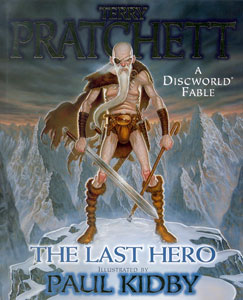
Leonard of Quirm, Rincewind, Captain Carrot, and a chance to save the world! What more could you want from a Discworld novel? Plus a little bit of Death too. I really enjoyed The Last Hero. It did not have too much substance to it, but it was only half the length of a typical Discworld novel and the short format worked really well for it.

The-last-hero

Sense and Sensibility

August 8th, 2014 | Books

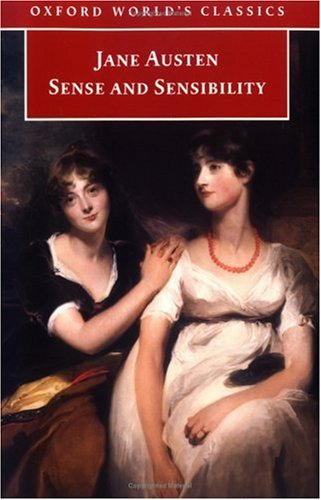
Ah, the problems of eighteenth century women, how plentiful they are. Luckily, though I hate to spoil it for you all, everyone ends up with a husband. So that’s nice.

sense and sensibility

This Land Is Mine

August 7th, 2014 | Video

While the Nordics should be applauded for there for their peaceful egalitarian societies, they do have the added advantage that nobody else really wants to live there.

Running socks

August 6th, 2014 | Reviews

Recently I have been trying out various running socks to try and stop my toes blistering.

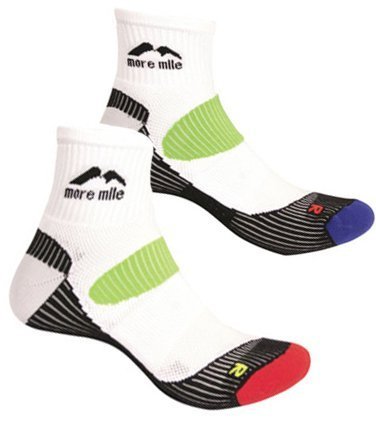
More Mile

Very impressed with these. They provide a lot of cushioning for my feet. I did not notice the difference until I went back to socks without that cushion and they felt a lot rougher.

They don’t entirely stop my toes from blistering, but they’re an improvement on regular socks.

more-mile

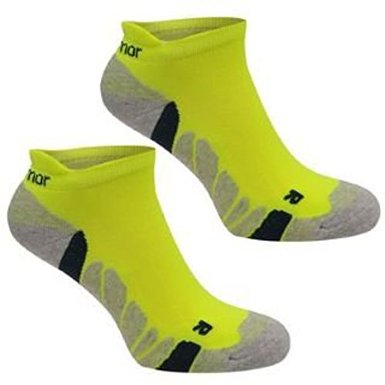
Karrimor

These were rubbish. They did not feel or produce results any better than just a regular cotton socks; they might well have been worse.

karrimor

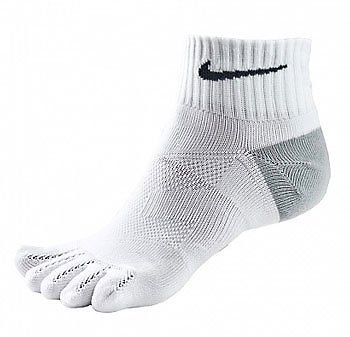
Nike

These were special toe-socks (they had individual toe holes) to stop them rubbing together. This seems to have produced good results on the 5km I did today, however they felt quite rough on the rest of my feet, particularly the balls of my foot, so without the padding of the others I am not sure I prefer them. They are also quite difficult to get on.

nike