Chris Worfolk's Blog


Collegiate Church of St Mary

August 23rd, 2014 | Travel

On our way to Cardiff we dropped by Warwick to see Collegiate Church of St Mary. It is a pretty cool church, most notable because you can go up the church tower and get a great view over Warwick from the top. We also had chance to grab lunch with Kat while down there and it was great to catch up. Oh how fast life moves these days…

IMG_5172 IMG_5170 IMG_5169 IMG_5168 IMG_5167 IMG_5166

Temple Newsam farm

August 22nd, 2014 | Life, Photos

In July we went to a Finnish picnic at Temple Newsam. We got there early so that we had time to go round the farm first. It has all changed since I was a kid – you have to pay to get in now! However, you can now milk a fake cow.

IMG_4666 IMG_4688 IMG_4697 IMG_4701 IMG_4703 IMG_4709 IMG_4712 IMG_4728 IMG_4754 IMG_4763 IMG_4771

Bear soup

August 21st, 2014 | Photos

bear-soup

Made with real bear.

It is actually quite a good meat to eat as they are not factory farmed and only killed to control the population (in Finland, I can’t speak for other countries).

How I Escaped My Certain Fate

August 20th, 2014 | Books

I was recommended this book, and by recommend I mean that somebody asked me if I had read it and I decided to change the answer from “no” to “yes”. However, I did not really know what it was about and the description of the book was pretty vague.

“The bestselling book by acclaimed stand-up comedian Stewart Lee revealing the inside workings of his award-winning act.”

There is no gentle introduction either, you are left thinking “what is this?” Lee just jumps straight in to an essay describing his early career and the rise of Alternative Comedy. Not that it is not interesting, I just did not really know what was going on.

Eventually it settles down to a mixture of describing his career and transcripts from his sets, which he has extensively annotated. So extensively that at times you feel the book is almost entirely written in footnotes. Which is good because otherwise I am just paying to read the jokes that I have already paid to see on DVD.

Comedy is clearly a small world. I lost count of the number of household stars that Lee discusses having being on the same bill as, or run into, or been bitter about playing the same club as to then see them rise to arenas. Ricky Gervais in particular, whose style regularly gets confused with Lee’s. This is completely unjust as it was Gervais that was inspired by Lee, and anyway, Lee is fairly open about the fact that he ripped his style of Johnny Vegas.

The book covers three of his sets in detail – Stand-Up Comedian, 90s Comedian and 41st Best Comedian Ever. It was enjoyable to re-read the transcripts for two of them. However, I have not seen 90s Comedian, and so without knowing the timing and intonation, most of the humour is lost. With the other two, you can replay Lee’s voice though the text as you read (or at least you can if you have seen the sets as many times as I have) and thereby preserve the humour.

how-i-escaped-my-certain-fate

The Amazing Maurice and his Educated Rodents

August 19th, 2014 | Books

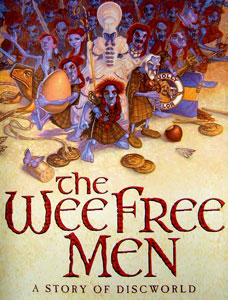
The Amazing Maurice is the first Discworld novel that is aimed at children. When that actually translates into texts, there is very little difference. The balance of jokes is perhaps more targeted at children than adults, but there was still plenty in there that I found entertaining and funny.

What did change was that even though it is set in the Discworld universe, you do not need to know anything about Discworld or have read the previous novels to be able to fully enjoy this one.

The-amazing-maurice-and-his-educated-rodents

All Quiet on the Western Front

August 18th, 2014 | Books

I had seen the film a decade or so ago (probably on VHS, that is how long ago it was), but with the 100th anniversary of theGreat War arriving, I decided I would read the original novel by Erich Maria Remarque.

It turns out that the war was pretty horrible.

It was not the shocking moments of horror that you might encounter when watching Roman Polanski’s The Pianist. It was the relentless horror, sometimes sparse in the detail, but the fact that you can gloss over such issues, reflects the nightmare of trench warfare. Other times the details are not spared. Of course we all know it was horrible, but simultaneously cannot imagine what it was really like; so such attempts are probably useful.

It would be nice to think we had learned our lesson. Of course, that probably is not the case. Even aside from the two world wars, Nassim Taleb wrote in The Black Swan that after the huge war that raged across the whole of Europe, people presumed we would have realised war was a stupid idea and would never do it again – that was the Napoleonic Wars.

Anyway, back on the book. I knew the ending from the film, so the impact was not as powerful as it could have been. Nevertheless, it is still a bold one.

All Quiet in the Western Front

The Believing Brain

August 17th, 2014 | Books

Michael Shermer is founder of The Skeptics Society and psychology researcher. The Believing Brain brings together much of his research over the past few decades.

Shermer’s take home message is to do with how we form beliefs. Namely, that we form our beliefs first, and then work out what evidence supports them. This is not the way we like to think we make decisions. We like to think that we gather the evidence, weigh it up, then make a decision. However, there is good evidence that we do not.

“The brain will almost always find ways to support what we want to believe, so we should be especially skeptical of things we want to believe.”

That is not actually an exact quote, but I think it is roughly it.

Evolution has given us pattern-detecting brain because false positives are far less harmful than false negatives. This leads us to see patterns that are not there.

This is true even of exaggerated patterns. For example birds will prefer to sit on eggs with even more pronounced patterns than they are supposed to have. Shermer suggests this is also true of dating. Wearing high heals extends the legs of women, so men’s brains are tricking into thinking they are more attractive. Similarly women like men with broad shoulders and who are tall, so platform heals and shoulder pads might help.

We are also predisposed to think there is an agency behind everything. These innate evolutionary traits of patternicity and agenticity explain why so many of us are susceptible to believing there is a creator, even though there is no evidence for this.

He goes on to discuss the idea of SETI as a religion. People believe in it, even though there is no evidence for it. To be fair to him, he does go on to explain in detail why SETI is different from a religion, however I still do not entirely agree with the comparison. SETI is at least consistent with a naturalist world view and is therefore a plausible theory that we are investigating, rather than believing in.

He spends a chapter making the case that conservatives are not that bad. But then he is one. However, he makes a good case of it being important. We need a system to regulate altruism and freeloaders and both conservative and liberal agendas can do this. He also points out a lot of evidence for egalitarianism and communism do not work, hence why we need such agendas.

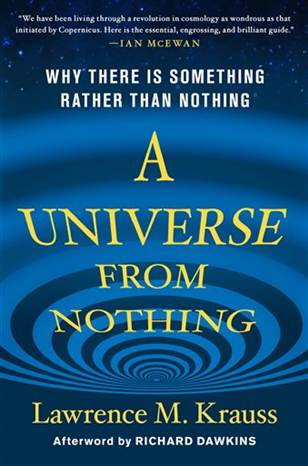
The final few chapters of the book look at the development of the scientific method and how it can help to overcome the biases and failings of our believing brains. This includes a discussion of how the universe was created. It feels a bit out of place in what is essentially a psychology book, as it will probably become out-of-date independently of the rest of the book’s content. Most of it I knew, but it was an interesting re-cap none the less.

Overall, it is definitely worth a read, offering some powerful explanations for why people believe what they believe and its implications for how we live our lives and structure our society.

the_believing_brain

Self-Made Man

August 16th, 2014 | Books

In Self-Made Man: My Year Disguised as a Man, Norah Vincent disguises herself as man to experience what it is like living as a different gender. Throughout the book she discusses her experiences, joining a bowling team, dating, having a job, going on a men’s retreat and even spending time in a monastery.

I would say that what she found was fairly predictable. However, I am aware that I probably think that because I am a man and thus have been in the male-culture she wanted to experience all my life. Of course, there is a degree of stereotype to what she finds, but there is probably a lot of truth that men are more emotionally distant from each other, and while women feel their rights and responsibilities are oppressed, men feel oppressed by the responsibilities of having those rights and responsibilities.

I struggled to fully identify with many of the characters in the book however. I do not think I have it has bad as those. If I have an emotional problem, I can talk about it with Elina, my parents or my friends. To an a limited extend perhaps, but a limit that far exceeds the emotionally-bottled-up characters that Norah’s alter ego Ned encounters during his research.

At the end of the book, Norah concludes that she is glad to be a woman. However, it is probably impossible to separate the strain of living in a man’s world from the strain of masking her own identity with that of Ned’s, so drawing much conclusion from that is difficult.

In the end, it comes down to what most sensible people know already. Both genders have problems. Both genders suffer inequality in different areas, some more than others. Working to reduce inequality across everyone will be mutually beneficial for everyone – fighting for women’s issues makes the world better for me, and fighting for men’s issues makes the world better for women. We can all win together.

Self-Made Man

The Black Swan

August 15th, 2014 | Books

A number of books on probability I have read recently talk about Nassim Taleb’s book, The Black Swan: The Impact of the Highly Improbable.

Sometimes I wonder if some of the citations and due to the Black Swan meme. It is a great term to use for unexpected events. Capturing the phrase makes it more citable. However, that is not to take anything away from the book. Many have called it one of the most influential books of the past 50 years. The Nobel laureate Daniel Kahneman is quoted as saying

The Black Swan changed my view of how the world works

Interesting Taleb goes on a small rant about the Nobel Prize. He questions the validity of some of the winners (though this is increasingly looking correct to do so) and also quotes others who have suggested that the Nobel Prize was a PR stunt designed to put economics on the same step as the natural sciences. Of course, he has not won one yet…

Anyway, the premise of the book is that we often assume that we live in a world known as Mediocristan in which distribution is on a bell curve. Outliers can only go so far. Height for example, you can only deviate so far from the average. However, the great challenge for society is that we actually live in Extremistan, where outliers can deviate significantly. These are the unknown unknowns as Donald Rumsfeld would put it.

How we deal with them is a difficult one. They are the unpredictable, and therefore by their very nature, we cannot predict them. Rather, we need to be prepared to handle them when they inevitably do happen. Forget trying to predict the next outlier that is completely missed by our models and instead try to robust enough to cope when negative ones happen (as well as taking advantage of the positive ones).

The book also deals with human thought processes, in particular our need to turn everything into a narrative. Most skeptics will know that one of the problems with the world is that anecdotes are more easily accepted than data, which makes it so far to get the skeptical point of view across. The issue also causes a lot of bad thinking – we fit things into a narrative that simply do not belong in one.

It is however, something we can turn to our advantage when we recognise it. For example, when going over an unpleasant situation or memory, insert it into a narrative that makes it unavoidable. Also writing down your problems in a narrative can make you feel less guilty about them. Anyway, that is just a small aside.

One of the key messages that I think we should take from Taleb, is the same message that we can take from most of the books I have read recently – that our thinking is flawed, but by recognising those flaws and trying to spot the weakness we know are there, we can be a little less stupid.

The Black Swan

100 years of Tove Jansson

August 14th, 2014 | Distractions

Tove_Jansson

Last Saturday was the 100th anniversary of the birth of Tove Jansson. She died in 2001 and is best known for creating The Moomins. In 1966, she received Hans Christian Andersen Medal for it. She also wrote an array of adult novels, but that kind of thing wouldn’t really interest me.

She also drew quite a few cartoons mocking Hilter, so it’s nice to know that not everyone in Finland was a collaborator ;).

The Moomins were originally comic strips, but if you are from the UK, you probably remember them from this animated series:

If you are ever on the south west coast of Finland, you may want to visit Moomin World. It is in Turku, which is two hours drive from Helsinki. Be ware though that it is only open in summer – which is quite a limited period in Finland. Though they also open briefly in the Christmas period too.

To celebrate her birthday they did a special event that included discounts on loads of stuff including free entry for people over 100.