I assume this video is for me…
October 26th, 2015 | Video
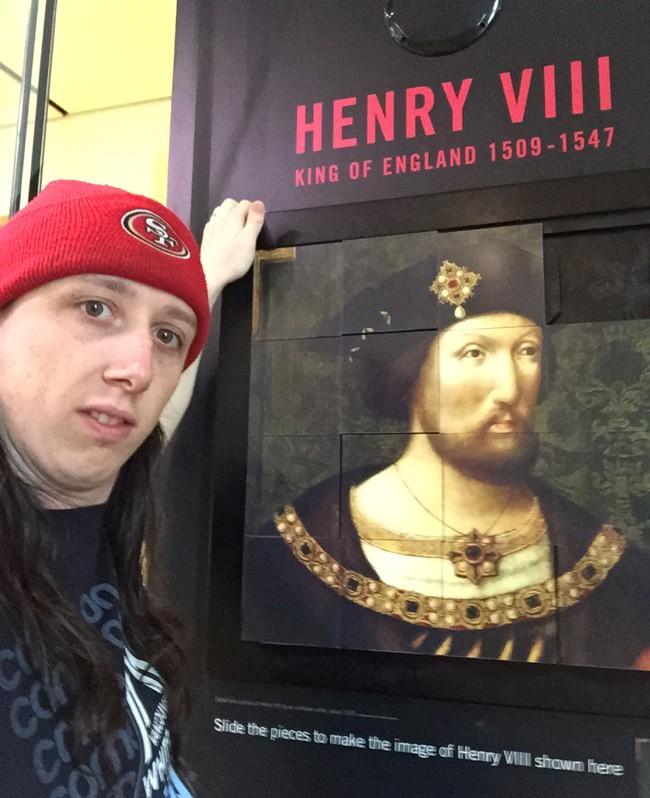
It has bee ages since I have done a sliding puzzle, but thanks to the days when I was forced to use Windows Vista, which included a little puzzle on the sidebar, I was able to re-arrange Henry VIII’s face.
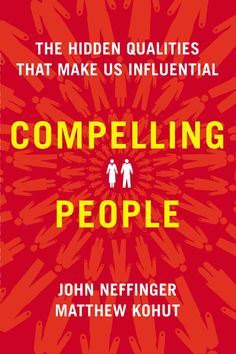
Compelling People: The Hidden Qualities That Make Us Influential is a book by John Neffinger and Matthew Kohut. It looks at what makes particular people, such as state leaders, the persuasive and charismatic people they are.
It claims to draw on the latest scientific evidence, though there do not seem to be any inline citations and the authors are writers and coaches rather than academics. That does not mean there is no good stuff in here – it is just difficult to know.
They put forward the idea that a charismatic person is one who projects strength and warmth. Strength is the ability to get stuff done and warmth is the ability to share someone’s feelings. The top leaders are able to do both.
Stereotypes play a role. Men are seen as stronger whereas women are seen as warmer. Luckily though, character is more important than physical characteristics, so you can soon overwrite these biases.
Lots of little clues project strength. Having your hands in fists or out flat. Vocally, be direct, sure of yourself, and avoid being too polite. In men, a low voice is strong and attractive. You can use method activating to set the tone of the conversation. For example, when I am reviewing restaurant food, I like pretend I am Paul Hollywood, and it makes it a lot easier to say blunt and honest things.
You can apply these things in your prep. Lets say for example that you are about to give a speech. As you prepare to go on stage, ensure you stand tall and smile. This will carry through into the presentation.
Another kind of strength is sated strength. This is when you’re so strong you don’t need to show it. Picture Steve Jobs for example, spread out of a couch, not giving a shit about what anyone thinks because he is the head of Apple. This is a world away from the sharp-suited kind of strength, but rather displays strength in a warm and casual way. It can backfire though – think Mark Zuckerberg turning up at his investor meetings in a hoodie and trainers. People began to question his leadership.
Similarly, different things project warmth. Tilting your head to the side. If you have a local accent, that can help project genuineness. Warmth is very easy to lose so be careful. To maintain trust ensure you do not lean away, cross your arms or touch your face.
Clothing can be a mine field too. Generally smart black clothing presents strength and casual white clothing projects warmth. However, clothing also affects how you feel, so if you want to feel confident and strong, a suit may not be the best play if you feel uncomfortable in it.
Smiling is important. You have to do it right. There is a big difference between a fake smile and a Duchenne smile, which involves using your whole face. Smiling makes other people smile, which makes them feel happy.
They also touch on a few areas that are controversial, public-speaking wise. They recommend using the magic ball hand position (put your hands as if you are cradling a ball around your belly button). I often get told off for this at Toastmasters. Similarly, we discourage the use of filler words. Neffinger and Kohut point out that they have their place as it signals to the audience you are not done.
When it is time to apply the persuasion, you need to identify with your audience and emphasise with them. The trick is to get yourself inside an imaginary circle with them, and get the opposition on the outside. Obama is very good at this when talking about gun control. He acknowledges that people have the right to bare arms (a nod to the opposition) before pointing out that responsible gun owners support him in some controls (get everyone inside the circle) and it is just the NRA that want everyone carrying automatic weapons (push the opposition outside).
The old saying “ask for money, get advice; ask for advice, get money” is also relevant. By deferring to people and making them feel important and knowledgeable, you are more likely to win their support. In contrast, once you begin having an argument with someone, persuasion ends.
Two topics the book ends with are both nice examples. The first is “it is a leader’s responsibly to define reality”. This came across strongly in Walter Isaacson’s biograpbhy of Steve Jobs. Jobs redefined the industry by insisting it would be that way. Of course you can argue that people like Dennis Ritchie were doing actually useful things while Jobs was churning out over-priced junk. But Mac, iTunes and the iPhone have shaped our society.
On a more local example, the entire committee laughed when I said were going to put on a week-long event in a marquee for Atheist Society despite having only been running for a few months. But just six weeks later we did it. Reality is malleable when you have the determination to see it through.
Finally, the most important message of the book is “be worth of being looked up to”. If you want to be someone people think is a caring, determined, hard-working leader then the best way to achieve that is to be a caring, determined, hard-working leader. The rest is just dressing.
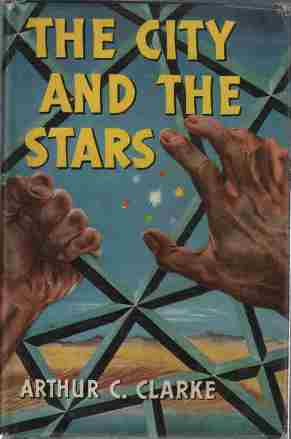
The City and the Stars is the first Arthur C. Clarke novel I have read so I was keen to find out what his writing was like.
It is very similar with Asimov, which is not surprising given they were both knocking around under the stewardship of John Campbell and the biggest names in science fiction writing for a long time.
The book tells the tale of Diaspar and Lys. Diaspar believes it is the last human city that has stood for a billion years. The entire city is run by the Central Computer and everything outside the city is ignored and suppressed.
I did not enjoy it as much as Foundation, but it was still a very interesting read and worth checking out if you like your science fiction.
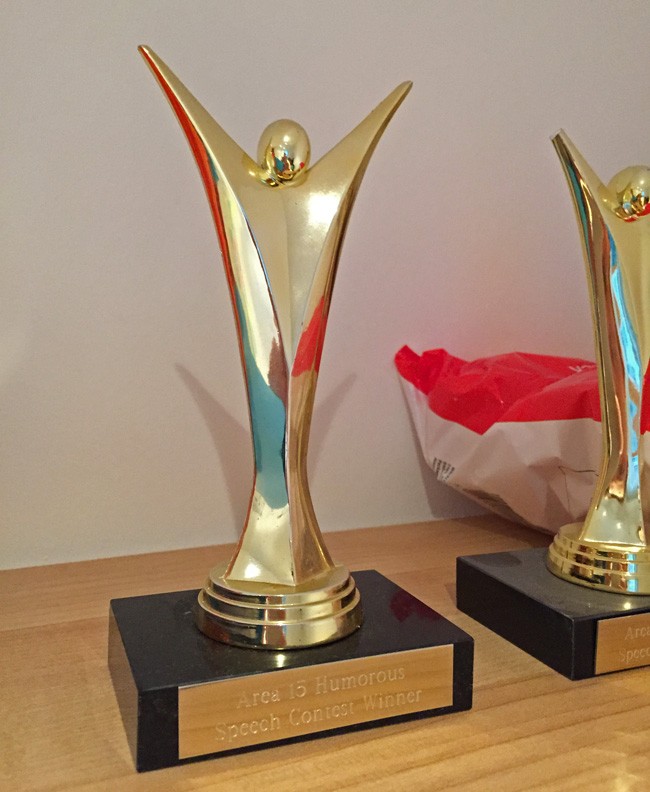
It’s good to have the trophy back on my shelf. Having won the club contest last month I was feeling more confident and managed to put in a sold performance at Area, enough to get me through to Division anyway.
The standard of the competition was very high. I had forgotten how tough Area 15 can be, having so many talented speakers in it. It is a shame that we can only send one contestant through to Division.
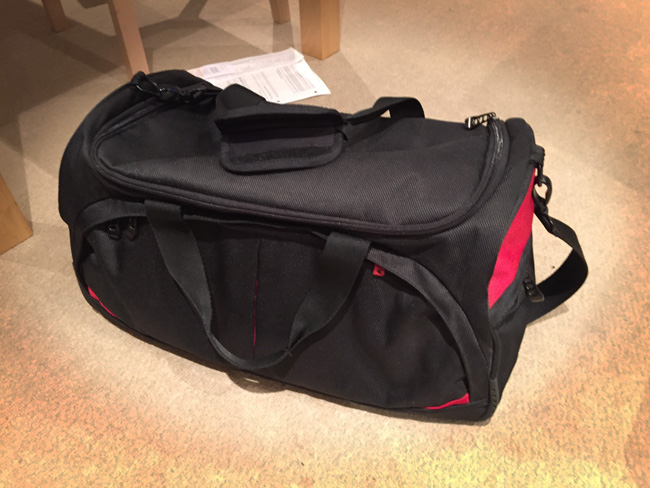
Those of you who have travelled with me will be pretty shocked that this bag is the only bag I took when going to Blackpool for an entire weekend. Literally, this was it. No little extras, no camera slung round my neck, everything went in this one bag.
Of course it is a medium-sized sports bag, which is quite a big bag, but for me this is super light. I am not sure it has really sold me on travelling with this little stuff though. It was easy to move around, but by the time you have put some clothes, toiletries and a laptop in it, it is pretty much full.
Here is the useful stuff I had to leave out to get it down to that…
Camera
I like to bring my camera, and a couple of lenses. I gave up and decided to make do with my iPhone. Normally I could have taken some really nice photos with my full set up. Instead, I was forced to actually enjoy the moment, which was very irritating.
Toiletries
Obviously I bring some, but I coast by using Elina’s tooth paste, shampoo and conditioner. No shaver or towel either.
Guitar / piano
Okay, it would have been a struggle to bring the piano. However, I am supposed to practice every day so it is a little annoying to be without any musical instruments all weekend.
Books
I would normally bring a book a book to read. Instead, I had to switch reading to something I had a Kindle edition of.
iPad charger
Luckily for a weekend I managed to get all I needed from one charge. No space for mistakes though.
Headphones
Normally I would take two pairs. My small in-ear ones for walking around and my big noise canceling ones for when I am at the hotel, on a plane, etc. I did not bring either and it turned out I did need them when I got up at 5:45am to watch the Japanese grand prix. Luckily Elina had some I could borrow.
You almost certainly don’t take all of these items with you when you travel. But do you take some of them? I feel like I have genuinely cut out useful stuff here. It’s not just because I am a horrible over-packer.
The Voyage of the Beagle is the book published by Charles Darwin following his five year trip around South America aboard the H.M.S. Beagle.
I read the abridged version because it sounded interesting, but not that interesting. Perhaps I was wrong though. The huge variety of places he visits makes for a fast moving narrative in which you are quickly going from one place and on to the next.
He is very much a product of his time. There is little careful observation in Darwin’s journey. He captures, pushes, pokes, prods, shoots and eats his way across most of South America. When there is a really tough nut to crack, he brings out the geological hammer. And by nut, I mean animal’s shell. Everything and everyone is a species of animal worth commenting on to him, including the native peoples.
It is interesting to compare this to On the Origin of Species. In Origin, he slowly builds up the idea of evolution. In Voyage, which predates Origin, he is in full science mode with no apologies. My guess is that there were designed for different audiences (or perhaps “adapted to their environment” would be a more appropriate term).
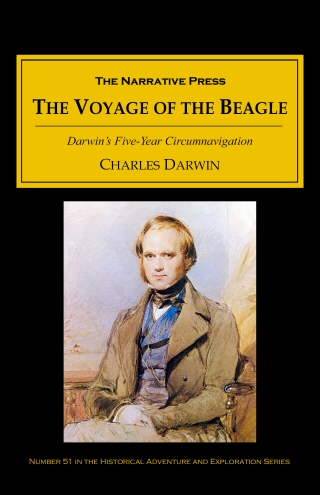
Listen to the Richard Dawkins-ead edition of the Voyage of the Beagle audiobook and drink at the following points. Fill a tall glass with your favourite beverage and drink the appropriate amount per instruction. You’ll also need a spirit suitable for doing shots of.
| Action | Drink |
|---|---|
| Darwin goes somewhere new… | One sip |
| Darwin mentions H.M.S. Beagle… | One finger |
| Darwin expresses a colonial attitude… | Two fingers |
| Darwin eats a specimen… | Three fingers |
| Darwin shoots something… | Finish the glass |
| Darwin uses his geological hammer… | Do a shot |
| Darwin describes something as beautiful because it looks like England… | Do a shot |
It is too easy to get emotionally involved with Bake Off. I have been saying Flora should go for a while now, and she was the right choice. But it was still heartbreaking to watch. There are no bad bakers here. Look at the technical. Everyone pulled off a reasonable chocolate soufflé. It might have had lumps in it. However, if I had tried to make one, it would almost certainly end in a fire.
Here are my power rankings for week nine…
1. Nadiya
Go Leeds! After another Star Baker award you have to give Nadiya some credit. Importantly, the fact that she achieved that even after coming last in the technical shows that she had survive having a bad round and still bring it home. It may well be that sings are so close now that coming last in a round does not have that much meaning.
If she did win it would be a second year in a row for Yorkshire as last year’s winner, Nancy, was from Hull.
2. Tamal
Still consistently performing on the home stretch, Tamal is in with an excellent chance. Especially if Nadiya does have a bad technical it is likely that Tamal will be right there to take the glory.
Again, referencing last year, one of the things that the judges said about Nancy was that she consistently performed throughout her time on Bake Off. Tamal has had one or two dips, but certainly recently he has put in solid bake after bake, so starts from a very strong position.
3. Ian
Ian shows creatively and excellent preparation, and offers some wonderful flavours. He has come up a little less consistent than the competition though so I think he would really have to nail it to take the crown.