Chris Worfolk's Blog


Leeds flooding: then and now

January 10th, 2016 | Photos

Following on from my photos of Leeds flooding I have been back out to take some new photos. I was hoping to stitch them together into one photo. However, I was unable to get them matched up, and the colour of the sky is also very different, so it did not look very good. Therefore I have just put them side by side.

IMG_8636IMG_8662

IMG_8626IMG_8664

IMG_8620IMG_8654

IMG_8561IMG_8676

IMG_8560IMG_8674

IMG_8553IMG_8672

The Bluffer’s Guide to Fishing

January 10th, 2016 | Books

The Bluffer’s Guide is a series of books that aims to give you enough knowledge to bullshit your way through a topic. The fishing guide does not go into detail, but provides a quick introduction to the various topics. You can knock through it in under an hour.

It was a mixed bag. I skipped past the “stories to have in your back pocket” as I’m actually not that interested in convincing people I am a seasoned angler. Also other sections that I would have liked more detail in were quickly glossed over. There was some useful information in there though.

I’m not sure it’s worth the £6.99 paperback price, but it was well worth the £0.00 I paid for the Kindle edition.

bluffers-guide-to-fishing

The Happiness Hypothesis

January 9th, 2016 | Books

The Happiness Hypothesis: Finding Modern Truth in Ancient Wisdom is a book by Jonathan Haidt. In it Haidt, a psychologist, looks at the ideas of happiness developed by Eastern religions, and puts them in a context of modern science in an attempt to develop an evidence-based happiness hypothesis.

He uses the analogy of an elephant and a rider. The rider is the higher-level rational part of your mind, the elephant is the rest. The rider can decide the think happy thoughts, eat healthily, exercise regularly and not spend all one’s time eating cake. It can even tell the elephant. But unless you actually train the elephant, the elephant is going to do what it wants.

Haidt starts off my demonstrating just how little control over our lives we really have. For example people who are named Dennis are more likely to become dentists. You are also more likely to marry someone with a similar sounding name to you. He gives his own personal example: he (John) is married to Jane. I did a quick scan of my friends and family and the rule does not work so well, but statistically it does seem to hold. It’s kind of horrible when you think about it. Are we pawns to environmental biases to quite such an extent? It would seem so.

Haidt points out that if you try hard to not think about negative thoughts, you end up thinking about them more. This has interesting implications for anxiety. Actively trying to avoid negative thoughts for example could actually reinforce them. I also identified strongly with his example of feeling the urge to shout random things at dinner parties just because I know I shouldn’t.

Another example of Haidt being a soulmate was his discussion of vegetarianism. He, like myself, is a vegetarian. He believes that killing animals for food is wrong. But, like me also, he can’t quite seem to actually cut meat out of his diet.

He talks about the negativity bias. We are programmed to reactive to negative things more strongly than positive. This is because if we miss a meal, we will probably find some more. If we miss a predator, we we will probably be eaten. This is not be confused with the positivity bias that Kahneman demonstrates we also have.

Haidt argues in favour of gossip. He suggests it is an important social tool for maintaining fairness. If someone is cheating the system, morality only works when people know about the transgressor. Whether that justifies the deep invasion of people’s personal lives that is often associated with gossip is another matter, but gossip as concept serves a useful evolutionary purpose.

We all have a base level of happiness, and we tend to return to it. This is probably had news for someone like me that seems to have a low level of happiness. Winning the lottery is not going to fix that. However, on the flip side, getting a terrible debilitating disease is unlikely to decrease it in the long term either. We get used to the situation and our base levels return to normal. Material possessions will only bring very short-lived happiness. Spend the money on experiences instead, and for maximum affect ensure you do it with the people you love.

Some things we do not adjust to though. For example noise levels, traffic and commuting are always bad. It is worth eliminating noise from your life were possible, especially traffic noise. As I learnt in Happiness By Design, commuting really is the worst thing you can do with your time. Given that, and that money does not make you happy because you adjust, taking a pay cut to live closer work is a smart move that will increase your happiness.

Critically, social connections correlate with happiness more than almost anything else. This backs up something I can come to realise and begun preaching over the past few years. Moving away from your friends and family to a different city, for career advancement, is a bad move. Yes you get more money. However, as discussed, this does not make you happy. What does make you happy is friends and family and these you lose when you move cities.

Unless your job is literally your entire life’s passion, take a lower-paid job in a city where your friends and family live, with a short commute. Don’t worry if it’s not your perfect job, it’s not your life.

Too many choices are bad. You want some choice, but above half a dozen it actually decreases your happiness because you expect a better match than you get and the probably that you selected an imperfect match increases. If you, like myself, have had the experience of walking into a shoe store, seeing 200 different trainers, and not liking any of them, you will know what I mean. If there were five styles of trainer, it would actually be a lot easier.

In his conclusion he says that the ancient wisdom and modern science often converge and both are needed, to some extent, to achieve true happiness. Happiness does come from within (to the extent that you cannot buy it) but the only way to achive it is through behaviour changes, and these can only be achived by re-training your elephant, not merely deciding as a rider.

The-Happiness-Hypothesis

Summer on the Horizon proofs

January 8th, 2016 | Books, News, Photos

Back in November I took part in NaNoWriMo and successfully completed my first novel. I sent it off to the printers just before Christmas and was pleasantly surprised a few days ago when the proofs dropped through my door. I created the book via CreateSpace and it was a bargain for the proofs at less than $3 per copy. I did spend more than that on shipping though!

Apparently, the done thing when they first arrive is to take a load of pictures of yourself posing with your book. Let it never be said I do not sometimes join in. Here is a bunch of pictures of my book in various locations.

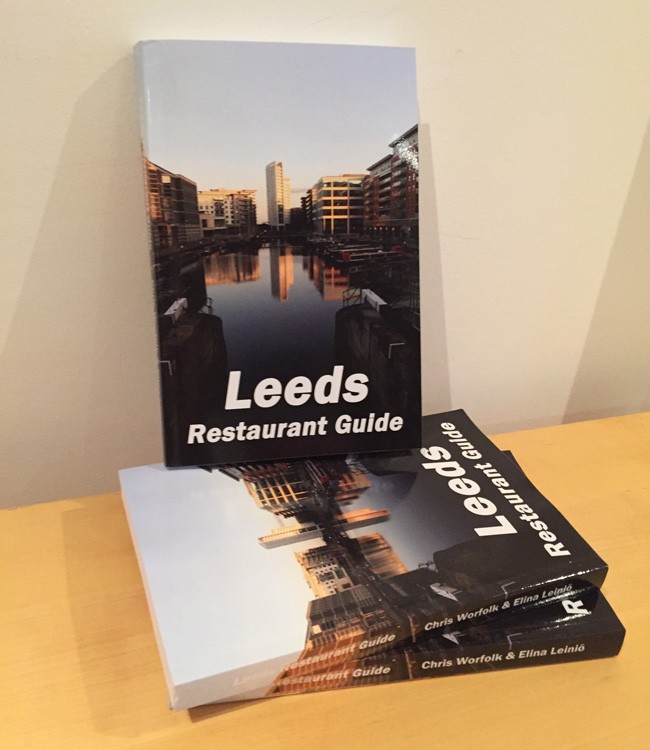
I have already spotted one mistake. It was on the back cover of all places. Though I did not give the cover a proper proofread, so there is some hope that my proofreading was successful. Unlikely though. When we published the Leeds Restaurant Guide, I proofread it, Elina proofread it several times, and three of my friends proofread it too – and we’re still finding mistakes.

summer-horizon-spread

Here is a spread of the books.

summer-horizon-table

Here are the books stacked up on a table.

summer-horizon-bookcase

Here is the book on my bookcase.

summer-horizon-and-lrg

Finally, here is the book sat next to the Leeds Restaurant Guide.

Fuzz face pedal

January 8th, 2016 | Music

fuzz-face

When playing guitar, I am often confused Jimi Hendrix (I think). However, if anyone did not think that before they surely will now that my family bought me a Fuzz Face pedal for Christmas.

It is a fairly standard size for a stomp box and the audio jacks come out at 45 degree angles from the back. This I quite like because it keeps them out of the way of the boxes where the cables come straight out of the sides.

It has two controls, volume and fuzz. The fuzz boosts the signal so you need to balance this with the volume level, depending on how much higher you want to go.

Man tries to drive through a cone

January 7th, 2016 | Video

road-cone

One of the roads near us was deep underwater as a result of the recent Leeds flooding so it was coned off. However, one man decided that he was going to drive down he road anyway. Unfortunately, he was not careful enough and managed to hit a cone, wedging it inside his front wheel. He then had to get out of the car and take it out.

See the video:

What this doesn’t show is that he got half way down the road, realised it was too deep, and had to turn round and come back.

2016 ice hockey world junior championship

January 6th, 2016 | News, Sport

ice-hockey-2016

We’re only a week into 2016 and there is already reason to celebrate. Earlier this week the world junior championship of ice hockey took place in Helsinki. The winners? Finland! Triumphing 4-3 over Russia in the final. To top all of that off, Sweden lost to the US in the play-off game as well.

Unfortunately ice hockey is not well covered in the UK. BBC Sport do have a section, but only if you go to All Sports, then A to Z, and then find Ice Hockey. Sky Sports require you to go to More Sports, then Filter, then Ice Hockey. Neither even mentioned the junior world champions when I checked. Similarly, to watch the adult world championships we had to buy Premier Sports for a month.

Finland’s victory in the juniors suggests they will continue to field a good team in the coming decade, and hopefully many more world championships to come.

Reading list complete

January 6th, 2016 | Life, Thoughts

books-1-1422241

A little under three years ago I formally compiled myself a reading list of all the books that I had been recommended or thought I really should read. I came up with a hundred or so, and began the challenge.

Along the way I picked up a hundred or so more. New books were recommended to be, often by the bookings that I was reading. A times my list actually grew faster than I should shrink it. I reviewed or commented on almost all of them on my blog.

Now though, I’m done! After 33 month’s hard work, I’ve got through them all. I never have to read again!

I probably will of course. In fact, I’ve already made a start on a Dirk Gently novel that I made a half-hearted attempt to read a decade ago and never really finished. No doubt my list will soon begin filling up again, but for now I am going to celebrate the victory.

This seems an appropriate time for some mildly interesting reflections.

I am not really a big reader. In fact I would go so far as to say that I do not enjoy reading. It’s feels like a big statement to make, especially given my social circle is mostly well educated. It feels a bit like admitting to being a smoker. My dirty habit of not reading.

Of course, I actually do read. But do I do it for for pleasure, or because I am a victim of peer pressure, reading because society expects me to read and because I do not want to be labelled as stupid. As peer pressure goes, being compelled to improve oneself by reading is probably one of the better ones, but I take great pride in regularly failing to conform.

In many ways, reading feels like a habit, or something you have to get into. I remember when we first got Sky One. At the time, the channel showed a lot of Star Trek. I wasn’t that interested in Star Trek at the time, but I told myself I wasn’t missing several hours of science fiction every day, so I forced myself to watch it until I liked it. Now I love Star Trek. But you need that initial time to get to know the characters, understand the universe, and fall in love with the premise. Even Discworld requires some buy-in time.

I suspect that reading in general may be the same. I feel much more favourable about it now that I read on a regular basis, then I did when I read a book occasionally.

I now find Waterstones a trap. I used to happily browse their shelves, occasionally buying a book on computing. Now I go in there and see all these books that I feel I should read, even though I know I will never be able to read most of them. In some ways, it makes me feel a tinge of sadness that there is so much great literature out there that one human being can only hope to read a small portion of it.

I am firmly sold on the idea of ebooks. I was never a hold-out for physical books anyway, but the advantages of electronic formats are many. I still buy plenty of physical books, especially cookbooks or music books, but mostly I buy ebooks.

Why Smart People Make Big Money Mistakes

January 5th, 2016 | Books

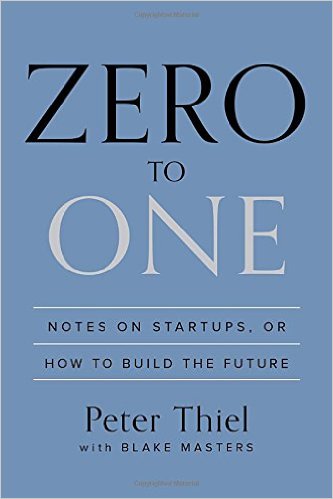
Why Smart People Make Big Money Mistakes – And How to Correct Them: Lessons From The New Science Of Behavioral Economics is a book with an obserdly long title. It’s written by Gary Belsky and Thomas Gilovich.

I first assumed that it was going to be about why professional investors do stupid things. I was incorrect, much to my advantage. It was about us, all of us. We are the smart people making the big money mistakes.

A lot of the content I already knew from reading A Random Walk and Thinking, Fast and Slow, but it was all a valuable reminder. Especially as I am still making many of the mistakes! Though as the book concludes, as fallible humans we are probably going to continually make them. It’s a fun book to read as you get scenarios and have to try and guess the right answer. Just like QI, you quickly learn to avoid the obvious answers.

Mental accounting is a classic example. A pound is a pound. Yet so often we sub-divide our money into different funds that are more or less valuable. I was in this exact scenario as I was reading it.

I had recently received some compensation for a car accident. I was thinking about buying a stand mixer with it. It’s bonus money, right? At the end of each month, I do a spreadsheet of all my bank balances and debts to see how much money I had on. In this case, I had even put a debit in to cancel out the effects of the extra money in my bank account, so that I could keep that money in a separate mental account.

But this is nonsense! I have that money, and it is just as valuable as any other money. If I can justify buying a stand mixer, I can justify it from my savings as much as from ‘found’ money as it is often called. If I can’t, then I shouldn’t be buying it. So I took the advice from the book – I removed the entry on my spreadsheet and I sent the money to my savings account. If I can justify taking it out, I can buy the stand mixer. If not, the money stays in my savings. Either way, all money has the same value.

The best way to avoid this issue is to put found money into your savings account, count it as part of your total savings for a while, then see if you still want to make the purchase.

Another example I fall pray to is using big purchases to hide additional extras. When I was going to buy my first desktop computer, I thought about buying a tablet to go with it. In the shadow of the cost of the computer, it wasn’t that much money. Luckily, my dad talked me out of it. I could have bought one later, but I never did because I could not really justify the cost on its own.

Contrast this with when I bought a piano. They offered to sell me a stool with it. It was a small cost in compassion to buying a piano. But did I really need it? I decided the sensible thing to do was wait and see if I really needed it, and could justify the purchase on its own. Six months later and I am still just using a dining chair, and it works fine. Better even, because a stool would get in the way.

Sunk cost fallacy is the idea that once you have spent the money it is gone, but people do not often actually believe this. The classic example is paying for a cinema ticket, or entry to a nightclub, getting bored, and then staying anyway to “get your money’s worth”. Of course, in reality, the money is gone and you are just wasting another valuable commodity, your time, by staying there bored.

This in itself doesn’t cost you money of course. However, other examples do. Take, for example, selling a house. People will often refuse to sell a house for more than they bought it for. Why? The buying price is irrelevant. If you need to sell your house, you should do so for the highest price you can get, rather than holding on to it because of an irrational psychological anchor. Yet, we’re all human, and I am sure I would try and hang on too, even though the rational part of my brain would be calling myself an idiot.

The book also talks about the ideal number of choices. Quoting the famous jam study. If you give people six choices, they are more likely to buy than if you give them 24. I mentioned this a few days ago in my review of the Happiness Hypothesis. It is worth noting that six and 24 were just the values that were picked for the experiment: it does not conclude that exactly six choices is the optimal number.

Insurance is an area that I am getting better at. I never took out extended warrenties and phone insurance anyway, but Daniel Kahneman has long since convinced me that I am correct not to do so. Insurance is a money making product, so if you could afford to replace it, you should not have insurance. I would be very annoyed if I smashed my £600 iPhone tomorrow and had to buy a new one. However, I could buy a new one, and the money I have saved over the past decade of owning a phone, not paying for insurance, and not smashing it, would still leave me in heavy profit.

A sneakier example is insurance excess though. On top of the £150 mandatory excess on my car insurance policy, I have an optional £250. Sometimes I think I should get rid of this. However, as the book points out, that would be a bad move. I can afford the £400 excess I would have to pay if my car was in an accident, so it makes sense to take advantage of the reduction in premiums because most years I will not claim on my insurance. In my case, this is pretty academic anyway, as my insurance company doesn’t think my car is worth anything.

In short, this is a very useful book. It references a lot of Kahneman and Tversky, which is useful for the everyday money mistakes we make. It also talks a lot about retirement planning and stock market investing, which is less relevant to some people, but still useful to most.

why-smart-people-make-big-money-mistakes

Chavs: The Demonization of the Working Class

January 4th, 2016 | Books, Religion & Politics

Chavs is the second book I have read by Owen Jones. The other being The Establishment.

In Chavs, Jones rails against the lens that working class people have been put under. Led by politicians, and then the media, society has been encouraged to demonise the poor as benefits-claiming jobless scroungers.

Who exactly are the working class? Neil Kinnock offers Karl Marx’s definition.

People who have no means of sustenance other than the sale of labour, are working class

This seems a very workable definition. I would include myself in the working class. I own no business of any value, nor any property, and have to sell my labour to pay the bills.

Before Thatcher took a sledgehammer to British industry in the 80’s, being working class was something to be proud of. As industry disappeared, entire communities were left without jobs and without hope. By 2010 there were two and a half million people unemployed, and less than a million job openings. There simply were not enough to go round. What sympathy do such communities receive? None. They are told to get on the bus and go chase a non-existent job. So Jones contests.

The argument in support of letting industry go was that it needed modernising and could not be propped up by the state. As we now know though, this isn’t the case. We managed to put together a multi-billion pound bailout for banking after all. So bailing out an entire industry is entirely possible.

The ultimate betrayal of the working class was the creation of New Labour. Thatcher’s greatest victory. No longer did Labour aim to help the working class improve their quality of life, but merely to encourage them to escape into the middle class. Thus, if they remained poor, it was their own fault.

This created a climate that you were either middle-class of a benefits scrounger, and there was no in between. Jones quotes Simon Heffer saying so. That feels ironic given I have just read Heffer’s book. No doubt he would wince at the ‘z’ in ‘Demonization’ too.

Society became outraged at the £1 billion we were losing on benefit fraud. Never mind that over £2 billion of eligible benefit is not claimed and that if everyone got exactly what we deserve the state would be less well off. And especially forget the £70 billion per year big business avoids in tax. A study by the Joseph Rowntree Foundation found that many people doing cash-in-hand jobs on the side do to to pay for basics like food, heating, or debt. Those are the people to blame.

The media jumped on the bandwagon too. The Sun was outraged when people went to the local shop in their pyjamas at lunchtime. Yet a quick visit to any area full of middle-class students, such as Bodington Hall, would offer a similar sight.

This allowed the government to cut into the working class. Between Thatcher taking power and Blair outing them, the tax burdeon on the working class increased from 31.1% to 37.7%.

Jones comes to the support of Jade Goody. She, after all, is a member of the demonised working class. He makes a good case. He attacks Little Britain, which he correctly identifies as being incredibly offensive, with it’s bad stereotypes of gays, transgender people and the poor.

He also suggests Wife Swap would be better-labelled class swap. From the few episodes I have seen of the show it does seem to come down to that. Far from being an attack on the working class though, it always seemed like comparing the loving family environment of the working class to the cold materialistic stand-off-ish attitude of the middle class.

I take exception to his accusation that there have been no working class bands since Oasis though. While Kaiser Chiefs lyrics may not always reflect well on the working class, such claims could not be made against the also-very-popular Arctic Monkeys.

Back onto the real subject matter, the argument about environment is less clear. Jones claims that the middle class are better able to provide for their children because they can get them an advantage in education and jobs. This is simpler to the case Gladwell makes in Outliers. Things are not that simple though. As Pinker points out, parenting has little effect on a child’s personality or intelligence, so the value on focusing on education is unclear.

It also appears not to the case that the middle class are better at managing their money. As Chris Tapp, director of debt advice charity Credit Action, says, poor people are actually excellent at managing money – one has to be to get by.

On reducing council tenancy from lifetime to 5 or 10 years, I’m torn. As my friend Chris points out, those of us in the private renting market enjoy 6 months at best. And when I advocated building more council housing my friend Helene elaborated on the issues of lifetime tenancy in The Netherlands. However, a few hundred pounds in moving bills wouldn’t actually trouble me. I would be very annoyed, but I could easily get such a sum out of my savings. Whereas I imagine many council tenants do not have a savings account.

One thing that put me off was that at least one of the facts in the book appears to the incorrect. For example, when discussing the 2011 riots, he describes them as spreading to northern cities including Leeds. But they didn’t. There was no rioting in Leeds during that period.

The take-home message for me is that there will always be a working class and it is important to have one, so we should focus on making their (our) lives better rather than offering an escape. This seems a difficult proposition to take fault with.

chavs-book