Chris Worfolk's Blog


Why EU fishing quotas are good for Britain
June 15th, 2016 | Religion & Politics

fishing

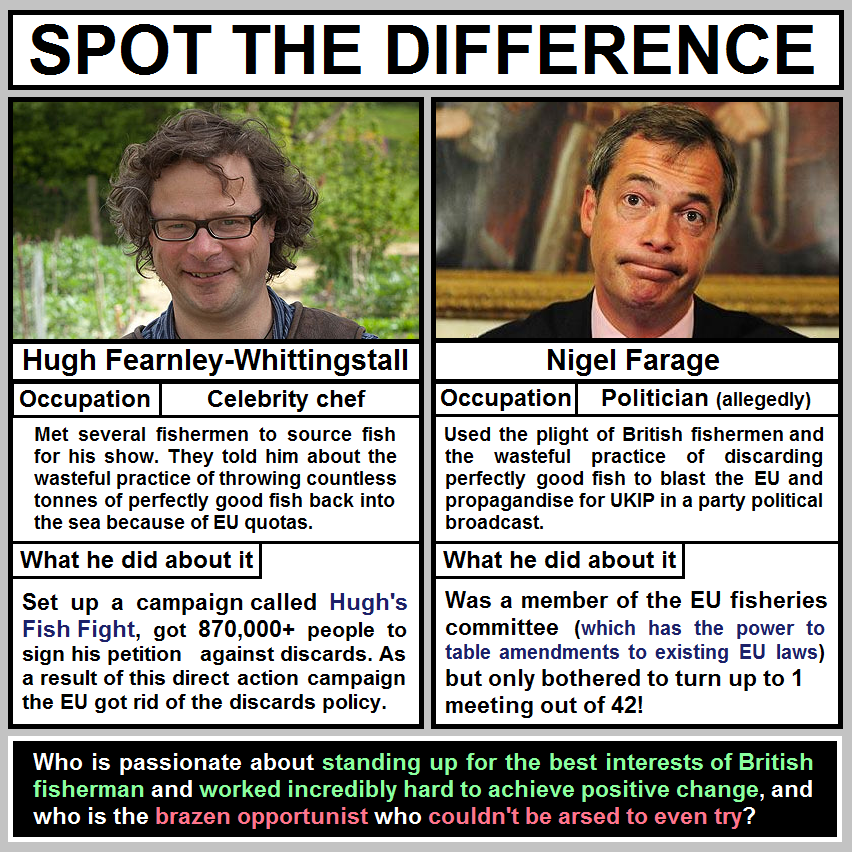
Today, Nigel Farage made a big deal about being on the Thames protesting EU fishing quotas. It is a serious issue. So lets pretend for a moment that Nigel Farage genuinely cares about the UK fishing industry, rather than just using this is an opportunity to press his own agenda. We have to pretend because we have the hard evidence to show he does not care, as exemplified by this meme.
hugh-vs-farage

That’s right, Nigel Farage was on the EU fisheries committee, but did not bother to turn up much, or vote, or really do anything. But suppose he genuinely did care. Are EU fishing quotas bad for Britain? The answer is no. Here is why.

We need to maintain fish stocks

Fish stocks have become dangerously low. We have quotas in place to stop fish going extinct. This would be bad because if fish disappear then it causes a huge problem for the environment. For example whales need fish to be there to eat. Whereas on the flip side, if fish were not eating their prey, they would cause over-population.

If you are not swayed by the environmental concern, consider that once there are no fish left, we won’t have any fish to eat. For me, that would be rubbish because I really like fish.

Fishing is big business

Are you imagining that the people complaining are small time fishermen who had a little boat to feed their family? To be honest, I was. And some of them are. But the majority of them are not. They’re big business. Here is Dr Chris Hassall from the University of Leeds…

Three large companies own 61% of all fishing quotas. This isn’t about Michael Gove’s father alone on a tiny boat in a stormy sea. This is an industry monopolised by millionaires who are fighting regulation, just like all other industries. Viewed in that light it is completely unsurprising that “Big Fish” has joined Farage, alongside his banker allies.

Fishing quotas help small fisherman compete against Big Fish. Unrestricted, big companies would fish the oceans clean, take all the dividend profits out of their companies and move on with their lives. Meanwhile small fishermen would suddenly find an empty sea, no way to make a living, and no huge profits to fall back on. Creating a sustainable industry is the only way to protect small fishing businesses.

Quotas protect Scottish fisherman

As well as allowing small fishermen to complete with the big corporate fishing, preventing over-fishing also protects those who genuinely do fish to feed their families. In the second episode of River Cottage: Gone Fishing Hugh Fearnley-Whittingstall travels to the Island of Rona in the Hebredes to meet the island’s caretaker. He feeds his family on the annual mackerel catch. However, each year that gets smaller and smaller. By the time the documentary was made, he had run into a two week draught.

Fishing quota are good for British business

As well as protecting our small fishermen from big business and ensuring we have a sustainable fishing industry going forward, fishing quotas have one further advantage to British business: they open up the opportunity for innovative fish farming to meet consumer demand.

In the same River Cottage: Gone Fishing episode Fearnley travels to the island of North Uist to visit just such a fish farm. The strong currents around the island mean they don’t have to treat for any diseases such as lice and produces excellent-quality fish. It’s a wonderful example of a small British business leading the world in innovation, sustainability and quality.

Conclusion

EU fishing quotas are good for Britain because:

  • They ensure there will still be fish to eat tomorrow
  • They ensure a sustainable industry for the future
  • They protect small fishermen from big fishing companies
  • They open up new opportunities for British entrepreneurs
  • They protect small communities that fish-to-eat from overfishing
  • They protect the environment

It’s time to speak out

June 15th, 2016 | Religion & Politics

lib-dem-europe-campaign

I have not been very active in campaigning for the UK to remain a member of the EU. The truth is, I don’t think I thought I really needed to. I thought when the time came, the UK would not be swayed by the torrent of anti-immigrant hated put out by a side that advocated a return to the good old days when we maintained our trade levels through invasion and empire-building, rather than dialogue and open borders.

Having discussed it with other people, I think many feel the same way. We did not realise our voices had to be heard. We assumed that the progress we had achieved over the past 50 years was safe. But now, only weeks before the referendum, the pendulum is swinging. Several polls put Leave ahead. Even the bookies have started slashing the odds, which were not that high to begin with.

We must speak out. The voice is the silent majority, our voice, must be silent no more. The time for being British and avoiding the awkward conversation with out friends and family has passed.

When I talk to people about the referendum, I don’t tell them about the percentage of immigrants in the UK (it’s lower than they think), the percentage of laws that come from Brussels (it’s lower than they think), it the net contribution we make to the EU (it is, of course, lower than they think). I talk about my fears for my wife and my baby daughter. Immigration laws tear families apart.

I talk about my fears of providing for my family when trade with other European nations becomes more difficult. At Sky, we’re expanding into Germany and Italy. If that growth is slowed, I will be the first out of the door.

I talk about my friends, who work on minimum wage, who will have to face a stagnant economy in which their pay does not rise, but their price of does does. Boris Johnson and Nigel Farage will still be millionaires whatever happens. It is the poorest communities, the communities of The North that will be hit the hardest.

I talk about my friends with disabilities and long term health conditions who face a bonfire of rights once there are no immigrants left to demonise.

And all of this for no clear benefit. There are no concrete benefits. We don’t know if leaving the EU will spare us some cash, or whether that will be lost in the economic shock. We don’t know if we will be able to gain any immigration controls while still maintaining business links with Europe. We do know that we almost certainly would have to contribute to the EU budget anyway, have no trade deals with other countries and make it more difficult to fight crime in a European level.

The only “gap” is our attitude

When the results of yesterday’s TNS UK poll were released, it put Leave 7 poins ahead. But listen to what their spokesperson, Luke Taylor, told The Guardian

It should be noted that among the entire general public the picture is more balanced with 33% supporting Remain, 35% supporting Leave and 32% undecided or planning not to vote.

Taking into account likelihood to vote and whether or not people are registered to vote, benefits ‘Leave’ over ‘Remain’. In particular, our turnout model penalises younger people and those that did not vote in the previous general election, as historically these groups are less likely to vote.

The Leave campaign does not represent the the majority view of British people. The reason they are ahead is because on Thursday 23 July, they are more likely to turn up and vote than everyone else. It is because of low turn out, especially among younger people, that the Leave campaign has the chance to drag us down down a road that the rest of the country does not want to go down.

Our voices must be heard, and our votes must be counted. It rests on all of our shoulders to make this happen.

Google Chrome and the missing hard disk space

June 14th, 2016 | Tech

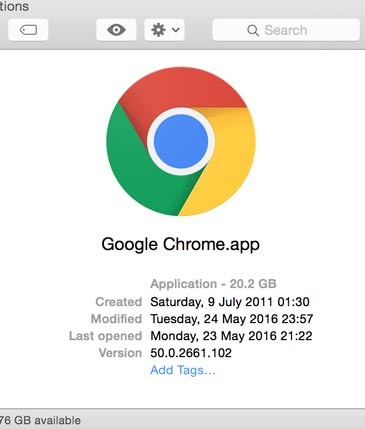
I was recently clearing space on my laptop hard drive when I noticed Google Chrome was taking 20gb of space. You read that correctly: 20gb.

google-chrome-size

After some searching, people suggested it could be old versions of Chrome. You can see into the package by right-clicking on it and clicking “Show Package Contents”. Inside I did indeed find dozens of old versions of Chrome and deleted them all. However, this only brought the size down to 19gb.

I wondered if the cache might be stored inside the app. I wouldn’t expect it to be, as typically it is stored in the user directory. However, when I went to clear out the cache, it only had 400mb in it away, so that ruled out that as a problem.

Next, I went through all the files in Finder to see if I could spot any large files. I could not. This made me suspicious, so I opened up terminal and checked it from there.

cd /Applications
du -sch ./* | grep Chrome
195M	./Google Chrome.app

Google Chrome isn’t actually using the space: Finder is just reporting it incorrectly. However, it clearly showed up on Daisy Disk before, and disappeared after I cleared out all of the old versions. So whether they were contributing or not I’m not sure.

Why I am voting Remain

June 13th, 2016 | Religion & Politics, Thoughts

eu-flag

On Thursday 23 June, we will have the choice for Britain to remain in, or leave, the European Union. I will be voting for us to remain a member, and want to explain why.

This is not a short term decision

Both sides have argued over what the short term effects on the country would be. But the truth is that that is not really important. This is a decision about our future and one that will affect our entire lives. We need to think about what kind of country we want 50 years down the line.

I know what kind of country I want. One that is open and inclusive. One that does not shrink away from being a part of the global community. One that builds relationships and tolerance by saying that we are a united continent, held together by an organisation set up to promote the common good.

Relationships are better in Europe

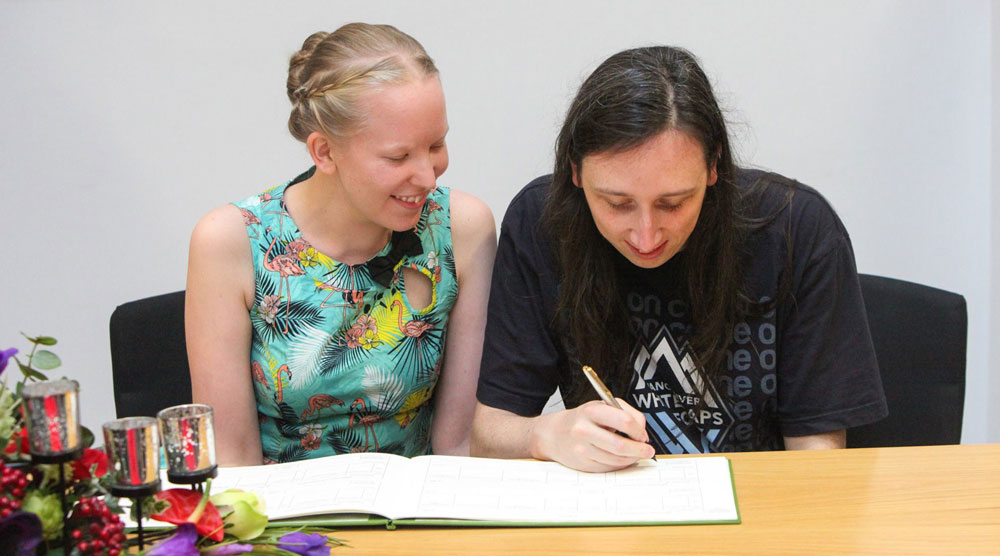
My wife is from Finland. Our marriage was easy. She can live and work over here, or I can live and work over there. When we visit each other’s families, travel is easy. Pretty much everything inside the EU is easier.

marriage-signing

Most of my friends are EU immigrants. They’re all awesome people, kind people, interesting people. They all have jobs. Not a single EU immigrant I know is on benefits: they are all contributing to our economy. They’re not cheap labour, they’re the best that their country has to offer. And they’re humans. Humans with feelings, and fears, left wandering what will happen to the country they live in and love.

Freedom to go where one wants

When I was going to move to San Francisco to work for a software company, we had months of complexities trying to sort out visas. I’m a high skilled worker with a skill that the United States needs, and still it was incredibly difficult and complex to get me the right to work in the country, let alone settle there.

I found this an incredibly bizarre experience. As a British citizen, my passport is normally a golden ticket to anything. I won the genetic lottery when I was born in the UK. Yet here was a country that wouldn’t let me even, even with a passport in which Her Majesty “requests & requires” the barer to be allowed free passage.

Right now I can go to any other European nation. I can live there, I can work there, I can use their healthcare system. I have that right because of the relationships we have with our European neighbours. Risking that would be only be a step backward.

Lead, not leave

27 countries send MEPs to the European Parliament. We send over 10% of them. The average country sends 4% of the MEPs, we send more than double that. Along with Germany and France, we have the biggest seat at the table.

And what a community to lead. The European Union is the world’s largest economy. It is bigger than the United States, it is bigger than China. It is one of the few powers in the world that can stand up to global corporations.

Europe sticks up for workers, and consumers

Europe is not making judgements and legislation to make our lives more difficult. They make a positive impact on our lives. They guarantee us holidays, rights, a limited working week and maternity leave.

Consumers benefit too. Take mobile roaming charges for example. It is literally free for operators to do this. The idea that roaming costs money is bullshit. The whole internet works on people sending data all over the world. There is no reason for these fees to exist other than for operators to take advantage of consumers. The EU are putting a stop to that.

There is no financial benefit

All countries that want access to the single market, which we would need to do to continue to trade with the rest of Europe, we would continue to have to pay into the EU budget. This is the reality Norway find themselves in.

However, even if we did save some cash after the new EU bill, and we somehow kept the economy going, and thereby ended up with in the black, the idea that that money would go to the NHS is dubious. As one meme pointed out, if you trust people live Johnson, Gove and Farage to take the money we save and put it into the NHS, rather than giving further tax breaks to the rich, then I have some magic beans to sell you.

Nor will leaving the EU allow us to avoid the European Convention on Human Rights or avoid the judgements of the European Court of Human Rights. These are part of the Council of Europe and leaving the EU will now exempt us from them.

There will be no immigration controls

The other major touted benefit of leaving the EU would be that we would have control of immigration. However, it has now been shown how this would be the case. Norway and Switzland both have free movement agreements in place and actually receive a higher proportion of EU immigrants than we do.

Summary

I am voting for remain because the European Union represents a better world. A world where we can go where we want, work where we want. A world where we welcome in our friends and our lovers, and do not worry about whether our relationships will be allowed to continue or rejected for visa reasons.

A world where we stand side-by-side with our neighbours to defend human rights, and the rights of workers and consumers across the continent. There is no economic argument for leaving: our economy will function best when we have open trading with our European partners.

United we stand, divided we fall.

Airport security fast track

June 13th, 2016 | Travel

airport

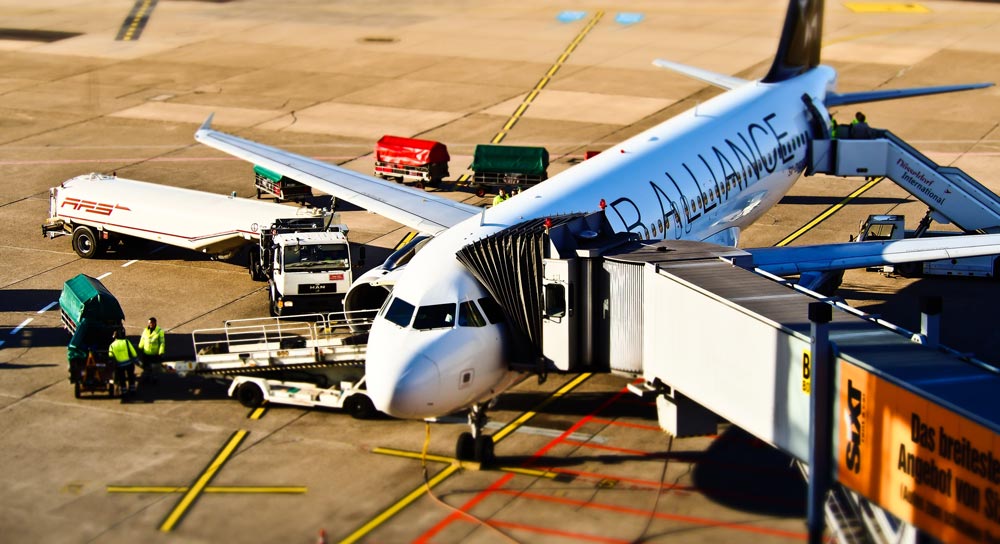
We used Manchester Airport fast track for the first time last week. We received a discount on it with our car parking, though it is only about £4 anyway. Is it worth it? I would say that it probably is.

It’s pot luck of course. You might end up going through on a day when the regular line has no queue. Or you might find that there are long queues in both regular and fast track. In fact, it reminded me of the speedy boarding passes in Come Fly With Me.

However, on the day we went through there was a queue at the regular line, which from what I remember seems fairly standard for Manchester, whereas we got straight through. Given the cost is fairly small in relation to the wider cost of the travel, it seems like it is worth the gamble to speed the process up and reduce my stress levels.

West Yorkshire Humanists 2016 AGM

June 12th, 2016 | Humanism
humanist-agm-2016
Sarann delivers her report on our charity work

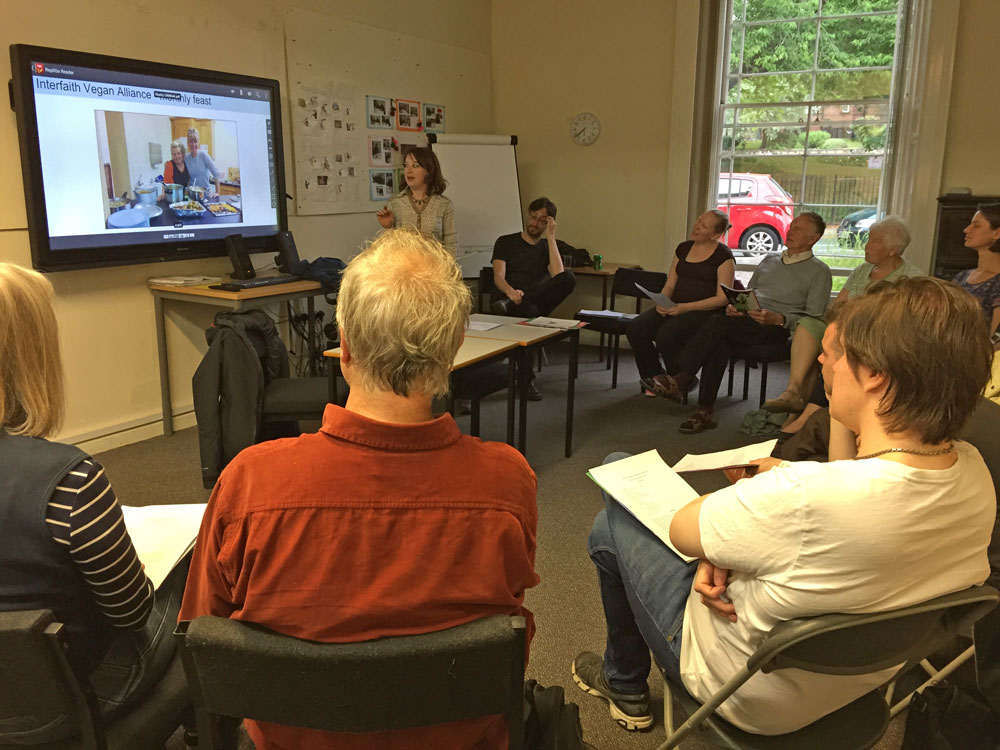
Earlier this month we held our AGM at West Yorkshire Humanists. It was a really positive meeting: this year we have significantly increased our membership (more than 20% increase), turned a financial deficit into a surplus and have completed more charity work than ever before.

Airport lounge access

June 12th, 2016 | Thoughts, Travel

view-of-airport

We had lounge access included in our outboard flights to Iceland. This was my first experience with an airport lounge, so I was keen to see what it was like.

We had access to the Aspire lounge at Manchester. It was easy to find but there was some confusion on arrival. Everyone else had lounge passes, but as we had electronic tickets, we had not received any. It wasn’t clear on their system that our ticket included lounge access, but this was eventually cleared up by a senior member of staff.

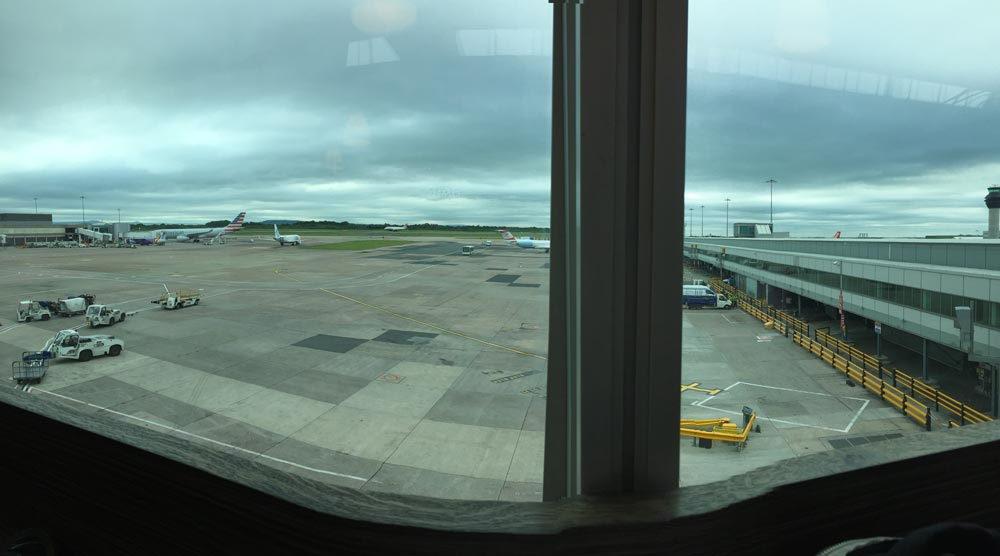
The area itself was reasonably comfortable, with a variety of seats and tables. There were power sockets embedded in our table, but no view of any flight boards. The view was reasonable.

Food and drink

The food and drink is included. We ate our way through a pastry, two bowls of soup, four bags of crisps and a slice of cake. They also brought out a few sandwiches as we were leaving.

Alcohol is included, so if you are a heavy drinker you can probably reclaim your £20-30 entry fee in that.

lounge-breakfast
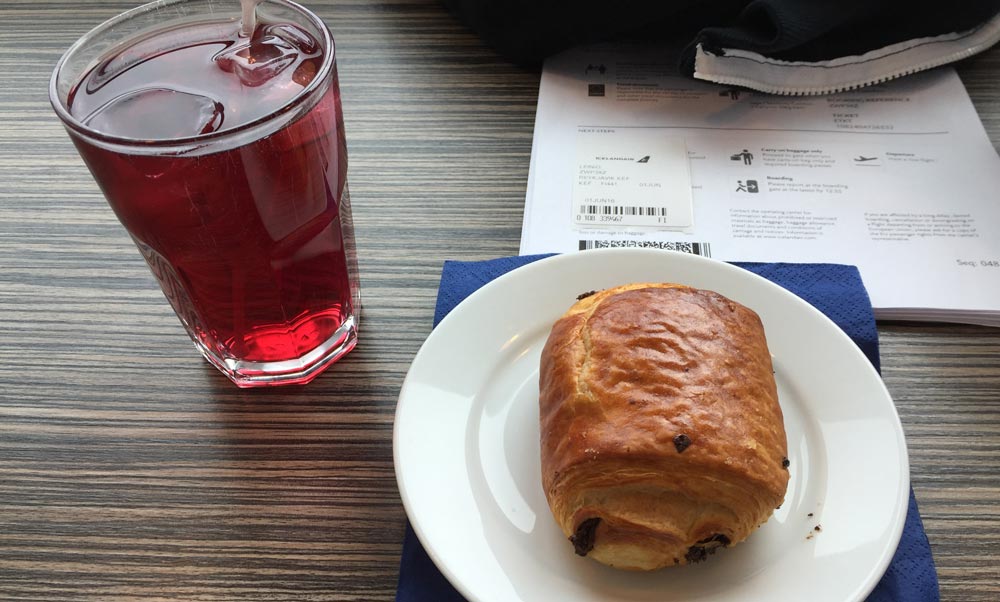
What healthier way to start the day than with a pastry and a vodka-cranberry for breakfast?

Downsides

The wifi was awful.

The lounge has no toilets of its own, but shares communal ones. These were tiny. One of the things I like about airports is that they usually have large and airy toilets, but these were not.

The lounge was not too busy, but then neither was the airport. Assuming it scales up proportionally, I think you would find that at busy times, escaping the bustle of the airport would only bring you into the bustle of the lounge. Online reviews seem to agree.

Conclusion

If it’s included in your ticket, then it is worth taking advantage of lounge access. If not, I’m not sure. I need a bigger dataset before I can really make a recommendation.

chris-and-elina

Is there a paradox of choice?

June 11th, 2016 | Science

jars-of-jam

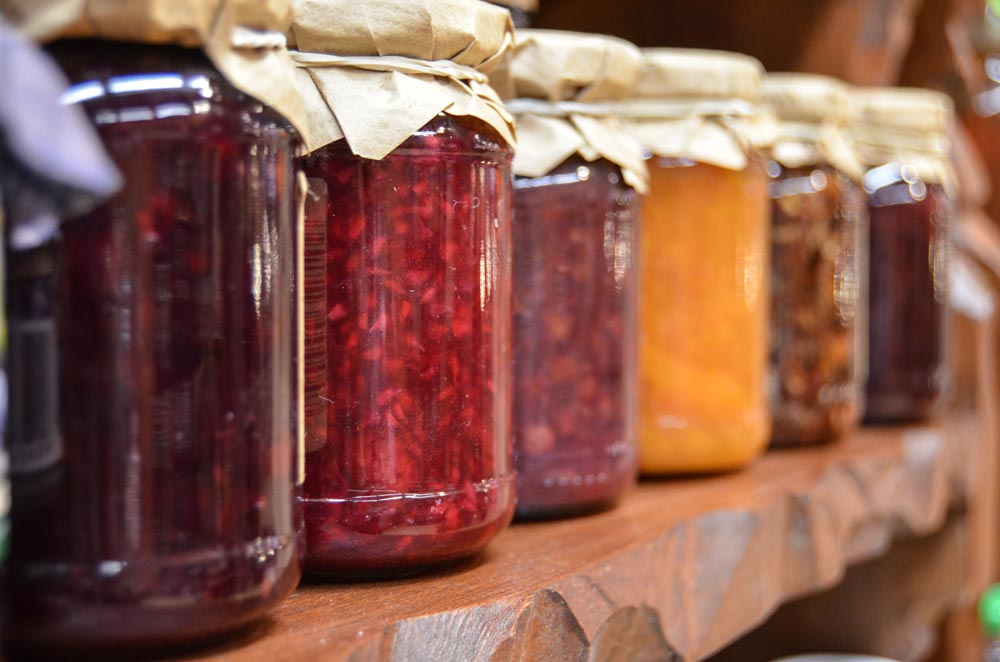
You may have heard of the idea that there can be too much choice. It’s a paradox because we think that more choice is always better. However, in his book The Paradox of Choice, Barry Schwartz claims that once you have a certain level of choice, more actually makes us unhappy because it raises our expectations. If there are three choices of trainers, we pick one. If there are a hundred choices we agnoise because with such much choice we expect to find a perfect one, and don’t.

He makes a similar case in a TED talk.

A lot of this comes from a famous study about selling jam, conducted by Mark Lepper and Sheena Iyengar. They noticed that if you offered people six different choices of jam, they bought more than if you offered them 36.

All of this is easy to identify with. However, to muddy the water, a blog post by Freakonomics suggests that it is less clear after all. When looking at real-world datasets it is actually quite difficult to find examples of this working.

They make a similar claim in a YouTube video, pointing out that you cannot generalise one specific study, such as the jam study, and assume it applies everywhere.

How much is too much jam? Perhaps there is an upper limit. However, more research is needed before we can start making generalised rules.

Do child car seats save lives?

June 10th, 2016 | Science

child-in-car-seat

Steven Levitt, of Freakonomics fame, gave a talk at TED in 2005. In it, he put forward the idea that child car seats do not outperform just using a seatbelt to a significant degree for children over two.

In some ways, this is shocking but believable. Take handsfree kits for example. There is no evidence that they are any safer than holding your phone. The dangerous bit is having a phone conversation, regardless of the phone being on handsfree or not. However, because it seems intuitive, because it allows the government to look like they are doing something, and because it allows manufacturers to sell us more stuff, everyone goes along with it.

Could the same thing be happening here?

Well, maybe. It is difficult to argue with the data he presents. However, in the Q&A at the end of the talk, Levitt touches on the issue of whether car seats do provide a reduction in injury and it turns out that they may well do. Other datasets suggest that there is a significant benefit.

Also, the following year the University of Michigan published a study suggesting that there was a significant reduction in risk of death: 28%. The study seems to group front and rear facing seats into the same category so it would be interesting to see if these groups showed a difference.

Therefore, unless further evidence is published, it makes sense to continue to use child car seats.

Remain campaign nonsense

June 9th, 2016 | Religion & Politics

stronger-in

When the EU referendum arrives, I will be voting to remain. I want to see an open, inclusive country that plays its part in the global community and helps lead the world forward at the head of the world’s largest and most powerful union.

However, I have been disappointed about the amount of bullshit being put out by the remain campaign. Tim Farron’s case for voting for the country we want is drowned out by the scare tactics being constantly pumped out by the remain-Conversatives. I want to challenge some of these.

£4,300 a year worse off

George Osborne made the claim that families would be £4,300 worse off. This is obviously is not true. Could you find £4,300 spare in your household? Most people couldn’t. Certainly someone earning £12,000 a year on minimum wage couldn’t. Many people live below though: working part time, being unable to find a job, being on long-term sick or retirees living on a pension.

I earn in the 90th percentile, so I could afford it. However, I couldn’t afford to subsidise it for the other nine people who earn less than me. There simply isn’t that much money going spare in the UK. It would be impossible for Brexit to cost households that much.

On the BBC Fact Check they explain he is actually talking about GPD, and not actual cost to families. However, it was explicitly not reported that way.

Nobody would sign trade agreements with us

US President Barack Obama claimed Britain would be at the back of the queue for a trade agreement if we left Europe. This could be true, but I very, very much doubt it. The UK is the United States’s 7th largest trading partner, second in Europe. If we left, having no trade agreement hurts them. Are we expected to believe they would cut off their nose? In reality, we’re likely to be first in the queue, being the most valuable trading partner now without a trade agreement.

Europe will send all the British expats back

Britain doesn’t have more people living abroad than any other country, but we do have a substantial population (somewhere around 1.2 million) of expats living in other EU countries.

However, it is unlikely that Brexit would mean much. Unlike Eastern European countries that are pumping out the cheap labour some people in the UK object to, British expats tend to be high-skilled workers or wealthy retirees. They also mostly live in Western European countries such as Spain and Ireland who most likely would continue to enjoy a good relationship with us.