Chris Worfolk's Blog


Reasons to read fiction

August 3rd, 2016 | Thoughts

book-with-tulip

If you are a massive over-thinker like I am, you may well spend a lot of time thinking about extracting the maximum utility out of your reading time. If I invest the 10+ hours in a book, I want to know what measurable outcomes I will get out of it.

On the face of it, fiction does not seem to stack up. If I read a non-fiction book I will learn things and become smarter. With fiction, the path is less clear. However, if you too feel this way, there are some good reasons to get stuck in to a good story.

It’s fun

Books can be a bit of a slog. I like starting and finishing a book, but the middle can sometimes be a bit of a drag. This can occur with any book, but on the whole I think good fiction books drag less often. Instead of considering every book for its knowledge, you could just read because it is enjoyable. Time well wasted.

Stories are memorable

Good fiction often has a take-home message, and a moral. Non-fiction does too, but it can be hard to remember plain facts and figures. Stories on the other hand, are very memorable. Humans seem to be wired to sharing stories and we remember them much better than we remember stats. Non-fiction may have more knowledge on paper, but once you have forgotten most of it the gap is a lot smaller.

Part of the reason could be that fiction is often more emotional. A textbook on the Great Depression is unlikely to teach me more than John Steinbeck did in The Grapes of Wrath because he really makes you feel the pain and frustration of those travelling west, chasing the hollow dream they had been sold.

It can explore ideas

In fiction, you can explore ideas that you cannot explore in non-fiction. You can also take ideas further and come up with contrived scenarios. George Orwell explored the dark side of communism through Nineteen Eighty-Four and Animal Farm. Star Trek explored the ethics of AI through Commander Data in a far more involving way than a simple thought experiment ever could.

You get references

In Capitalism in the Twenty-First Century Thomas Piketty discusses theories of economics using analogies from the writing of Jane Austen. It was a great way to explain the point, but if you hadn’t read Jane Austen it may have been totally lost on you. I wrote about this last year in a post entitled The Benefits of Austen.

They pop up in all sorts of places. There is a Gary Jules song named Umbilical Town in which he sings about Dostoevsky’s Crime & Punishment. It is a beautiful song anyway, but understanding the background only makes it better.

Smart people have read classics

Are you so shallow that you want to be seen as well-educated among your peer group? I certainly am. How about seeming clever in front of your children? Again, yes. Why not read some Russian literature and be ready to spring into conversation with “that wasn’t my interpretation of Tolstoy!”

Hollandaise sauce

August 3rd, 2016 | Food

One of the things I was particularly impressed with about the food in Iceland was that everywhere did a good hollandaise sauce. It seemed to be the standard sauce that everywhere from fancy restaurants to service stations did. Perhaps they just mass-produce or buy it in in jars, but it all tasted very good.

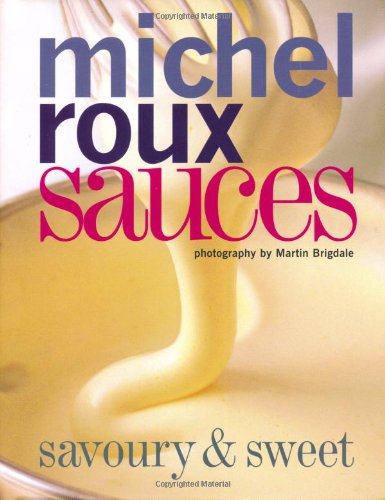
I recently picked up Michel Roux’s book on sauces and decided to give hollandaise a go. It is difficult to get right. My first attempt was a total disaster as everything separated. On the second attempt, I combined the book with a video tutorial to better results.

making-hollandaise

I cooked it over a ban of barely-boiling water to keep the temperate as low as possible. It is hard work. You have to whisk for five or ten minutes, then gradually add the clarified butter while you continue to whisk even more. Next time I might do this final whisking using my stand mixer, but that isn’t really an option while you have it over the heat.

I ended up with a super-thick sauce that could easily have been mistaken for a custard. Next time I might add a little more water.

hollandaise-sauce

The result is something special though. We didn’t even have a dinner to eat it with: we just spread it on bread and ate it, and it was delicious.

Le Cordon Bleu’s Complete Cooking Techniques

August 2nd, 2016 | Books, Food

I was recommended Le Cordon Bleu’s Complete Cooking Techniques who said it was more than just a cookery book: it really took the time to explain the techniques used in cooking. It is available new for around £65, but it you are happy with a used copy you can pick it up a hardback copy for £0.01. There is £2.80 shipping on that, but still a bargain.

It is a comprehensive book. There are five full pages discussing the different equipment you may find in a kitchen and what they are all used for. Each section (fish, beef, cheese, vegetables, etc) has a full spread on what to look for when buying them. It takes you step by step through cleaning fish, which colour photographs to illustrate each stage. The margins contain suggestions containing extra tips for doing it like the pros, examples of cuisines that use the technique and histories of the foods.

There are very few recipes in the book. In the chicken section for example, it shows you how to prepare a bird for roasting, jointing and cutting the pieces, and different methods for cooking chicken. It is up to you what you do with those techniques. There are some recipes in there, but they feel more like they are there for illustrations, and perhaps a little out of place. Some of the techniques are recipes in themselves: making a terrine for example is pretty much the whole process of terrine-based dinner.

I like the attention to detail the book brings. It has a “finishing touches” spread in which it talks about the garnishes of herbs and decorations you can add to a dish to finish it off. It also contains a host of useful tables: approximate cooking times, what cut suits each cooking method, what herbs to use with what dish.

The downside is two-fold. First, I already knew a lot of the stuff in the book. Not because I had ever read it but because you pick it up as you go along. I am interested to know why you should add herbs at the very end (heat destroys their delicate flavour) but after 100 recipes telling me to add the coriander just before serving, you pick that stuff up anyway.

Second, there is very little actionable stuff in the book. I feel I know a little more about cooking, including why I am doing things, but I don’t know what I will do now to put these ideas into practice to reinforce the knowledge.

le-cordon-bleu-complete-cooking-techniques

The so-called death of civilisation

August 1st, 2016 | Thoughts

In January, there was internet outrage regarding a photo of school children in an art gallery. They were sat by The Night Watch by Rembrandt. However, instead of looking at the artwork, they were all looking at their phones. Many described it as the death of civilisation.

children-in-art-gallery

Later, a teacher named José Picardo responded, pointing out that the kids were actually using the musuem’s app to learn more about the painting. He also posted another photo from a few minutes before showing the students diligently studying the painting.

So much for that then.

But suppose they were just checking Facebook instead of looking at the artwork. So what? As soon as old people (I include myself in this group, as I probably don’t qualify as a young person anymore) see this they ask “what is wrong with the younger generation?” However, there is no reason to assume it is young people that are broken. Maybe what we should be asking is “why is this art gallery so shit that people would rather check their phones?”

Have you been to an art gallery? It’s really boring. Whenever a group of friends and I visit a museum, we can maybe do an hour before at least some of the group are bored. Maybe the difference is that the young people, as ever, remain the most honest critics.

You can argue that young people have no attention span, because it has been ruined by the culture of immediacy. Yet somehow they manage to sit through films at the cinema, or much longer sporting events, without exploding.

I don’t know what the answer is to making art galleries and museums more engaging to a younger audience (or any audience). However, blaming the children does not sound like the answer.

SuperFreakonomics

July 31st, 2016 | Books

SuperFreakonomics is a non-fiction book published in 2009. It is written by Stephen Dubner and Steve Levitt as a follow-up to their 2005 book Freakonomics.

I had this book vaguely on the back-burner of things I wanted to read. However, while holidaying in Wales I found, to my surprise, a copy lying around in the cottage we had rented. So I sat down and had a read.

It is a short book, weighing in at just over 200 pages plus an extensive notes section. It is also a fun book. I read through it in about 24 hours. While enjoyable, I find it less enlightening or informing than their first book. I enjoy their writing style. There is a short rant about how people say things were better in the old days, even though on almost every metric things are better today. I often have this exact same rant.

The most interesting statistic they produce is arguably in the introduction. They discuss the risk of fatal accidents while driving drunk. It turns out that you are actually more likely to die if you walk home than if you drive. Walking home is dangerous: you might wander out into the road for example, or, if you’re in Leeds, into the river (sadly people frequently have).

It makes sense that drunk driving is illegal, because you are more likely to take an innocent victim with you, but actually it would be safer to let people drive home. Or, if you are the drunk trying to work out what method of transport to take, the best option would be to take a cab.

While the book is on the subject of vice, it next moves onto prostitution. Prostitution pays comparably well compared to many other professions but used to be far better paid. The problem: increased competition. These days, pre-martial sex is acceptable, and so you don’t need to pay a woman to have sex with you, you can just go dating instead.

They suggest this has implications for fighting drugs. If you go after the dealers, more will pop up, because the demand exists. Prostitution reduced because demand reduced, and so perhaps the way to deal with drug dealers is to go after the users and reduce the demand. This ignores the complexities of addiction but could be a good way to think about many other problems society faces.

They also discuss whether child car seats save lives. I blogged about this last month after watching Steve Levitt’s talk at TED.

While on children, they talk about how increased access to television correlates with criminal convictions later in life. This is something I am also reading about in The Village Effect, a book that stresses the importance of face-to-face communication over raising a child in front of the TV.

The book ends with a discussion on climate change. They note that food transport makes up only 11% of carbon emissions. Therefore, buying locally can actually be bad for the environment because large farms are typically more efficient. Rob Lyons talks about the same thing in Panic on a Plate: local farms might be closer, but in third world farms far more is done by hand, as opposed to carbon-polluting machinery.

I am less convinced about their solution to climate change though. They suggest that a technique called Budyko’s blanket could solve the problem. It would be nice if there was a simple solution that we had overlooked. However, a quick check on Wikipedia seems to rule this one out.

SuperFreakonomics

The Essential First Year

July 30th, 2016 | Books

The Essential First Year is a parenting book by Penelope Leach. On the whole. I found it an irritating book.

It is difficult to say how useful the advice is at this stage, not having a baby yet. However, I found much of the tone very patronising. Maybe I will feel like it is obvious that I would want to sacrifice any free time and happiness for my baby. But maybe I won’t, and if I decide I want some kind of balance between caring for my family and looking after myself, that is fine too.

I think this comes from the premise that the book is baby-centric. It is about how to give your child the best possible start, at the cost of sacrificing the parents. This is a complex issue though. For example, the book recommends not letting father’s get involved with feeding.

You may hear that bottle-feeding is better for modern families because the father can share the joy of feeding his baby and the mother can sleep while he does some night feeds. Oh please! Every parent knows that feeding is the baby’s basic need and has to come before father’s joy or even mother’s sleep.

There are two possibilities here. One is that I will feel as I do now: that having a family is a compromise involving the welfare of all parties. That sometimes getting some desperately needed sleep, or bonding with your child, might equally weight in on what is best for the child, beyond the obvious.

The other, is that I accept I could feel differently after the baby is born, and that I will then agree with the sentiment expressed above. Even in this case, Leach’s writing is still amateurish and offensive. Some basic thought on the topic would suggest that people may feel this way for perfectly valid reasons, such as I have stated above, and that there is a far more effective way of winning people to your side than yelling “oh please!”.

Conventions are a bit annoying too. The book mostly uses the pronoun “she” when referring to the baby, but then seemingly randomly switches to “he” instead, and flips back between them. What pronoun to use for a gender-unknown baby is a genuinely difficult question, and perhaps it is asking too much of a book to solve it.

There is a lot of useful stuff in here: reasons for find out the gender for example, and any book that says some moderate alcohol intake is okay, which the evidence says it is, gets some points for that. Understanding what stages babies go through and a rough guide to when they will do what is also very helpful. However, this could probably have been presented in two or three pages of charts rather than a hundred pages of prose.

The production of the book itself is high quality. There are lots of full-page colour photographs to illustrate the stages of a baby’s first year.

Overall, I do not think this book was worth reading. It’s just too irritatingly patronising and long-winded. This is a shame as it does have a good evidence-based grounding. Time will tell as to whether I refer back to it after the baby arrives.

essential-first-year

Does weather affect your mood?

July 29th, 2016 | Science

Recently an internal poll at Sky asked employees whether the weather affected your mood. Responders overwhelming said that it did.

weather-mood

However, this is people self-reporting in a poll. When you get into the science, the picture is far less clear.

The Huffington Post reported on all kinds of maladies that studies suggest are caused by weather. The list includes changes in empathy, violent crime and mental health problems.

In contrast, a 1998 study by David Shkade and Daniel Kahneman suggested that people’s hapiness was unaffected by weather. Their conclusion was clear: better climate does not make you happier. They conclude…

It is not unlikely that some people might actually move to California in the mistaken belief that this would make them happier. Our research suggests a moral, and a warning: Nothing that you focus on will make as much difference as you think.

The same BBC article also quotes a 2008 study by Jaap Denissen that concludes…

The idea that pleasant weather increases people’s positive mood in general is not supported by the findings of this study.

These findings cannot be generalised to everyone. Some people suffer from seasonal affective disorder. It comes with the acronym SAD, just like social anxiety disorder does, suggesting that mental health professionals would benefit from improved coordination.

Seasonal affective disorder is a genuine and widely-accepted condition and is one that should not be taken likely: it is a serious mental illness. However, it only accounts for a small amount of the population. A study published in the British Journal of Psychiatry puts the prevalence at 2.4% of the population.

So are the rest of us just imagining it?

Well, maybe. But a study by Klimstra et al. fought back. They suggested that some personalty types may be affected by weather while others may not be.

Their figures suggest that around half of people are unaffected by weather, while others are affected by summer, and by rain. They conclude…

Overall, the large individual differences in how people’s moods were affected by weather reconciles the discrepancy between the generally held beliefs that weather has a substantive effect on mood and findings from previous research indicating that effects of weather on mood are limited or absent.

So does weather affect your mood? Probably less than you think. But, as ever, more research is needed.

Can restaurants discriminate when hiring staff?

July 28th, 2016 | Religion & Politics, Thoughts

restaurant-staff

Whenever I dine at one of the many fine Thai restaurants in Leeds I am always struck by the fact that the staff are all Thai people. Why is this? How does a restaurant get away with this? Surely it is discrimination to exclude all other races?

My assumption was that they got round the legislation by insisting on language skills. If you run a Thai restaurant, all you need to do is specify applicants must speak Thai, and without saying anything about race you have filtered almost everyone else out. I’ll come back to this point later.

Economist Steven Levitt suggests that it probably isn’t that much of a problem. There are lots of different restaurants from lots of different cultures, and so the fact that you are less likely to get a job at one restaurant is fine because you are more likely to get a job at another. If anyone loses out it is the majority population (British people in the UK) which you could argue is also less of a problem because many restaurants are not themed and minorities generally need more protection than majorities.

He also suggests that restaurants may not be directly discriminating at all. In the fictional Swedish-themed restaurant he and Stephen Dubner discuss, he says you could advertise for staff in Swedish magazines, and write the job advert in Swedish. In the restaurant Dubner visits to do some interviews, they say they also hire extensively from friends and family of existing staff. Thus the restaurants are not refusing to hire white people, they just don’t apply.

Levitt also notes that customers prefer authentic staff. Which is probably true right. It’s nice to go to a Chinese restaurant and have Chinese people working there. The experience loses something when someone clearly British is serving you. This is silly when you think about it though. This is just your waiter; they’re not the chef. They’re almost like dressing for the restaurant. And even if the chef was Chinese too, that doesn’t mean they are automatically a better Chinese food cook.

Dubner also gives the example of airline hostesses. Back in the day, airlines would specifically hire attractive, unmarried stewardesses, and after they married they were expected to give it up. This proved popular with their business clientele (middle-aged businessmen) but the court ruled against it saying part of fighting discrimination was challenging these ideas of preference. Just because we’re all a little bit wired to prefer authentic staff, doesn’t mean we should promote that as an acceptable social value.

Not to mention these groups are often lumped together: Mexican restaurants are often staffed with Spanish and Portuguese waiters, Indian restaurants are often staffed by Pakistanis and Bangladeshis and Thai restaurants are often staffed by Vietnamese people.

Language could be a genuine reason. In a Latin restaurant that Dubner interviews, they say the orders are called out in Spanish in the kitchen, so you can make a case for requiring that. However, when speaking to an equality lawyer, they talked about a restaurant chain that was successfully sued because the plaintiff argued language requirements were just being used as a proxy for discrimination.

In summary, the answer is no. Restaurants cannot, and should not, discriminate to get authentic staff. However a combination of indirect discrimination and language requirements may allow restaurants to primarily hire such staff without any direct discrimination.

An economist’s guide to parenting

July 27th, 2016 | Family & Parenting, Thoughts

parenting

In the podcast episode An Economist’s Guide to Parenting Stephen Dubner discusses the ROI of putting time into your parenting. How much should you give?

In The Blank Slate Steven Pinker discusses the nature vs nurture argument. He makes the claim that your child’s life success and personality and predominantly determined by generics (50%), social environment (40%) and parenting (10%). Based on twin studies, you find that twins turn out very similar regardless of environment, whereas a similar environment (adoptions) do not homogenise adopted siblings.

This suggests parenting is not that important. Dubner agrees. There is no evidence that extensive extra-curricular activities or culture cramming provide a measurable benefit to your child. If anything, it might do damage as the sacrifices a parent has to make to ferry their child around to all of this nonsense may reduce the quality of the relationship: obsessive parenting makes parents less happy.

This contrasts Malcolm Gladwell’s argument in Outliers in which he argues that a large part of people’s success is a result of the structured activities organised by parents. Though it could be that success is due to the parental time, and Gladwell has simply interpreted this as the structure providing benefit.

Some things do matter, mostly setting an example for your child. For example, if you are a smoker or heavy drinker, your child is more likely to adopt these characteristics too. The other example given is how you treat waiters in a restaurant, which presumably really extends to how you treat other people in general.

The other thing that matters, and seems to matter a lot, is love. The time you spend with your child doesn’t have to be “constructive” as long as it constitutes quality time. So picking an activity you both enjoy is the best way to make this work, and you shouldn’t be afraid to change it if it isn’t. Less structure, more love makes for a happier parent and a more successful child.

Is learning a foreign language really worth it?

July 26th, 2016 | Science, Thoughts

language-school

In an episode of Freakonomics Radio I recently listened to, the show discussed whether learning a foreign language was really worth it.

I wrote a post back in May about whether we should teach foreign language in schools. My main point was that it was essentially a failed system: children simply do not learn to speak a foreign language, despite spending hours of school time per week on it. That is a big opportunity cost when they could be doing other subjects.

The show agrees with me. Not only are most people unsuccessful, but it really does not provide that much benefit. If you look at the economic benefit for example, which if it was giving you additional skills or even just increasing your IQ, we would expect to see big gains here. However, a study in America showed that learning Spanish gave you an economic benefit of around 2%. French was a little better at 2.7%, but there are certainly other things you could do and other skills you could learn that would give you a much greater benefit with the same time input.

This is not true of countries where English is not the primary language. If you live in a country where a relatively obscure language is spoken, and then learn English, you’re economic outlook significantly increases: perhaps 20%. Therefore it makes sense for other countries to continue to teach English as an additional language. However, for English-speaking countries to continue to teach other languages makes far less sense.

There was one benefit the show discussed that did pick up my interest though. Thinking in another language seems to make you more rational. For example, if you are offered a coin toss: heads you get £15, tails you lose £10. The rational thing to do is to take this bet. However, many people don’t. It is called loss aversion and Daniel Kahneman talks about it in Thinking, Fast and Slow.

However, if you get people to think about it in a different language, they are more likely to take the bet. Similarly, if you give them a moral dilemma, “do you switch the train tracks to save five people but kill one”, they are more likely to take the utilitarian view in a second language. Dubner suggests this is because we attach a lot of emotion to the worlds in our mother tongue, but do not have this baggage when thinking in a different language.