Archive for the ‘Religion & Politics’ Category

The Rock of York

Sunday, October 3rd, 2010 | Religion & Politics

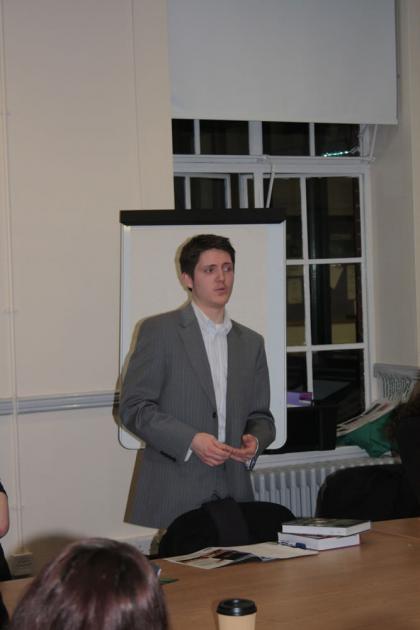
Yesterday we headed over to York Rock Church to see their main weekly service, held on a Saturday evening, called Communicating Life.

I first noticed The Rock when I was down giving a talk at North Yorkshire Humanist Group and decided to google it when I got back. The website I found was fascinating – it looked like it was basically an entire church service delivered in the form of rock music (and with some very catchy songs too!).

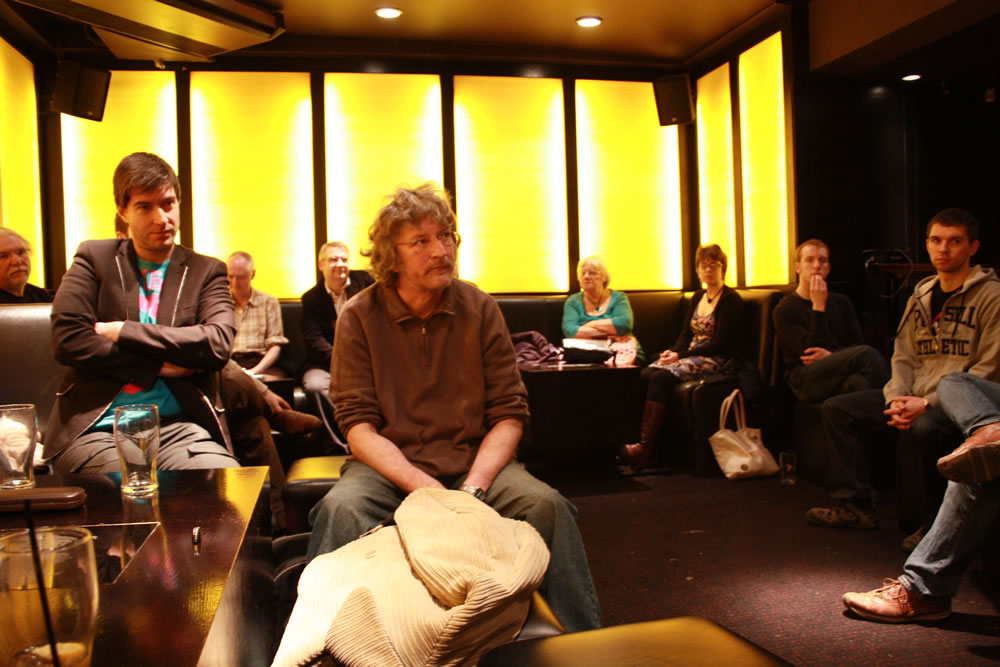
So we arrived just on time for the main service, which even had a countdown to let you know how was left until the rock began! I would describe the atmosphere as reasonably friendly, someone took us through to the main hall and once we had sat down two other people came over and introduced themselves in the ten minutes or so we were waiting.

The service itself started with about eleven people on stage, most of which were singing in a line at the front which really reminded me of the American evangelical mega-churches. It didn’t feel quite as big as it did on the videos – the place could have held maybe 300 people of which there were about 100 there which is a lot of people but I guess I was expecting it to be more like what Abundant Life looks like from the photos.

Afterward we were taken to the cafe, named Pillars, complete with free wifi internet and branded coffee cups. Here we got chatting to Beth who works on the youth outreach projects for the church. She even invited us back to their house party which apparently follows on from most of the weekly services.

All in all well worth the trip, they have a great community feel and excellent biscuits.

The Ab Soc debate saga

Friday, October 1st, 2010 | Humanism, Religion & Politics

Because the Islamic Society at Leeds University Union generally refuse to talk to us, we were left wondering how we could get an Islamic debate for this year’s Reason Week 2010 held in April.

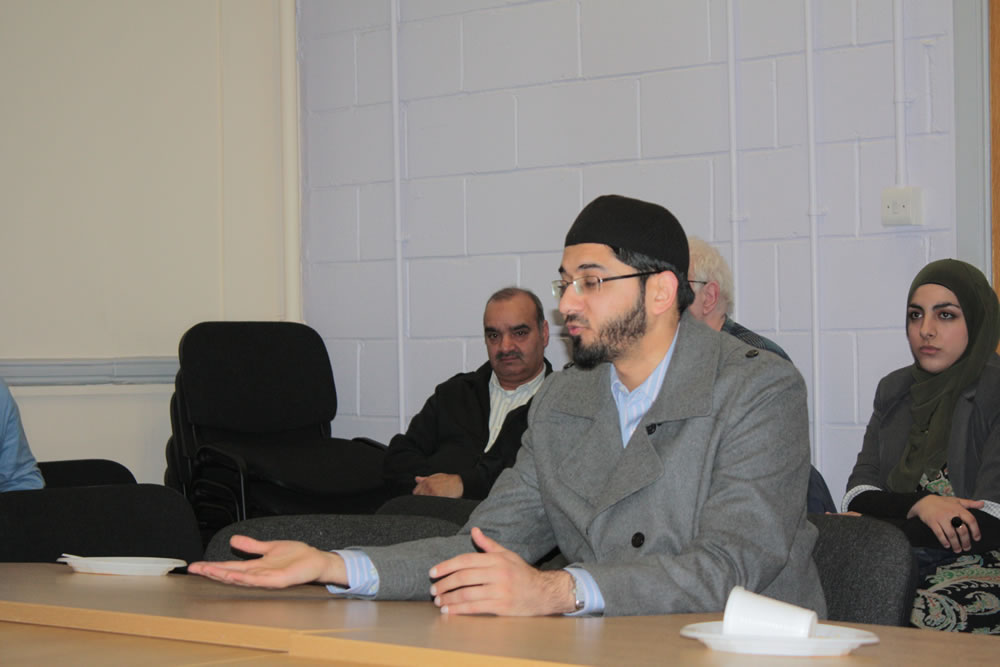
In the end the solution we went with was to contact Ahlul Bayt, which is a different sect of Islam – they are basically to Islamic Society what the Catholic Society is to the Christian Union. They’re treasurer had spoken at an interfaith panel discussion we had held before so we were on fairly good terms with them.

The debate itself took place to a packed out tent, as people crowded in to hear Norman Ralph speak for our side on the subject of whether Islam provides everything you need to live a good life.

The debate itself went very well so we thought. With a formal debate there is always a little toing and throwing – or as you would normally call it, debate, but everything seemed to remain friendly.

We had also gone out of our way to accommodate the members of their society, providing a specifically vegetarian dinner with no meat option at all so that we could avoid any issues surrounding non-Halal meat.

One rather amusing incident was when the present of AbSoc, who was sitting in the audience, raised her hand to make a point and explained that she wore the headscarf because it empowered her to hide her looks. Norman countered by pointing out that with or without her headscarf, she was clearly a rather attractive woman.

The debate continued and afterwards several of their society members hung around to continued the debate is a less formal environment until eventually everyone dissipated and we thought job well done.

However a week later we received an email from Ab Soc saying that our attitude had ruined the debate. They accused us of not being impartial, of them not being given chance to respond to points and it generally being an attack on Islam.

They also said it was highly inappropriate for people to have been drinking in the tent and that there were people in the corner shouting and jeering which isn’t “the sort of behaviour that we expect at a formal debate.”

Further more, when they’re speaker spoke about the constitution of Islam, an audience member apparently replied “that’s shit” and Ab Soc went on to demand that there was “action taken against this person” as it was “at least offensive and at greatest illegal!”

To address these points…

The debate was chaired by a representative of Debate Society. I personally felt they were impartial, but even if you didn’t, I don’t see how you can throw a criticism at Atheist Society for that.

The people shouting and jeering in the corner of the tent where not members of the Atheist Society. But even if they were – that actually is the kind o attitude you expect at a debate. It isn’t a real debate unless there is at least some fist banging and shouts of “here, here!”

These were the same people who were drinking. We have a no alcohol policy in the tent, but we don’t control these people and drinking is part of the real world – they wouldn’t tolerate alcohol in a mosque nor would we take alcohol in out of respect, and yet when they come to our venue they do not respect our free choice to consume alcohol.

Finally, it certainly isn’t illegal to criticise an idea. I’m not exactly sure what is referred to by the “constitution of Islam” but I’m fairly sure it is a pile of shit and I have every right to voice that opinion under British law.

Obviously the first reaction of the committee was a very offended one but we soon calmed down and suggested we just ignore it. Our president at the time Sophie, felt that it needed a response though and decided that rather than cause an argument she would send an apology.

We presumed this would be the end of it but apparently not – we received another angry email back from Ab Soc, in response to our apology, saying that Norman had repeatedly attacked Islamic and this should have been totally off the cards is a debate about Islam.

Meanwhile, when Sophie had pointed out that they had laid into homosexuals during the debate this was only apparently because someone had asked about it and the question was answered “representing Islam” which as you will probably know, is intolerant of homosexuality.

They then want on to state that saying “that’s shit” was a violation of the Public Order Act because several members of the audience felt “distressed” by the comment. They went on to say that they would never make such a comment (presumably about the atheist constitution if there was such a thing) and put this down to their respect for diversity – even though they’ve already said that they don’t tolerate the gays.

At this point we made a decision as a committee that Ab Soc were just looking for an argument and the best thing to do would be to simply turn the other cheek and ignore the email so as to not aggravate the situation any further. Again, we presumed this would be the end of it.

However a week later we received another email from Ab Soc demanding an answer to their previous email.

So eventually Sophie emailed him back saying she hadn’t responded because she didn’t want to cause more of an argument, but while we’re on the subject we didn’t appreciate being compared to football hooligans, that she didn’t appreciate the threatening emails he had been sending her and that if they wanted to go the police and ask for a criminal investigation, we would welcome it.

Personally I would have added that if we were to be held accountable for the behaviour of people who weren’t members of our society but were never the less self describing as atheists, whether Ab Soc would be answering for those individuals self describing as Muslims who carried out 7-7 and 9-11. But Sophie is more diplomatic than I am.

Ab Soc shortly emailed back saying they would discuss their next move in their next committee meeting but encouraged us to take their emails to the police if we wanted, showing how meaningless their initial threats against Sophie had been.

Sophie still wanted to repair relationships however and so set up a meeting with Kay, our development coordinator for faith and cultural societies at the union. The meeting with Kay went well – Sophie presented her case and Kay agreed that the emails were threatening and offered to set up a meeting with Ab Soc so we could talk it out.

Unfortunately, on the day the meeting was schedule to take place, Kay was off sick. It was rescheduled to a week later but again, when the say came Kay was off sick again so once again the meeting didn’t take place. So by this point we decided to give up and wait to see if anyone else forced the issue. And that was the end of our exciting adventure with Ab Soc.
Miliband doesn’t “do” god

Wednesday, September 29th, 2010 | Religion & Politics

I was reading the Daily Mail’s coverage of Ed Miliband’s interview in which he said that he didn’t do god. He did of course say he has great respect for people who do and I may write about that later (I haven’t heard Cameron say he has great respect for non-believers, persumably because that’s most of us) but one thing I did find interesting was the Daily Mail poll which asked the following.

Does it matter that Ed Miliband does not believe in God?

Let’s pretend it isn’t offensive for them to suggest that the idea that his is an atheist makes him a bad person (one wonders whether they would have run a poll on “does it matter that x is a Muslim?”) and consider how to answer it.

My first reaction was to tick “no.” Because we all know what the poll is really about – as outlined above, do we think the fact that Ed Miliband is an atheist is detrimental to his character. If you answer yes, you do think that, if you answer no you don’t think that.

But of course it isn’t as simple as that. In actual fact, when considering the question does it matter to me that Ed Miliband is a non-beliver the answer is, yes it does. It matters a great deal to me! Just not in the way that the Daily Mail would imagine it might.

In fact, it probably matters to a lot of people. This is a man who could well be the prime minister of the United Kingdom in a few years time – it matters a great deal that he isn’t some mad crackpot religious nut. Especially when the last one turned out to be hiding his religious quackery until after he had sent hundreds of British servicemen to their deaths after some good healthy praying about it.

So yes, it does matter that Ed Miliband is an atheist. It’s great news.

For the record, at the time of casting my vote, 61% said it didn’t matter, with the other 39% saying it did.

There is officially no god

Thursday, September 2nd, 2010 | Life, Religion & Politics

As you probably know, atheists are currently celebrating Stephen Hawking announcing there is officially no god.

I was on BBC Radio Leeds talking about it earlier. It went pretty badly, to be honest, I could have spoken a lot better and we ended up discussing what evidence I would require to believe in god rather than talking about Hawking’s new book. Never the less it’s always an experience and it’s great to get a mixture of view points on the show which BBC Leeds are always really good at.

You can listen again for seven days on the BBC website, it’s about 38 minutes in.

General election

Sunday, May 16th, 2010 | Religion & Politics, Thoughts

I have to say, the general election was rubbish.

I had to queue for 40 minutes to vote. I actually really regret that now, as much as you should participate in democracy, no metric when you think about it would actually have been worth a whole 40 minutes of my precious time given that Hilary Benn was always going to win the seat for Labour once again.

But yes, that footage of everyone queuing outside Trinity Church in Leeds, that was me. Well, that footage wasn’t me, I did it earlier in the day, but much like everyone else I went at first (around 6pm) and saw how long the queue was so I thought I would come back two hours later when the queue had died down only to find it had gotten even longer.

The error in my logic was thinking that most people didn’t live in the city centre and so would be voting at around 6pm as they got the bus home from work, passing through town of course. It was only later I realised how silly this was – obviously if they were bussing it home to somewhere else, they would be in a different constituency.

In my defense though, having looked at the queue I believe most people would have thought the same thing – it was full of shabby looking poor lower-working class people so my instant reaction was that they obviously couldn’t afford to live in the city centre and must just be voting here and then going back to whichever slum they live in. I still think this is probably the case and just the Leeds Central constituency stretches father than I realise.

And then after all that, I stay up all night to watch the election and we don’t even get a real result.

I think the biggest argument for our current electoral system is that if we switched to proportional representation, most election nights would be such a massive anti-climax. I stayed up until about 5:30 because all the interesting results – the Leeds ones for me obviously, Brighton Pier, Barking, Buckingham and Oxford West took absolutely ages to declare.

Indeed the only one I managed to catch while in some state of consciousness was when Oxford West was announced, only to find out that very disappointing Dr Evan Harris had lost his seat. And thus was the death of science and evidence based policy in the House of Commons.

What a massive disappointment all round really.

Scientology and me

Sunday, April 4th, 2010 | Events, Foundation, Religion & Politics

For the final session of this year’s Perspective we invited Sam Butler over from the Church of Scientology in Manchester. It was really interesting to hear what he had to say and get a good insight into the beliefs that Scientologists hold.

Unfortunately it wasn’t chaired well and we ended up not getting any real chance for questions which was a disappointment. Also I managed to mess up the focus on my camera and so half the photos were out of focus. Still, the first of hopefully more such Perspectives.

Perspective looks at Islam

Sunday, March 14th, 2010 | Religion & Politics

With out speaker from the Muslim Debate Initiative having canceled us on the night before, a speaker from the Leeds Makkah Mosque kindly stepped in at the last minute to present the session on Islam. I found it a really good session, there were some excellent questions asked and interesting answers given.

Big church or big business?

Monday, March 1st, 2010 | Events, Religion & Politics

At the recent meeting of Leeds Skeptics in the Pub Mike Granville delivered us the talk The Catholic Church: Big Church or Big Business? It was fascinating to learn that at the start of the 20th century the Catholic Church was actually on it’s knees and it was only alliances formed around World War II that restored it to power. Another interesting twist in the story of the Catholic Church.

Sikhism in review

Monday, February 22nd, 2010 | Humanism, Religion & Politics

Last Friday we were joined by a representative of the Sikh faith at Perspective.

While Sikhism is often seen as preferable to the major monotheist religions, I think it falls into the same trap as Paganism in that it mixes some good stuff in with a load of rubbish and then tries to use the plausible aspects as all true. At least Christianity offers you wholesale bullshit, you either accept the whole idea of Jesus or you don’t, there is no trying to force a square peg into a round hole.

First off, I want to say that in general, the concept that most people used to describe it this time (which is actually something I coined last year 😉 ), that Sikhism is just “Humanism plus god”, I agree with. I was perhaps a bit harsh in my initial review in The Old bar on Friday night about my thoughts on it. However, I stand by my stance that it is very much disagreeable.

Firstly, it has a concept of god, or “the Devine” but it doesn’t actually define what this is. According to the speaker, their holy book contains about 4,000 pages explain what god isn’t, but never explains what god is. This seems very confusing an ill-defined when it comes to building a belief structure around it.

It has the concept of a traditional family unit – you are commanded to get married and have kids. This is common among many other religions, especially Catholicism and Judaism and inevitably leads to an intolerance of homosexuals and even on a more general level creates judgement in the community of those that don’t choose to live as a traditional nuclear family.

They don’t cut their hair or shave. There is just no reason for this. You might be able to come up with some justification as to why this is done in terms of being one with nature but any such justification would almost certainly indicate you should do this with all your body – yet they are quite happy to cut their nails or shower for example.

Finally, they fall back on the favourite religious past time of trying to suppress and control natural human behaviour in order to exhort control over the follower’s life.

The best example of this is that Sikhs are forbidden from indulging in anything that could be harmful to their bodies – such as drugs, alcohol or meat. Not only to most people naturally crave these things but actually, there is nothing wrong with having meat or alcohol as part of a balanced diet and many studies have shown that they have a positive impact on your health. Particularly because I have Sikh friends who regularly eat at McDonald’s (having the vegetarian option of course but it’s still fast food1) so the rules then seem to become rather less meaningful.

Footnotes
1 I should point out that McDonald’s does not identify as a fast food restaurant. I use that term to describe the kind of food McDonald’s serves but they never call themselves it so don’t get arsey next time you’re waiting a whole three minutes for your food and making sarcastic comments like “you call this fast food?” because we don’t call it that, we never promised you it would be fast, we’re just so damn good at it that nine times out of ten we do have it all ready in under a minute.

Violent video games don’t lead to violent crime

Monday, February 22nd, 2010 | Religion & Politics, Thoughts

I was recently in a discussion about whether violent video games led to violent crime or not.

The main argument from the other side was “well, it’s just obvious isn’t it” and, on a slightly more substance based strand, “kids just think violence such as they experience on a video game is normal and acceptable.”

My argument was that there simply isn’t any evidence for this. I wasn’t going to chase it up or anything but I have work to do that I’m procrastinating from and as I saw a related article in the news just now, I thought I would double check my facts.

A quick consultation of the encyclopedia helpfully points out the bottom line – that Harvard Medical School and the British Medical Journal have both done studies into this topic “have shown no conclusive link between video game usage and violent activity.”

The fact is the evidence shows there isn’t a link between violent video games and kids going out and committing violent crimes.

But I would also goes as far as to say that, if you put some thought into it, it’s actually obvious that there isn’t a link. I think there are two main reasons for this.

The first is that Wikipedia also points out that over the past 20 years violent crime has been consistently in decline whereas sales of video games have been consistently growing. If there was a link we would expect that as more violent video games were sold, violent crime would increase. But it doesn’t. In fact it goes the opposite way. I’m not suggesting that violent video games actually decrease violent crimes but it certainly is evidence against the idea that encourage it.

Secondly, society hasn’t really got any more violent than it used to be.

Video games may be a relative new comer (although of course the ZX81 is actually older than I am) but the idea of violent games certainly isn’t. For years kids have been running around playing cops and robbers, cowboys and indians, playing with toy soliders and toy guns. Indeed my dad has often told me that one of the must have toys of his era was the Johnny 5 Gun, so called because it had five different modes of shooting. The only difference today is that kids run around a virtual world connected by their X Box Live rather than doing it in real life – which is arguably far more real than in a computer game.

Given these two reasons alone, it does not seem intuative that the popularisation of video games including some which are violent, would automatically lead to violent crime – and you would be right, because the evidence backs up that it doesn’t.