Archive for the ‘Books’ Category

Technical Anxiety is out today

Wednesday, November 9th, 2016 | Books, News

technical-anxiety-books

My new book, Technical Anxiety, is available from today. You can get the eBook on iBooks and Kindle, and the paperback will be available shortly too.

EDIT: The book is now available in paperback too.

New book, Technical Anxiety

Saturday, October 29th, 2016 | Books, Health & Wellbeing, News

I have a new book coming out. It’s called Technical Anxiety: the complete guide to what is anxiety and what to do about it. If you have read books about anxiety, you might have noticed that a lot of them seem to be written by people who do not really seem to know what it is like to have anxiety or how it makes you feel.

Technical Anxiety cuts through all of that. It covers things like talking to your friends and family (and work), being less self-critical, coping strategies, health anxiety, social anxiety, building a lifestyle that improves anxiety and loads more. To be honest, there is too much in it.

It is available for pre-order on iBooks and Kindle.

technical-anxiety-book-cover

Summer on the Horizon on iBooks

Tuesday, October 18th, 2016 | Books, News

Yesterday I announced that the Leeds Restaurant Guide had returned to the iBook Store. Today, I am pleased to announce that my novel, Summer on the Horizon, is available on the iBooks Store for the first time.

It is already available from Amazon in paperback and Kindle edition, and is now available on the iBooks Store as well.

summer-on-the-horizon

Restaurant Guide on iBooks

Monday, October 17th, 2016 | Books, News

lsr-on-ibooks

When I originally released the Leeds Restaurant Guide, I originally published it via a company called eBook Partnership. They are a great bunch of people, and get your book into pretty much every eBook store there is.

However, it was not perfectly suited to the format of the guide. We push out new editions regularly, and it was not practical for us to push these changes through in the same way we could with Kindle. Therefore, after two years, I decided to call it a day with the other eBook stores.

That changes today, as I now have direct access to the iBooks Store. The guide is back in there and will receive updates for future editions too. View on the iBooks Store.

Fish Market Cookbook

Monday, September 26th, 2016 | Books, Food

fish-market-cookbook

In June we travelled to Iceland for our honeymoon, and were very impressed with a Reykjavik restaurant known as The Fish Market. So impressed in fact, that we shelled out for the cookbook while we were there.

The production values are high quality. Once you get past the menacing photo of head chef Hrefna Rósa Sætran wielding a knife on the cover, you find a hardback book, just under A4 size with a full colour photo of every dish. This is everything I want in a cookbook.

The recipes themselves are a bit more challenging however. I struggled to follow a lot of them. Perhaps they make more sense to a trained cook, but I could have done with many of the blanks filling in. The photography of the dishes is quite artistic and therefore, even though you have a photo, it is not always clear what you are aiming for.

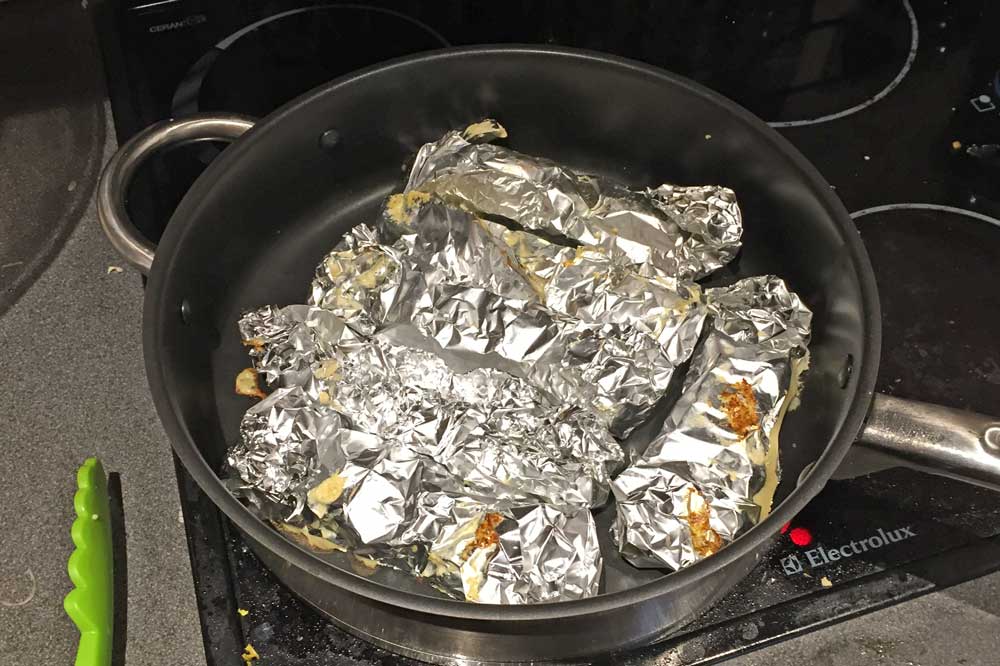
salted-cod-hotpot
I don’t think it is what the salted cod hotpot should look like

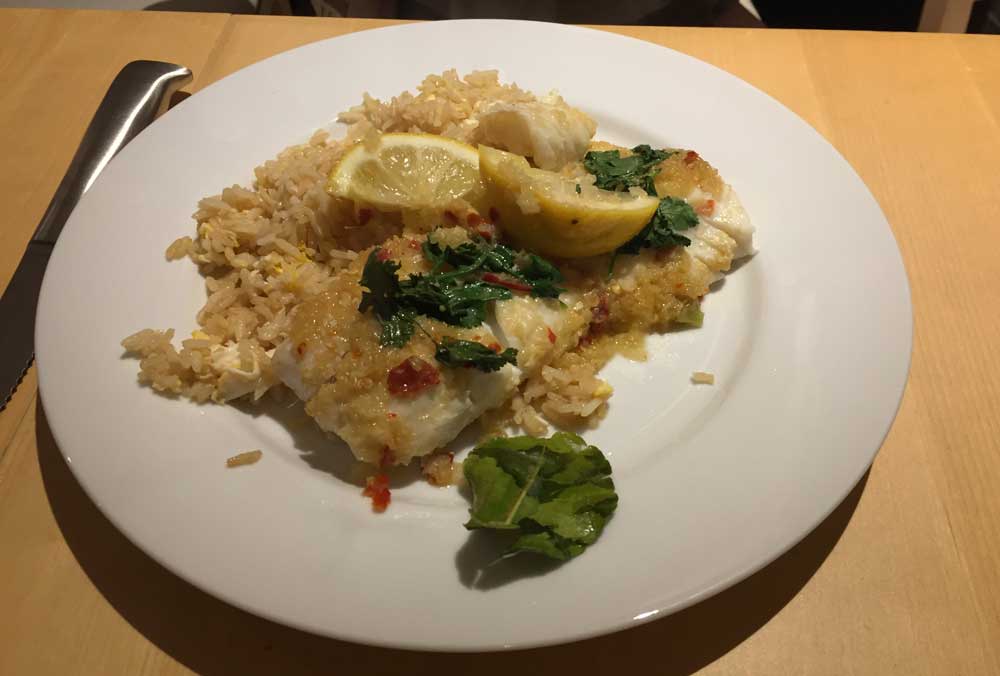
I haven’t written about much from the book, but here is the breaded pork tenderloin I made.

The language can also be a bit confusing. It is written in American English, rather than proper English. I was struggling to find shrimp chips, until I realised they were prawn crackers. A few times I wondered whether the translation had become a bit muddled. Some of it appears to be in need of a proofread too. The hot chocolate cake recipe for example: it says “melt the chocolate and water in a double boiler.” There is no water in the recipe, but there is some butter that is never mentioned. The word was almost certainly supposed to be butter.

This resulted in a lot of the recipes being duds for me. I simply couldn’t re-create them, and even when I could, they did not even resemble the picture most of the time.

Then there was the search for ingredients. Leeds has twice the population of Iceland, and four times the population of Reykjavik. Why can’t I find these ingredients? We did venture in to the Thai supermarket and international supermarket, with some success, but there is still much on my list that I have not been able to locate. Not that that is the book’s fault of course.

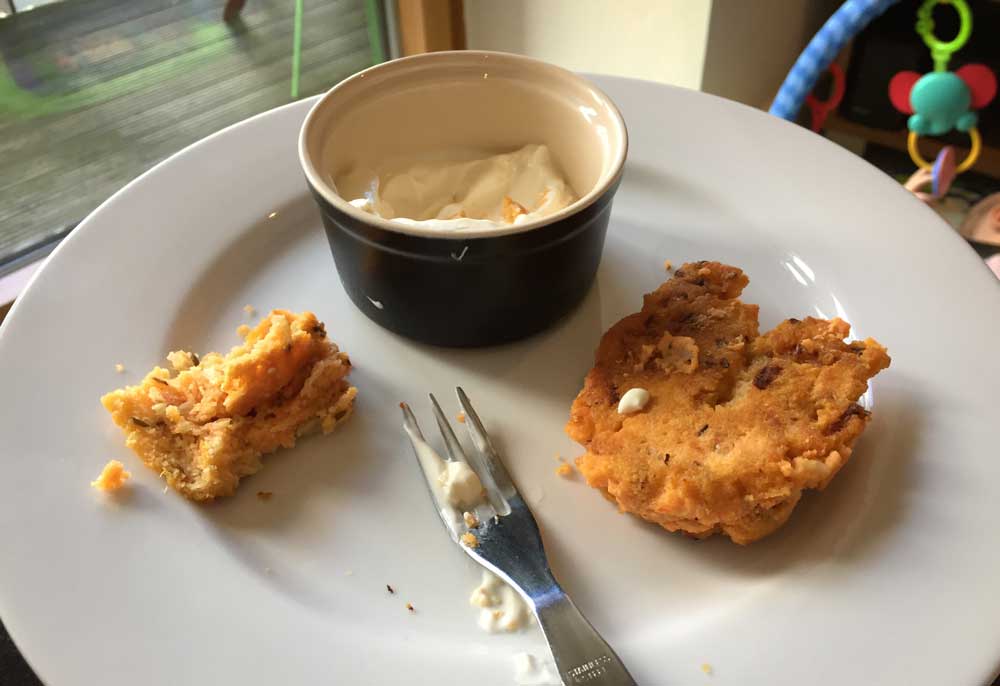
cheesecake
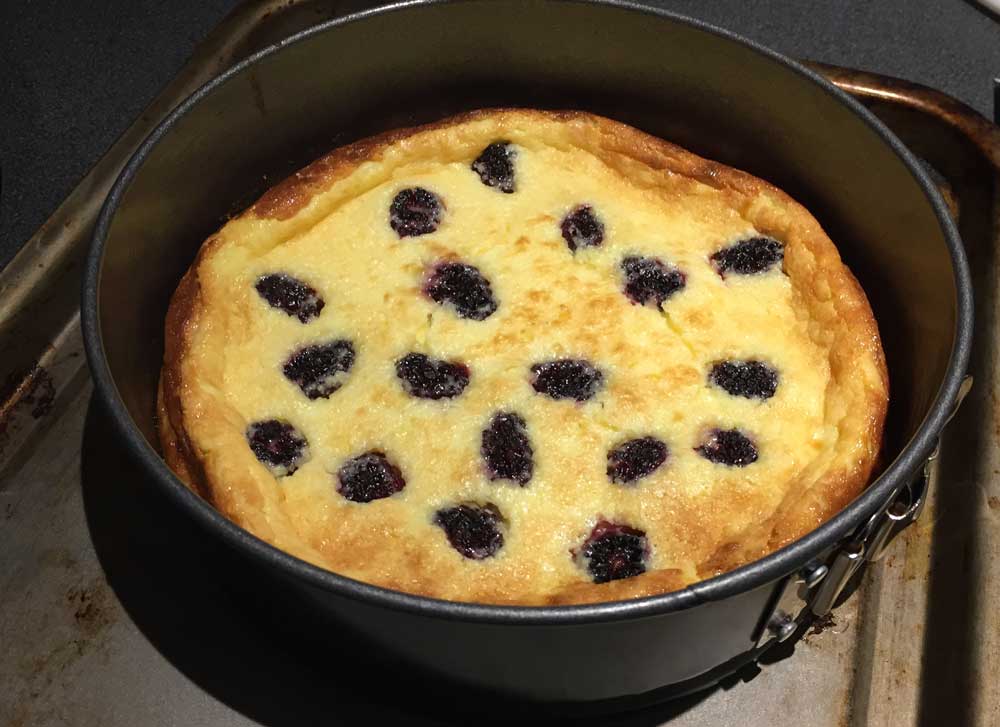
The cheesecake made an appearance at my Gran’s birthday party (left), my Grandma’s wake (right), a dinner party and one just for Elina and I.

When the recipes did work though, they were delicious. The pomelo and papaya salad with sweet cashews have quickly become a go-to salad for parties, and the white chocolate cheesecake is so easy and so delicious that we have had a continually rolling batch of them on the go for about a month now.

It might not be the most practical cookbook ever. However, it has produced a few tasty recipes and is a lovely way to remember our trip.

How to Build a Billion Dollar App

Sunday, September 25th, 2016 | Books

In How to Build a Billion Dollar App George Berkowski takes you through the stages of coming up with a mobile app from concept to being a billion pound company. It is based on his story co-founding taxi app Hailo.

As you might expect it is a pretty whistle-stop tour of each stage of the business. However, it provides a good overview with various comments and advice that Berkowski brings from his experience at Hailo. He stresses the importance of getting the product right for the market and how you should be measuring growth, two of the keys to getting a successful product out there.

While it is a good overview, I am not sure how much I am going to take away from it. Compared to something like The Hard Thing About Hard Things which offers plenty of specific and useful advice, this is more of a general guide to the journey. The one thing I did really like was a list of concepts that have universal appeal to humans. This is great for brainstorming ideas from.

I also found it interesting that he recommended having one Scrum Master for around 12-15 engineers. I have worked at a number of companies that do agile and a typical setup in the UK would be one Scrum Master to around 3-5 engineers, a considerably different ratio.

how-to-build-a-billion-dollar-app

Which cookbooks are the most useful?

Saturday, September 24th, 2016 | Books, Food

cookbooks

We don’t often repeat recipes in the Worfolk household. There are so many amazing cuisines, cookbooks and ideas out there that we try something new almost every night. However, there are some recipes that are tasty enough, quick enough or reliable enough that they are reused on a semi-regular basis.

As you might imagine from knowing me, I keep them on a spreadsheet. I thought it would be interesting to analysis how many recipes from each cookbook made it onto the spreadsheet and therefore which cookbooks have stood the test of time.

I have linked through to the review, where one exists.

Recipe Count Cookbooks
13 River Cottage: Veg Every Day
11 River Cottage Every Day
6 Mary Berry’s Absolute Favourites
4 Paul Hollywood’s Bread, Cakes & Slices, 30 Minute One Pot, Nordic Cookbook
3 River Cottage Bread*, The Fish Market, Curry Bible, Thug Kitchen
2 Baking: 100 Everyday Recipes, Soups, The Accidental Vegetarian, Paul Hollywood’s Pies & Puds, River Cottage: Light & Easy, Chocolate
1 River Cottage Fish Book, Kenwood, Moomin’s Cookbook, Linda’s Kitchen, Easy One Pot, Nordic Bakery
0 500 Ways To Cook Vegetarian, River Cottage Cookbook, Hugh’s Three Good Things

* indicates I am still working my way through this book.

This isn’t an exact science. I re-use some recipes more than others. If anything, Veg Every Day deserves to be higher because I use that a lot, whereas although I have marked Easy One Pot as having a recipe I would re-use, I certainly don’t go for it anywhere near as much.

It is also unfair on some of the books. A lot of the baking books for example are full of amazing recipes that I have yet to try, but one might day and find they are definitely keepers.

Based on these figures, it seems sensible for me to recommend River Cottage and Mary Berry cookbooks. River Cottage consistently does well. The original River Cottage Cookbook isn’t really a cookbook, it’s more of a book about self-sufficiency, so it is not surprisingly it did not do well. The River Cottage Fish Book did not score so well either, but it was fun read. At the other end of the table, both of my favourite River Cottage cookbooks are storming ahead.

Mary Berry is also on the recommendation list because I am working through my second cookbook of hers at the moment and that is also going to score well. Plus they’e excellent for easy meals and dinner parties as they almost always contain instructions for making in advance.

UPDATE: Since writing this, I have finished working my way through Mary Berry Cooks that added 8 new recipes onto my spreadsheet. That puts it in third place behind the two River Cottage books.

TED Talks: The Official TED Guide to Public Speaking

Wednesday, September 14th, 2016 | Books

TED Talks: The Official TED Guide to Public Speaking is a book by Chris Anderson, curator of TED, on how to deliver a great talk. It is aimed to give advice to everyone, not just people speaking at TED, and while all the examples are from TED, there is much to be learned from anyone looking to give a speech.

As with a great TED talk, Anderson starts the book by creating a vision. An idea is a thought pattern in your head, and your challenge is to replicate that thought pattern inside the mind of each of your audience members. He then goes on to explain how to do this, step by step.

Most of the book concentrates on the idea of getting your message correct. This makes sense because it is more important than delivery and you can do in written form. If your body language or voice is not perfect, this matters less than having a great message. Nor can you teach these skills effectively in a book.

There are also discussions of the fine lines you run into when speaking. Sharing personal stories for example. Generally speakers don’t do enough of this. Showing an audience your vulnerabilities and being open about some of the challenges you have faced really helps you connect with an audience. But you can overshare and even make them feel uncomfortable if you go too far.

Similarly, how much should you rehearse. Should you do it word-for-word or just rehearse ideas? Word-for-words means you will know it better and get it right: but it can also sound forced and unnatural. Both approaches can work. However, in general word-for-word is better. Many speakers, usually with high opinions of themselves, will talk about how they just blag it and it comes out brilliantly. For a tiny proportion of speakers this may be true. However, for most they simply do not sound as good as they think they do. In comparison, I am often complement for how natural and unrehearsed I sound. The speeches that people usually make those comments are the ones I have rehearsed to death: my guess is that that style only comes from the confidence of knowing your speech inside out.

I was quite pleased when the book suggested you should use blank slides to bring the audience back to you. I use this in my speeches, but I have never seen or heard anyone else suggest it before, so it was nice to see TED recommends it too.

One interesting point of contention was the pace you should speak at. At Toastmasters, we always tell people to slow down. TED says the opposite. People can digest faster than you can physically say things, so why would you slow down for anything other than the complicated bits that cause a high cognitive load on your audience? I see their point. If your audience can comprehend you speaking at normal conversation speed, why not pack in more information?

I think both these points of view can be reconciled. A Toastmasters, we’re typically teaching nervous speakers to get over their fears. When people are anxious they speak faster. Slowing down is a skill you need to learn and practice because otherwise you will go a million miles per hour. However, once you have learned to go at your own paces, to add pauses in the right places and to speed up and slow down as required, then you can use that skill to speed up as appropriate.

ted-talks

The Paradox of Choice

Tuesday, September 13th, 2016 | Books

More choice is always better, right? Not according to Barry Schwartz, author of The Paradox of Choice. In his book, he argues that more choices actually make us less happy.

He begins by talking about buying a pair of jeans. He went into a shop and asked for some. The shop assistant asked him a lot of questions: what colour, what fit, what treatment, what distressing, and what type of fly did he want. His answer: “I want the kind that used to be the only kind.” Not only did he now have to make a decision, which takes cognitive effort if you want to make the right decision, but the increased choice raises our expectations that we will get something better.

This is something I strongly identify with. When I need some new trainers I walk into a shoe shop and look at the choices. If you head down to Sports Direct in Leeds you will find literally a thousand shoes on the wall (I might be over-estimating, but not by much: it’s huge!). Does that make it easier to find the shoes I want? No! It makes it harder. Much harder. I spend time searching for the perfect shoe. If there were just six choices my life would be so much easier.

All of this choice might be okay if we made good decisions and were happier for it. But neither of these are true. Humans are terrible at making rational decisions and Schwartz summaries a lot of Thinking, Fast and Slow as well as other research to prove it. Anchoring is a big one, but there are many. Sunk cost fallacy is another big one: why continue to eat when you are uncomfortably full? I do that all of the time.

He goes on to say that people fear regret and try to avoid it. Therefore people often opt for reversal decisions: buying items you can return, booking things you can cancel for free, etc. However, the research shows that this makes us less happy because we continue to meditate on the choice after having made it. Whereas, if it is reversible we just get on with it. This affects small decisions, like ordering food from a restaurant menu, to life-changing decisions like marriage.

How does Schwartz recommend we remedy this? He has a number of suggestions. The most important is be a satisficer, not a maximiser. A satisficer wants something that is “good enough”. A maximiser will spend as much time as possible making the perfect decision. You could spend a month of weekends travelling around stores to find the perfect coffee table. Or you could buy the first one that would look good enough in your house. Which option do you think will make you the happiest?

It’s option B by a long way. Option A not only wastes all of your weekends, but you will regret all the possible coffee tables you did not buy, and the happiness of finding the best one will wear off over time. Which brings me onto another one of his suggestions: be aware that your happiness is making a good decision will wear off over time. If you expect it, it is not as bad.

Finally, consider artificially limiting your choices sometimes. Do you know one of those people who always choose the same thing when you go to a restaurant? They’re usually really happy with their food. Instead of considering twenty different locations to visit on holiday, consider two or three. Make a non-refundable booking so you don’t get tempted to change your mind and you will enjoy it more.

The-Pardox-of-Choice

It is also worth noting that not everyone agrees with Schwartz. I wrote about this last month in a blog post about Schwartz’s TED talk on the same topic.

A Man’s Guide to Having a Baby

Monday, September 12th, 2016 | Books

A Man’s Guide to Having a Baby is a book on parenting by Dominic Bliss. I picked up the hardback edition. It’s a short book and you can knock through the entire thing in an hour or so if you’re not religiously re-reading everything. I have read a few books already, so I was pretty relaxed about it.

It is straight forward as to what it offers. It is for men and makes no bones about it. It strikes me as a book that is more useful than most out there. There are diagrams on how to do things. That is far more useful than the books that say “you’ll pick it up” or talk you through it in general terms. There is even a short troubleshooting guide for common problems and how to fix them.

a-mans-guide-to-having-a-baby