Archive for the ‘Books’ Category

James Caan – The Real Deal

Friday, November 9th, 2012 | Books

I’ve just finished reading The Real Deal: My Story from Brick Lane to Dragons’ Den by James Caan. He is a dragon (now former dragon I assume, as he isn’t on the latest series) who started by building up several recruitment companies, and now runs a private equity firm that invests in SMEs.

Was it an interesting read? Certainly. Was it a useful read? Yes, I think it probably was.

The same themes come up across books by different entrepreneurs – invest in the right people and it will pay dividends, work hard and make sure you understand your business inside out.

I actually really like James’ way of doing things. For example, at the end of a meeting, he’ll take time to double check whether the other party has any concerns. So often, you’ll walk out of a meeting already resenting the deal you have just done, and so James’ final check allows him to resolve issues there and then.

He also argues that he is actually risk adverse, and only really pursues an opportunity once he has minimised the risks – investing isn’t about taking risks, it’s about taking smart risks when you know the odds are in your favour – think of it like poker pot odds, you might have some losses, but if you play the right game, you’ll eventually turn a profit.

Rip It Up

Sunday, September 9th, 2012 | Books

I’ve recently finished reading Richard Wiseman’s new book Rip It Up.

If you’re not familiar with Wiseman, he is a psychologist based in Edinburgh, and the man that showed expensive wine doesn’t taste any better.

It’s an excellent demonstration of Wiseman’s brilliant business skills. The book encourages you to change your actions and this is done by literally ripping the book up – you are supposed to tear pages out. This was somewhat difficult on my Kindle but means if you really want to get the most out of it – you have to buy a new copy every read. Genius.

Beyond that, the book looks at the As If principle, first proposed by William James, that suggests that rather than our thoughts influencing our behaviour, it is actually our behaviour that influences our thoughts.

Take this example – we often assume that we smile because we are happy. But the As If principle suggests that it is actually the other way round – we are happy because we smile. The book goes into hundreds of examples of this, but if you want to test it out now, why not spend a minute or two smiling and see if you feel any different?

Assuming that for the moment we put some stock into this, why does it mean? Well, there are lots of real-world applications.

For example, if you’re dieting, and you have a chocolate bar on your desk – try pushing it away from you. According to the theory, this will create the idea in your mind that you like it less, and so will less tempted to eat it. I’ve often done this anyway, though I’ve often attributed it to getting it further away from my eye line.

Another example, get over procrastination by allocating a few minutes to starting a task. This should be easier, as you can just tell yourself you’re going to do 2-3 minutes and then take a break. But once you find yourself doing it, it will be easier to continue.

In any case, it certainly makes for an interesting read. You can find out more on the book’s website.

Ulysses

Friday, August 31st, 2012 | Books, Distractions

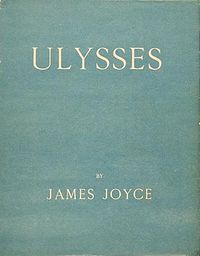
Being in Dublin and going round the generically tourist bits, you can’t help but notice there is a lot of stuff about James Joyce – he is one of the major literary figures in the country’s history after all.

So having some time to kill while we waited for our flight back, I decided to attempt to read Ulysses. I use the word attempt not to suggest I was trying to read it all in one sitting, but to suggest I was seeing if I could read it at all. After all, Elina had said she struggled, and her language skills are significantly beyond my own.

I’ve so far made it through the first part, of which there are three, but the first is much shorter. Even that has been hard going – I had to head over to Wikipedia at regular intervals to check my understanding matched up with theirs! I seem to be roughly following though, so all is well.

Jennifer Government

Friday, August 3rd, 2012 | Books

Jack having mentioned Jennifer Government a few times, I decided it was worth giving a read.

It’s a science fiction book, though set in the present day, except that society has taken a very different course of action. Capitalism has been allowed to run rampant and now almost everything is privatised – even the police is a private company. It was almost about to say “even the healthcare system”, but then I remembered that isn’t some kind of horrible nightmare, that is just present-day United States.

I enjoyed it, but to discuss the reasons why would only end in spoilers, so I will simply say, if you’re a fan of Brave New World and Nineteen Eighty-Four, then you’ll probably enjoy this.

Like a Virgin

Saturday, July 28th, 2012 | Books

I’ve recently finished reading Richard Branson’s new book, Like a Virgin, “They Won’t Teach You at Business School”.

My first question was, if Richard didn’t go to business school, how does he know they don’t teach this stuff? But, for the moment, lets take him on his word that they genuinely don’t. Once I got passed my own sarcastic comments, I settled down for an enjoyable read.

The book is structured in many short sections of only a few pages each, dealing with specific topics in no particular order, some related to a specific area of business and management, some on what Virgin has done and what lessons can be learnt, and some were Richard answering emails people have sent him asking for advice.

I really liked this format. Having sections that only lasted two or three pages meant that I could easily dip in and out of it. If I had five minutes to do some reading, I did’t need to worry about getting lost in the middle of a chapter. Though it also had the problem that when I was reading in bed, every end of a section was followed by a “oh, I’ll just read the next section, it’s only two more pages” until it was late into the night!

In many ways, Virgin really have turned business on it’s head. I once heard them described as a brand based capital house and where other companies have sought to dominate the one market they are best at, Virgin have built an empire out of going into many different, diverse markets, and staying small. This fits well with Richard’s personality, who clearly suits the cheeky personal marketing approach that they take, and there is a lot to be said for it.

Ultimately, there are no hidden secrets in the book, which is almost certainly a good thing (as any book promising you to uncover the “magic” is probably nonsense) but reinforces what we really should know already – be nice to your customers, invest in your staff, get your name out there and don’t take yourself too seriously. Definitely worth a read for budding entrepreneurs, if only as a gentle reminder.

History: A Very Short Introduction

Thursday, May 10th, 2012 | Books

I was somewhat disappointed when I first began reading History: A Very Short Introduction.

I was originally coping for a compact and concise list of everything that has happened in the past few thousand years. You know, Depression, Hitler, World War 2, Invention of Supermarkets, etc. You know, a way to know everything that has ever happened, in around a hundred pages.

However, History: A Very Short Introduction follows a different narrative, one more in line with the other books in the series, and common sense. It talks about “Historiography”, the study of history and methodologies used in such study.

While I found it just about interesting enough to continue reading all the way through, I must say that I didn’t feel I learnt a great deal. Having studied history for the first three years of high school, I felt that alone had given me a grounding in history to a greater level. You could of course argue this is obvious (three years of school vs a book that took me two days to read), but I would have expected the book to be pitched at a level that assumes the reader had in fact attended school.

Still, it isn’t entirely about the learning, but also about proving it on paper – and now that I can add having read said book to my CV, as I explained to Hugh, I’m now more than happy to fill in for him at his history lectures at any point.

I, Partridge: We Need To Talk About Alan

Tuesday, May 8th, 2012 | Books

Given that we saw Alan’s book, Bouncing Back, get pulped due to low sales, it would seem somewhat ironic that his recent book, “I, Partridge” doesn’t seem to be doing too well either – originally priced at £20, I picked my copy up for £3.99. Admittedly, that was on Kindle, but the book shop round the corner has the hardback for £6.

I don’t know why. This is one of the best books I have read recently. I couldn’t put it down – having purchased it one Sunday morning I had read from start to finish by the end of the day.

Presenting a vivid depiction of Alan’s life, often weaving in and out of the TV show, the book reads like you’re in conversation with him – and it works brilliantly. Not to mention his description of a fleeing Dave Clifton probably being the funniest simile you will ever read.

Ironically, as I only started reading it because Elina was keeping me awake by playing Scrabble on her laptop. But ten minutes after she had started playing the site went down for maintenance, so needless to say, I had the last laugh.

I, Partridge book cover

Foundation’s Edge

Friday, March 23rd, 2012 | Books

Having recently re-read the Foundation trilogy by Isaac Asimov, I went on to read the fourth book in the series, Foundation’s Edge.

Despite high praise elsewhere, I was somewhat disappointed by the book. While it was certainly an enjoyable read and one I don’t regret, I don’t feel that it played out with quite the brilliant design that the original trilogy did. It was a great read, but not as good as the first three.

Foundation series

Sunday, March 18th, 2012 | Books, Distractions

I’m currently re-reading Isaac Asimov’s Foundation series.

They are a fantastic series of novels and it’s brilliant to see the way Asimov carefully laid out all the story lines and concepts and weaved them in and out so that you never really know where it will end up, yet it all seems so obvious at the end.

I also find a lot of amusing parallels between the concept of The Tech-Men and work. Carefully tinkering around to try and fix systems we don’t really understand but somehow manage to keep ticking over 😀 .

The 7 Habits of Highly Effective People

Thursday, March 15th, 2012 | Books

I had heard a few good things about 7 Habits by Stephen R. Covey, so I decided to give it a read.

I have to say, I was very much disappointed. I guess there should usually be some kind of flag when the author needs to foreword his own book, though this can be forgiven – after all, our once great leader, now deposed for his crimes against Darwinism on Radio 4, Professor Richard Dawkins, has previously foreworded his own books in revised editions.

The book sets itself up to be the anecdote to the nonsense that has been published in recent times – there is no quick fix, the fads don’t work, etc. But the author then goes on to discuss how he uses many of these techniques, which Penn & Teller have devoted entire episodes of Bullshit to rubbishing, in his personal life.

He then goes on to set out many obvious points which simply don’t offer any value. Perhaps there is some merit in simply codifying already known or obvious values, but then we don’t ascribe any praise to books such as L. Ron Hubbard’s The Way to Happiness which makes valid, but obvious points such as “set a good example” or be honest.

Covey’s constant reference to his religious faith (he is a practicing Mormon) also add a large amount of bias to the book. Indeed, some of the arguments that he puts forward I could only really get my head round by looking at it from a religious perspective – they simply don’t make much sense from a secular perspective.

So overall, not too impressed with the book.